


Table of Contents
Ask any Korean designer where their first sample came from, and there's a decent chance the answer is Dongdaemun (동대문). This is the engine room of Korean fashion, a 25-block wholesale mega district in eastern Seoul that runs on the opposite clock from the rest of the city. Retail tourists shop it by day. The people who actually make Korean fashion move here between midnight and 6 a.m., in a rhythm the industry calls 밤장 (bamjang, the "night market").

What Dongdaemun Actually Is
Numbers first. Dongdaemun packs more than 40 wholesale malls, roughly 30,000 vendors, and an ecosystem of over 50,000 upstream manufacturers into one district. Annual gross across the market clocks in around $15 billion. It is, without exaggeration, the largest concentration of apparel commerce in Korea, and it has held that title since Pyeonghwa Market opened in 1962.
The reason the market keeps its scale, even in an age when brands could theoretically source anywhere in Asia, is speed. A designer at a small Korean SPA label can walk out of a Dongdaemun sample room at 3 a.m. with a rack of tomorrow's inventory, ship it to a boutique in Busan by noon, and see it on shelves by dinner. That 12-hour cycle is why Dongdaemun still matters when Vietnam is cheaper on paper.
Why It Operates at Night
Here's the part most tourists misread. Dongdaemun isn't "open late for the vibes." It runs at night because the customers are wholesale buyers, mostly retail store owners driving in from cities across the country, and they shop between 8 p.m. and 6 a.m. so they can be back home to open their shops the next morning. If you walk the wholesale floors around 2 a.m., the people carrying huge black plastic bags full of merchandise aren't influencers. They're merchants running boutiques in Daegu, Gwangju, Cheongju.
Retail tourists get the daytime shift, roughly 10 a.m. to 11 p.m., in the polished malls facing the main road. The wholesale complexes tucked behind them, in buildings like Nampyeongtaepyeong or Jeil Pyeonghwa, don't even bother turning on the lights until dusk.
The Wholesale-to-Retail Gradient: Doota, Migliore, apM, Hello apM
Not every building in Dongdaemun serves the same customer, and mixing them up is how first-time visitors waste four hours in the wrong tower. Think of it as a gradient. Doota Mall (두타몰) at the west end is essentially a retail brand. Eight floors, curated K-designer boutiques, prices posted, tax refund desk, English signage. It's the version of Dongdaemun that shows up in tourism videos, and it's what you visit if you don't speak Korean and want a "shop in Dongdaemun" experience without the friction.
Migliore (밀리오레) sits closer to the middle. Retail-oriented but with a lot of independent vendors, price tags are sometimes negotiable, and the vibe is closer to a bazaar. apM and Hello apM are the mixed tier. apM Place, which opened in 2016, is a straight-up wholesale market for made-in-Korea womenswear that releases new designs weekly. Hello apM leans more retail with young-trendsetter street style. And then the pure wholesale complexes (Nampyeongtaepyeong, Cheongpyeonghwa, Jeil Pyeonghwa) are the ones where individual buyers get politely turned away and the elevators run all night for people moving pallets.
The judgment call for a first visit: if you're a tourist, start at Doota, wander to Migliore, glance into Hello apM. Skip the wholesale complexes unless you actually want to buy 30 units of something.
The Supply Chain Behind K-Fashion
Here's the industry piece most retail write-ups skip. Korean SPA brands (Stylenanda before Amorepacific bought it, Chuu, MustHave, 8seconds in its early days) built their whole model on Dongdaemun's speed. The playbook: designer scouts Instagram for a trending silhouette on Monday, walks the Dongdaemun sample floors Tuesday night, places an order Wednesday morning, and the product ships to their online store by Friday. That's a five-day fashion cycle. Zara does eight to ten. Uniqlo does months.
This is also why Korean fashion has that "you saw it on TikTok yesterday, it's shipping today" reputation. The dirty secret is that a huge fraction of the K-fashion export supply chain, including brands that call themselves "designer," is actually sourcing from the same 40 Dongdaemun wholesale buildings. The vendors know it. The buyers know it. The consumer just sees a curated Instagram grid.
The tension with this model is that margins on the vendor side are brutal, and the district has been fighting to move upmarket for over a decade. That fight is what DDP represents.
DDP: Zaha Hadid, Tourism, and the Question It Hasn't Answered
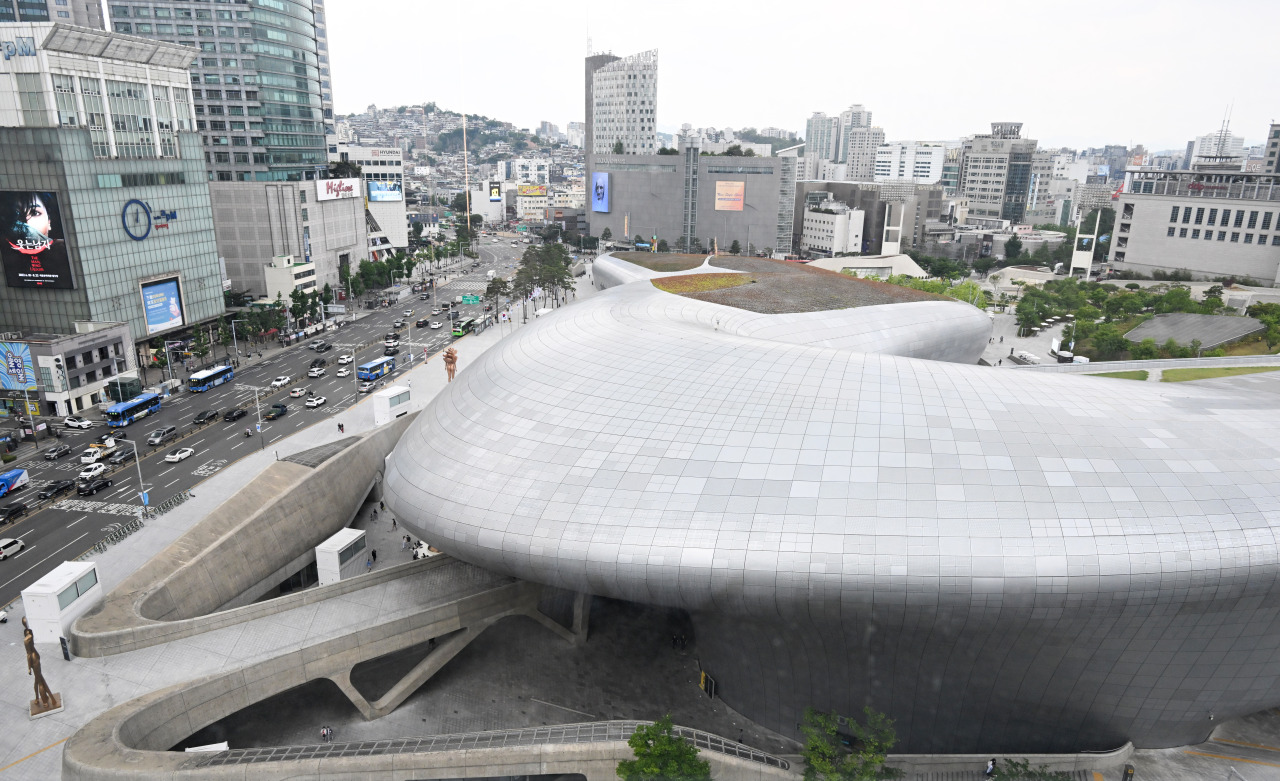
Dongdaemun Design Plaza (DDP) opened in 2014 on the site of the old Dongdaemun Stadium. Zaha Hadid designed it. The building is a 86,000-square-meter neofuturistic curve of aluminum panels, and it cost roughly 470 billion won, making it one of the most expensive public architecture projects in Korean history. The pitch was that DDP would rebrand Dongdaemun from a wholesale grind to a global design destination, and it worked as tourism: visitor counts to the district went up over 40 percent post-DDP.

The part it didn't answer is whether tourism translates into wholesale business. Vendors I've talked to over the years say the same thing: DDP brings people who buy coffee and take photos, not people who buy 200 dozen blouses. The wholesale volume in the district has been roughly flat since the mid-2010s, even as retail tourism grew. That's the honest gap between how Seoul markets Dongdaemun and how the district actually earns its money.
None of which stops DDP from being genuinely worth seeing. The 220-meter LED facade shows every summer during Seoul Light DDP, and the plaza hosts Seoul Fashion Week's runway. If you're going anyway, pair a DDP walkthrough with the wholesale market crawl. They tell you two different stories about the same neighborhood.
How to Actually Shop It
A few things I'd tell a friend visiting for the first time. Go on a Tuesday or Wednesday night, not a weekend. Weekends the retail tourists fill Doota and Migliore, and the vibe gets sluggish. Midweek nights are when the wholesale floors run hot and even the retail malls feel purposeful. Bring cash. A lot of the smaller wholesale vendors still prefer it, especially past 1 a.m., and the exchange rate at a bank ATM inside Doota is better than the money-changer booths outside.
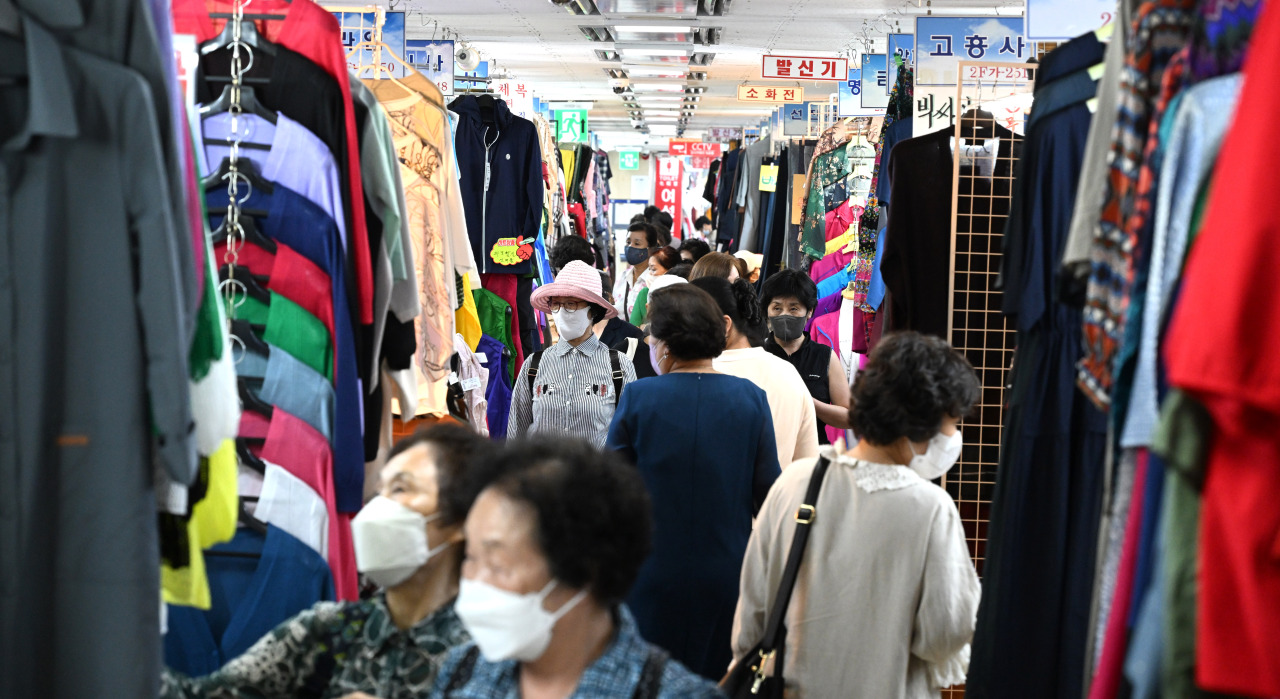
On bargaining: it's real, but only for larger purchases. If you're buying one blouse for 25,000 won, don't insult the vendor by haggling. If you're buying five items, you can politely ask for a 깎아주세요 (kkakka juseyo, "please give me a discount") and expect maybe 10 to 15 percent off. Buy volume, get respect. Don't overshoot; these vendors are working 10-hour night shifts and Korean bargaining is about relationship, not pressure.
Food-wise, the street food tents that appear along the sidewalks between DDP and the wholesale complexes are the workers' canteen. Tteokbokki, sundae, hotteok, odeng. The people eating there at 3 a.m. aren't tourists; they're seamstresses on break, drivers waiting for pickup runs, and buyers midway through a night. That's the honest Dongdaemun. Eat there.
Explore More of Korea with Daebak
Want to bring a little piece of Korea into your life? The Daebak Box is packed with the best Korean snacks, ramen, and cultural goodies delivered monthly to your door.


