


Table of Contents
Every fall, thousands of Korean-Americans and their neighbors converge on the Presidio in San Francisco to make 송편, drum out samgomu rhythms with the Bay, and try on 한복 while the fog rolls over the Golden Gate. That's the Bay Area Chuseok Festival, and if you want a data-point on how far Korean culture has traveled in the last decade of Hallyu, this is one of the clearest ones outside Seoul.

I've spent the better part of a decade watching the Korean cultural export machine move from a niche interest to mainstream Western programming, and one thing gets lost in the headlines about BTS and Squid Game: the on-the-ground infrastructure that carried Korean identity into American life long before Netflix cared. The Korean Center, Inc. (KCI) is one of those quiet engines, and their annual Bay Area Chuseok Festival is the biggest public showcase of Korean culture in Northern California. This piece walks through what the festival is, why it matters, and how it fits into the diaspora story that the Squid Game era conveniently forgets.
The Korean Center, Inc.: A 1974 Immigrant Services Org Turned Cultural Anchor
KCI didn't start as a cultural festival organizer. Founded in 1974, it was a nuts-and-bolts immigrant services nonprofit: English classes, job training, help navigating the U.S. system for new Korean arrivals in San Francisco. That practical DNA still shows. The Chuseok Festival isn't a top-down tourism board production out of Seoul. It's a community-anchored event with roots in decades of actually helping people settle here, which is why the crowd looks different from a K-pop convention.
Today KCI runs the King Sejong Institute Korean language program, senior services, and youth programming out of its Bay Area base. The organization frames its work as "bridging communities and generations," and the Chuseok Festival is where that mission stops being an abstract mission statement and becomes 15 maker stalls and 20 food vendors on the Main Parade Lawn of the Presidio. On September 21, 2021, the San Francisco Board of Supervisors passed a resolution formally recognizing "Korean Chuseok Day" as an acknowledgment of KCI's contributions, and they've re-upped the recognition every year since.
What Chuseok (추석) Actually Is, and Why It Translates
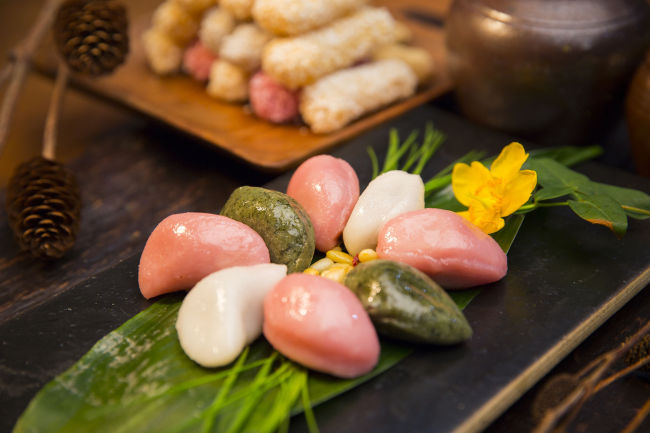
Chuseok (추석), also called 한가위 Hangawi, lands on the 15th day of the 8th lunar month, meaning the date drifts in the Gregorian calendar and usually falls mid-September to mid-October. It's Korea's harvest thanksgiving, historically the moment families returned to their ancestral hometown to hold 차례 charye rites, tend graves, and share the year's first proper feast. Songpyeon, the chewy half-moon rice cakes filled with sesame, red bean, or mashed mung beans and steamed over pine needles, are the tell-tale dish. There's an old superstition that whoever shapes the prettiest songpyeon will have a beautiful child, which is exactly the kind of low-stakes competitive family activity that survives migration well.
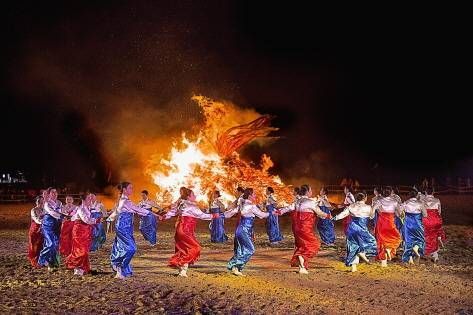
Here's what makes Chuseok exportable in a way that Seollal (Lunar New Year) has struggled with in the West: the harvest-thanks framing lets Americans meet it halfway. Even Secretary of State Antony Blinken has issued formal Chuseok statements three years running. "Korean Thanksgiving" is a rough translation, but it opens the door. What non-Korean attendees find once they step through, songpyeon-making tables, 강강술래 circle dances, ganggangsullae songs sung under a full moon, is something more textured than the Thanksgiving analogy suggests.
The Bay Area Chuseok Festival: From 5,000 Attendees to 20,000 in Four Years
KCI launched the inaugural Bay Area Chuseok Festival in 2019 with roughly 5,000 attendees. The pandemic shoved editions two and three online (2020 and 2021 ran as virtual programs, with panels broadcast from both San Francisco and Seoul, a K-drama and K-folklore panel moderated by DKDKTV, and a headline live concert from singer-songwriter Jae Jin). By the time the festival came back to the Presidio in person, the audience had scaled to roughly 20,000. That's a 4x jump in four years, and it maps almost exactly onto the post-Parasite (2019) and Squid Game (2021) inflection point when Korean cultural fluency became mainstream in the U.S.

Silicon Valley demographics are a big part of the story. The greater Bay Area is home to a Korean-American population that includes a large tech-worker cohort, many of them 1.5 or 2nd generation, plus a steady inflow of H-1B engineers, KAIST and Yonsei alums, and startup founders. That crowd is culturally bilingual by default: they'll queue for KPop Chicken and a Melona soju slushy from Korner Kitchen, then send their kids to the ganggangsullae station and photograph them in rented hanbok. The festival is a rare public space where all of that is default rather than exotic.
Programming: Hanbok Booths, Yutnori, K-pop Dance, and Real Talent from Seoul
The programming mix is what makes the festival work. On the traditional end you get 윷놀이 yutnori boards, jegichagi shuttlecock kicking, tuho arrow-toss, and the "Red Light, Green Light" game that Squid Game's opening episode made globally infamous under its real name, 무궁화 꽃이 피었습니다. There's a hanbok photo booth run by KCI staff, a "Wishes to the Chuseok Moon" interactive art installation where visitors write intentions on colored paper and hang them from a full-moon frame, and stations for paper lotus lantern making and chopstick craft.

On the performance side, KCI typically books a mix of traditional and contemporary acts. Urisawe covers samgomu three-drum dance and pangut percussion. The Silicon Valley Korean Children's Choir and Santa Clara Korean Senior Choir handle the intergenerational vocal programming (grandparents in hanbok, kids in matching hanbok, both singing "Spring In My Hometown"). Then contemporary K-pop dance covers from teams like Saori's Project and Eclipse take the stage, followed by hip-hop headliners like Son of Paper (Kyle Jae Hyuk Shin) or Year of the Ox's Rick Lee. A recent edition flew Seoul-based Art Taekwondo out to headline with a martial arts-meets-modern-dance show marking the 70th year of the U.S.-Korea alliance, which is the kind of set piece that gets funded when the Consul General of the Republic of Korea in San Francisco is in the front row.
Why This Matters for 재외동포 (Overseas Koreans)
재외동포 jaeoedongpo, the overseas Korean community, has been quietly the load-bearing infrastructure for Korean cultural export for 50+ years. LA's Koreatown, Flushing in Queens, and Atlanta's Buford Highway corridor all did the heavy lifting on visibility long before the Korean government's KOCIS (Korean Culture and Information Service) started coordinating soft-power campaigns. What's changed in the Squid Game / Parasite era is that non-Korean Americans now show up too. The 2023 Presidio festival drew a crowd that KCI staff described as visibly diverse in a way earlier editions weren't.
The 2nd-gen and 1.5-gen Korean-American experience often involves a specific low-grade grief: your parents celebrated Chuseok in a living room with a handful of other immigrant families, or not at all because your ancestors are buried across the Pacific and 차례 rites don't quite make sense when you're 6,000 miles from the graves. A festival at the Presidio, run by a 50-year-old immigrant services nonprofit and formally recognized by the city, gives that grief a place to go. San Jose resident Ji Yoon Yoo, a former KBS radio producer, told AsAmNews she was bringing her U.S.-born daughter for the first time so she could see Chuseok "in full swing" without flying to Korea. That's the actual product KCI is delivering, and it's the reason attendance keeps doubling.
How to Bring a Little Chuseok Home, Even Without a Presidio
If you can't make it to the Presidio, the KCI programming is a good template for a home version. Buy songpyeon from a local Korean bakery (H Mart carries frozen options if you're outside a major Korean-American hub), pick up jeon and galbi from the deli counter, and stream the KCI virtual archive from their 2020 and 2021 editions, which still has the Chef Tu David Phu food industry panel and the K-drama origins conversation. Bay Area residents should register early: KCI opens Eventbrite registration in late summer, and while the main event is free, the popular hanbok photo booth slot fills fast.
The bigger point is that Korean culture in the U.S. is no longer a "look what my parents brought" experience. It's a public, civic, city-recognized moment on a Presidio lawn. That shift didn't happen because BTS charted at #1. It happened because KCI and its peers spent 50 years building the infrastructure to make it possible, and the festival is the annual reminder.
Explore More of Korea with Daebak
Want to bring a little piece of Korea into your life? The Daebak Box is packed with the best Korean snacks, ramen, and cultural goodies delivered monthly to your door.


