

Table of Contents
Los Angeles runs a Korean cultural infrastructure most of the West Coast still underestimates. Roughly 250,000 Korean Americans live across the LA metro area, more than any other US city, and the neighborhood they built, the roughly 2.7 square miles bordered by Wilshire and Olympic and anchored around Sixth and Western, is where the entire American Hallyu economy quietly stages itself. K-pop stadium tours land here first. K-food brand launches book their US photoshoots here. When HYBE, SM Entertainment, and CJ ENM look at the American map, LA is the pin.
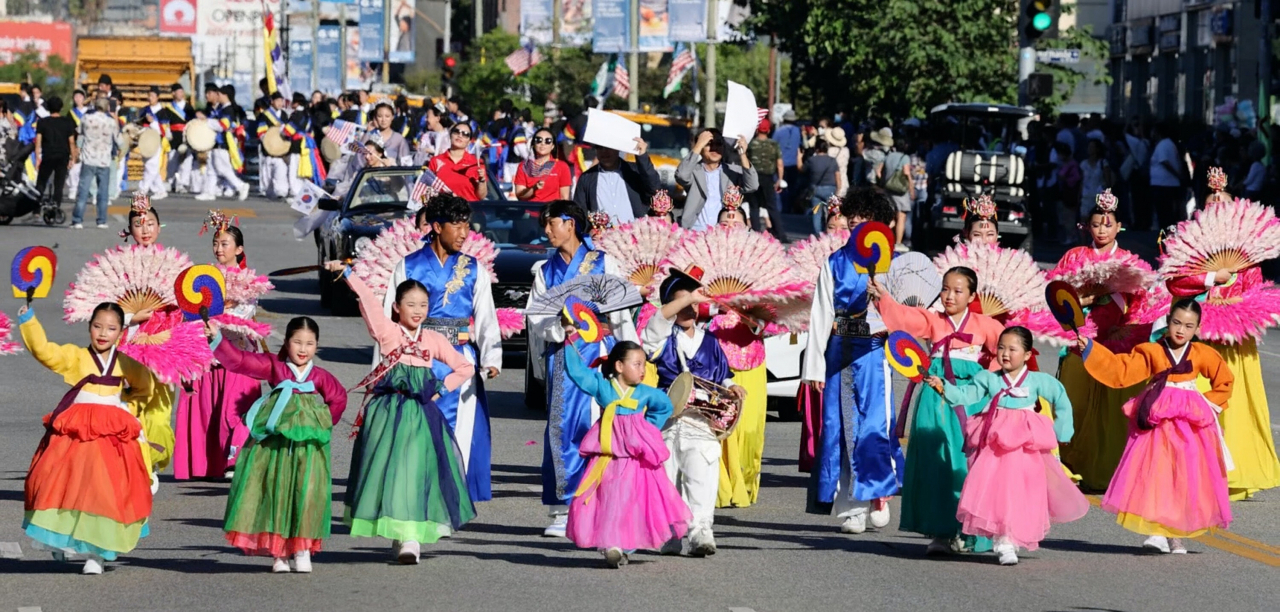
I have been working around the K-content space for over a decade, and one thing that consistently surprises people outside the industry is how much of what looks like "K-pop touring America" is really "K-pop routing through Los Angeles." That routing is not accidental. It is the compounded payoff of a 재미교포 (Korean American) community that has been organizing itself here since the 1970s, and it changes what a Daebak reader should expect when they visit 한인타운 today.
A Neighborhood Built Twice: From Post-1965 Migration to the 1992 Reckoning
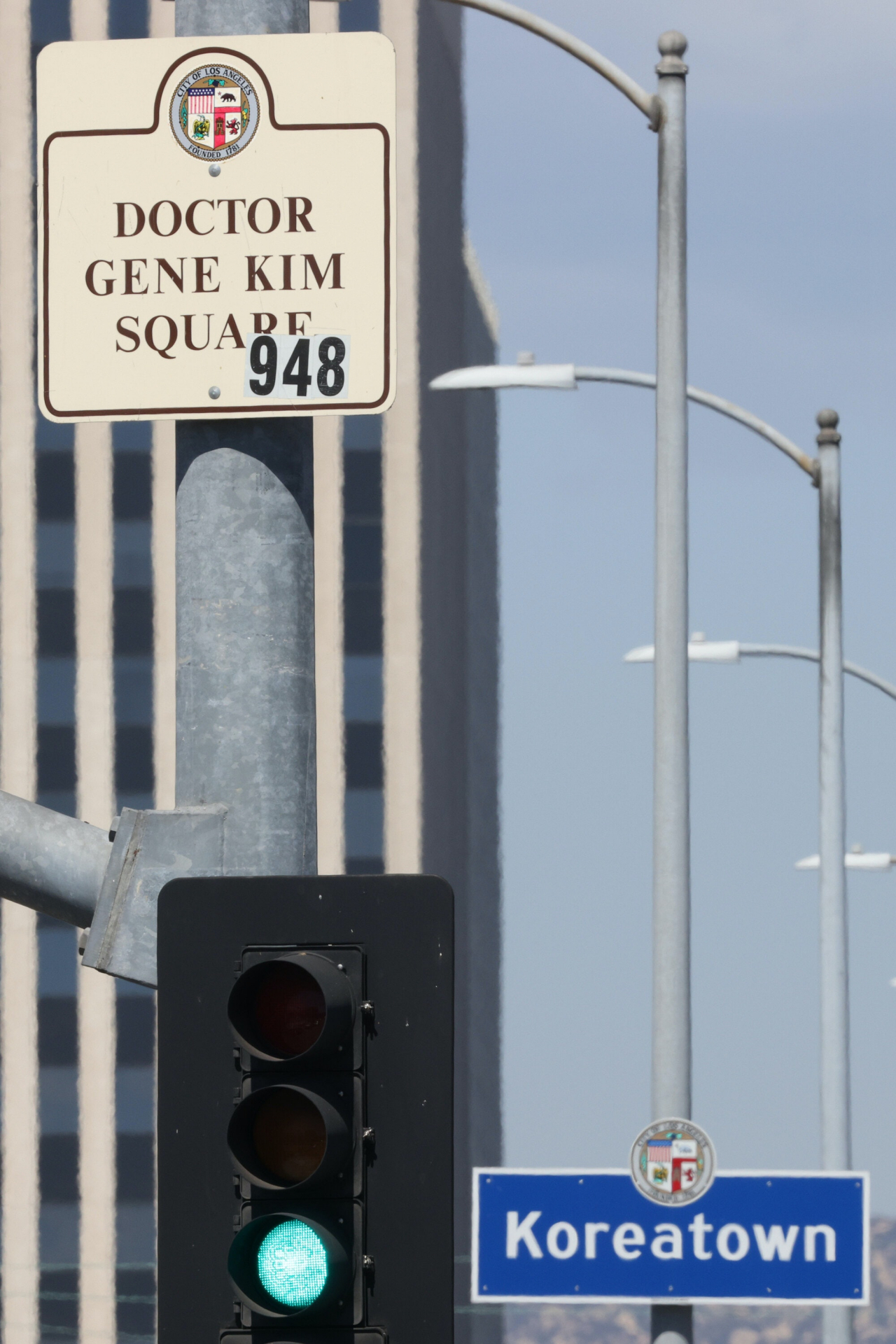
Koreans started arriving in serious numbers after the 1965 Immigration Act, and by 1974 there was enough gravity for the first LA Korean Festival Parade to march down Olympic Boulevard. The LAPD counted 30,000 spectators. Community founder Dr. Gene Kim, who bankrolled the neighborhood plan, then pushed the LA City Council toward the official Koreatown designation, which landed on Dec. 8, 1981, with signage going up in 1982. That is the timeline most travel guides flatten: a decade of parades and grassroots business build-out before the political recognition arrived.
Then came sa-i-gu, 4/29, the 1992 LA unrest. Insurance carriers pulled coverage from Korean American storeowners mid-crisis, and the image of shop owners on their own rooftops with rifles became the enduring symbol of a community the city had just legitimized and then left exposed. The point most Hallyu articles skip: today's polished K-town, with its glass-walled soondae joints and boutique noraebang lounges, exists because that generation refused to leave. The neighborhood you walk through now is not a first draft, it is a rebuild.
Roy Choi and the Kogi Blueprint Korean Restaurants Still Follow
Any honest conversation about Korean food in LA has to start with Roy Choi. In November 2008 he rolled out the Kogi truck, dressing marinated galbi on a warm tortilla with cilantro-onion salsa and gochujang, and by 2010 he was the first food truck chef ever named Best New Chef by Food and Wine. That was the moment Korean flavor stopped being a specialty-restaurant item and became LA's street vocabulary. Anyone selling bulgogi tacos, kimchi quesadillas, or Korean fried chicken sliders in 2026 is working from a template Choi drafted.
What made the Kogi moment specifically Korean American, not just Californian, was the built-in mixed audience. LA Koreatown is roughly half Latino by residency, and Kogi's flavor bet, gochujang meeting salsa verde, was aimed at that lived reality, not at a food critic's fusion fantasy. That is the appeal point most fusion projects miss: real Korean American food already grew up next to a taco truck. Choi did not invent the pairing so much as put it on wheels and give it a Twitter feed. Today the ecosystem stretches all the way up to Baroo, the Downtown LA tasting-menu restaurant that placed No. 3 on the Los Angeles Times' 101 Best Restaurants list, serving jokpyeon and 들기름 (deulgireum) perilla-oil noodles at $125 per guest to a mostly non-Korean dining room. Comfort-food anchors like BCD Tofu House, the Koreatown soondubu institution founded in 1996 and now spanning 11-plus branches, still pack the room at 5 p.m. on a Super Bowl Sunday. Both extremes exist because the base was set on a truck.
SM Entertainment Square: When K-pop Went On the City Map

The moment K-pop's Korean American infrastructure went from informal to on the city map was Oct. 28, 2020, when the LA City Council designated the Sixth Street and Oxford Avenue intersection as SM Entertainment Square. It is the first time a Korean entertainment company name has been written into a symbolic US street, and SM immediately announced plans to open an SMT LA lifestyle complex on the site. Industry insiders read that as a real signal: not the ceremonial sign itself, but the willingness of a Big Four K-pop label to plant a permanent physical footprint inside K-town rather than in Beverly Hills or DTLA proper.
The subtext is that SM, and by extension the entire Big Four (SM, JYP, YG, HYBE), sees LA Koreatown as the American endpoint for the fandom-to-lifestyle pipeline. Korean diaspora fans were the earliest US 팬덤 for these labels, and locating the flagship experiences where those fans actually live, rather than a mile east in a tourist-heavy zone, is the correct read of where money and attention travel together.
KCON LA: How CJ ENM Invented the K-pop Convention Format Here
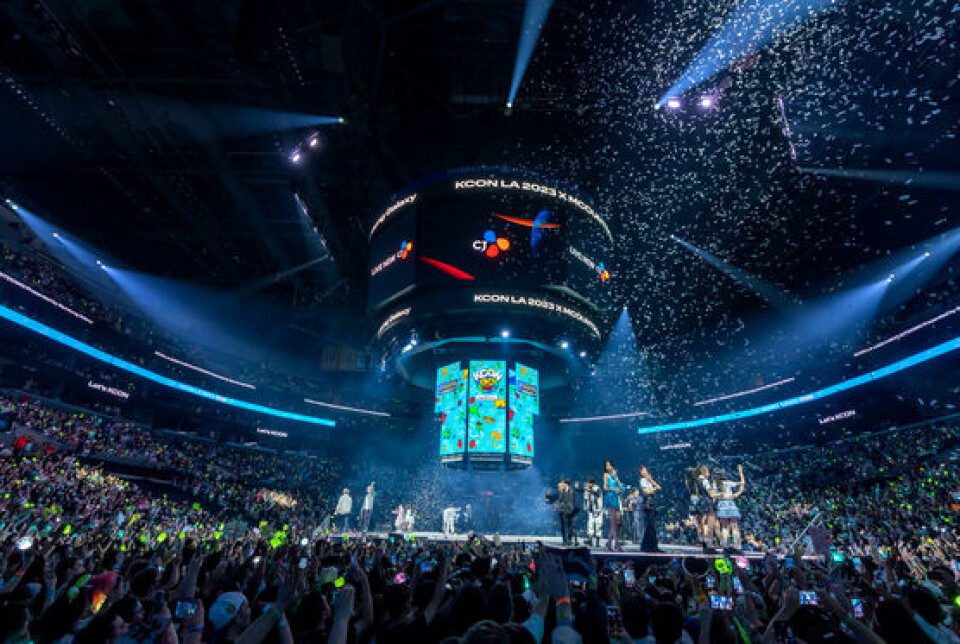
CJ ENM launched KCON in Irvine, California in 2012, and it is worth pausing on that origin, because KCON, 케이팝 콘, invented the K-pop convention format globally. The MAMA Awards were already the industry's night-of-nights inside Korea, but KCON was the first serious attempt to sell K-pop to an American audience as a multi-day experience, not just a single-night concert. By the mid-2010s it had settled into the LA Convention Center and Crypto.com Arena (then Staples Center) footprint, and in 2024 it drew over 125,000 in-person attendees plus 5.8 million on digital simulcasts. KCON LA 2026, held Aug. 14 through 16 under the theme K-SOUL CITY, pulled roughly 142,000 people downtown behind headliners NCT 127, ZeroBaseOne, and Tomorrow X Together.
What makes KCON different from a Coachella or a typical festival is the deliberately fan-first structure: three days of paneled convention floor, artist meet-and-greets and hi-touch, K-food and K-beauty brand booths woven in with the concert, and the red carpet event. That layered format is why every attempt to launch a "Korean Coachella" has to eventually admit KCON already exists in downtown LA, just under different branding. The Korean government's Presidential Committee on Popular Culture Exchange floated "Fanomenon" in July 2026 as an official state-backed K-pop festival, but the on-the-ground template it will lean on was built by CJ ENM in this city over the past 14 years.
BTS at the Rose Bowl and SoFi: How LA Became a K-pop Stadium Capital

The reason LA specifically, and not New York, became K-pop's US stadium capital comes down to two runs. On May 4, 2019, BTS opened their Love Yourself: Speak Yourself tour at the Rose Bowl in Pasadena, playing to a two-night attendance of 113,040 that made it the Rose Bowl's highest-grossing concert engagement ever at $16.5 million. Then in November and December 2021, they returned with Permission to Dance on Stage at SoFi Stadium in Inglewood, becoming the first artist to sell out four consecutive nights at the venue and grossing $33.3 million on more than 214,000 tickets, the highest-grossing concert engagement in California history at that point.
Ask any tour promoter and they will tell you the same thing: after those numbers, every K-pop stadium routing in North America has been benchmarked against LA. TWICE, BLACKPINK, Stray Kids, and SEVENTEEN have all built their US legs around SoFi or Dodger Stadium anchor dates. It works because Los Angeles offers both the largest concentrated Korean American audience in the country and the wider diaspora and non-Korean Hallyu fan base sitting inside a two-hour drive radius. That is a booking math no other US city can currently match.
The Industry Layer Nobody Sees: HYBE America, Bibigo, and the LA Machine
The K-pop business you do not see when you walk through K-town is arguably more important than the one you do. HYBE America, headquartered in Los Angeles, is the vehicle that structured the $1.05 billion 2021 acquisition of Ithaca Holdings and the multi-year exclusive distribution deal with Universal Music Group that routes BTS, SEVENTEEN, and every other HYBE label artist's physical and digital releases through UMG's North American pipes. It also runs KATSEYE, the multinational girl group co-produced with Geffen Records that debuted in 2024 and hit 25.17 million monthly Spotify listeners by August 2025. That group's training pipeline, US-style vocal and choreography camp with Korean rigor layered on top, was assembled largely out of LA.
On the food side, Bibigo (CJ Foods America) locked in its cultural placement by becoming the Los Angeles Lakers' jersey patch sponsor in 2021, the sort of move that only makes sense if you think of K-food as a full lifestyle category, not a grocery aisle. That deal alone put the bibigo wordmark on every Lakers highlight reel worldwide, and CJ's leadership has been quietly running the same playbook across sports and celebrity endorsements from its Southern California operations. When you see Randall Park in a bibigo campaign, that is not a coincidence, it is the LA machine executing.
What This Means for a Daebak Reader Visiting LA
Walk Wilshire on a weekday and you will pass a Korean bakery, a jjimjilbang, a K-pop merch store, a plastic surgery clinic, and a soondubu house that has been open since 1996. That density is not an accident, and it will not be replicated in another American city anytime soon. If you want to feel what Hallyu means as lived infrastructure rather than a Netflix category, LA is where it has been running the longest and where its next decade is already being negotiated in office towers on Wilshire and Olympic.
Craving more Hallyu straight from Seoul while you plan your K-town trip? The Daebak Box ships hand-picked K-pop, K-drama, and Korean lifestyle finds to your door every month, so a piece of Korea lands at your place between LA visits.


