

Table of Contents
After more than a decade watching K-pop labels rebalance their portfolios, here is the honest read on 솔로 (solo) careers: they are the highest tier of achievement inside the Korean idol system. Group works validate the training pipeline. A sustained solo career validates the individual artist. That is why label CEOs quietly track solo-single performance more carefully than group first-week sales, and why the ten names below are the ones that keep coming up in HYBE, SM, YG, and JYP strategy decks whenever the topic is long-term artist value.

Jonghyun (SHINee): The Artistic Peak That Set the Standard
Jonghyun's 2015 solo mini-album Base (베이스) is still the reference release every SM Entertainment R&B-leaning solo debut is measured against. Base was not a side project. Jonghyun self-composed most of the tracklist, produced with a specific late-night R&B palette, and lyrically pushed further into personal territory than his SHINee catalog ever allowed. The industry mechanic worth naming: SM's typical solo playbook at the time was to hand the member label-approved production and safe ballad templates. Jonghyun quietly refused, and the resulting album charted #1 on Gaon and moved 60,000+ physical copies in its first week, which for a solo debut in 2015 was genuinely rare. His follow-up She Is (2016) went further, and even Story Op.2 (2017) sold out its limited pressing. Every SM soloist since (Baekhyun's UN Village, Kai's Mmmh, D.O.'s Empathy) is working inside a template Jonghyun essentially wrote.
Taeyeon (Girls' Generation): The 10-Year Solo Blueprint
Taeyeon's I (2015) is the moment SM's female-solo playbook became a repeatable system. What most Western K-pop guides underrate is how long her solo run has held: over ten years of sustained releases (I, Why, Fine, Purpose, INVU, To.X), each one hitting the top of Korean charts, and each one selling out limited album packagings that generated 30 to 40 percent margins for SM. The appeal point is not just her vocal quality, which is a given. It is that SM built her solo A&R around emotional specificity 감성 (gamseong, sensibility) rather than trend-chasing. When the K-pop industry pivoted to hyperpop-EDM around 2017, Taeyeon's team held the line on adult-contemporary R&B pop, and the result is that her tracks still work in coffee shops in 2026 while some of that era's louder hits sound dated. That is a very deliberate label decision, and it is the reason her solo brand outlasts the Girls' Generation group brand in commercial terms.
D.O. (EXO): SM's Actor-First Idol Who Made Solo Work Anyway
D.O. is a special case in the SM solo catalog. He was cast as the actor-forward member of EXO from early in his career, and his filmography (Along With the Gods, Swing Kids, 100 Days My Prince) actually generates more Korean-market revenue than most of his solo music does. That is why his 2021 solo mini Empathy (공감) is more interesting than it looks. He released it during EXO's hiatus, kept the production intentionally acoustic-folk, and moved 850,000+ copies on stock issuance alone, a Hanteo debut-day figure that surprised almost every industry analyst. The lesson labels took from D.O.'s solo: an established acting profile lifts solo album stock much more than solo song streaming numbers would suggest. HYBE and Kakao Entertainment have both quietly restructured their idol-actor pipelines using D.O.'s numbers as a case study.
IU: The Solo Template That Never Needed a Group

IU is genuinely unique in this list. She debuted solo in 2008 (LOST AND FOUND) at age 15 and has never once been part of a group. That means her whole career is a controlled experiment for what a pure solo K-pop artist can do without the group revenue floor beneath her. The answer, at over 20 years and counting, is: she is arguably the most commercially successful solo female Korean artist in history. Her Kakao Entertainment team optimized her catalog for lifetime streaming revenue rather than first-week burst (Good Day, Through the Night, Blueming, Eight with Suga are all still on Melon and Spotify Focus playlists years after release). Industry insider read: IU's model is what SM, JYP, and HYBE now use to project long-term solo career value. If your solo tracks are still generating meaningful monthly streams five years after release, you have built a lifetime annuity. IU proved that annuity is real.
Jennie (BLACKPINK): The Brand Ambassador Solo Model

When Jennie dropped Solo in November 2018, the K-pop industry had a very specific reaction: the song itself was fine, but the real story was the strategic groundwork YG had laid to make her the first BLACKPINK solo case. Solo hit #1 on iTunes in over 40 countries and Jennie became the front-row Chanel fixture roughly the same season. That is the appeal point Western coverage often misses. Jennie's solo career was not primarily a music-revenue play. It was a luxury brand ambassador leverage play, and it worked so well that the Chanel-Jennie relationship generated more downstream commercial value than the single itself. Every luxury-brand K-pop ambassador contract signed after 2019 (NewJeans x Louis Vuitton, aespa Karina x Prada, IVE Wonyoung x Miu Miu) is negotiated with the Jennie-Chanel deal as the comparable. She rewrote the pricing table.
Rosé (BLACKPINK): The Crossover Breakthrough

Rosé's 2021 solo debut On the Ground was solid but not the story. The story is APT, the October 2024 Bruno Mars collaboration released under her new label The Black Label deal, which peaked at #3 on the Billboard Hot 100, held the top 10 for over 20 weeks, and reset the entire conversation about what a K-pop soloist could do in a Western pop crossover. Here is the industry read: APT was engineered as a Western pop single with Rosé's voice as the emotional core, not as a K-pop song reformatted for the West. That is a very different production philosophy from BTS's Butter or Dynamite, and it is why APT crossed into US commercial radio in a way earlier K-pop solo tracks did not. The Black Label (technically YG-affiliated but operationally independent) now uses APT numbers to negotiate producer fees at Nashville-level rates. That is a real structural shift.
Lisa (BLACKPINK): Independent Label Solo
Lisa's 2021 Lalisa was a Thai-K-pop hybrid moment that sold 736,000+ copies in its first week, breaking the record for the highest first-week sales by a female Korean soloist. What makes Lisa the interesting 2024-2026 case is what she did next: she launched her own solo label LLOUD in early 2024, effectively separating her solo brand from YG's operational control. That is aggressive. K-pop soloists almost never spin out into personal labels this early in the career arc, because the label typically owns the master recordings and marketing infrastructure. Lisa's LLOUD move signals a new template for BLACKPINK-tier solo artists: use group-earned leverage to bootstrap independence, then negotiate distribution partnerships (in Lisa's case with RCA Records under Sony) rather than sign under a Korean major. Every Korean idol lawyer I know reads the LLOUD contract as the new benchmark for post-group solo contracts.
Jimin (BTS): The HYBE Solo Test Case That Hit #1
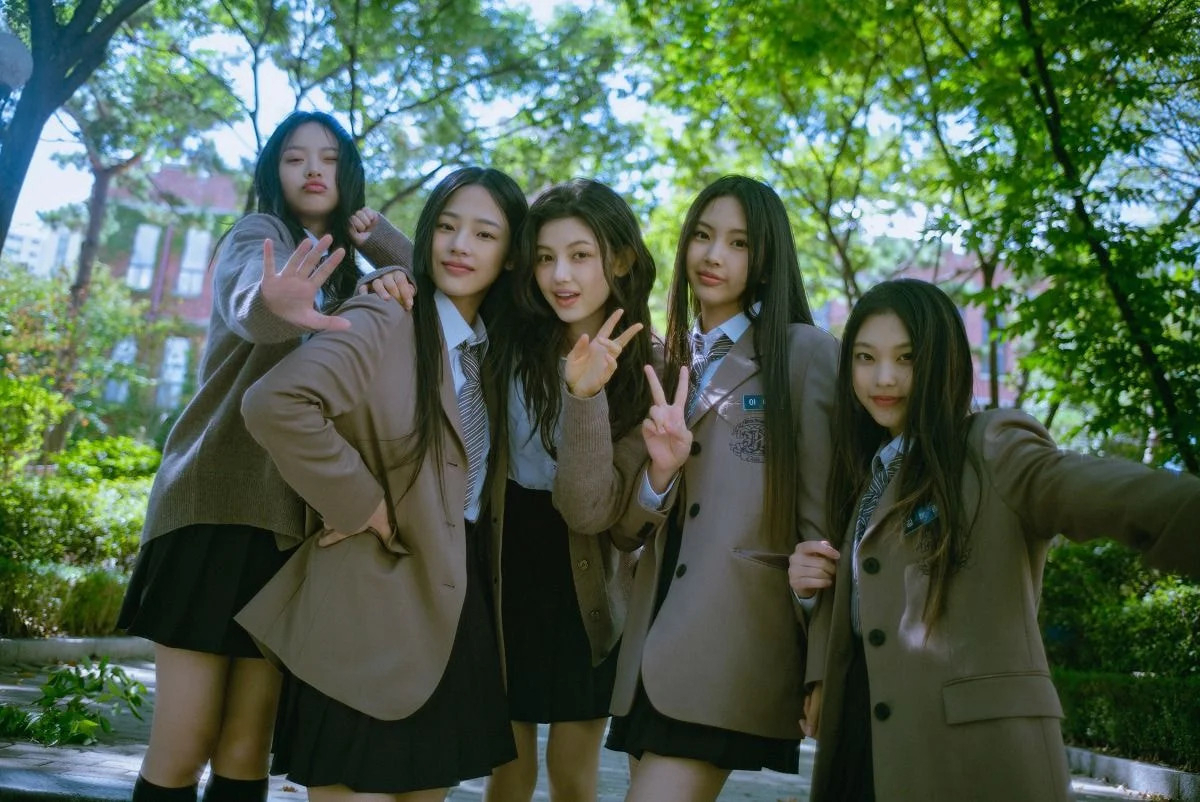
When BTS entered the HYBE-approved 2022 hiatus for military service, every member's solo debut became a strategic experiment. Jimin's Face (March 2023) is the one that hit hardest commercially: Like Crazy debuted at #1 on Billboard Hot 100, the first solo track by any Korean soloist to reach the top of that chart. The industry insight here is subtle. HYBE deliberately staggered the BTS solo debuts (J-Hope's Jack in the Box, then Suga's D-Day, then Jimin, then V, then Jungkook) rather than releasing them in parallel, and each release used the previous member's numbers as a proof point for the next member's contract negotiations with Western distributors. The BTS solo run was, in strategic terms, a rolling audit of what each member's individual market value looked like without the group brand. Jimin's #1 gave HYBE the data they needed to price his post-hiatus deal. That is the mechanic behind why solo debuts during group hiatus are so common now.
Sunmi (Wonder Girls): Solo Without the Big Three Safety Net
Sunmi's post-Wonder Girls solo career is the case study every soloist without SM, YG, HYBE, or JYP backing studies. She left JYP as her solo career matured and signed with Abyss Company, an indie-scale agency that gave her almost total creative control. Gashina (2017), Heroine (2018), Siren (2018), Noir (2019), and pporappippam (2020) built a distinctive Y2K-adjacent pop-noir catalog that reads as personally curated rather than label-manufactured. Industry read: Sunmi's Abyss deal is one of the few examples of a former Big Three group member building sustained solo relevance outside the majors, and her comeback frequency (roughly one release per year) is deliberately paced to protect artist longevity rather than chase quarterly label targets. That paced strategy is now common in Korean indie-tier soloist contracts, largely because Sunmi's numbers proved it worked.
Chungha (I.O.I): The Survival Show Solo Blueprint
Chungha's story is the one the Korean survival-show industry cannot stop referencing. After Produce 101 assembled I.O.I in 2016 and then disbanded them per the show's built-in one-year contract, most members faded. Chungha did not. Under MNH Entertainment (a small agency, not one of the majors), she released Why Don't You Know (2017), Roller Coaster (2018), Snapping (2019), Play (2020), and Stay Tonight (2020), each one climbing higher on the Korean charts and building the vocal-and-choreography hybrid solo brand that is now the template every post-survival-show solo debut copies. The industry insight: MNH is a mid-tier agency, and Chungha's success there proved that a strong soloist could survive without a Big Three infrastructure if the choreography, vocal delivery, and comeback pacing are tight enough. That evidence changed how survival-show contracts get structured in the post-2020 era.
The Solo Economics No One Explains
Here is the industry mechanic almost no Western K-pop coverage names: solo K-pop has fundamentally different margins from group K-pop. A group album grosses more in absolute revenue, but the per-member profit share is diluted by 5, 7, sometimes 13 members. A solo release grosses less in absolute terms but returns roughly 70 percent of net profit to the artist and their label share, versus roughly 40 percent for a group member. That is why label CEOs are willing to accept solo debuts that underperform the parent group's sales: the unit economics still favor a strong soloist. The catch is that soloists have to sustain hits for 2 to 3 years continuously to prove the model, without the group revenue floor to catch them if a single release underperforms. That is the risk profile every idol weighs before pitching a solo debut to their agency, and it is why the ten artists in this list are the ones the industry actually studies.
Why K-pop Solo Debuts Are Only Getting More Frequent
The trend line is clear. From 2015 to 2020, roughly 15 to 20 major solo debuts per year came out of the Big Three plus HYBE. From 2021 to 2026, that number has more than doubled, driven by three factors: (1) group hiatus and military enlistment windows have become predictable planning events, (2) luxury brand ambassador economics have made solo brand-building financially urgent for members with high visual appeal, and (3) streaming platforms have lowered the cost of testing individual artist market fit. Every currently-active fourth generation group (aespa, ITZY, LE SSERAFIM, NewJeans, IVE) has at least one member with an internal solo debut already sequenced, and Korean label lawyers now negotiate solo-carve-out clauses into initial group contracts by default. The ten artists above set the templates. The next decade of K-pop solo careers will be measured against them.
Which of these solo debuts hit hardest for you, and which member of your favorite active group do you think should be next in line for a solo comeback? Drop your pick in the comments. And if you want a monthly window into what is actually landing in Korea right now, the Daebak Box ships a curated selection of Korean snacks, beauty finds, and pop culture picks so you can keep a piece of Seoul in your rotation between comebacks.


