


Table of Contents
Walk into any Seoul 편의점 (convenience store) and you'll find a wall of 200+ gummy SKUs. That's not a design choice, it's the Korean confectionery industry's fastest-growing subcategory, powered by a duopoly-plus that has been iterating fruit gummies for three decades. What follows is the insider read on how Korean gummies got here.
The Korean Gummy Duopoly: Orion, Lotte, Haitai
Three companies effectively write the rules. Orion runs the fruit-shape gummy playbook (마이구미, 왕꿈틀이). Lotte Wellfood pushes the value-tier chewy category and dominates the shared shelf between candy and gum. Haitai Confectionery, the smallest of the three, plays the specialty fruit-jelly card. Together they carve up roughly 70 percent of the ₩500 billion domestic gummy market, and none of them are willing to concede a single SKU slot to the other two.
The dynamic matters because it explains why Korean convenience stores stock so many variants. Every quarter the big three test new flavors at CU and GS25 first, watch scan data, and either promote survivors nationally or kill them within eight weeks. That is a much faster kill-and-refresh cycle than the U.S. or European gummy market runs on.
마이구미: The Kid Original Since 1992
Orion launched 마이구미 (literally "My Gummy") in February 1992 and it hit ₩25 billion in first-year sales, an unheard-of number for a debut confection at the time. The grape-shaped format was Korea's first gelatin-based fruit gummy, and it locked in the pediatric snack category before Lotte could respond. The product still ships in the same purple pouch with roughly the same flavor architecture, though Orion has quietly bumped fruit-juice content from 5.1 percent to about 60 percent equivalent since the 2020 reformulation.

왕꿈틀이: The Stretch-Format Sibling
Two years after 마이구미 launched, Orion added 왕꿈틀이, a stretch-format worm gummy engineered to be pulled long before you bite it. That single design choice, borrowed loosely from Trolli but tuned for a chewier Korean palate, created what became the country's second-most iconic gummy line. Kids still compete to see who can stretch a 대왕꿈틀이 (the giant one, only one per bag) the longest before it snaps.

홍초 젤리: When Vinegar Became Candy
In 2015 CJ CheilJedang did something the industry thought was daft, they turned 홍초 (hong-cho, the fruit-vinegar health drink that had already been a mass-market beverage since 2005) into a gummy. It sounds absurd on paper. On the shelf it worked. The tart-sweet vinegar note reads as "grown-up" fruit flavor to Korean consumers, and the health-halo of vinegar gave parents cover to buy it for older kids and teens.
홍초 젤리 was the first serious signal that Korean gummy R&D was moving past the kid segment. Everything that followed, including the entire 명물 젤리 (premium chewy) category, traces back to that beverage-to-gummy translation moment.
편의점 Walls: 200+ SKUs and Counting
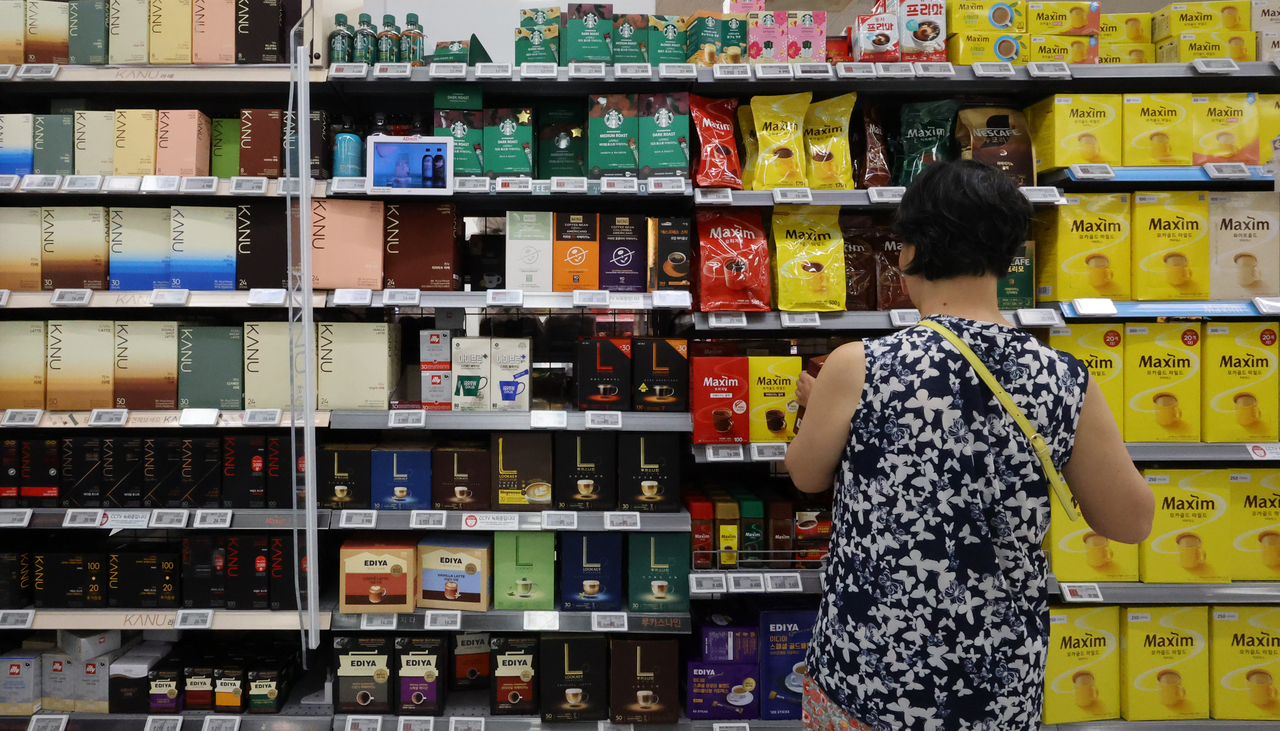
Go to a mid-sized CU or GS25 in Seoul and count the gummy pouches on the wall. You will clear 200 easily. That density is not accidental. Convenience stores are the primary channel for Korean confectionery innovation because they will take small first orders and rotate stock weekly. Big grocery chains want proven sellers only.
The result is a channel that behaves like a live A/B testing lab for gummy flavors. If a limited-run 리치 알맹이 or 패션후르츠 알맹이 hits, it goes national. If not, it disappears in weeks. That feedback loop is why Korean gummy shelves feel so alive compared with the same category in Tokyo or Los Angeles.
The TikTok Effect: Korean Gummies Go Global
Post-2020, Korean gummies caught the ASMR wave. Search "Korean gummy ASMR" on TikTok and you will surface millions of videos, most of them centered on the same three product families: 마이구미 알맹이, 왕꿈틀이 대왕, and the various 명물 젤리 premium lines. Costco and Trader Joe's noticed. Both now stock rotating Korean gummy SKUs in North America, and Korean confectionery exports to the U.S. cleared roughly ₩50 billion last year, up about threefold since 2020.

Kids vs. Adults: Where 명물 젤리 Fits
The category split is now cleanly bimodal. 마이구미 owns the under-10 shelf. 명물 젤리, the premium-chewy tier priced ₩2,000 to ₩3,500 per pouch, owns the 10-to-20-something TikTok segment. In between sits the private-label CU and GS25 gummy line, which is where most late-teen impulse buying actually happens.
Watch what a Korean 20-something puts in her 편의점 basket and you will often see one 명물 젤리 pouch plus one iced Americano. That combo is now as coded-Korean as tteokbokki after school was a decade ago.
Why Korean Gummies Taste Different
Korean gummies are noticeably chewier than European or American equivalents, and the fruit notes are more realistic. Two reasons. First, the industry took its texture cues from Japanese confectionery rather than German (Haribo runs a softer, more gelatinous bite). Second, Korean R&D leans on concentrated real-fruit juice at higher percentages than most global peers, which is why 마이구미's 60 percent fruit-juice-equivalent number matters commercially.

Sugar levels also run lower. A standard 46g pouch of 마이구미 delivers about 28g of sugar, roughly 20 percent less than a comparable Haribo pouch of similar size. That gap is not accidental. Korean confectionery regulation has been tightening added-sugar disclosure for a decade, and the big three have quietly reformulated toward the ceiling rather than fought it.
Explore Korean Snacks with Daebak
Love Korean food? Get authentic Korean snacks and ramen delivered straight to your door with the SnackFever Box by Daebak.


