


Table of Contents
I have been in the Korean travel and content space for over a decade, and Gwangmyeong Cave (광명동굴) is the one Seoul-adjacent attraction I keep pushing to skeptics who think abandoned mines can never be interesting. A 30-minute train ride from Seoul Station drops you in Gwangmyeong-si, Gyeonggi-do, and inside a 275-meter-deep former gold mine that the city government spent roughly ₩30 billion converting into a theme park. It hits over a million paying visitors a year now. That is not tourism-brochure filler; that is real ROI on a piece of infrastructure everyone had written off as dead weight.

From forced-labor mine to cultural theme park: the WHY behind Gwangmyeong Cave
The origin story is uglier than the LED-drenched interior lets on. The site opened in 1912 as Siheung Mine during Japanese colonial rule, and Korean laborers hauled out gold, silver, copper, and zinc under the kind of conditions that produce national trauma, not tourism. When peak production hit, roughly 250 tons of ore came out per day with 500 miners on rotation. The mine limped along after liberation, then closed in 1972 once the deposits played out and flooding made further work uneconomic. For nearly four decades after that, the tunnels sat empty. Someone eventually rented them out as cold storage for salted shrimp (새우젓) headed to Seoul's kimchi-making households. That is the level of dead asset we are talking about.
Here is the part travel bloggers usually skip. In 2011, the Gwangmyeong city government bought the private mine and started sinking real capital into converting it, roughly ₩30 billion across 2011 to 2015. The bet was that Seoul metropolitan residents would pay to walk through an air-conditioned (naturally, thanks to the cave's stable 12°C year-round temperature) piece of colonial-industrial history if you dressed it up with LED art and a Weta Workshop dragon. The bet paid off. Annual revenue clears ₩60 billion by most published city estimates, and the cave now anchors a category most Korean local governments have started copying: legacy mining infrastructure reworked as immersive art space. That is a smart move, not a lucky one.

Rainbow Cave and Light Space: why this became Korea's Instagram gold
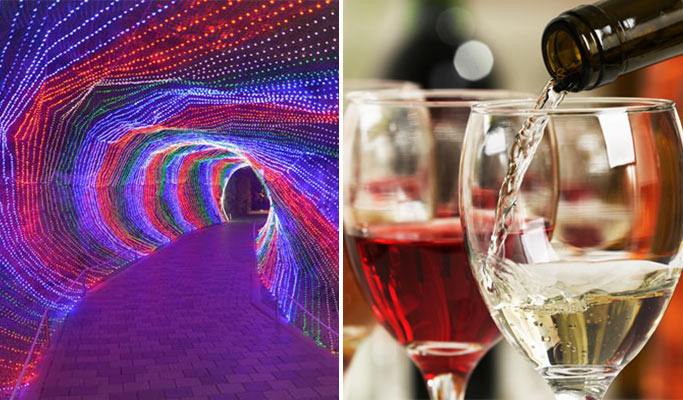
The section that made Gwangmyeong Cave go viral is Light Space, a tunnel wall-papered in thousands of tiny multicolored LED bulbs that photograph as a rainbow river when you frame the shot right. Add the Rainbow Waterfall, the Light Garden pond with LED sea creatures, and the media facade projected onto the cave's dome (a 10-minute CGI show that runs every 20 minutes), and you have a location that lands on every "인생샷" (once-in-a-lifetime photo) roundup Korean travel Instagram publishes. Photo tourism is a specific product, and Gwangmyeong Cave engineered it deliberately.
The appeal is not that Koreans have never seen LEDs. The appeal is the contrast: raw, jagged, damp rock walls that clearly used to be mined, with hyper-saturated color washing over them. That texture-versus-neon collision is what gives the photos their pop, and it is why the same setup at, say, a shopping-mall art installation would feel flat. Trazy's Gwangmyeong tour packages consistently sell through on this exact angle, pairing the cave with wine tasting for what the industry calls a "content plus consumption" itinerary. The photo is the hook, the wine is the retention play.

Golden Road, Dark Ride, and the Weta Workshop dragon
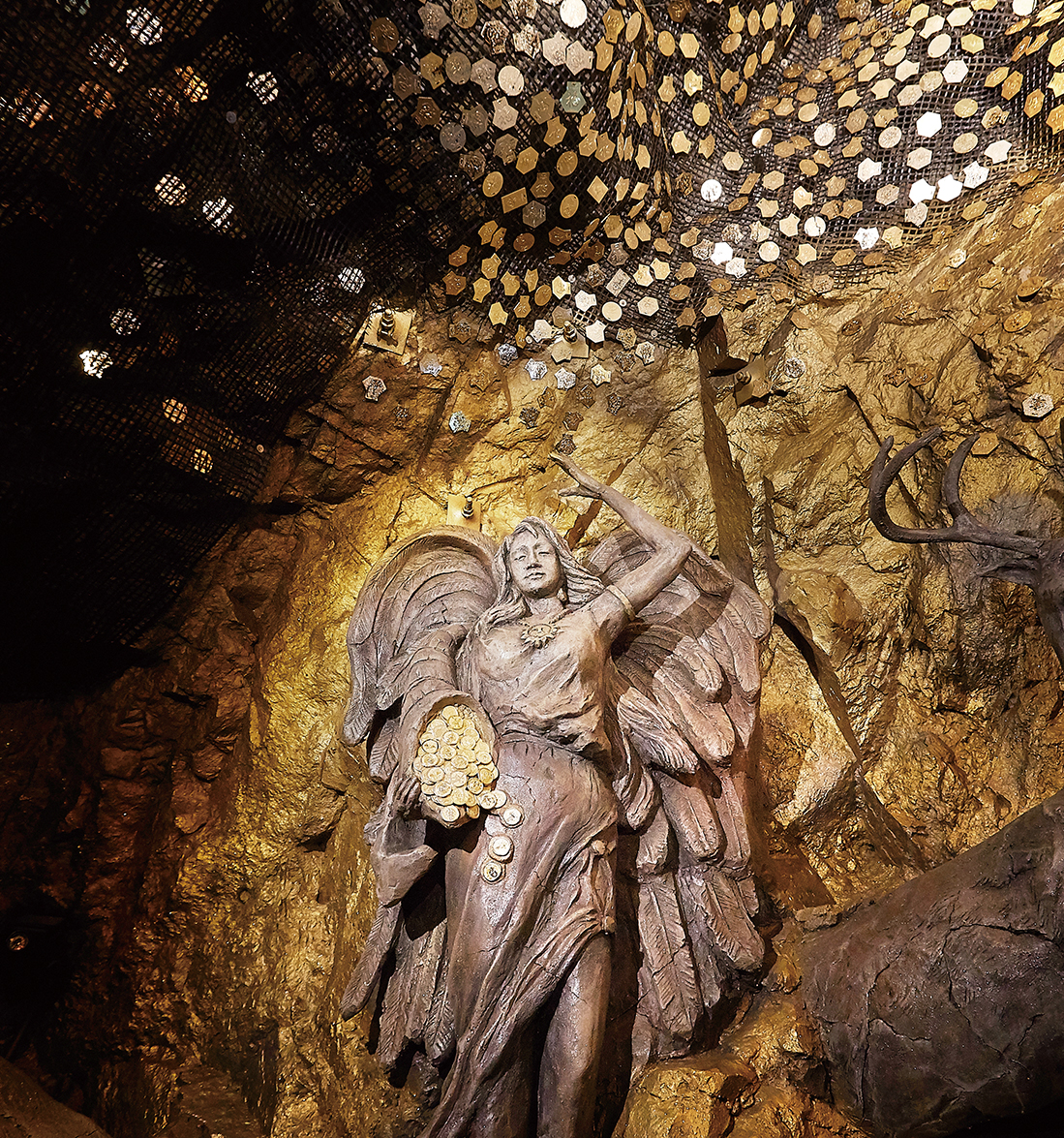
Deeper in, the cave leans into its mining roots with Golden Road, a corridor themed around gold with the Golden Waterfall (a 3.6-meter artificial cascade), the Golden Palace, and Aisha (아이샤), the cave's mascot goddess of abundance holding a golden hammer visitors touch for luck. It reads a little kitsch on paper. In person it works, because the theming is committed and the storytelling connects to the actual gold-mining history rather than fighting it. That is a distinction Korean theme-park designers care a lot about lately, and Gwangmyeong Cave was ahead of that curve.
The Dark Ride is the newer money move. You board a small mining cart for a 400-meter track through pitch-black tunnels with projection-mapped effects along the walls. It is a straightforward budget adaptation of the "boat ride through animatronic scenes" formula Disney's Pirates of the Caribbean codified, sized down for a regional Korean attraction. What sells it is the setting: a real former mine cart route, not a fabricated dark-ride building. That authenticity is what a Universal or Everland cannot easily replicate.
The single most Instagrammed sculpture is the 41-meter, 800-kilogram dragon dubbed "Lord of the Cave," built by New Zealand's Weta Workshop, the same shop behind The Lord of the Rings and King Kong. Weta shipped 30 pieces to Korea for on-site assembly. A life-size Gollum sculpture crouches nearby, and Weta also loaned a limited-edition figure with Gandalf's actual film-prop staff. Getting Weta on board was a real coup for a mid-sized Korean city; it signaled that Gwangmyeong Cave was competing on production value, not just novelty. That deal is why the cave lands in international Lord of the Rings fan itineraries at all.
Wine Cave: the underground move nobody saw coming
The Wine Cave is the smartest programming decision the operators made, and it is the section serious travelers keep talking about. It runs 194 meters, stocks around 170 to 200 Korean wines from roughly 49 domestic wineries, and is officially the largest underground cave wine collection in Korea. The cave holds a steady 12°C to 13°C without any refrigeration, which is a wine cellar spec you would otherwise pay industrial HVAC money to build. Free tasting sits at the entrance on weekends.
Here is the industry insight most visitors miss. Korean wine is a struggling category. Foreign wine dominates distribution, retail shelf space in Seoul is expensive, and most Korean wineries are too small to run their own tasting rooms. Gwangmyeong city recognized that and turned the Wine Cave into a de facto national showcase for domestic producers, pooling wines from all eight provinces into one destination. Since 2015, the annual Korea Wine Festival has been hosted here. That is not a gift shop; that is state-adjacent infrastructure for a whole product category, dressed up as a tourist attraction. Korean wineries pay for the shelf visibility, tourists pay for the tasting, everyone wins. Very Korean solution.
Why Gwangmyeong Cave keeps working as a case study
Cave tourism is a niche segment in Korea. Danyang Gosu Cave (단양 고수동굴) and Ganghwa's historical cave sites work a similar audience, but they lean natural-formation and history-museum, not immersive light art. Gwangmyeong Cave sits in a different bracket because it is close to Seoul (14 kilometers southwest of the city, 15 minutes on the KTX from Seoul Station to Gwangmyeong Station, then a 10-minute taxi or shuttle), it is indoor and climate-stable, and it programs new pop-up exhibits regularly (Barbie exhibitions, dinosaur experiences, Lascaux replicas). That mix keeps Korean repeat visitors coming back, which is the hardest KPI for any regional attraction to hit.
If you are visiting Korea and want a Seoul day trip that is not another palace or Hongdae shopping loop, this is the one I recommend. Bring a jacket (12°C reads chilly if you were expecting Seoul summer), block off two to three hours minimum, and do not skip the Wine Cave even if you were planning to. It is the section that reveals what the operators are actually trying to do.
Plan a Korea trip? Bring Korea to your door first
Gwangmyeong Cave rewards travelers who go in with a little cultural context. Our monthly Daebak Box ships curated Korean lifestyle, snacks, and culture picks to your door so you can build that context before you ever board a flight. Real products, sourced from Korea, chosen by people who work in the industry.


