


Table of Contents
Few dining experiences in the world match the communal energy of Korean BBQ. A table at the center, a glowing grill built into it, plates of marinated meat arriving in sequence, and a full cast of banchan dishes surrounding everything. You cook, you eat, you share, you pour drinks for each other, and you stay for hours. Korean BBQ is not just a meal. It is an event.
Whether you are a first-timer walking into a KBBQ restaurant or someone who has been grilling samgyeopsal for years and wants to understand the culture more deeply, this guide covers everything you need to know.
The Origins of Korean BBQ
Grilling meat over fire has ancient roots in Korean culture, but the modern Korean BBQ tradition has more specific origins. "Bulgogi" (literally "fire meat") has been documented in Korean cuisine since at least the Goguryeo era (37 BCE to 668 CE), where a dish called "maekjeok" was prepared by threading seasoned meat onto skewers over fire.
The galbi (short rib) grilling tradition grew alongside the expansion of beef consumption during the Joseon Dynasty, where beef was a luxury associated with celebrations and ancestral rites. The shift toward in-table grilling came more broadly in the 20th century, particularly after the Korean War, as affordable cuts of pork like samgyeopsal (three-layer pork belly) became widely available and tabletop grills became a fixture in dedicated KBBQ restaurants across the country.
Today, Korean BBQ restaurants range from refined spots serving premium wagyu-grade beef to no-frills neighborhood joints where the charcoal smoke is thick and the soju flows freely. The category spans everything from upscale omakase-style experiences to 24-hour chains open after midnight for late-night workers.
The Essential KBBQ Meats
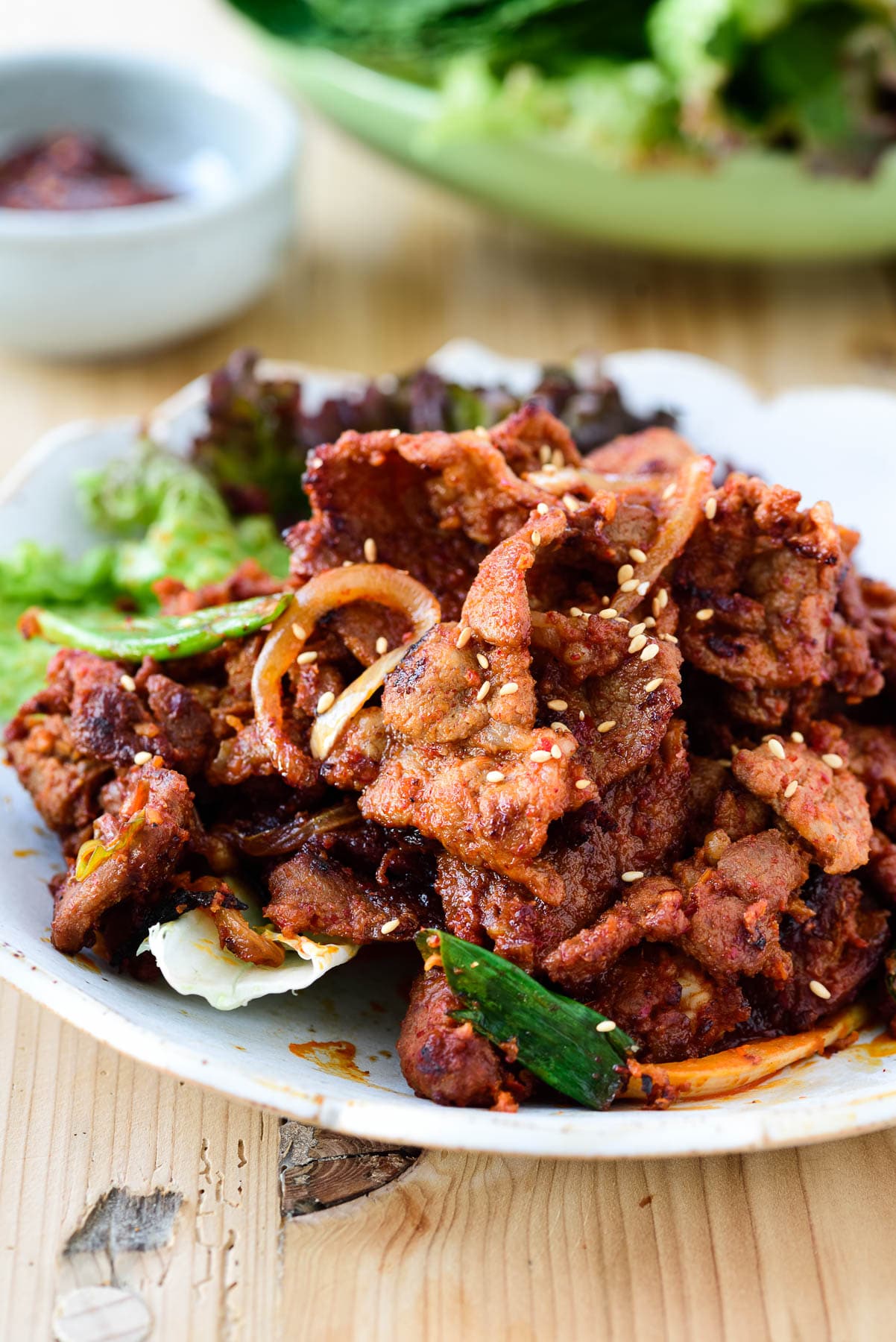
Understanding the meat options is the first step to a great KBBQ experience. Samgyeopsal is the most popular choice for casual dining. These thick slices of pork belly are grilled without marination, their natural fat rendering slowly over the grill and crisping the edges to a golden crunch. The simplicity is the point: you taste pure pork, enhanced only by what you dip or wrap it in afterward.
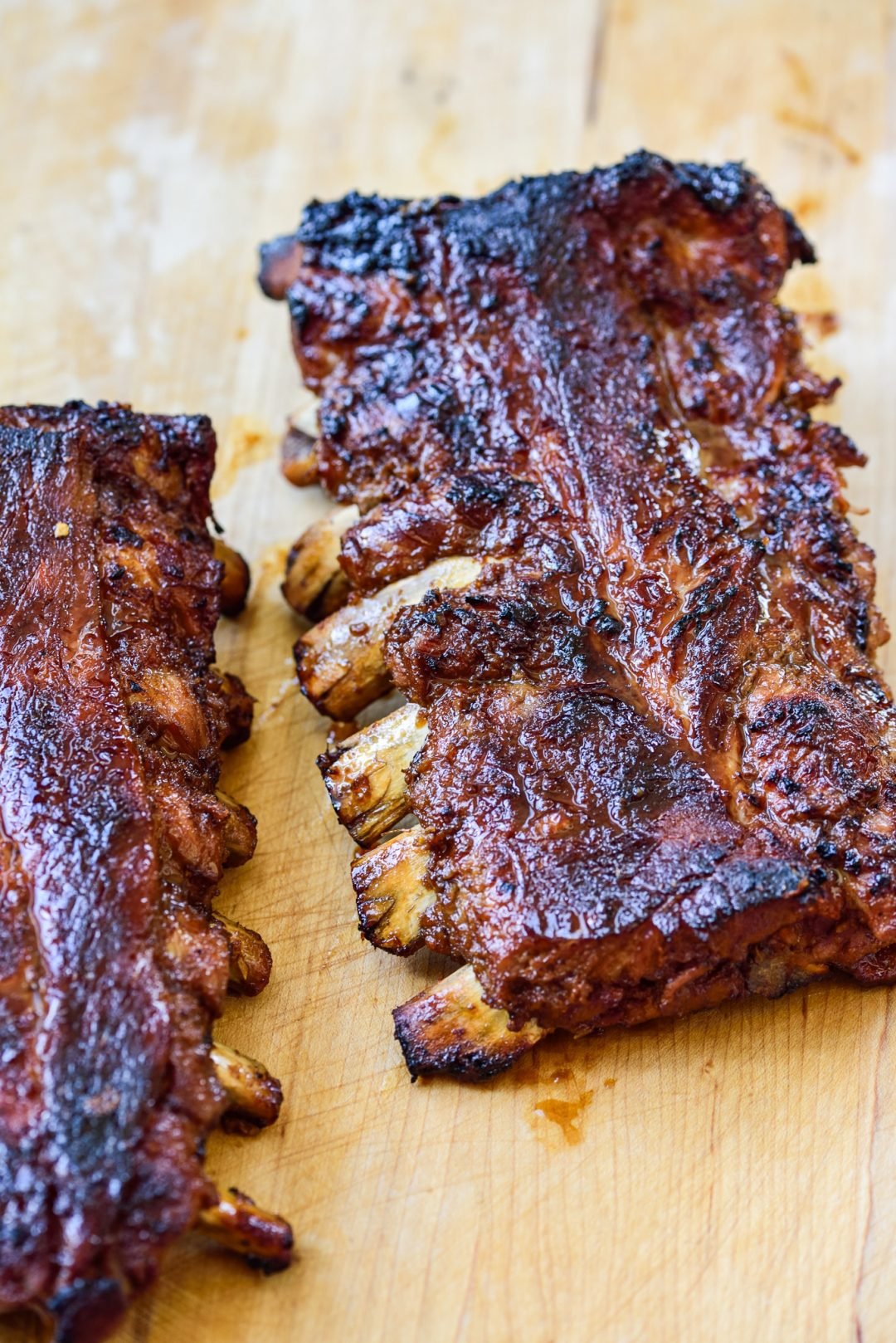
Galbi (short ribs) are the premium option, and they come in two main styles. "Gui galbi" uses bone-in flanken-cut ribs marinated in a sweet soy and pear or apple sauce, then grilled until the sugars caramelize and the meat falls from the bone. "LA galbi" (a Korean-American variation developed in Los Angeles by Korean immigrants) uses the same cut but sliced thinner across the bones, allowing for faster grilling and a higher char-to-meat ratio.
Bulgogi, the original Korean BBQ meat, is thinly sliced beef (typically sirloin or ribeye) soaked overnight in a marinade of soy sauce, sugar, Asian pear, garlic, ginger, and sesame oil. Grilled quickly at high heat, it caramelizes fast and delivers layers of sweet, savory, and smoky flavor in every bite. It is also commonly cooked in a pan with vegetables, making it one of the most versatile meats in the Korean kitchen.
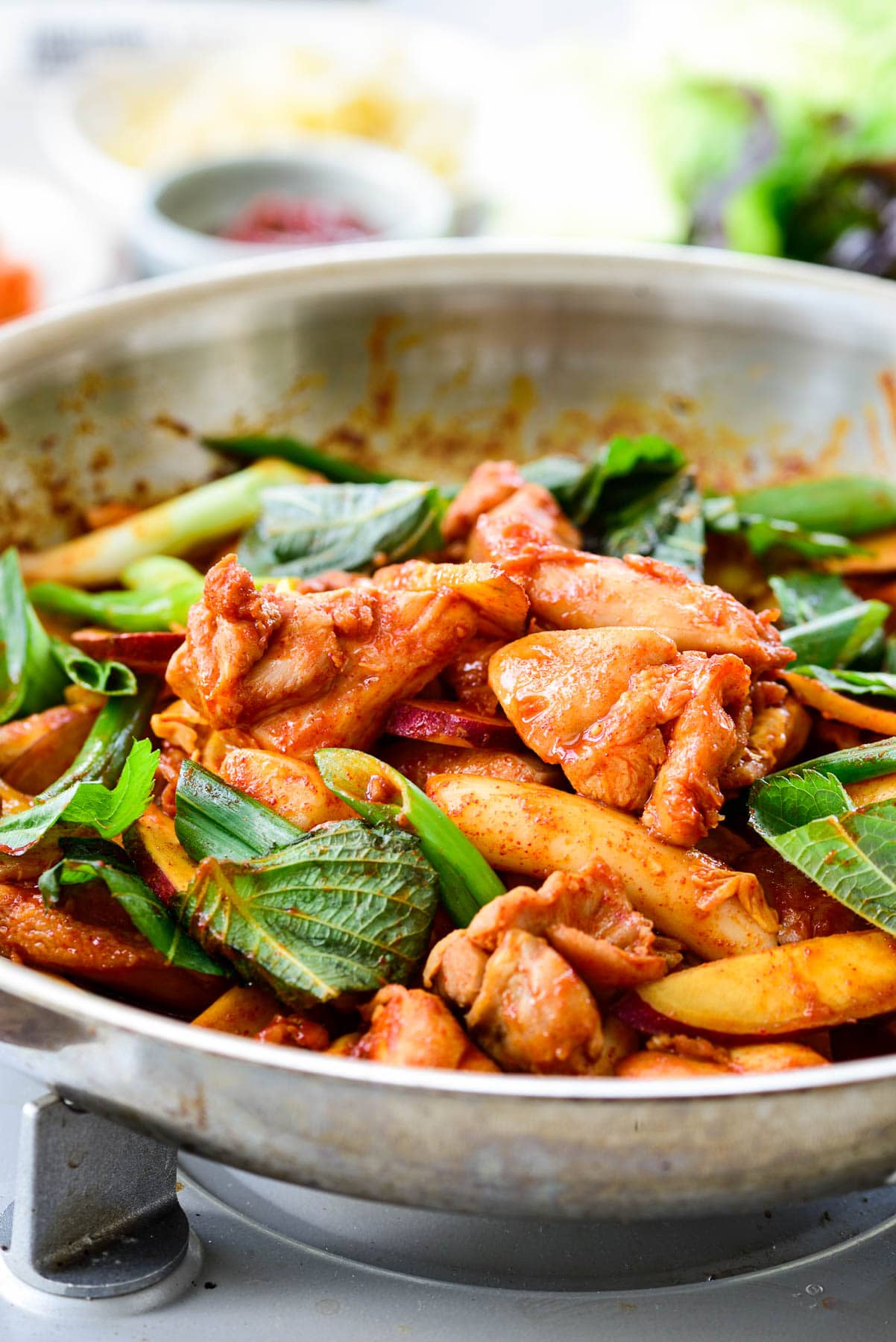
Other popular options include chadolbaegi (very thin, un-marinated beef brisket that cooks in seconds), dwaeji bulgogi (spicy marinated pork), and dak galbi (spicy marinated chicken). Most KBBQ restaurants offer a sampler set for groups wanting to try a range.
The Banchan: Side Dishes That Complete the Table
A KBBQ meal without banchan is incomplete. These small side dishes arrive automatically with the meal and are refilled for free throughout the evening. Their role is to provide contrast, palate cleansing, and textural balance against the richness of grilled meat.
Kimchi is the anchor, its funky fermented tang cutting through fat beautifully. Kongnamul (seasoned soybean sprouts), spinach namul, pickled radish, and doenjang jjigae (soybean paste stew) typically round out a standard banchan spread. Gyeran jjim (steamed egg custard) is a beloved addition at many restaurants, its silky, savory softness providing a gentle counterpoint to everything else on the table.
Sauces and Dips
The sauces at a KBBQ table are deceptively important. Ssamjang is the foundational dip: a thick, deeply savory paste made from doenjang (fermented soybean paste) and gochujang (red chili paste), mixed with sesame oil, garlic, and green onion. A smear of ssamjang on a lettuce wrap transforms a slice of plain pork belly into something extraordinary.
Sesame oil with salt and pepper is the classic dip for chadolbaegi and other un-marinated beef cuts. The fat-soluble flavor compounds in the sesame oil cling to the meat and amplify its richness while the salt brings out the savory depth. Some restaurants offer a dipping sauce of "gireumjang" (sesame oil mixed with coarse sea salt and black pepper), which is considered the most traditional pairing for samgyeopsal.
Other common sauces include a soy-vinegar dipping sauce for more delicate cuts, and a sweet radish pickle brine that cleanses the palate between bites.
Ssam: The Art of the Lettuce Wrap
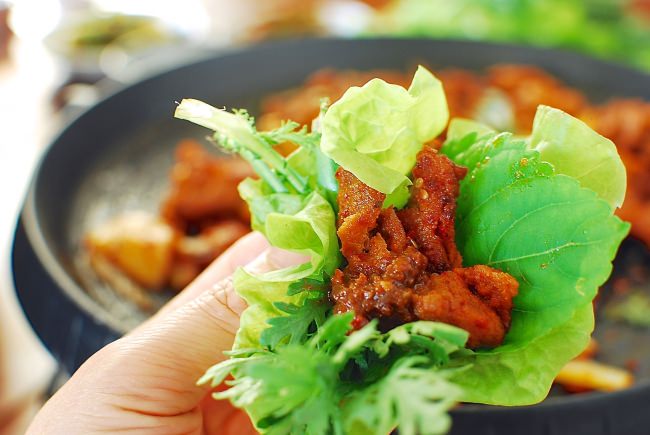
Ssam, meaning "wrapped," is one of the great pleasures of Korean BBQ. The process is simple but deeply satisfying: take a fresh perilla leaf or butter lettuce cup, place a small piece of cooked meat in the center, add a dab of ssamjang, a sliver of raw garlic, a thin slice of green chili if you like heat, and maybe a pinch of rice. Fold it into a bundle and eat it whole in one bite.
The contrast of textures and flavors in that single mouthful is remarkable: the crisp, cool lettuce against the hot, fatty meat; the pungent raw garlic; the deep, spicy funk of ssamjang. This is what many Korean food lovers consider the platonic ideal of their cuisine: balance, contrast, and communal pleasure all in one bite-sized package.
Kkennip (perilla leaves) deserve special mention as the preferred wrap for many Koreans. Their distinctive flavor, somewhere between basil and mint with an herbal bite, pairs uniquely well with pork and transforms the ssam experience completely compared to lettuce.
Garlic and Green Onions on the Grill
In the gaps between meat slices, a skilled KBBQ diner fills the grill with whole garlic cloves and thick slices of green onion (or scallion). The garlic roasts slowly until golden and soft, losing most of its sharpness and becoming sweet and nutty. These roasted garlic cloves are eaten directly with the meat, adding a depth of flavor that raw garlic cannot match.
Green onions placed on the grill char slightly on the outside while softening within, developing a mild sweetness. They can be eaten alongside meat or placed inside a ssam wrap. At many restaurants, kimchi is also grilled briefly alongside the meat, its sugars caramelizing and its flavor becoming deeper and more concentrated.
KBBQ Etiquette: Unspoken Rules
Korean BBQ comes with a rich set of social customs that reflect broader Korean cultural values around hierarchy, hospitality, and communal eating. Understanding these makes the experience feel more natural and respectful.
Pouring drinks for others (not yourself) is standard practice. If someone's glass is empty, you refill it. If yours is empty, wait for someone at the table to notice and pour for you, or gently raise your glass to signal. This applies to soju, beer, and makgeolli alike. Drinking before the eldest person at the table takes the first sip is considered improper in formal settings.
Grilling duties often fall to the most attentive or youngest adult at the table in casual settings, or to restaurant staff in higher-end establishments where grill staff manage everything. Either way, the grill should be monitored so nothing burns, and cooked pieces should be cut into bite-sized pieces (restaurants provide scissors for exactly this purpose) and distributed before eating.
Using both hands, or placing your right hand under your left forearm when offering or receiving food or drink, shows respect to elders. Waiting for the eldest to begin eating before starting is also standard in more formal family or business settings.
Makgeolli, Soju, and Beer: Drinks at KBBQ
Korean BBQ and Korean alcohol are inseparable. Soju is the default: clean, slightly sweet, 16-25% ABV rice or grain spirit that is ordered by the bottle and shared continuously throughout the meal. "Somaek" (soju mixed with beer) is extremely popular for its smoother flavor, and ordering one round of beer and one bottle of soju and mixing them yourself at the table is entirely normal.
Makgeolli, the milky, slightly fizzy rice wine, is another excellent pairing. Its gentle sweetness and low alcohol content (6-8% ABV) make it especially refreshing alongside spicy marinades and fatty pork. Craft makgeolli has been experiencing a renaissance in recent years, with artisanal versions available at higher-end restaurants.
After the Meat: Doenjang Jjigae and Naengmyeon
A KBBQ meal traditionally ends with one of two finishers. Doenjang jjigae (soybean paste stew) is the most common, its earthy, deep umami broth helping settle the meal and aid digestion. At many restaurants it is included with the meal. The other classic ender is naengmyeon (cold buckwheat noodles), whose icy, tangy broth provides a refreshing contrast after so much heat and fat. The combination of hot meat followed by cold noodles is deeply satisfying in a way that is hard to explain until you experience it.
KBBQ at Home
Recreating Korean BBQ at home is entirely achievable. A cast-iron grill pan on the stove or an outdoor charcoal grill works well for samgyeopsal and bulgogi. The most important element is the marinade for bulgogi and galbi: soy sauce, sugar, Asian pear (the enzymes tenderize the meat), garlic, ginger, and sesame oil combined and allowed to soak overnight.
The banchan spread makes the biggest difference. Even just kimchi, a simple spinach namul, and some pickled radish transforms a home grill session into something that feels authentically Korean. Ssamjang can be bought premade at Korean grocery stores, and perilla leaves (if you can find them) elevate the ssam experience dramatically over plain lettuce.
Bring the KBBQ Spirit to Your Snack Game
If a full KBBQ setup is not on the table tonight, you can still tap into Korean BBQ flavors through the incredible range of Korean snacks inspired by the tradition. Korean BBQ flavored chips, popcorn, and noodle snacks bring those sweet, savory, smoky marinade notes into easy grab-and-go formats.
The SnackFever Box is a monthly subscription box of curated authentic Korean snacks, including plenty of BBQ-flavored favorites, shipped directly to your door.
Final Thoughts
Korean BBQ endures as one of the world's great dining traditions because it is fundamentally social. The grill in the middle of the table is not just a cooking tool. It is an invitation to slow down, take turns, pour for each other, and share something that tastes better because you made it together. Whether you are experiencing it for the first time or the hundredth, there is always something more to discover at the Korean BBQ table.


