


Table of Contents
Few dishes capture the spirit of a Korean summer like naengmyeon (냉면), a bowl of thin, chewy noodles served either in icy beef broth or tossed in a fiery red sauce. Once a winter delicacy enjoyed in chilled dongchimi water in the northern provinces, naengmyeon migrated south during the Korean War and turned into a sweat-cooling national obsession.
From the quiet, beefy depth of Pyongyang naengmyeon to the chewy, blazing-spice punch of Hamhung-style bibim naengmyeon, this guide walks you through the styles, the iconic Seoul restaurants, the eating etiquette, and how to recreate the dish at home.
What Is Naengmyeon?
Literally meaning “cold noodles,” naengmyeon is a dish of thin, chewy noodles traditionally made from buckwheat (memil) and a starch binder such as potato or sweet potato. The noodles are rinsed in ice water until they squeak when pinched, then served either in a chilled broth or tangled with a sweet-spicy sauce. The result is a refreshing meal that walks the line between savory and almost dessert-like in its restorative coolness.
The two main varieties are mul naengmyeon (물냉면), with broth, and bibim naengmyeon (비빔냉면), without. Both rely on chilled bowls, chilled toppings, and noodles cooked just long enough to stay springy.
Mul vs Bibim: The Two Main Styles
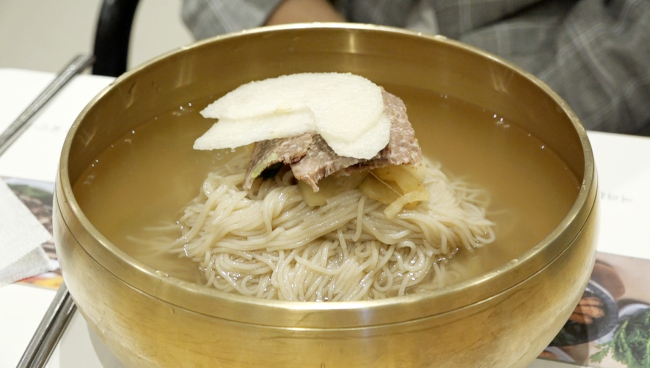
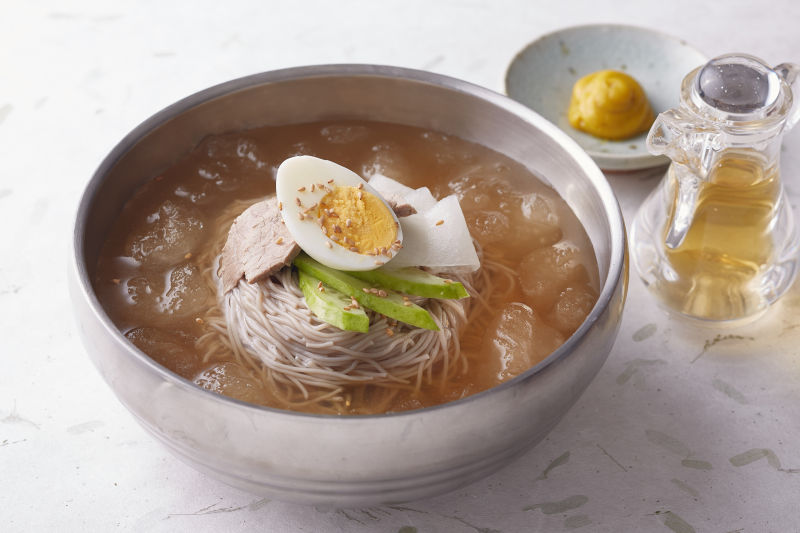
Mul naengmyeon arrives in a wide metal bowl filled with clear, slushy broth made from simmered beef brisket, dongchimi (radish water kimchi) juice, or a blend of both. The flavor is purposely subtle, with toppings such as boiled egg, sliced beef, julienned cucumber, Korean pear, and a small mound of sweet pickled radish.
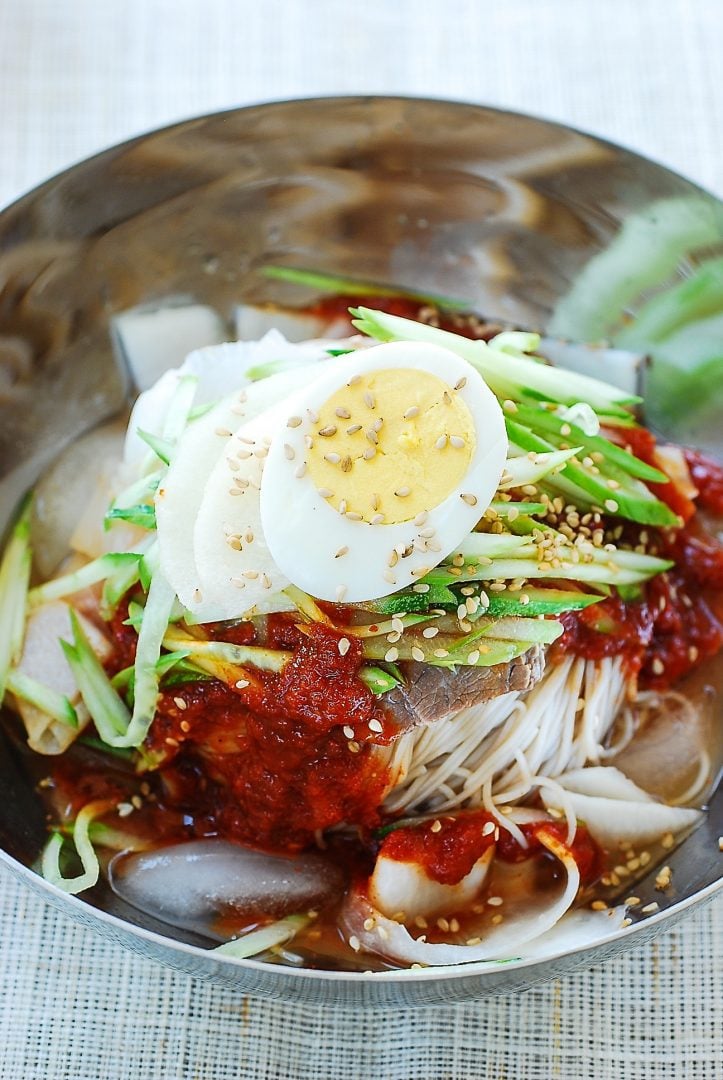
Bibim naengmyeon goes in the opposite direction. The noodles are tossed in a glossy gochujang-and-gochugaru sauce sweetened with sugar or pear, then crowned with similar toppings. Many shops serve a cup of warm beef broth on the side to cleanse the palate between fiery bites, as Korean Bapsang notes in its home recipe.
Pyongyang vs Hamhung: The Great Naengmyeon Debate
The two styles map almost perfectly onto two North Korean cities. Pyongyang naengmyeon uses noodles with a high buckwheat content, served in icy beef and dongchimi broth that tastes mild and almost watery on first sip. The Korea Herald has profiled Seoul shops like Bongmilga whose chef uses 80 percent buckwheat for a smoother, less chewy bite that lets the broth shine.
Hamhung naengmyeon, by contrast, uses noodles made mostly from sweet potato starch. The strands are thinner, glassier, and so chewy that scissors are almost mandatory. They are typically dressed in a spicy red sauce, and a hoe (raw skate) topping is a regional signature in shops like Ojang-dong Heungnamjip.
How Naengmyeon Migrated South During the Korean War
Naengmyeon as Seoul knows it today is a story of displacement. During the 1950 to 1953 Korean War, refugees from Pyongyang, Hamhung, and Haeju fled south, bringing their family recipes with them. They opened small noodle shops in postwar Seoul to make a living, and the dish slowly shifted from a winter comfort food to a summer staple.
The Korea Times notes that landmark restaurants such as Ojang-dong Heungnamjip, opened in 1953 by a couple who fled Hamhung, channeled their longing for the North into bowls of Hamhung-style noodles. In Busan, the same wave of refugees invented milmyeon by substituting wheat flour for buckwheat when relief supplies arrived, giving the southern port its own beloved cold noodle.
Seoul's Iconic Naengmyeon Spots
Most of the legendary Pyongyang naengmyeon houses cluster north of the Han River. The Korea Herald lists Woo Lae Oak, Eulji Myeonok, Eulmildae, Pildong Myeonok, and Pyongyang Myeonok as the five traditional restaurants that have all been running for more than six decades, with chewier noodles and a thicker, more robust beef broth than newer rivals.
Wooraeoak, founded in 1946, is the oldest of the bunch and the spiritual home of Seoul naengmyeon. Pildong Myeonok, recognized by the Michelin Guide, is praised for serving its bibim naengmyeon with a bowl of starchy noodle-cooking water instead of beef broth, a quietly elegant Pyongan touch documented by Visit Seoul.

What to Add, and the Rule About Not Cutting Noodles
Every naengmyeon table comes with three small bottles or jars: vinegar (sikcho), bright yellow hot mustard (gyeoja), and sugar. Bibim naengmyeon usually gets sugar first, then vinegar, then a touch of mustard. Mul naengmyeon is more contested. Some Pyongyang purists insist you add nothing at all and let the broth do the talking.
The single most important rule at a serious Pyongyang naengmyeon house is do not cut the noodles. Scissors are not offered, because the long noodles symbolize longevity and the chef wants you to taste the natural break of the buckwheat strand. At Hamhung-style shops the rule is reversed, and scissors usually appear at the table before you even ask.
Naengmyeon and Korean Summer Culture
Few Korean foods are so tied to a season. The moment temperatures climb above 30 degrees Celsius, social media floods with photos of slushy broth and frosted metal bowls. Office workers crowd into noodle shops for lunch, families queue at landmark restaurants on weekends, and supermarket sales of refrigerated and frozen naengmyeon packs spike from late June through August.
Naengmyeon also has a more specific cultural role as the closing course of a Korean barbecue meal. After grilled galbi or samgyeopsal, a shared bowl of cold noodles helps cut through the richness of the meat and the smokiness of the table.
Regional Variations: Jinju, Busan, and Beyond
Beyond Pyongyang and Hamhung, regional cold noodles have their own loyal followings. Jinju naengmyeon, from the southern city of Jinju, uses a chilled seafood-based broth made from dried anchovies, mussels, and other shellfish, topped with thin strips of seasoned beef pancake (yukjeon). The result is far more umami-driven than its northern cousins.
Busan’s milmyeon, which The Korea Times calls naengmyeon’s cousin, swaps buckwheat for wheat and starch and uses a pork-bone broth scented with medicinal herbs like licorice and cinnamon. Choryang Milmyeon near Busan Station is considered the genre’s reference point. Haeju Naengmyeon in Seoul represents yet another tradition, with extra-spicy bibim noodles from Haeju in North Korea’s South Hwanghae Province.
How to Make Pyongyang or Hamhung Naengmyeon at Home
Both styles share the same skeleton: chewy noodles, properly chilled, plus a punchy topping or broth. For Pyongyang-style mul naengmyeon, simmer brisket with onion, scallion, garlic, ginger, and peppercorns for about an hour, season lightly with guk-ganjang (soup soy sauce), and chill the broth until slushy. Korean Bapsang recommends mixing in a cup or two of dongchimi broth for that signature radish tang.
For Hamhung-style bibim naengmyeon, the sauce does the heavy lifting. Blend fine gochugaru, grated pear or apple, soy sauce, sugar, corn syrup, minced garlic, and salt, then toss it with cooked and shocked sweet-potato-starch naengmyeon. Top with pickled radish, cucumber, pear, beef slices, and a boiled egg half, and finish with a drizzle of sesame oil.
Where to Find Naengmyeon Outside Korea
Naengmyeon has followed the Korean diaspora across the world. In Los Angeles, the Koreatown branch of Woo Lae Oak (the same family name as the Seoul original) was an early ambassador of Pyongyang-style noodles in the United States. In New York, Tokyo, and Sydney, Korean barbecue chains routinely offer naengmyeon as a finisher, while specialty cold noodle shops have opened in cities with large Korean populations such as Toronto and London.
For home cooks, refrigerated or frozen naengmyeon kits from Korean grocery brands like Pulmuone and Ottogi are sold worldwide and usually come with noodles plus a packet of pre-made broth or spicy sauce. They are not quite Eulji Myeonok, but on a humid summer evening they get remarkably close.
More Korean Noodle and Street Food Guides
- Korean Ramen (Ramyeon): The Ultimate Guide to Korea's Instant Noodle Culture
- Korean Instant Noodles: 5 Must-Try Ramyeon Flavors Loved by Locals
- Japchae: Korea’s Beloved Glass Noodle Stir-Fry
- Korean Pojangmacha: Inside Korea's Iconic Late-Night Street Food Tents
Explore Korean Snacks with Daebak
Love Korean food? Get authentic Korean snacks and ramen delivered straight to your door with the SnackFever Box by Daebak, or browse our Korean Snacks collection.


