


Table of Contents
Step out of Apgujeong Rodeo Station on a weekday afternoon and the first thing you notice is the signage. Clinic names in pastel pink and navy blue stack up the sides of glass towers, advertisements for double eyelid surgery and V-line jaw contouring loop on subway platform screens, and tourists with bandaged faces sip coffee at sidewalk cafes. This is the Apgujeong Plastic Surgery Belt, the most concentrated cluster of cosmetic clinics in the world and the engine behind one of Korea's fastest growing tourism categories.
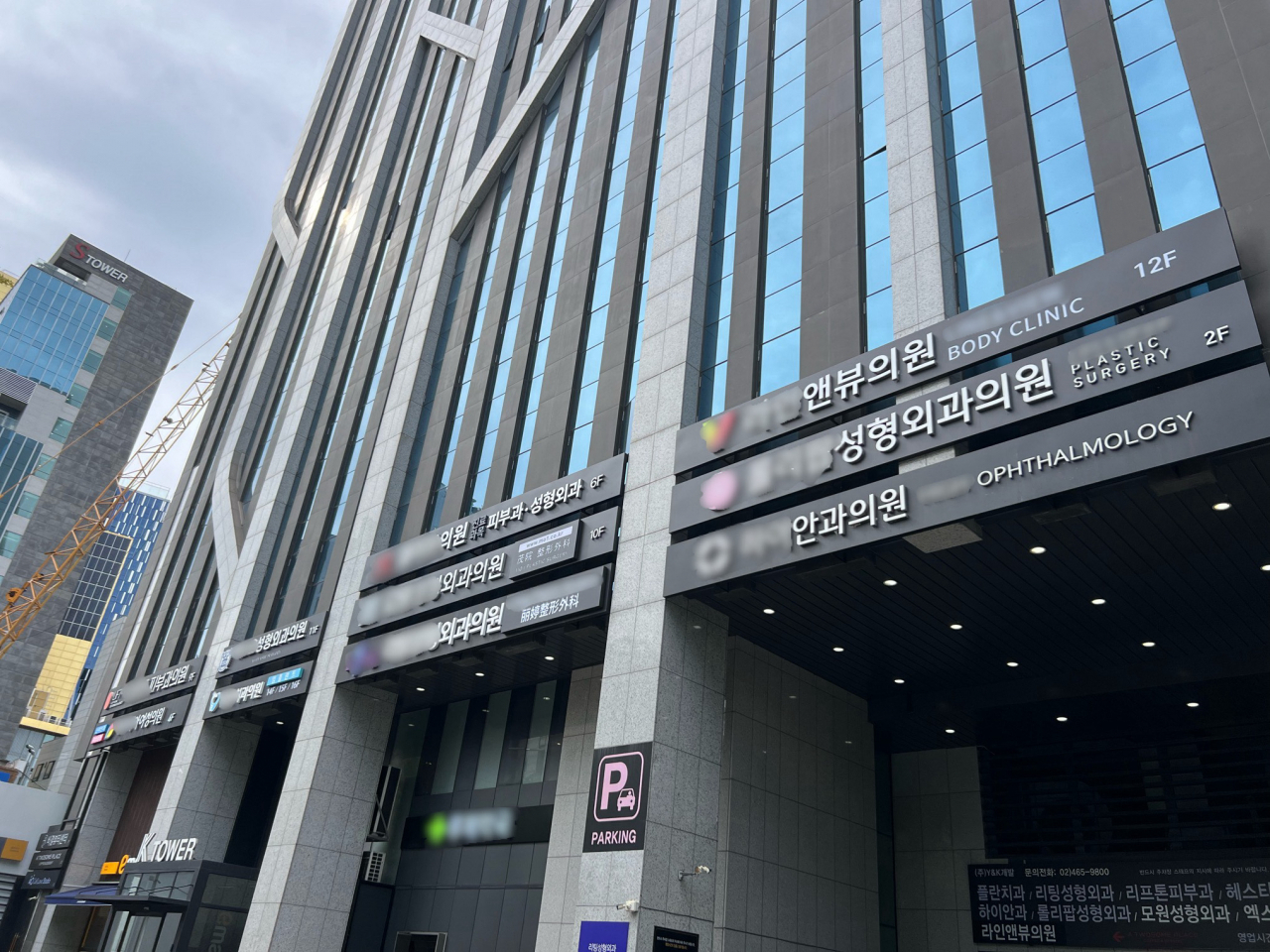
Inside the Apgujeong Plastic Surgery Belt
Apgujeong-dong and the neighboring Sinsa, Cheongdam and Nonhyeon districts of Gangnam-gu together host the densest concentration of cosmetic clinics anywhere in the world. Korean and English-language media routinely cite figures of 400 to 500 plastic surgery and dermatology clinics packed into roughly one square kilometer, with the Korea Herald reporting that about 540 cosmetic surgeons had set up shop in the area in recent years. The cluster sits behind Apgujeong Station on Line 3 and Sinsa Station on the Shinbundang Line, and extends north toward Cheongdam-dong, where celebrity-favored clinics share addresses with luxury fashion houses on K-Star Road.
The Ministry of Health and Welfare reported that South Korea recorded 1.17 million foreign medical patients in 2024, nearly double the prior year. Dermatology accounted for 56.6 percent of those visits and plastic surgery for 11.4 percent, with most clinics clustered in Seoul. Industry analysts cited by KED Global estimate foreign patients and companions spent roughly 7.5 trillion won, or about 5.2 billion US dollars, on medical tourism in the country last year.
The Famous Clinics and Their Foreign Coordinators
Apgujeong's name recognition rests on a handful of large clinics that publicly market to overseas patients. JK Plastic Surgery sits on what marketing materials call Apgujeong Medical Street and was profiled by the Korea Herald as one of the country's largest cosmetic centers, with non-Korean clients making up roughly half of its caseload. ID Hospital, Banobagi, BK, Wonjin, View, Item, Dream and Grand are among the other names tourists encounter on billboards and in K-pop fan forums. Many are vertically integrated buildings of six or more floors, housing consultation rooms, operating theaters and recovery suites in a single tower.
The Korea Times reported that View Plastic Surgery in Gangnam alone employs around 60 multilingual coordinators serving patients in ten languages including Spanish, English and Chinese. Coordinators handle marketing, online consultations, in-person translation and after-care follow up. JK was an early adopter of the model, opening its own attached hotel for deep-pocketed clients who spend an average of about 20 million won, roughly 14,000 to 17,000 US dollars, on multi-procedure visits.

The Most Requested Procedures
Korean clinics market a recognizable menu of procedures, and the same names appear repeatedly in foreign patient bookings. Korea Biomedical Review's tally of VAT refund claims in the first half of 2024 placed skin rejuvenation, whitening and pore therapy at the top with 62,683 cases, followed by wrinkle removal at 23,740 cases and double eyelid surgery, called ssangkkeopul susul in Korean, at 14,213 cases.
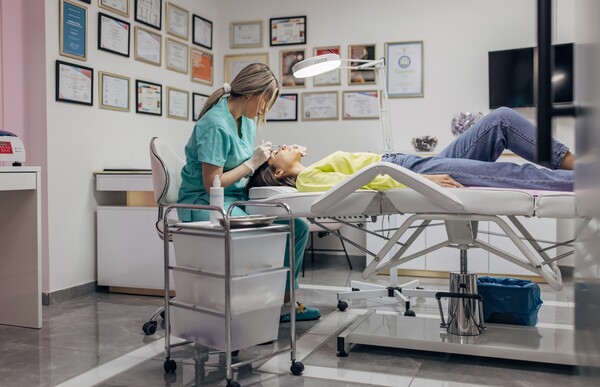
Rhinoplasty, or kosaehyeong, is consistently the second most requested surgical procedure among foreign patients, often paired with chin or cheekbone reshaping for what Korean marketing calls a V-line jawline. More invasive bone surgery such as two-jaw alignment, known as yangak susul, and forehead reduction are also performed in Korea more frequently than in most other countries. Less invasive treatments dominate the dermatology side: Botox, hyaluronic acid lip fillers, PRP injections derived from the patient's blood and thread lifts marketed under names like Silhouette Soft and Korean facelift are heavily advertised across clinic windows in Apgujeong.
Who Is Visiting and Why
The Ministry of Health and Welfare data cited by Korea Biomedical Review shows that in 2024, Japan and China together accounted for 60 percent of foreign patients, followed by the United States, Taiwan and Thailand. Taiwan posted the fastest growth, with dermatology visits jumping more than 1,000 percent year on year. Vietnam, Mongolia, Indonesia and Russia are also significant markets for surgical procedures specifically. The Korea Times spoke with patients from Vietnam and Mongolia who said they were drawn by Korean clinics' reputation for facial contouring and lower revision rates than at home, even though Korean prices are not always the cheapest in the region.
Price comparison is one of the recurring talking points. Industry surveys quoted in Korean and international press place rhinoplasty in Seoul roughly 30 to 60 percent below comparable procedures in the United States, while double eyelid surgery in Apgujeong typically runs from 1.5 to 4 million won, or about 1,100 to 3,000 US dollars. Singapore and Bangkok are cheaper for many soft tissue procedures, so Korea competes on perceived skill, K-pop visual ideals and the bundled experience rather than on price alone.
The Cultural Backdrop and the Backlash
Plastic surgery is unusually normalized in South Korea. Local press routinely reports on the post-CSAT season when high school seniors receive surgery as a graduation gift, and Korea Bizwire has cited surveys in which roughly 30 percent of Korean students consider procedures to improve job prospects. Korean celebrities have grown more candid about their own surgeries on broadcast television, which Korea Bizwire described as fueling a national debate. Standards described in fashion media include a small face, V-shaped jaw, high-bridged nose, double eyelid and pale, glassy skin.
A counter-movement exists. The tal-corset, or escape the corset, movement that gained visibility in the late 2010s has carried into 2020s social media, with Korean women publicly cutting their hair, ditching makeup and rejecting cosmetic procedures. Domestic press, including JoongAng Daily and Hankyoreh, has also covered campaigns to ban plastic surgery advertising on subway platforms and to restrict before-and-after marketing online.
The Risks: Ghost Surgery and Regulatory Gaps
Korean media has covered the ghost surgery scandal extensively. Known in Korean as geurimja susul, or shadow surgery, the practice involves a consulting doctor handing the procedure to an unannounced substitute, sometimes a less experienced surgeon or even a non-physician, once the patient is under anesthesia. The Korea Times has reported court cases including a 35-celebrity lawsuit against one Gangnam hospital and a compensation order for the family of a patient who died after a botched procedure. In 2024 Korean lawmakers expanded a rule requiring operating room cameras in many cosmetic procedures, although enforcement remains uneven.
The Korean Society of Plastic and Reconstructive Surgeons recommends that foreign patients verify a clinic's specialist status through the Korean Medical Association, ask whether the named consulting surgeon will actually perform the operation, and request written cost and complication disclosures. The Ministry of Health and Welfare's Korean International Medical Association also publishes a list of clinics certified for medical tourism and provides a tourist medical complaint hotline at 1577-7129.
Recovery Hotels and Aftercare Around Gangnam
One side effect of the boom has been the emergence of recovery hotels around Apgujeong, Cheongdam and Sinsa. These properties cater specifically to post-surgery patients, with blackout curtains, soft food menus, in-room ice therapy, lymphatic drainage massages and partnerships with nearby clinics. Some occupy floors inside the clinic buildings themselves, as in the case of JK's attached hotel. Others operate as standalone properties along Dosan-daero and around Apgujeong Rodeo Street.
For dermatology and minor procedures, many tourists pair appointments with broader Seoul travel. The Seoul Medical Tourism Center, run by the city government in partnership with about 180 clinics, helps with appointments, translations and entry procedures, and Gangnam-gu operates a tourist information desk near Sinsa Station that focuses specifically on medical visitors.
How to Approach Apgujeong as a Tourist
Travelers considering cosmetic procedures in Korea should treat clinic selection like any other medical decision. The Korean Medical Association's English-language directory, the Ministry of Health's Medical Korea portal and the city of Seoul's Visit Medical Korea site list verified clinics that have signed up to the country's foreign patient attraction program. Patients are entitled to written consent forms in their language, an itemized quote, and copies of their medical records. Foreign patients also have access to the Korean Consumer Agency for disputes and can file complaints with the Korea Tourism Organization's 1330 hotline.
Even visitors who do not plan to undergo surgery often pass through the district. Apgujeong Rodeo Street, Dosan Park, the SM Town flagship at Coex and Cheongdam fashion houses are walkable from the same subway stations, which means the plastic surgery economy is impossible to miss on a Gangnam itinerary. Whether observed as a curious tourist or considered as a patient, Apgujeong offers an unusually concentrated view of how Korea has turned aesthetic medicine into a global export.
Explore More of Korea with Daebak
Curious to bring a piece of Korea's beauty culture home without going under the knife? The Daebak K-Beauty Box delivers carefully selected Korean skincare and beauty products straight from Seoul to your door.


