


Table of Contents
Jeju Island (제주도) gets pitched to first-time visitors as "the Hawaii of Korea," a comparison that isn't wrong but flattens what actually makes this place different. After a decade working with Korean tour operators, hotel groups, and K-content location scouts, I've watched Jeju evolve from a domestic honeymoon default into a workation hub, a K-drama backdrop, and one of the most photographed islands in Northeast Asia. The Gimpo-Jeju air route now moves roughly 13 million passengers a year, making it the world's busiest domestic flight corridor. Jeju's annual tourism receipts sit around 8 trillion won, with about 85% of visitors coming from within Korea. That domestic weight matters because it shapes everything: menu prices, seasonal crowds, the aggressive cafe scene, even the K-drama plots set here.
If you're planning a trip, the shortlist below is the same one I'd send a friend. It skips the "top 10" filler.

When to Go: The Four Seasons Play Differently Here
Jeju's weather isn't Seoul-lite. It's a subtropical island with typhoon exposure and its own microclimates around Hallasan, so timing matters more than most guides admit.
April is canola (유채) bloom season, when the yellow fields around Seongsan and Gapado turn the coast into a scene that dominates Korean Instagram for two weeks straight. May pushes into peak honeymoon territory. Korean couples still book Jeju resorts around this window, and Jungmun hotel rates roughly double. The catch: it's also school field-trip season, so certain attractions get overrun with uniformed teenagers.
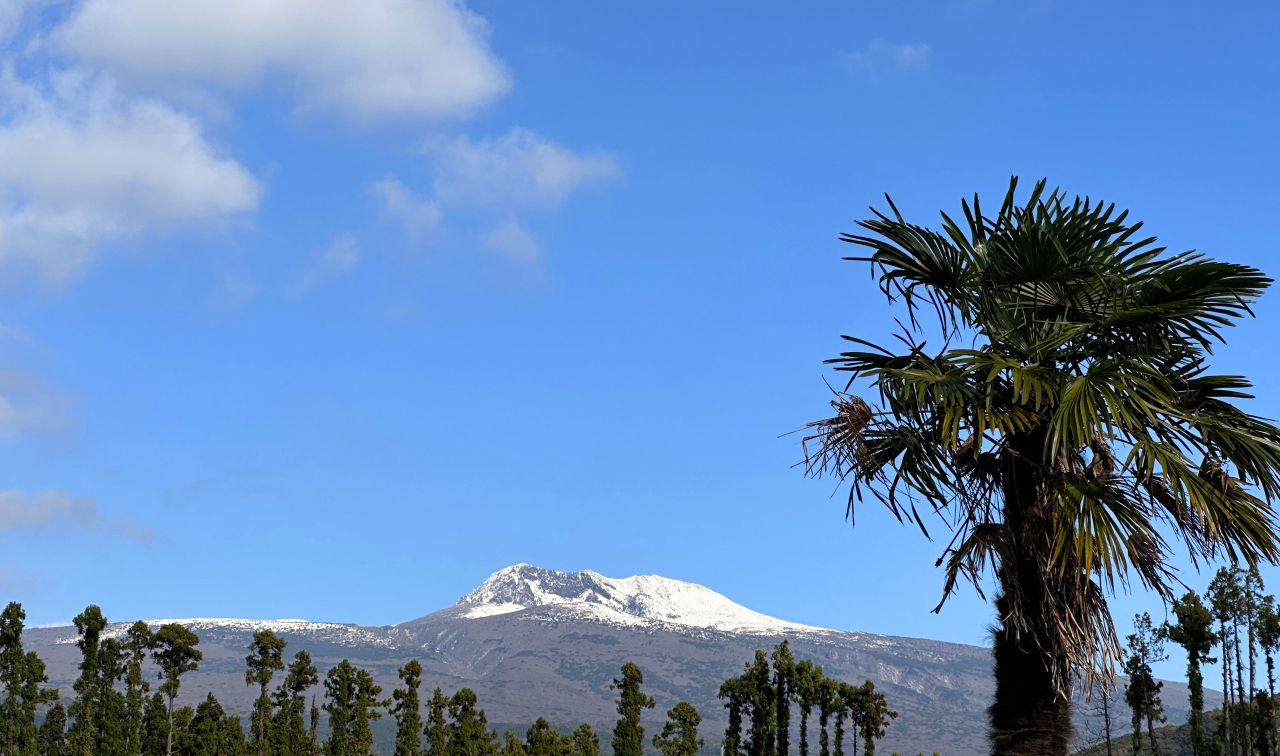
September, once the typhoon window closes, is my personal pick. The heat breaks, the water stays warm enough for Udo beaches, and the domestic crowd thins because Korean kids are back in school. December is the sleeper season, especially if you want to see Hallasan (한라산) capped in snow. The Yeongsil and Eorimok trails turn into one of the most underrated winter hikes in Korea, and rental cars are cheap because everyone assumes the island shuts down.
Getting There and Getting Around
The Gimpo-Jeju flight takes about 60 minutes. Roundtrip on Jeju Air, Jin Air, or T'way usually lands between 50,000 and 100,000 won if you book more than three weeks out. Incheon flights exist but are pricier and less frequent; unless you're connecting internationally, use Gimpo.
Rent a car. This is the one non-negotiable on Jeju. The tourist bus network exists but covers a fraction of what's worth seeing, and Ubers here are effectively nonexistent. Expect 50,000 won per day for a compact, more for the small SUVs most Koreans book. An International Driving Permit is required for foreign visitors, and Jeju's traffic police enforce speed cameras strictly on the coastal roads.
Where to Stay: Four Belts, Four Different Trips
Jeju isn't a "pick one hotel" island. The neighborhood decides the vacation.
Jungmun (중문): The resort belt on the south coast. Hyatt, Shilla, Lotte, Parnas. Best for families, honeymooners, and anyone who wants a pool, a beach walk, and dinner without driving.
Seogwipo (서귀포): The southern port city. More local restaurants, cheaper hotels, easy access to Cheonjiyeon Waterfall (천지연폭포) and the Olle Trail network. Good base for hikers.
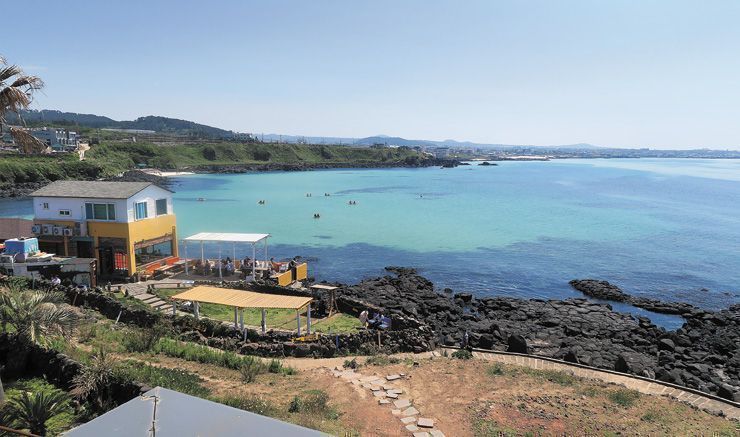
Aewol (애월): The Instagram belt on the northwest coast. Ocean-view cafes stacked shoulder to shoulder, a design-forward aesthetic that started around 2015 when G-Dragon opened Cafe Monsant, and now genuinely defines a piece of Korean cafe culture. If your trip is photo-driven, stay here.
Seongsan (성산): The east coast. Wake up, walk out, climb the sunrise peak before anyone else arrives. That's the entire pitch, and it works.
Must-See: The Five That Actually Earn the Hype
Seongsan Ilchulbong (성산일출봉): A 5,000-year-old tuff cone, UNESCO-listed, best hit at sunrise. The climb is 20 to 40 minutes and easy enough for kids. The reason it works isn't just the geology, it's the way the crater rim frames the sunrise over the East Sea. Locals still come here on New Year's Day.
Manjanggul Cave (만장굴): One of the longest lava tubes on earth. The public section is about a kilometer and the temperature inside stays around 11°C year-round, which is why summer visitors love it and winter visitors regret their choice of shoes.
Cheonjiyeon Waterfall (천지연폭포): Not the tallest waterfall in Korea, but the walk in through subtropical forest is the point. Lit up at night, which most tourists miss.
Hallim Park (한림공원): An overlooked pick. Nine themed gardens plus the Hyeopjae and Ssangyonggul lava caves on-site, so you compress a lot of Jeju into one afternoon.
Camellia Hill (카멜리아힐): Peak January to March. Six thousand camellia trees, 500 varieties. If you're on Jeju during winter and you skip this, you missed the season.
Must-Eat: The Four Dishes That Are Actually Local
Half the "must-try Jeju food" lists floating around are just standard Korean menu items served on the island. These four are genuinely Jeju.
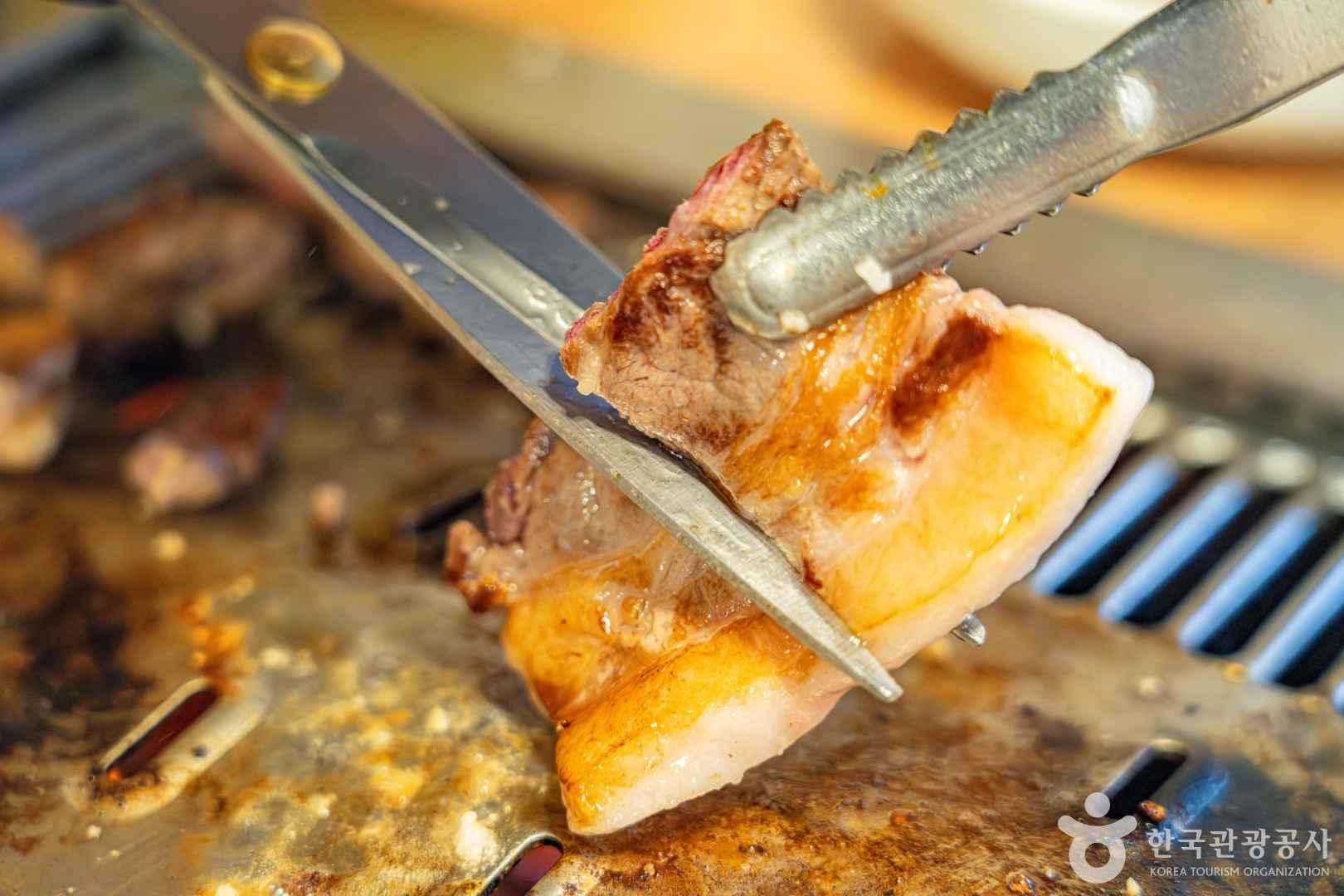
Heukdwaeji (흑돼지): Jeju black pig. The government classified it as a national heritage species in 2015. The fat renders differently than mainland pork, with a chewy, almost steak-like bite and less moisture in the fat cap. Order the ogyeopsal (five-layer belly) at a charcoal-grill spot, dip in meljeot (fermented anchovy sauce) instead of salt, and pay attention to why Koreans get emotional about this specific pig.
Galchi-jorim (갈치조림): Braised hairtail stewed with radish, gochugaru, and soy in a shallow pan. Jeju hairtail is thicker and sweeter than the mainland catch. Seogwipo restaurants specialize in the whole-fish version.
Okdomgui (옥돔구이): Grilled tilefish, a Jeju delicacy that used to be sent as tribute to the Joseon court. Dry, delicate flesh; eat it with rice, not banchan-heavy.
Seonggae Miyeokguk (성게미역국): Sea urchin seaweed soup. Sold on Udo Island beaches for a reason: the sea urchin comes from the haenyeo (해녀) divers who still work these waters. Order it the day you visit Udo and you'll understand why.
Post-2020: Workation and the Aewol Cafe Boom
Two shifts changed Jeju since the pandemic. First, 워케이션 (workation) went from a magazine trend piece to actual government policy. The Jeju provincial office launched a voucher program in 2023 that gives remote workers 30,000 won daily credits for coworking space plus 100,000 won in leisure vouchers, and roughly 10,000 people used it in the first year. If you can work Korean office hours from a laptop, Jeju now competes with Bali on cost and beats it on infrastructure.
Second, the Aewol cafe belt exploded. What started with Monsant in 2015 turned into a stretch of ocean-view cafes competing on architecture and Instagram optics. The reason it works commercially: Korean domestic travelers spend on cafe experiences the way Western travelers spend on museums. A 12,000-won latte with a view sells all day.
K-Drama on Jeju: Why Producers Keep Coming Back
Jeju's landscape does something for Korean romance dramas that Seoul can't. The volcanic coastline, the black stone walls (돌담), the isolation shots, all of it reads as emotional shorthand. When a character retreats to Jeju in a K-drama, the audience already understands the story beat.
Welcome to Samdal-ri (웰컴투 삼달리), the JTBC 2023-24 drama with Ji Chang-wook and Shin Hye-sun, used Jeju not as backdrop but as narrative anchor. The whole show is about a burned-out Seoul photographer returning to her Jeju hometown, and the location shooting on the northeast coast around Samdal-ri (a real village) triggered a small tourism spike that's still ongoing. My Roommate is a Gumiho (2021) and the perennial Warm and Cozy (2015) leaned on the same instinct: Jeju as escape.

Off the Beaten Path: What Locals Actually Do
Bijarim Forest (비자림): A 500-year-old nutmeg tree forest with soft red-dirt trails. Cool in summer, virtually empty on weekdays.
Udo Island (우도): A 15-minute ferry from Seongsan. Rent an electric scooter, do the coastal loop in three hours, eat peanut ice cream, catch the last ferry back. The single best day trip Jeju offers.
Gapado (가파도): A tiny island off the southwest coast, famous for its barley fields in April and its low-slung stone houses. If you want the Jeju that Instagram hasn't fully colonized yet, this is it.
Oreum (오름) sunrise hikes: Jeju has 368 parasitic volcanic cones scattered across the island. Yongnuni Oreum and Baengnok Oreum are the classic sunrise hikes and take 20 to 30 minutes. Locals treat them like morning jogs. Foreign visitors almost never find them.
The Real Takeaway
Jeju rewards a slower trip. Three days feels rushed. Five to seven is the sweet spot. Don't cram every UNESCO site into an itinerary; the island's appeal is in the cafe stops, the beach detours, the accidental oreum climb after lunch. The Korean domestic traveler figured this out years ago, which is why 85% of Jeju visitors are Korean and most of them are on their fifth or sixth trip.
Bring Korea home with you. The Daebak Box is our monthly subscription of handpicked Korean snacks, K-beauty, lifestyle items, and pop culture goods, curated by our team in Korea and shipped worldwide. It's the closest thing to a Jeju cafe run without the plane ticket.


