


Table of Contents
Thanksgiving in a Korean-American household in the 90s usually meant two tables. The formal one, groaning under a turkey nobody in the family really loved, and the second table off to the side where 엄마 (mom) had quietly set out the good stuff. Kimchi. Japchae. A tray of galbi she'd marinated since Tuesday. That second table was the one we grew up sneaking to. Three decades later, that same instinct has scaled up. K-food sits at $10 billion-plus in US retail, Bibigo dumplings own 41 percent of the American frozen dumpling market, and Trader Joe's carries banchan in the refrigerator aisle. So this year, a proper gratitude list feels overdue. 감사, from an industry that spent the better part of a century convincing the world 김치 wasn't scary.
I've been in the K-content space for over a decade, and the halo effect from Netflix and K-pop is doing a lot of the heavy lifting for K-food right now. Amazon searches for Korean food climbed more than 300 percent between 2020 and 2024. That timing isn't coincidence. It maps almost exactly to the K-drama streaming boom, from Crash Landing on You in early 2020 through Squid Game and Extraordinary Attorney Woo. When a K-pop idol posts their late-night 라면 cook on Weverse, or when a K-drama couple shares samgyeopsal on screen, CJ Foods and Nongshim see the ripple two quarters later at earnings calls. It's the tightest culture-to-consumption loop Korean brands have ever had.
김치, Fermentation Wisdom That Predates Us
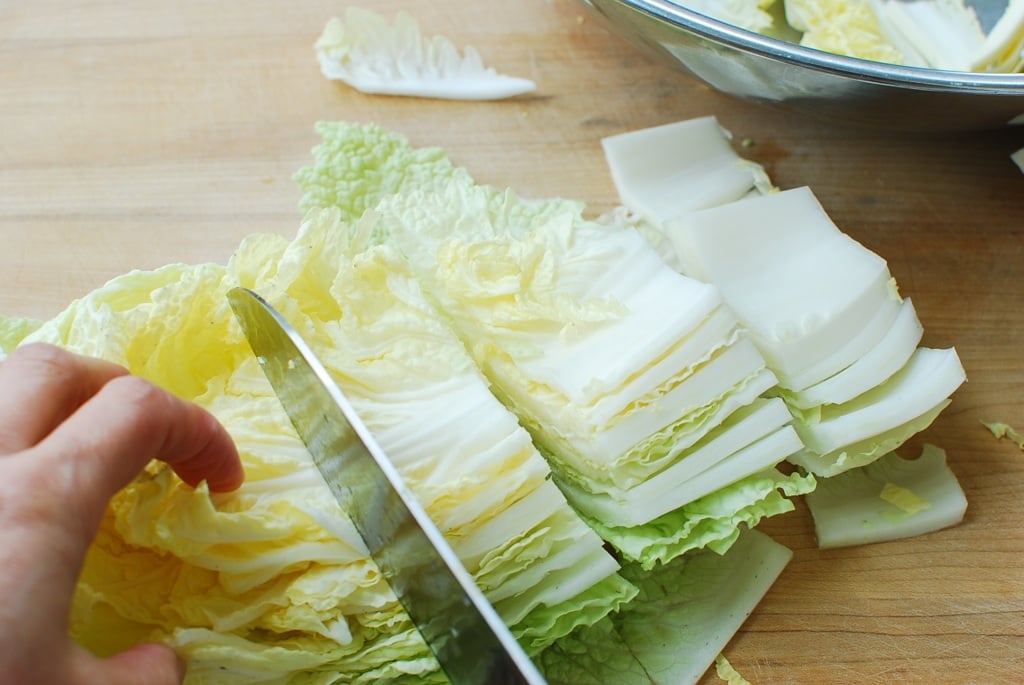
Every Korean grandmother I've worked with on food-brand projects tells a version of the same story: kimchi isn't a recipe, it's a technique your hands learn from your mother's hands. The gratitude here is generational. Centuries before probiotics became a wellness buzzword, Korean households were engineering the ideal fermentation environment inside earthenware 항아리 buried in the yard. Lactobacillus, glutamates, texture that softens without collapsing, the wisdom was empirical, transferred at kimjang tables, and it works. What makes kimchi land globally isn't the heat. It's the acid. That clean, effervescent sourness cuts through fatty Western food in a way pickles never quite manage. Watch someone try it next to fried chicken for the first time. The look on their face is the appeal point.
반찬, The Table That Multiplies
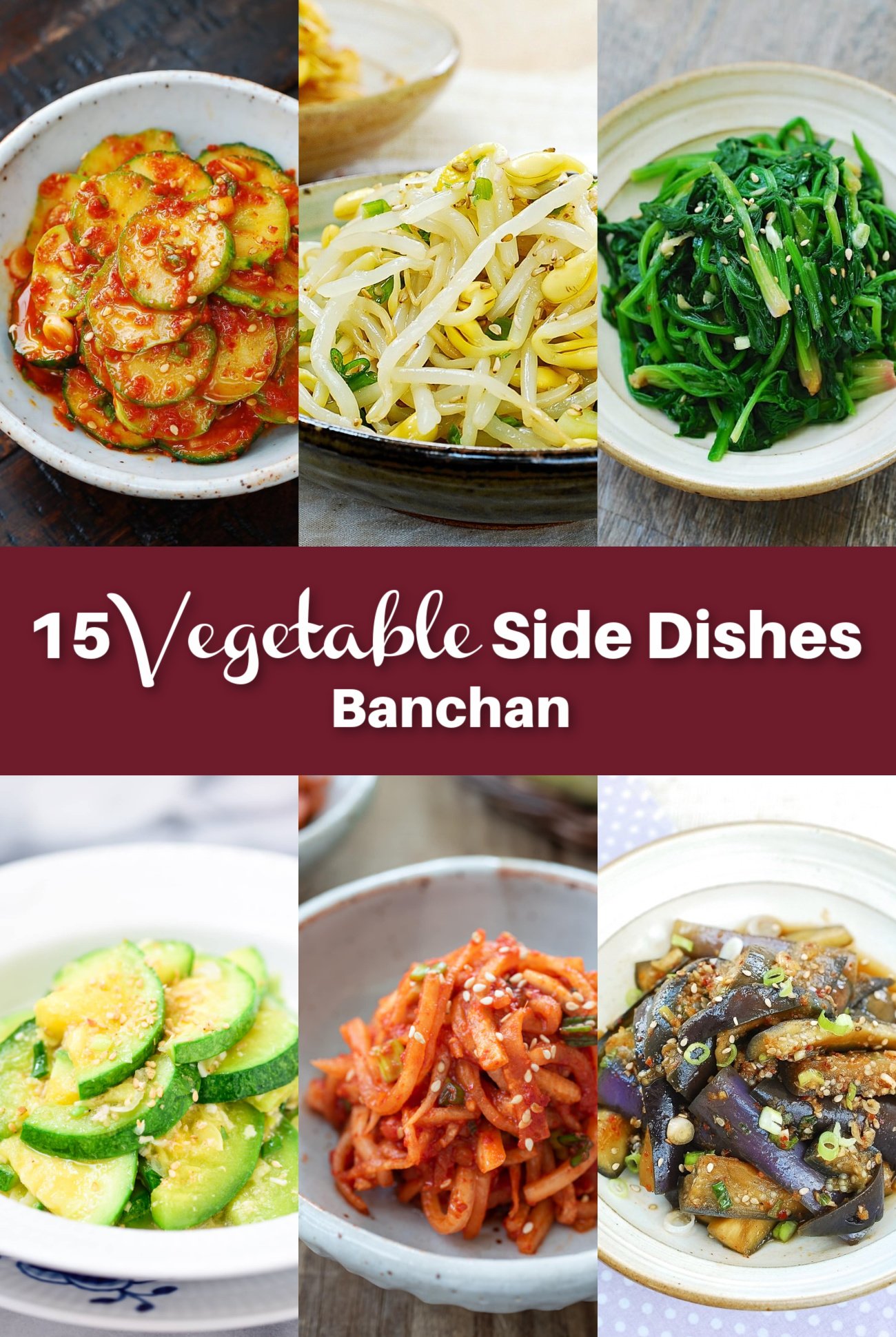
Non-Korean guests always ask the same question at their first Korean meal: "Wait, all these are free?" 반찬 culture is the quiet flex of Korean cuisine. Six, eight, sometimes twelve small plates surround the main dish, refilled without asking, shared without ceremony. Industry-wise, it's genius. Banchan is how Korean restaurants signal abundance without inflating menu prices, and it's why customer perceived value at a modest Korean BBQ spot beats a comparable steakhouse. Culturally, it's how families communicate care. A mother packing her college-bound kid off to Seoul sends fourteen containers of banchan in a cooler, not a lecture. That's why Thanksgiving translates so easily into a Korean-American context. Both traditions worship the crowded table.
삼겹살, The Gathering Grill
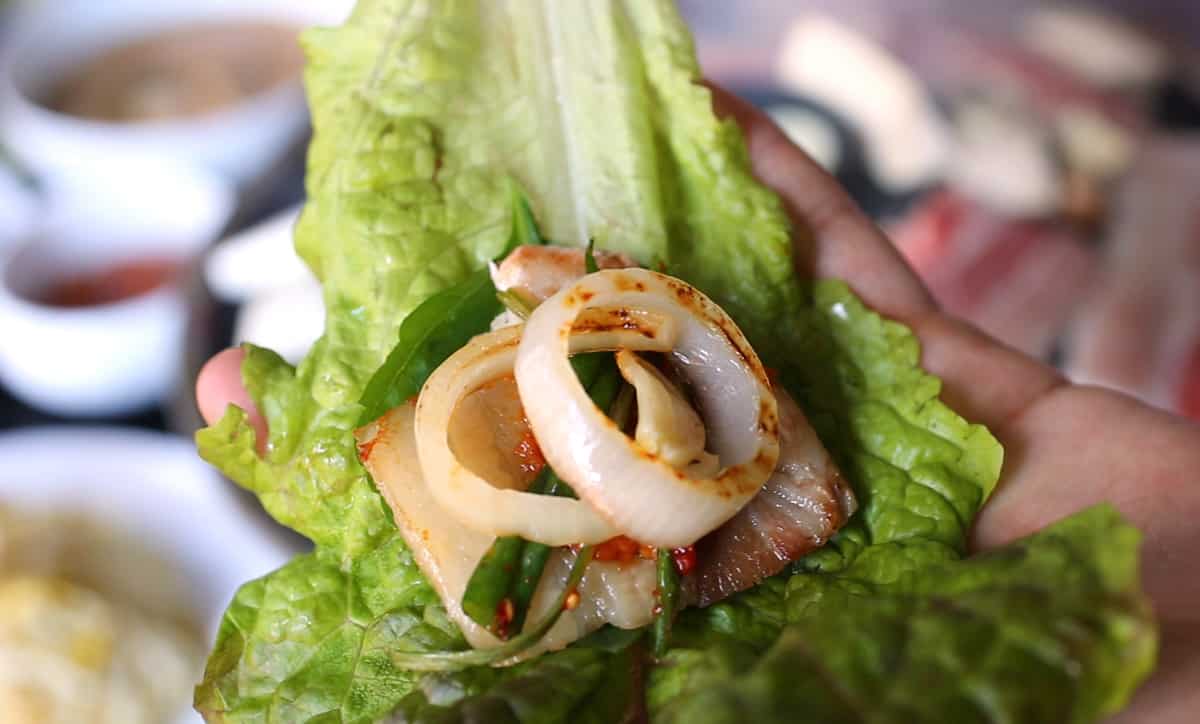
If turkey is Thanksgiving's centerpiece by force of tradition, 삼겹살 is Korean gratitude by force of gravity. The grill in the middle. Everyone leaning in. The lettuce wrap you build in your palm, ssamjang, garlic, a curl of pork belly still spitting. Samgyeopsal isn't just food, it's the mechanic that makes Korean gatherings feel unforced. Nobody's stuck plating or hosting because the grill democratizes the work. Korean-American families figured this out early. Swap the turkey for a portable tabletop grill and Thanksgiving stops being a solo performance, it starts feeling like a real meal. Chef Roy Choi and chef Corey Lee, both born to Korean immigrant parents, have publicly credited samgyeopsal nights as the reason they became chefs at all.
라면, The 2 A.M. Bowl
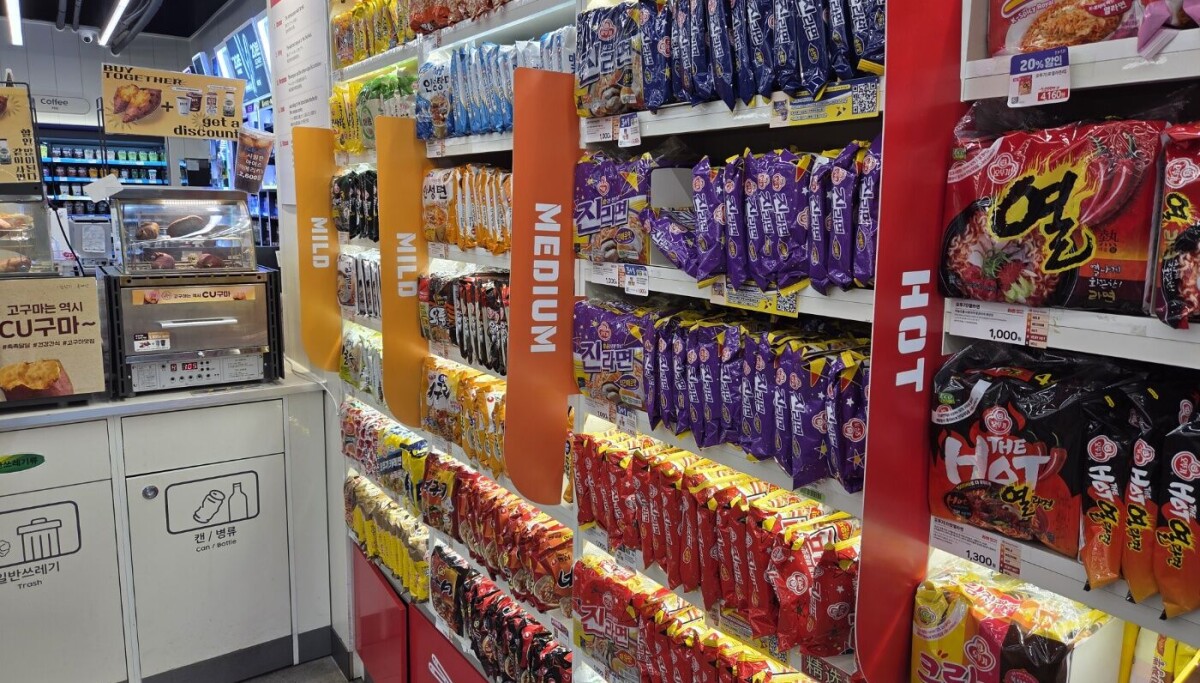
Ramyeon exports crossed $1.5 billion for the first time in 2025, up nearly 22 percent from the year before. Shin Ramyun sells in more than 100 countries. But the reason to be grateful for 라면 isn't the export chart. It's the 2 a.m. bowl. Every Korean student, every night-shift worker, every heartbroken twenty-something reaches for the same silver kettle and the same crumpled packet. Nongshim's genius, and Samyang's, was turning that intimate cultural ritual into a portable one. The Buldak fire-noodle challenge didn't blow up because the noodles tasted the best in the world. It blew up because global teens recognized the format: a shared late-night dare, filmed. The industry rode that mechanic to a market no ad budget could have bought outright.
The Global K-Food Halo

The numbers tell the story if you want spreadsheet gratitude. CJ CheilJedang's US food business, which makes up 83 percent of the group's overseas revenue, jumped from $2.4 billion in 2020 to a much larger figure by 2025, with Bibigo dumplings capturing 41 percent of the American frozen dumpling category by 2024. Nongshim keeps scaling California capacity. Pulmuone dominates the tofu aisle. What used to be an ethnic-aisle category is now a mainstream retail engine. But the deeper appeal, the reason it stuck, is that 케이푸드 came with a story attached, one told by K-dramas, K-pop mukbang lives, and the immigrant grandmothers who spent decades refusing to apologize for the smell of their kitchens.
A Korean-American Thanksgiving
The second table always wins in the end. This November, in Korean-American homes from LA to New Jersey, kimchi will sit next to cranberry sauce. Japchae will elbow the stuffing. Someone's uncle will insist the leftover turkey goes better in kimchi jjigae than in a sandwich, and he'll be right. That's what 감사 looks like now. Two food cultures finally sharing one table without either needing to shrink.
If you want a shortcut to that same gratitude, a Daebak Box is the easiest way to bring 케이푸드 straight to your own Thanksgiving spread this year. Kimchi seasoning, ramyeon your K-drama favorites, sauces and snacks that would take you three trips to Hmart to assemble, all packed monthly. Consider it a permission slip to add a Korean row to your gratitude list.


