


Table of Contents
Everyone writes about Myeongdong (명동) as a shopping district. Fair enough, that is where the daytime revenue lives. But after more than a decade watching how Seoul packages itself for global visitors, I can tell you the more interesting economic story is what happens after 5pm, when the beauty stores dim their halogen lights and the neighborhood pivots into experience tourism. This second Myeongdong is not about carrying home shopping bags. It is about doing things you cannot do anywhere else in the world, from riding Korea's oldest cable car up a mountain in the middle of a city to drumming with a kitchen knife on a Broadway-touring stage.
Korean tourism industry planners actually track these two Myeongdongs separately. The daytime persona sells to Chinese and Japanese group tours who arrive by bus and shop by list. The nighttime persona sells to independent travelers, honeymooners, K-pop fans, and Southeast Asian influencers who want an Instagram loop, not a receipt. Both models coexist because they use the same real estate at different hours. If you have already read our guide to the best things to do in Myeongdong, treat this as the sequel with a pulse rate. Here are the five activities that actually get your heart moving.
1. Ride the 1962 Namsan Cable Car (남산 케이블카)
Most travelers see this as a scenic ride. What they miss is that the Namsan Cable Car is a piece of Korean industrial heritage that predates almost every skyscraper it now flies past. Built in 1962 and opened after four years of construction, this was the first commercial passenger cable car service in Korea. It survived the Park Chung-hee industrialization era, the 1988 Olympics, and every K-drama filming request since. That is the appeal here that guidebooks flatten. You are not just going up a mountain. You are riding a 60-year-old tourism artifact that still moves over 50,000 people a month.
The technical bit that makes the ride feel bigger than it should. The cable is 605 meters long with a 138-meter elevation change, hitting a 13-degree gradient in the middle. Three minutes is all you get, but those three minutes cross the entire visual gap between old Seoul and new Seoul, from the tiled roofs near Hoehyeon-dong to the LED wash of the tower deck. Round-trip runs 15,000 won for adults. Best move for photos is to grab the downhill leg at dusk when the city switches on. That golden-hour window is why every Korean movie that features a first-date scene at Namsan books that specific 15-minute slot.
2. Chase the 480-meter panorama at N Seoul Tower (남산타워)
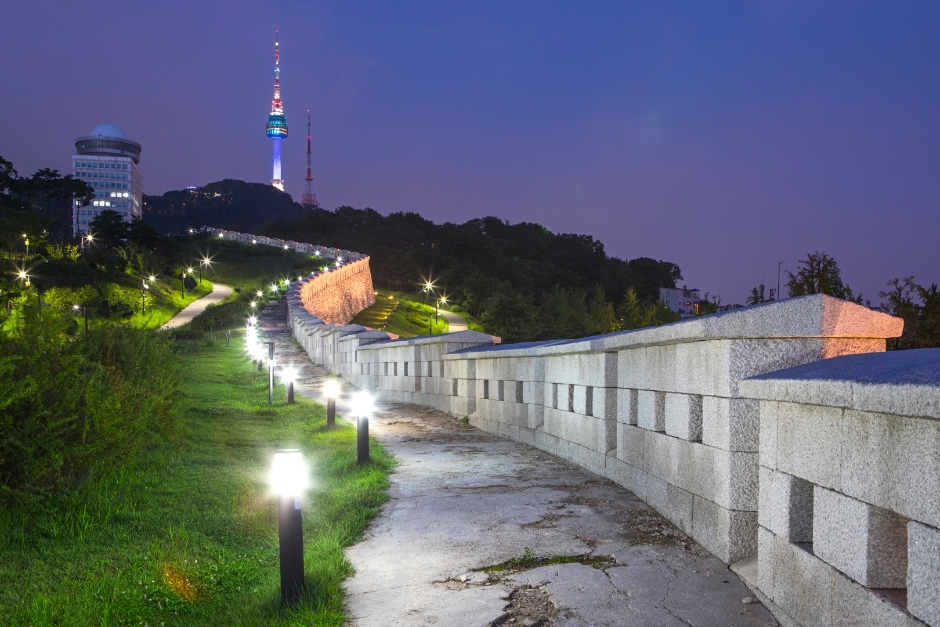
The moment the cable car doors open, you are already inside Seoul's most photographed skyline. Namsan Seoul Tower was built in 1969 as Korea's first integrated broadcast transmission tower and did not open to the public until 1980. That decade of closed-door engineering is why the observatory feels slightly overbuilt in the best way, thick concrete pylons, wide viewing panes, an obsessive HVAC hum you notice only at night. The tower deck sits at 480 meters above sea level, which is the highest natural vantage over central Seoul that a tourist can legally reach without corporate credentials.
The industry secret Koreans do not tell you is that the tower's monetization was reinvented in 2005 when the CJ Group leased it, added the "N" for New, and turned the base into experience real estate rather than just an observation deck. That is why you get the Locks of Love wall (originally a copycat of the Paris Pont des Arts bridge, but scaled up into a merchandising engine that sells the padlocks themselves), the Digital Observatory's 32-screen media wall, and the Sky Restroom overlooking the Han River. Yes, the restroom is a paid tourist stop. Yes, it works. Book the observatory ticket at 29,000 won and time your visit for sunset transition, roughly 30 minutes before official golden hour. That is when you get both the daytime cityscape and the light-up sequence in a single photo pass.
3. Take a K-beauty masterclass at Olive Young Myeongdong Town
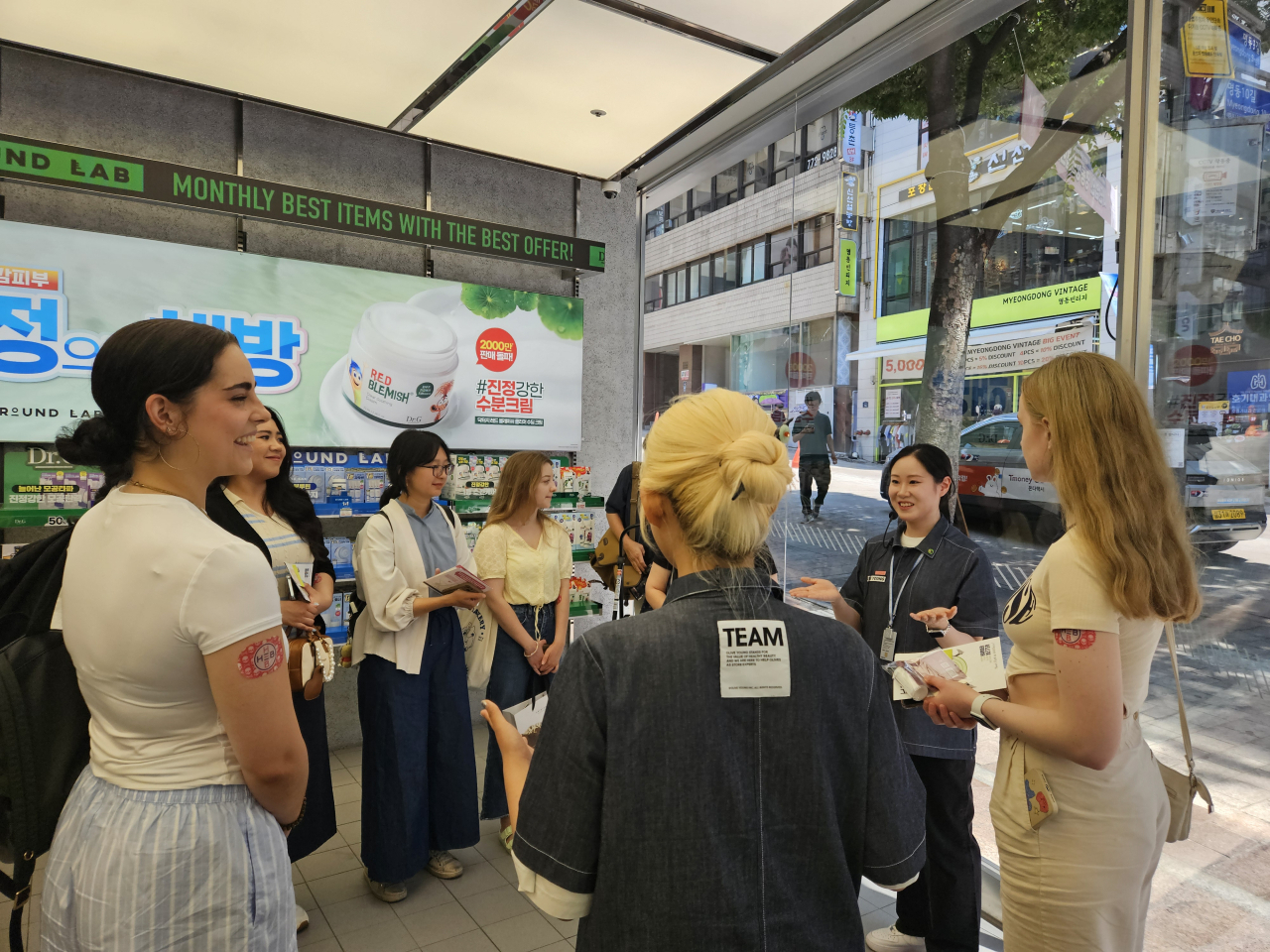
Here is where the industry mechanics really show. Olive Young Myeongdong Town, the CJ Group's flagship at 53 Myeongdong-gil, does about 5,000 daily visitors, and roughly 90 percent of them are foreign. That is not accidental. It is the highest foreign-share ratio of any beauty retail unit in Seoul. When the Culture Ministry launched the 2024 Korea Beauty Festival, this store was chosen for the first-ever K-beauty docent tour program, an hour-long guided walkthrough that has since become a repeatable format. Think of it as a masterclass conversion funnel, expert-led product education that lands you at the register with a curated basket.
The appeal point global fans do not fully articulate is why K-beauty stores feel different from a Sephora. It is not just product volume. It is the sampling density. The Get It Beauty Zone lets you try texture and finish on your actual skin. The Perfume Bar sits over 40 scents on rotating trays. There is a K-Food Zone with snacks between aisles because CJ figured out that a fed shopper stays 40 percent longer. That is the kind of retail math that makes Myeongdong Town a training case study in Korean marketing schools. In April 2024 the chain even rolled out a real-time interpreter device in 16 languages, which quietly killed the language barrier that used to define beauty tourism in Korea.
4. Catch Nanta (난타) at the Myeongdong theater
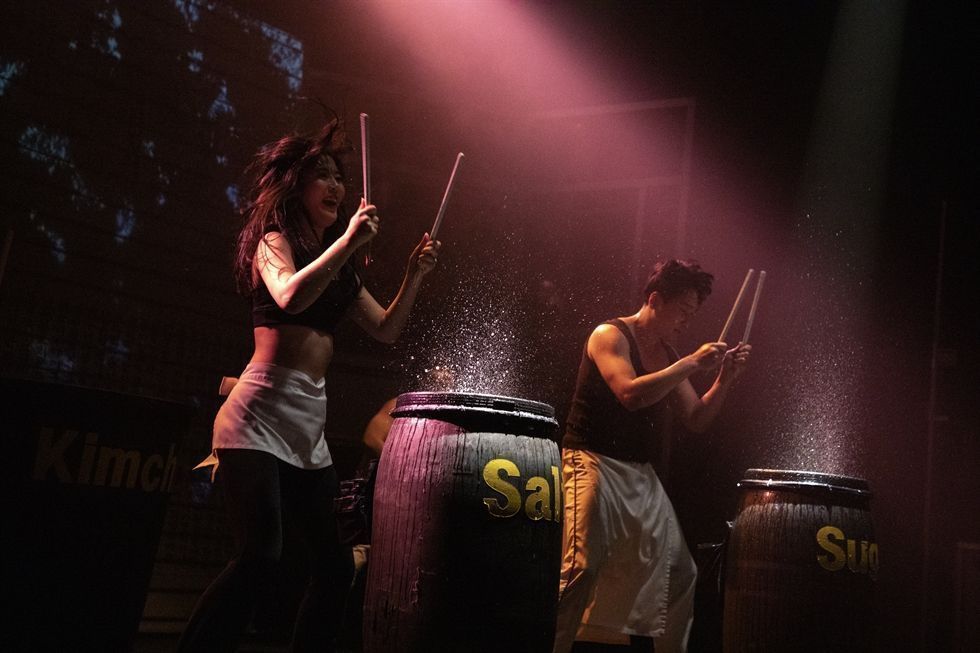
If you only see one Korean stage show in your lifetime, PMC Production wants you to make it Nanta. It has been running since October 1997, which makes it the longest-running theatrical show in Korean history. Producer Song Seung-whan built it around a simple bet, that samulnori (사물놀이, the four-instrument traditional Korean percussion) could translate to Western audiences if you swapped the traditional drums for kitchen utensils and let four chefs slam knives and cutting boards to the same rhythmic phrasing. It worked. As of 2023, Nanta had performed in 325 cities across 61 countries and drawn over 15 million viewers, roughly two-thirds of them foreign nationals.
What makes Myeongdong the right venue rather than the Hongdae branch is theatrical intimacy. The Myeongdong Nanta theater is the flagship dedicated venue, the same room PMC opened as its first Nanta-only house in 1999 (the original ran at Hoam Art Hall). The 90-minute non-verbal format means zero language barrier, and the audience participation segments, three volunteers are pulled on stage to help "prepare the wedding banquet" as the storyline goes, become the anecdote you tell for years. Insider tip. The performers you watch are often veteran cast members who have run the choreography for over a decade. When Sexy Guy or Head Chef looks like they are barely trying, that is exactly the kind of muscle-memory precision that took three years of training to hide.

5. Run the Myeongdong Night Market street food challenge
This is the activity Korean travel YouTubers built entire channels around, and for good reason. Once the light hits that specific late-afternoon angle around 3pm, roughly 100 to 150 pojangmacha (포장마차, tented street stalls) fold out along Myeongdong-gil and Myeongdong-8-gil, running until about 10pm. The challenge format that has become social-media shorthand is simple. Ten items, one alley, no repeats. If you can finish the strip in one evening you have done more culinary tourism in three hours than most people do in a week.
The current tier list, ranked by what actually delivers on the hype. Tornado potato (회오리 감자, hoeori gamja) is the visual winner, a whole spud spiral-cut, deep-fried on a skewer, and dusted with cheese or spicy powder for 4,000 to 5,000 won. Cheesy lobster tails at 15,000 won are the Instagram winner, a post-pandemic invention aimed squarely at Southeast Asian tourists. Tanghulu (탕후루, fresh strawberries or grapes glazed in hardened rock sugar) is the trend winner, currently the most-photographed item on the strip. Then the classic survivors, tteokbokki (떡볶이) with that jjolgit (쫄깃) chewy rice-cake texture Western snacks rarely deliver, gyeranppang (계란빵) egg bread hot off the griddle, and hotteok (호떡) sweet cinnamon-sugar pancakes. Yes, prices have climbed since 2019, roughly 30 percent higher than Namdaemun a block over. Locals grumble. Tourists eat anyway.
Explore More of Korea with Daebak
Want to bring a little piece of Korea into your life? The Daebak Box is packed with the best Korean snacks, ramen, and cultural goodies delivered monthly to your door.
Do these five in one long day and you get a full slice of what modern Myeongdong actually sells to the world. Heritage transport, altitude, retail theater, actual theater, and street food. That is the reason the district still holds its position at the top of Seoul's tourism circuit two decades after Insadong and Hongdae started competing for the same visitors. Not because Myeongdong has the newest attractions. Because it packages the widest range of Korean experiences into the smallest walkable footprint.


