


Table of Contents
Chuseok (추석) lands on the 15th day of the eighth lunar month, and every year I get the same question from non-Korean friends in this industry: "It's just Korean Thanksgiving, right?" That framing sells the holiday short. After a decade working across K-content and Korean cultural marketing, I've watched Chuseok food culture become the single most consistent visual touchstone of how K-dramas, K-pop variety shows, and Korean YouTubers tell a global audience what "family" looks like in Korea. The food is the story.
The 차례상 is the engine, not the dinner table
Westerners see a Chuseok table and assume it's a feast. It isn't. The 차례상 (charye-sang) is an ancestral rites table, and its positional grammar is strict. 홍동백서 (red fruits east, white fruits west). 어동육서 (fish east, meat west). 좌포우혜 (dried meat left, fermented fish-rice right). My mother could place a persimmon two centimeters off and my grandmother would adjust it without comment. That's the muscle memory you're watching when a K-drama family bows in front of a folding screen.
The appeal point for global fans isn't the symbolism in the abstract. It's that the food on that table also gets eaten by the living family right after the ritual, which collapses the distance between ancestor and grandchild into the same bite of jeon. That ritual-then-shared-meal structure is specifically Korean, and it's what makes Chuseok hit differently than Thanksgiving.
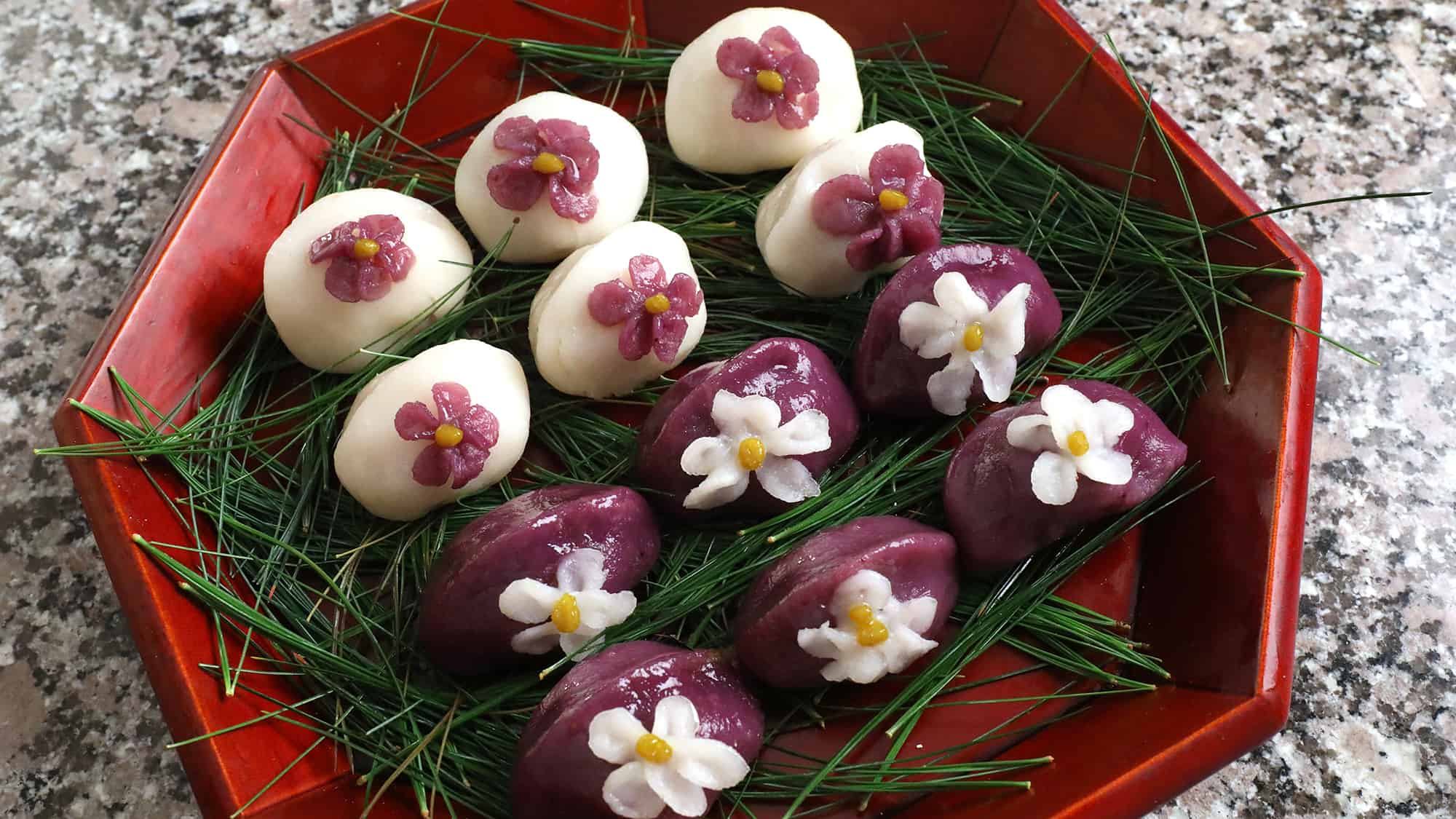
Songpyeon (송편) and the labor-of-love economy
Songpyeon is the holiday's signature, and the reason isn't taste. It's that shaping each half-moon rice cake by hand takes hours, and Korean families historically did it together the night before Chuseok. Mothers taught daughters. Grandmothers corrected pinch technique. There's a folk saying that women who shape pretty songpyeon will have beautiful children, which sounds quaint until you realize it was the social pressure that kept multigenerational kitchens occupied for an entire evening of knowledge transfer.
The fillings tell you the household: sesame and honey for sweetness, mung bean paste for a savory bite, chestnut for richness, red bean for nostalgia. The pine needles in the steamer are the giveaway. That resinous, faintly bitter aroma is the smell of Chuseok itself, and you can't fake it with a regular steamer. Even MZ세대 (Korea's Gen Z / younger millennials) who buy ready-made songpyeon at Lotte Mart still try to recreate that pine-needle layer at home for the photo.
Jeon (전) and why your apartment building smells the same on Chuseok eve
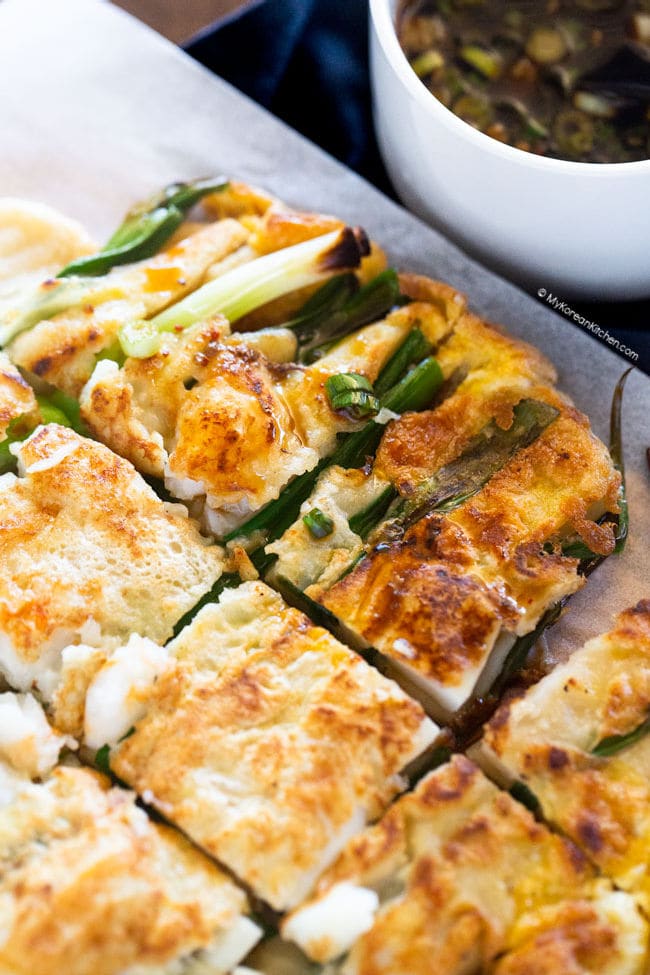
Jeon (전) is the umbrella term for Korean pan-fried, batter-coated savory pancakes, and Chuseok is the holiday they take over your kitchen. The lineup is standard: 동그랑땡 (dongeurangttaeng, mini meat patties), 동태전 (dongtae jeon, pollock fillet), 호박전 (hobak jeon, zucchini), 깻잎전 (kkaennip jeon, perilla leaf stuffed with seasoned beef), and 산적 (sanjeok, skewered beef and green onion). My friends who work at HYBE, SM, and CJ ENM all share the same complaint every September: their mothers expect them home to fry jeon for six hours straight, and there is no plausible work excuse that lands.
The appeal for a Western palate is the technique itself. Each ingredient is dredged in flour, dipped in beaten egg, then pan-fried in a thin oil layer. The result is golden, slightly chewy, and savory in a way that French crepes and American pancakes never reach. This is why K-drama scenes where a daughter-in-law fries jeon all morning while her in-laws talk read so loaded to Korean viewers. It's invisible labor made visible.
Japchae (잡채): the sweet potato noodle that earned its spot
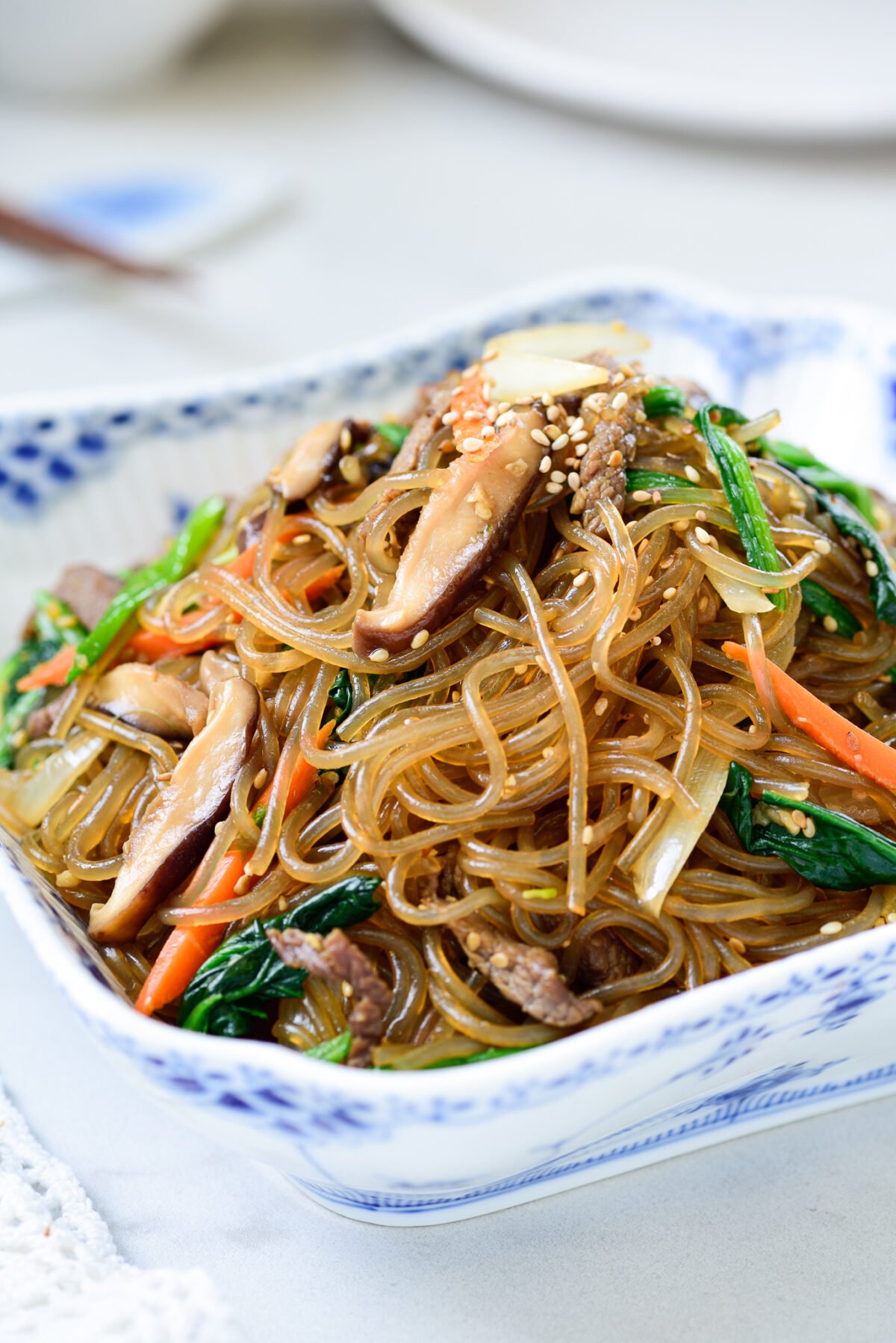
Japchae is a royal court dish from the Joseon dynasty that became a holiday standard, and the reason it survived into the modern Chuseok table is texture. 당면 (dangmyeon), Korean sweet potato starch noodles, hit a chewiness Western noodles don't. Combine that 쫄깃 (jjolgit, chewy bite) with the sesame-oil gloss of stir-fried spinach, carrot, mushroom, and beef bulgogi, and you get a dish that reads as both celebratory and digestible after three rounds of jeon and meat.
Japchae is also the dish Korean families fight about in the kitchen the most. Some pre-blanch every vegetable separately to preserve color. Others wok-toss everything together for speed. K-content figures like Maangchi and Korean Bapsang built six-figure subscriber bases partly because their japchae recipes settle a real intra-family debate about whether shortcuts are allowed. That's why Western K-drama fans recognize japchae instantly. It shows up in every romantic scene where a mom packs a lunchbox for her grown daughter.
Hangwa (한과) and the gift-economy logic of Chuseok
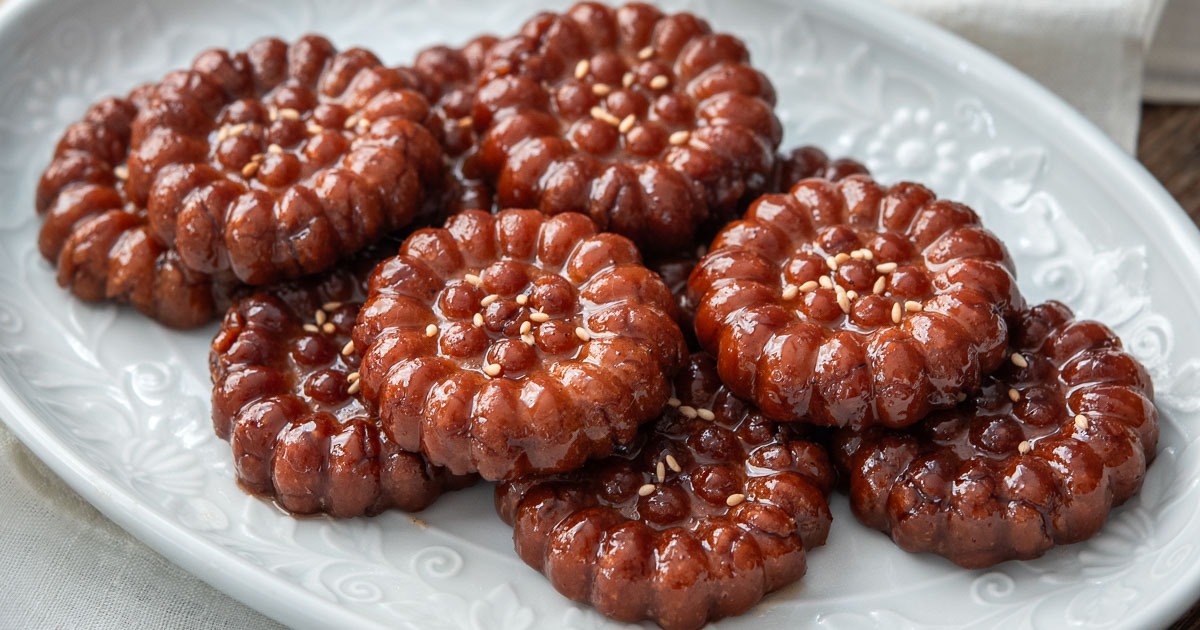
Hangwa (한과) is the catch-all for traditional Korean confections: 약과 (yakgwa, deep-fried honey cookie soaked in ginger syrup), 유과 (yugwa, puffed rice cookie), 다식 (dasik, pressed-powder sweets), and 정과 (jeonggwa, candied fruit). These aren't snacks. They're the social currency of Chuseok gift-giving. Walk into any Hyundai Department Store or Shinsegae in mid-September and the ground floor becomes a hangwa marketplace, with sets priced from ₩30,000 to ₩300,000.
The industry data here is real. Korea Agro-Fisheries & Food Trade Corporation tracks the 명절 (myeongjeol, traditional holiday) food market at roughly $2 billion annually, and pre-made 차례상 set sales surged over 300% after 2020 as MZ세대 quietly opted out of the all-day cooking ritual. CJ CheilJedang's Bibigo line and Shinsegae Food now sell complete charye-sang kits with jeon, japchae, namul, and tteok already prepared. That tension between "real" Chuseok and "convenient" Chuseok shows up in dramas like My Mister and Hometown Cha-Cha-Cha, where the mother frying jeon by hand is coded as cultural authority and the daughter-in-law unboxing CJ kits is coded as modern compromise.
Sikhye (식혜) and the digestive logic of Korean meals
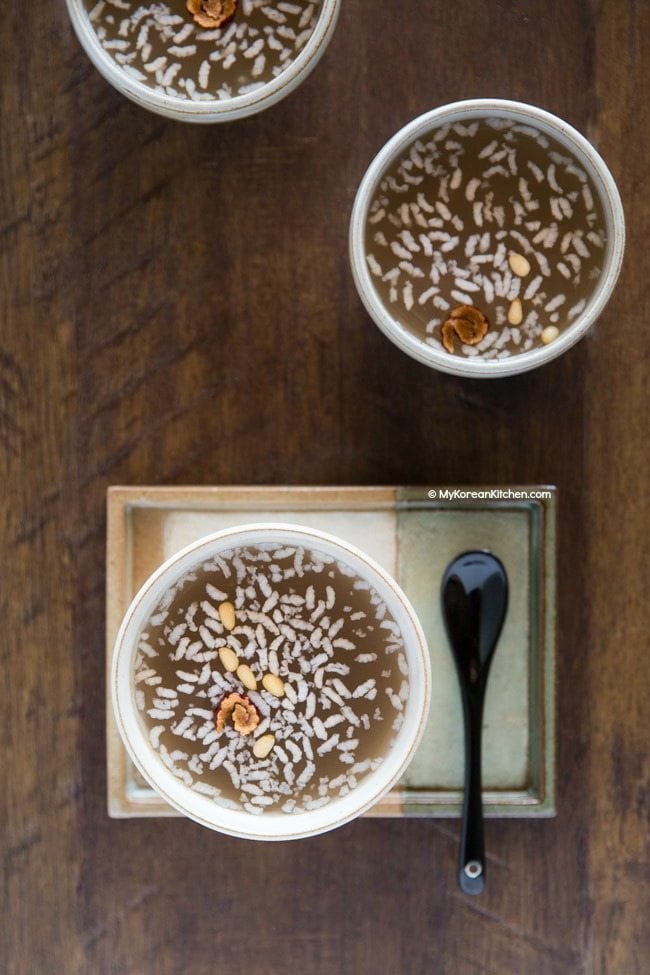
Sikhye is a mildly sweet, non-alcoholic rice punch made by fermenting cooked rice in malted barley water. It looks like cloudy water with floating rice grains. Western palates often dismiss it on first sip because the sweetness is so subtle, but that's the point. Sikhye exists to close out a heavy meal. The malt enzymes literally help break down starches in the stomach, which is why every Korean jjimjilbang serves it ice-cold next to roasted eggs.
At Chuseok, sikhye is the bridge between the heavy charye-sang foods and the long afternoon of card games and TV. The MZ세대 reframing here is interesting: Binggrae's bottled sikhye, sold in convenience stores nationwide, has become a year-round product partly because younger Koreans want the holiday taste on demand. The drink that used to mean "grandma's house at Chuseok" now means "I'm hungover and need something gentle." Same beverage, different cultural script.
Why this matters for global K-content fans
Every major Chuseok episode in K-drama history uses these five food categories as visual shorthand. The 차례상 setup scene tells you the family's class and generational tension. The jeon-frying montage tells you who's the daughter-in-law in the pecking order. The japchae bowl on the porch tells you someone is being welcomed home. The hangwa gift box at the door tells you the boss came by. The sikhye glass at the end tells you the meal is finished and the conversation can begin.
If you've watched My Mister, Reply 1988, or Hometown Cha-Cha-Cha and wondered why the holiday scenes felt so loaded, this is the answer. The food isn't decoration. It's the dialogue.
Explore Korean Snacks with Daebak
Love Korean food? Get authentic Korean snacks and ramen delivered straight to your door with the SnackFever Box by Daebak.


