


Table of Contents
Here is the honest read from someone who has spent over a decade around K-pop A&R meetings and stylist mood boards: the horror concept is not a Halloween gimmick. It is one of the most calculated reinvention lanes in Korean pop. Labels reach for 다크 컨셉 (dark concept) when a girl group needs to graduate out of pastel, when a boy group wants a Western critical re-read, or when a soloist wants to reset their public image without releasing a ballad first. Fandoms know this. The moment a teaser drops in gothic Victorian wardrobe or a horror movie color grade, group chats start asking whether this is the era, meaning the era where the group finally forces the industry to take them seriously. That is the appeal point Western pop culture writers miss when they cover this as "K-pop does spooky stuff for Halloween." 케이팝 (K-pop) uses horror as choreography for career reinvention.

Dreamcatcher: the group that made horror the whole business plan
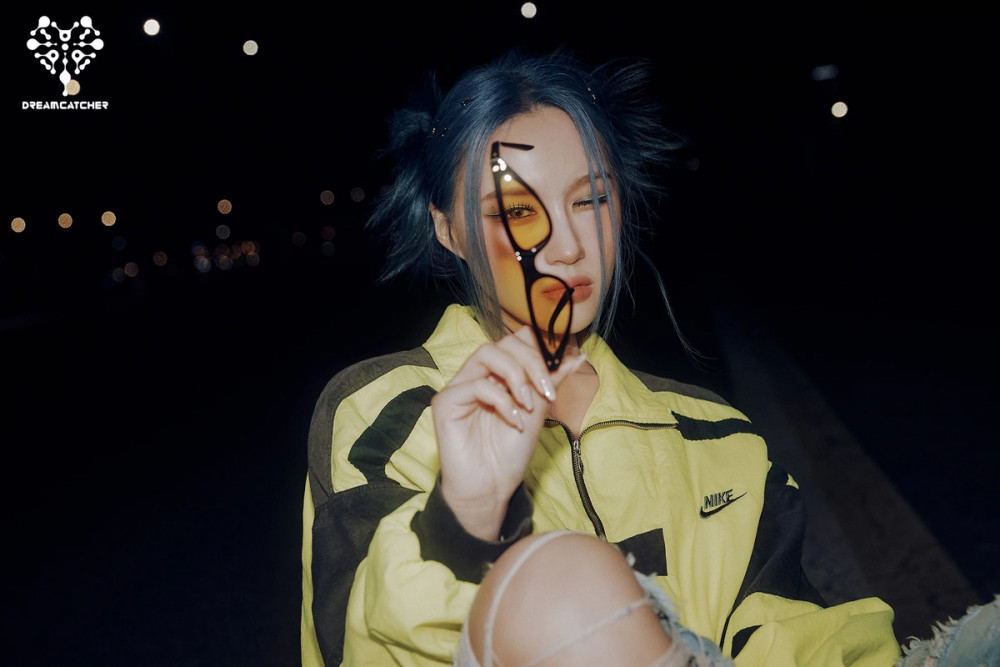
If any group deserves the founder's chair in the K-pop horror hall of fame, it is Dreamcatcher. Happy Face Entertainment relaunched what had been a struggling group (previously known as MINX) in January 2017 with a single called Chase Me. The MV opens in a haunted mansion, ends with the members swallowed into a nightmare loop, and set the template that the group has kept for nearly a decade: metal-adjacent guitar riffs under K-pop vocal lines, choreography built around horror-movie beats, and a running seven-part Nightmare narrative that treated each comeback as a chapter. Fall Asleep in the Mirror, Piri, Deja Vu, Scream, and the ongoing Apocalypse trilogy (From Us in 2023, Follow Us later that year, and Save Us) all live inside the same story world. This is not typical K-pop, and that is the strategy. When a mid-tier agency cannot outspend HYBE or SM, the only way to build a loyal international fanbase is to occupy a niche the majors are structurally too commercial to touch. Dreamcatcher's InSomnia fandom exists because no other group is committing to the horror lane with the same discipline.
Red Velvet's Peek-A-Boo: the moment SM's "Velvet" thesis actually paid off
When Red Velvet debuted in 2014, SM Entertainment gave them one of the strangest brand splits in K-pop history: a "Red" side (bubblegum, retro) and a "Velvet" side (moody, R&B, cinematic). The Velvet side did not fully land with the mainstream until Peek-A-Boo in November 2017. The MV plays as a suburban horror short film. Five red-dressed women lure a pizza delivery boy into a house, hunt him, and by the end the visual language reads more like a Yorgos Lanthimos scene than a K-pop MV. Producer duo Moonshine (Jonathan Gusmark and Ludvig Evers) later told Koreaboo the sonic template was borrowed from Scooby-Doo, which is the joke of the era: the group turned a cartoon into a slasher without ever losing radio-pop hookability.

Why fans still call this a career pivot: before Peek-A-Boo, Red Velvet were considered a great vocal group with an unfinished identity. After Peek-A-Boo, the "Velvet" half of the brand was the half that critics wrote about. Every subsequent album (Perfect Velvet, RBB, The ReVe Festival) leaned on the Velvet side because the fans read Peek-A-Boo as the moment the group's dark-chocolate era finally made sense. In stylist language: red dresses plus crowns plus a hunted man became a lookbook other agencies borrowed from for the next four years.
ATEEZ's Guerrilla: post-apocalyptic dystopia as boy-group career reset
ATEEZ live in a self-built cinematic universe called HALATEEZ, and Guerrilla (July 2022) was where the horror-adjacent side of that universe finally hit critical mass. The MV opens with the members as rebel fighters in a totalitarian city where music and art have been outlawed. Riot police, torched vehicles, dystopian graffiti, extremely un-K-pop imagery. KQ Entertainment spent visibly more on production design here than on any prior ATEEZ MV, and the payoff came fast: Guerrilla broke the group into the Top 200 territory that had been gatekept by BTS-tier acts. My read on this after watching a decade of boy-group career arcs: horror-adjacent dystopia works for boy groups where straight romance concepts do not, because it lets a group perform intensity without being sexual, which is the only intensity register that reads as "artistic" to Western critics.

Everglow, SEVENTEEN, and the "girl crush horror" grammar
Everglow's DUN DUN (February 2020) is a textbook case of horror-adjacent grammar being used for a "girl crush" positioning. Yuehua Entertainment framed the MV as end-of-world imagery: fire, ruins, jagged brass hits under the choreography. The song itself is not horror, but the visual environment tells you where the group wants to sit in the market: not cute, not seductive, but apocalyptic-cool. This became the Everglow signature, and by 2024's Zombie (post-breakup zombie imagery) they had fully turned the horror grammar into a fandom in-joke.
SEVENTEEN's HIT (August 2019) is the boy-group counterpart. Woozi and Bumzu wrote it as an escape-from-your-cage anthem, and Pledis staged the MV in a sleek dark-alley industrial aesthetic. This is not Dreamcatcher-level horror, but it is horror-grammar: the cinematography borrows from thriller films, the color grade is nearly monochrome, and the choreography reads as controlled aggression instead of typical SEVENTEEN charm. For a 13-member group that historically leaned playful, HIT was the moment they proved they could hold a dark stage without losing the fanbase. The industry lesson: even non-horror boy groups need one dark-concept single every era, because that is the b-roll the international festival bookers use.
G-Dragon's Coup d'Etat: political horror as soloist reinvention
Go back to September 2013. G-Dragon released Coup d'Etat, the album that sampled Gil Scott-Heron's The Revolution Will Not Be Televised and cast the BIGBANG member as a masked political dissident. The title track was co-produced by Diplo and Baauer. The visuals were engineered as political-horror aesthetic: interrogation rooms, riot iconography, the artist positioned as a threat to state order. This mattered because it was the moment a mainstream K-pop soloist decided to stop performing pop cool and start performing menace. YG's brand has traded on that framing ever since, and it is worth naming that after South Korea's brief December 2024 martial law episode, Coup d'Etat re-charted domestically. Korean listeners went back to the song because it read as prophetic. That is the payoff of the horror-adjacent concept done right: the song outlives the promotion cycle because the aesthetic contained a real political feeling under the pop production.
Halloween performances: "career choice" moments and Michael Jackson Thriller
Inside Korean fandoms there is a running phrase for a Halloween cover stage: 인생 컨셉 (life concept, or career-choice moment). A single seasonal performance can reset a member's public perception the way a full comeback normally would. GFRIEND's Yerin covering the Thriller choreography in 2019 got clipped and reposted for years. TWICE's annual Halloween fan meets (before 2022) were where members like Chaeyoung and Momo publicly performed a vampire or Wednesday Addams styling that then leaked into their next comeback lookbook. This is a genuine fandom-recognized mechanic: the Halloween stage is a stylist R&D lab. It lets the styling team float ideas the label would never green-light for a title-track era.
Cover choices matter too. Michael Jackson's Thriller is the single most-performed non-Korean cover on K-pop Halloween broadcasts, and it is not sentimental. It is a technical proving ground. Thriller's choreography is famously hard, so a group performing it clean signals dance credibility without needing a new song. Girl groups like MOMOLAND, ITZY, and NMIXX have all done Thriller variations. The performance reads to fans as: we belong in the pop-choreography lineage that runs from MJ through Beyoncé, we are not just a K-pop novelty.
The post-2020 dark concept mainstream: Nxde, EASY, and the aesthetic winning without the horror
Post-2020 the horror concept has bled into the mainstream in a quieter way. (G)I-DLE's Nxde (October 2022) is not a horror song, but the visual grammar (Marilyn Monroe framing, black-and-white sequences, the sketch-film cold open) is unmistakably lifted from the dark-concept toolkit that Dreamcatcher and Red Velvet built. The song is a body-autonomy statement, and Cube Entertainment used dark-concept cinematography to make it read as artistic instead of provocative. Similarly, LE SSERAFIM's EASY (February 2024) borrows dark noir grammar to sell a message about deceptive confidence. The aesthetic is what carries the meaning. In HYBE stylist language: dark concept is now the default lens for messages that need to feel serious. Bright concepts are for fun songs. Dark concepts are for songs that want to be respected.
The 이태원 context: why Korean Halloween is muted while the concept side keeps going
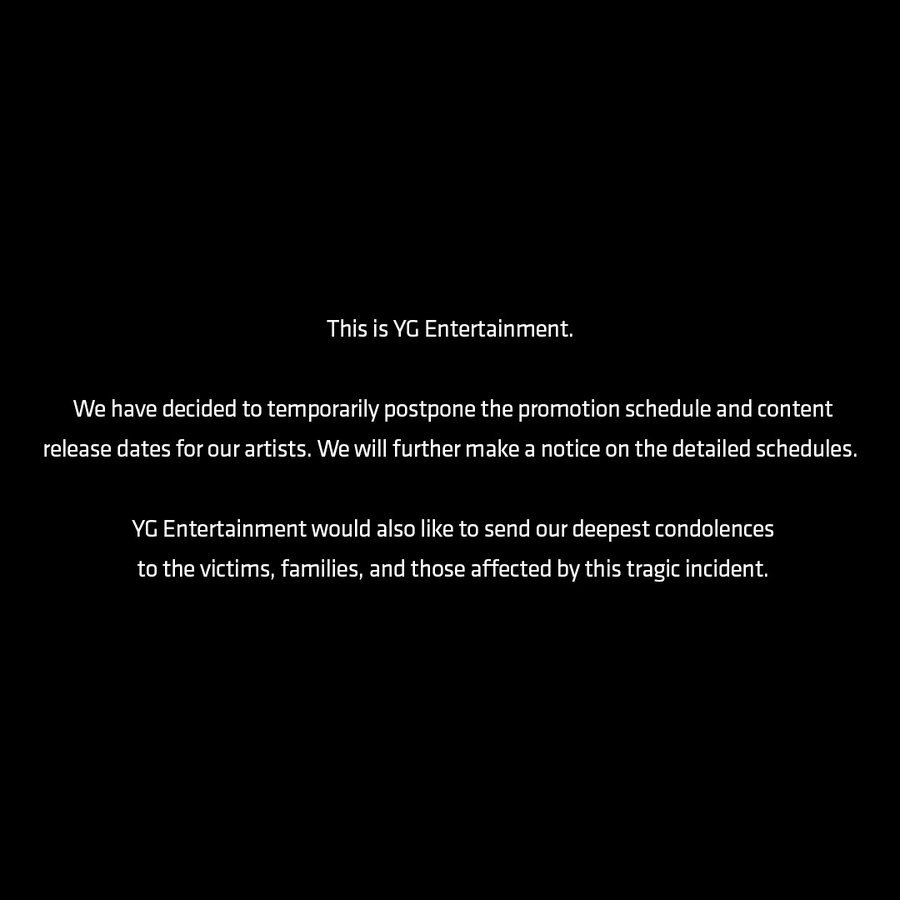
On October 29, 2022, a Halloween crowd crush in 이태원 (Itaewon) killed 159 people, most of them in their twenties. Per Korea Herald reporting from the days after, the K-pop industry paused within 48 hours: JYP canceled TWICE's Halloween-themed anniversary fan meet, SM canceled SM Town Wonderland, YG froze promotional content, HYBE postponed its corporate briefing, and Jin's solo rollout was pushed. Bands mid-tour, including ATEEZ and Dreamcatcher, kept concerts subdued and addressed the audience from stage. The tragedy structurally reshaped the Korean Halloween calendar. Since then, the big label Halloween fan-meet tradition has never returned at pre-2022 scale. Bars and clubs in Itaewon and Hongdae still trim their Halloween marketing on the anniversary window. This is the appeal point that is genuinely Korean about the current dark-concept moment: the industry has quietly separated public-facing Halloween celebration (still muted, still sensitive) from concept-side dark aesthetics (still on, still evolving, still driving comebacks). Both are true at the same time.
How to read a dark concept teaser like a stylist
A practical field guide, in case a teaser drops mid-year and the fandom does not know whether the era is real. First, wardrobe: Victorian goth wardrobe (corsetry, lace, blood-red accents) usually signals full horror commitment (Dreamcatcher, Red Velvet Peek-A-Boo). Sleek monochrome leather usually signals horror-grammar without full horror (SEVENTEEN HIT, LE SSERAFIM EASY). Second, color grade: if the LUT crushes blacks and desaturates skin tone toward cool blue, the label wants a serious critical read. Third, choreography stills: sharp downbeat freezes and low-angle shots signal a title-track era; softer profile shots signal a B-side. Fourth, story-world hints: any reference to a running narrative (Dreamcatcher's Nightmare/Apocalypse arc, ATEEZ's HALATEEZ universe) means the label is committed to a multi-year buildout. That is the fandom-recognized language and it is why teaser-day group chats read like literary criticism seminars.
Bring the K-pop Universe Home with Daebak
Want K-pop, K-snacks, and K-culture arriving at your door each month? The Daebak Box is a monthly Korean lifestyle subscription curated by the Daebak team, packed with snacks, drinks, K-beauty picks, and K-pop merchandise so you can carry the 다크 컨셉 fandom energy into everyday life. Perfect for the InSomnia in your group chat.


