


Table of Contents
Ask any Korean about the exact moment winter starts, and you will not get a date. You will get a smell: brown sugar melting into cinnamon on a hot griddle, coming out of a paper cup at a corner 노점상 (street stall). That is hotteok (호떡), and it is the reason Koreans keep loose 3,000-won bills folded in their coat pockets from November through February.
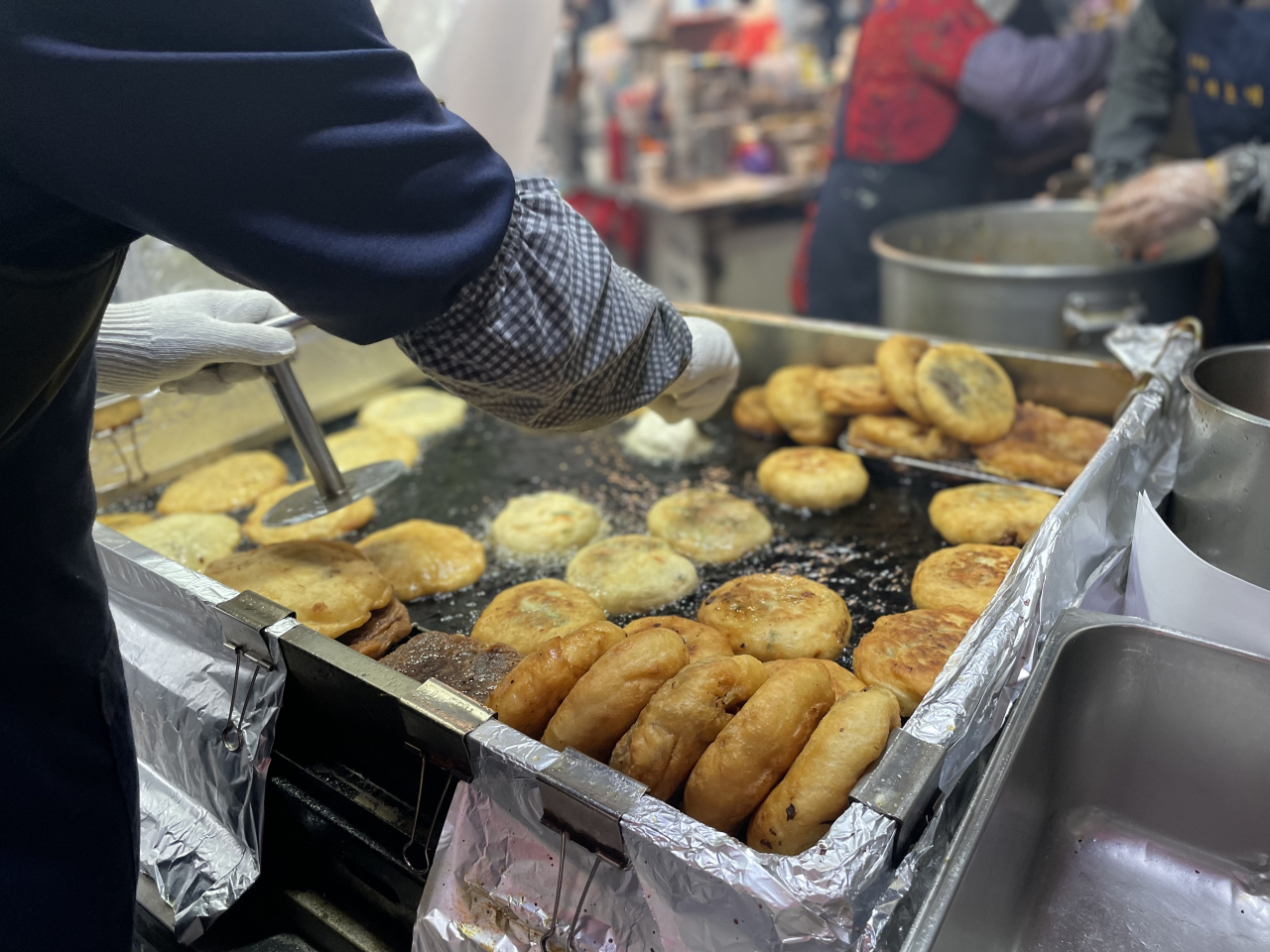
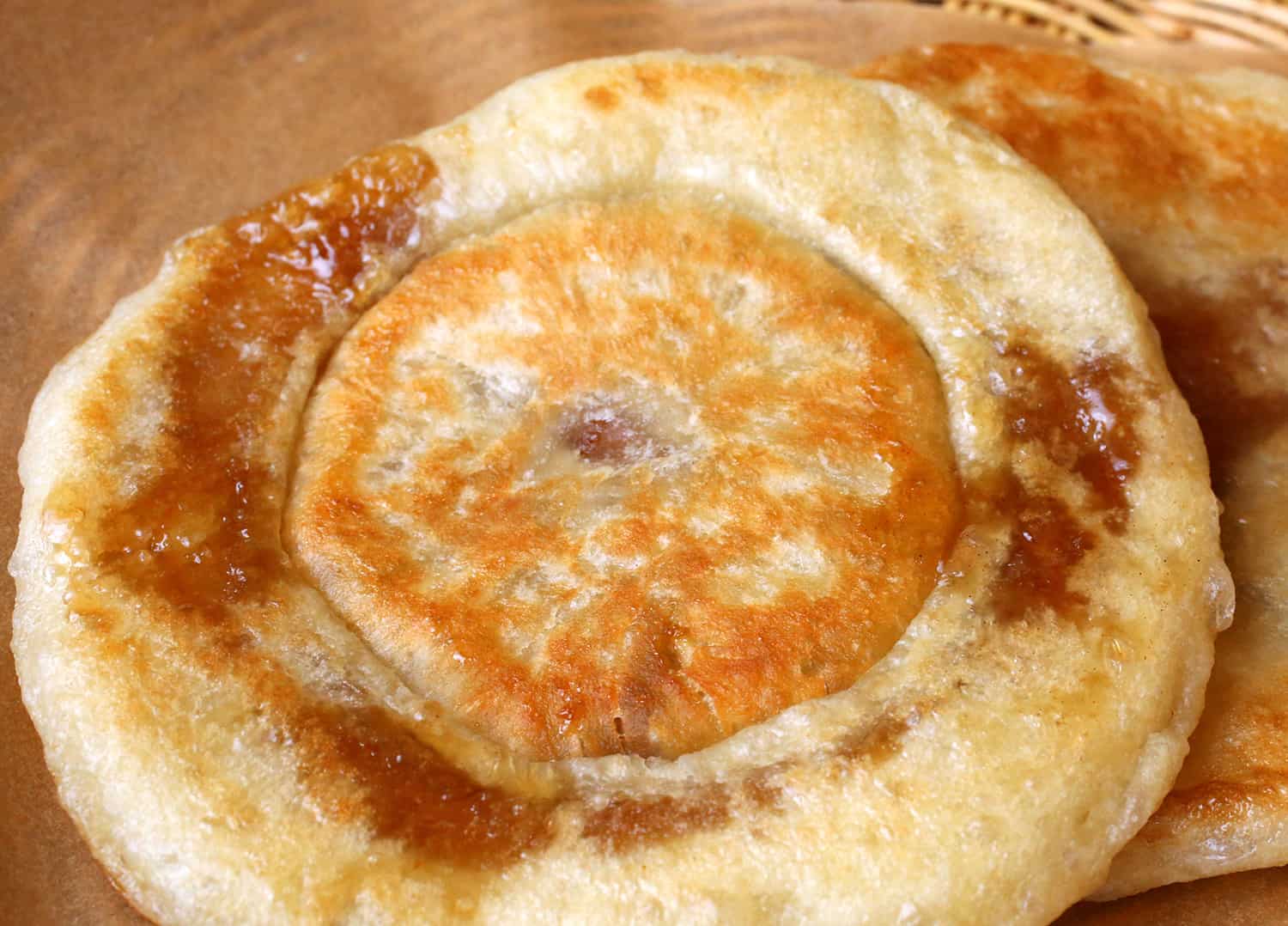
I've spent more than a decade around Korean food branding and hallyu content marketing, and I can tell you the industry has tried to franchise hotteok a hundred different ways. It still refuses to become a chain product. The reason is textural: a proper hotteok is a yeast-risen dough pressed thin on a hot iron, its inside pockets of brown sugar liquefied into a molten pool of syrup with crushed walnuts or peanuts suspended in it. Bite the crisp golden crust and the sugar rushes at you at 90 degrees Celsius. Miss it by ten minutes and you have just a cold, chewy roll. This is a food that has to be made in front of you, which is exactly why every 겨울 간식 (winter snack) alley from Namdaemun to Nampo-dong is packed on the coldest nights of the year.
The Winter Street Food Trio Every Korean Grew Up On
Hotteok travels with two siblings: 붕어빵 (fish-shaped red bean cakes) and 계란빵 (egg bread). Together they form the holy trinity of Korean winter street food. You will see the exact same three stalls setting up in Insadong, Hongdae, Myeongdong, and outside every subway exit in Seoul once the temperature drops below 5 degrees Celsius. There is a real economic logic here that most tourists miss. A single hotteok has roughly 300 won in ingredients (flour, yeast, brown sugar, oil, nuts) and sells for 1,500 to 3,000 won. That is a 5x markup, and vendors move 400 to 600 units a night at peak, which is why the Korean street food economy is now estimated at over 200 billion won annually. Winter is the make-or-break season, and hotteok is the anchor SKU.
What Actually Goes Inside
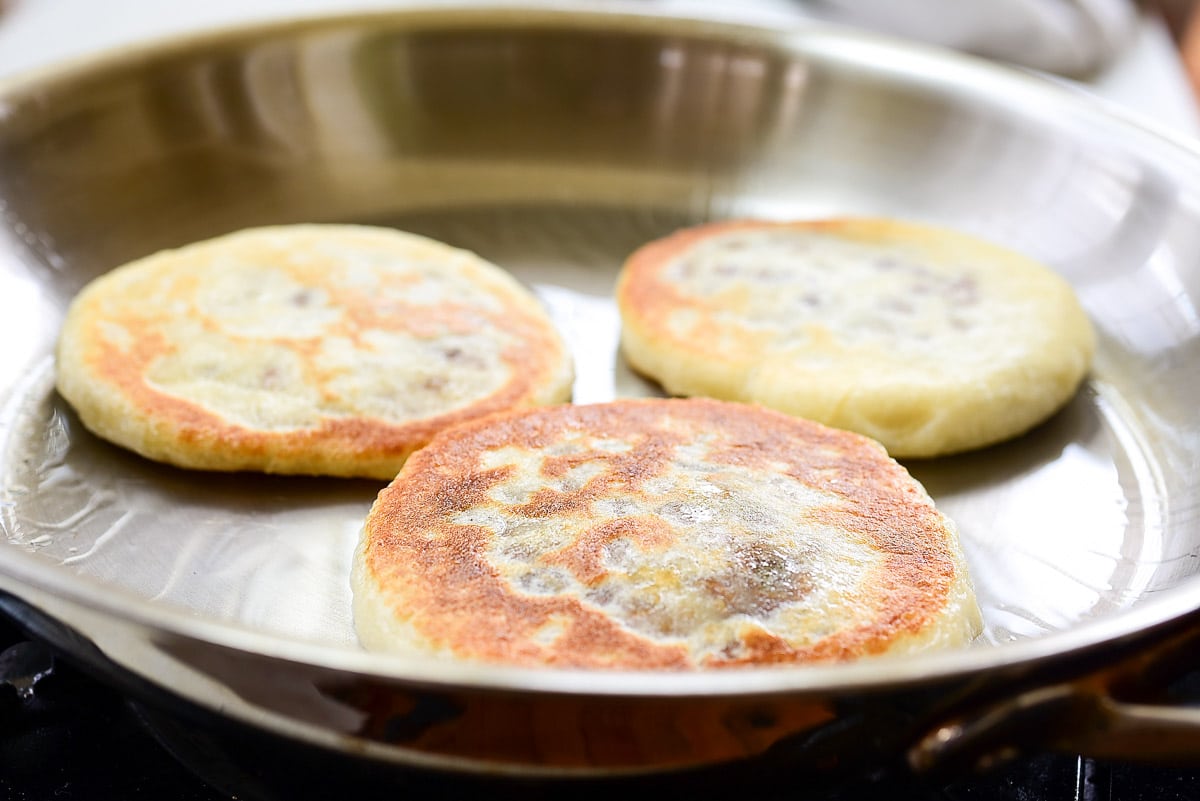
The classic filling is deceptively simple: dark brown sugar, cinnamon powder, and chopped walnuts or peanuts. What the recipe books rarely tell you is that vendors slip a spoonful of fine breadcrumbs into the sugar to stop it from crystallizing into a hard sheet. That is why street hotteok has that specific molten-lava mouthfeel, while a lot of homemade attempts end up gritty. Beyond Kimchee's Hyegyoung Ford, who lives in Korea, has written openly about picking up this exact trick from Seoul stall owners. The dough itself is a yeast-risen blend of wheat flour and 찹쌀가루 (glutinous rice flour). The 찹쌀 is what gives it the 쫄깃 (chewy, springy) bite that separates it from a Western donut.
Busan's Ssiat Hotteok and the BIFF Square Legend
If you have to pick one hotteok pilgrimage site, it is BIFF Square in Busan's Nampo-dong. The story goes back to the Korean War era, when refugees from the North landed in Busan and started stuffing their hotteok with cheap, filling seeds. That became 씨앗호떡 (seed hotteok), and today two competing stalls, "Seunggi Hotteok" (made famous by variety show 1박2일) and "Original Mr. Hotteok" (in operation since 1987), face off across the same alley. The vendor deep-fries the pancake, slits one side, and stuffs a whole cup of sunflower and pumpkin seeds inside before folding it into a paper cup. Lines regularly hit 30 minutes during the Busan International Film Festival. That intense-crunch, sweet-nutty combo is why 씨앗호떡 has spread nationwide as a premium Busan variant, priced at 2,500 to 3,000 won per piece.
Green Tea, Cheese, and the Seongsu Gourmet Turn
Hotteok is not just a nostalgia product. Since around 2019, gourmet cafes in Seongsu-dong and Itaewon have been rebuilding it as a 5,000 to 8,000 won dessert: 녹차호떡 (green tea hotteok) with matcha-dusted dough, mozzarella-cheese-and-japchae savory versions, and, most viral of all, hotteok ice cream sandwiches where a warm pancake is folded around a scoop of vanilla or 팥 (red bean) ice cream. The temperature contrast is what sells it. There is also 야채호떡 (vegetable hotteok), which flips the whole concept savory with a stir-fried veggie-and-noodle filling. Maangchi has been teaching Western home cooks that variation for years, and it is genuinely underrated. The industry angle: the same 300-won-cost pancake now clears an 8,000-won ticket in Seongsu, which is a 26x margin. That is why every Korean dessert startup you see on Instagram is trying to reinvent 호떡.
Why K-Dramas Keep Filming Hotteok Scenes
If you have watched any K-drama set in winter, you have seen a hotteok scene. Goblin (2016) folds one into the market chase sequence. Weightlifting Fairy Kim Bok-joo turns hotteok into a running motif for the lead's late-night carb cravings. Extraordinary Attorney Woo has a quiet moment where the character eats hotteok on a bench, and that clip became a fan-editing favorite on TikTok. This is not coincidence. Korean screenwriters lean on 호떡 because it is short-hand for warmth, working-class comfort, and a moment where two characters can stop and share something without dialogue. Hotteok is a physical prop that does emotional work, which is why it consistently outperforms staged studio meals in memorable-scene rankings from Korean fan surveys. The global spillover is real: the #hotteok hashtag on TikTok crossed 200 million views by late 2022 and is still climbing, with most of the traffic coming from home cooks in the US, UK, and Southeast Asia recreating what they saw onscreen.
Trying It at Home (and Where to Start)
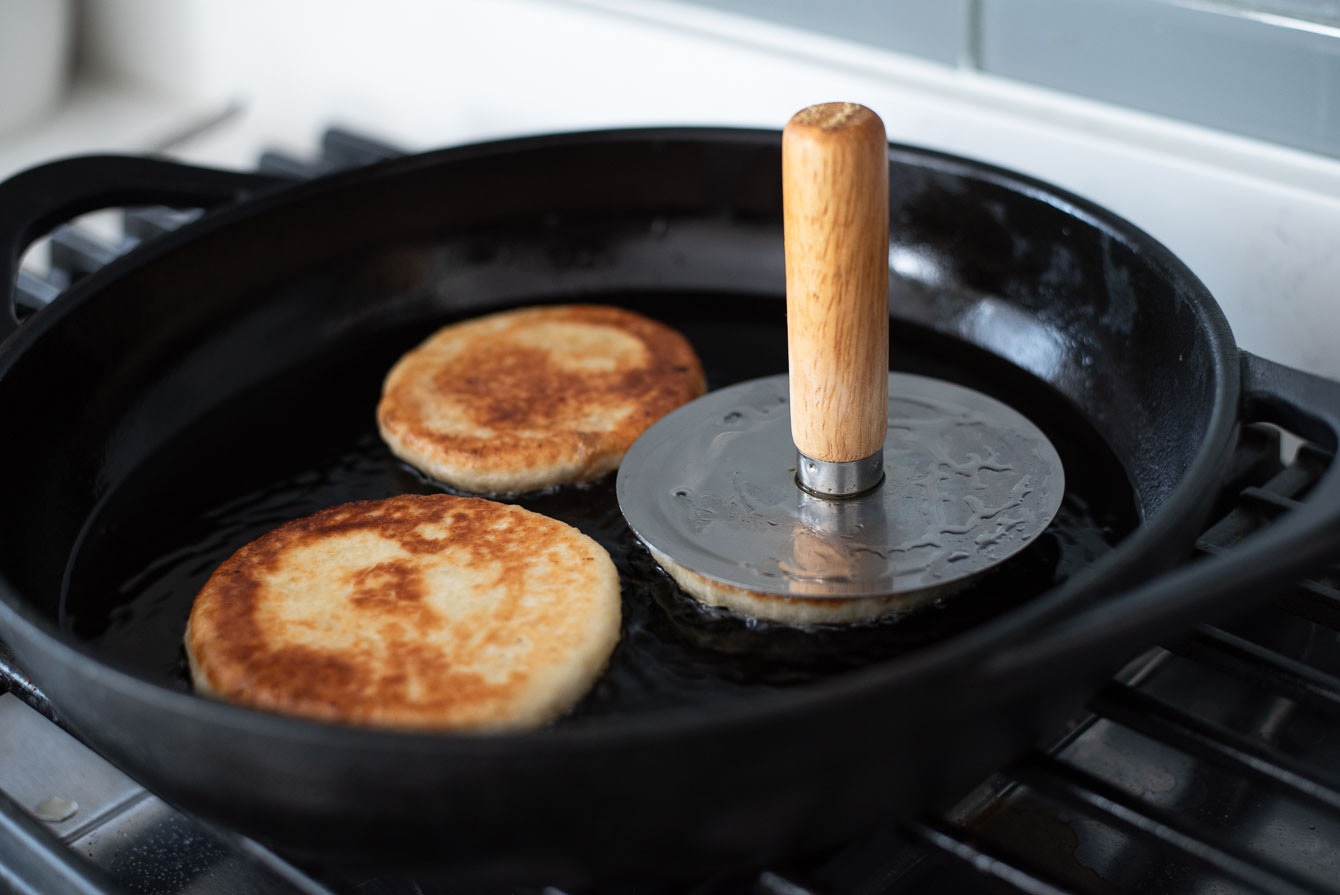
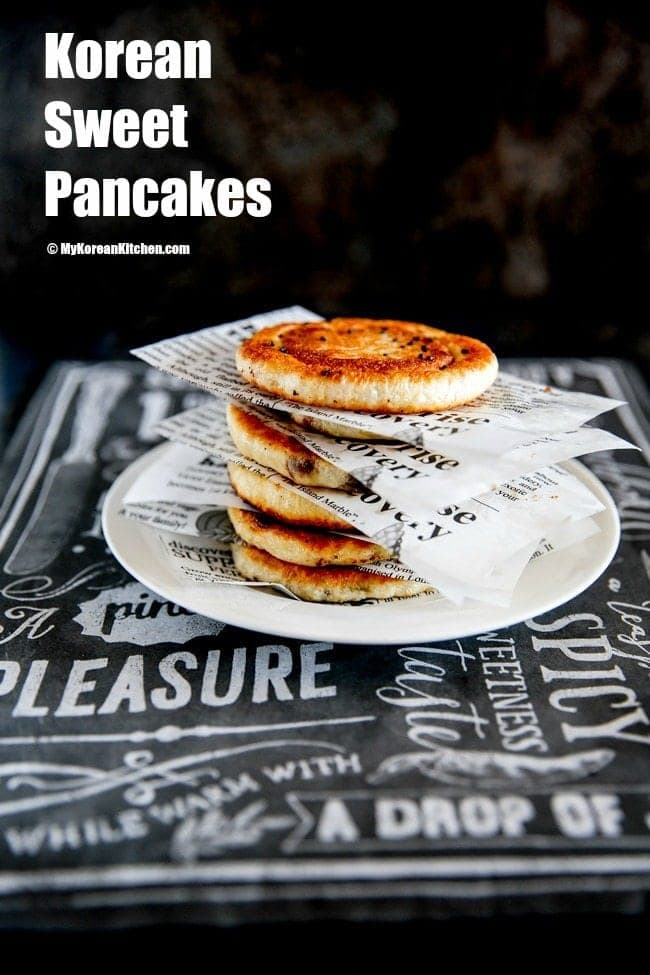
You do not need a special hotteok press or a Korean market griddle to make a decent one. All you need is instant yeast, all-purpose flour, a little 찹쌀가루 if you can find it, and the classic dark brown sugar plus cinnamon plus crushed walnut filling. Maangchi's original recipe from 2010 is still the most beginner-friendly. Korean Bapsang's 씨앗호떡 version is the closest thing to what you would get in Busan, packed with sunflower, pumpkin, and pine nuts. My Korean Kitchen's premix-shortcut works if you want it on the table in 30 minutes. The one rule everyone agrees on: eat it hot. A cold hotteok is a betrayal.
If getting to a real 노점상 in Seoul is not on your calendar this winter, the next-best move is to have Korea's snack culture shipped to your door. The SnackFever Box curates the exact kinds of Korean snacks, cookies, and hotteok-adjacent treats that Seoul convenience stores rotate through every season, so you can taste your way through Korean 겨울 간식 without booking the flight. Warm up the kettle and dig in.


