


Table of Contents
I still remember the HYBE marketing deck that opened with a slide titled “What comes after the Billboard chart?” The answer was not another chart. It was a UNICEF partnership. That single strategic pivot in late 2017 explains most of what people mean when they say 방탄소년단 changed the world. The group did not just tour bigger venues. They welded their brand to a cause, then let 아미 turn that cause into an infrastructure.

Love Myself: a campaign designed to outlast the album cycle
Launched November 1, 2017 with the UN Children’s Fund, Love Myself was tied structurally to the Love Yourself trilogy: three percent of physical album sales, one hundred percent of official campaign merchandise, plus a roughly $447,000 seed from Big Hit and the seven members. Most idol charity moves are one-off donations tied to a birthday. This one was baked into the SKU sheet.
Why that structural choice matters: it turned every album pre-order into a small act of donation, which is the kind of mechanic that keeps working long after the promotional window ends. By 2020 the fund had crossed roughly $3.6 million and UNICEF handed BTS an Inspire Award in the Integrated Campaigns and Events category, one of eighteen given out of a hundred submissions from fifty countries. That is not a fan-service line item. That is UNICEF acknowledging the campaign moved policy needles on ending violence against young people, which is the actual mandate behind #ENDviolence.
The 유엔 podium: three speeches, three different registers

September 24, 2018. RM steps to the podium at the UN General Assembly, opens Generation Unlimited, and closes with a line that got tattooed onto arms all over the world: “No matter who you are, where you’re from, your skin color, your gender identity, just speak yourself.” He was twenty-four. He spoke in his second language. He looked terrified for about ninety seconds. That is not a minor detail. Most K-pop groups by 2018 were being run through media-training scripts so tight the members sounded like they were dubbing themselves. RM sounded like a person.
Then came September 2020, mid-pandemic, a pre-recorded 75th Session address about resilience. And September 2021, the Sustainable Development Goals moment, where the seven members walked into the General Assembly hall in matching suits and filmed the “Permission to Dance” performance inside the actual UN chamber. Each speech served a distinct function. 2018 introduced BTS as youth ambassadors. 2020 spoke into pandemic despair. 2021 rebranded the SDGs to a generation that had never heard the acronym. That is a fluency in soft-power messaging that most governments cannot buy.
The Grammys, and the door BTS actually opened

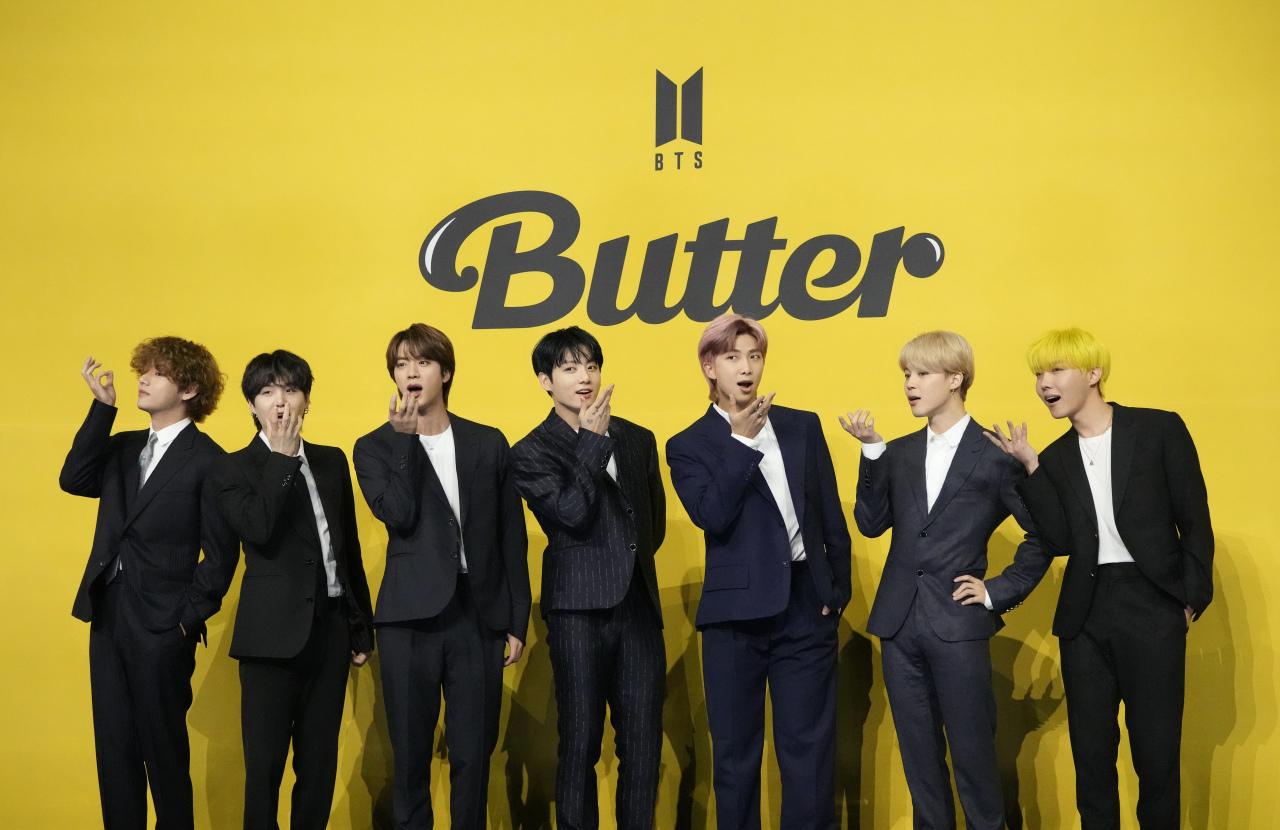
“Dynamite” earned the first Grammy nod in November 2020, Best Pop Duo/Group Performance. First K-pop act ever nominated in a major Grammy category. They lost to “Rain On Me,” and every ARMY on Twitter knew the fix was in about ten seconds after the envelope opened. But the loss is not the story. The story is that HYBE built the “Dynamite” rollout as a Grammy-eligibility play, not just a chart play: English-language single, disco-pop tempo, radio-friendly runtime, all engineered to slot into the Recording Academy’s preferred format. It worked. “Butter” then repeated the trick with a 2021 nomination and again in 2022.
That was the door. Every major K-pop label copied the template inside two release cycles. Stray Kids, TXT, and later Ateez all now build annual releases with a specific English-track slot for Western awards eligibility. BTS did not just get nominated. They redrew the roadmap.
The mental-health lyrics that made a fandom into a movement
What made the Love Myself platform credible was that the songs backed it up. “Answer: Love Myself” from Love Yourself: Answer is the exact lyrical distillation of the campaign thesis, self-love as the precondition for loving anyone else. But the harder-hitting tracks are the earlier ones. SUGA’s “The Last” from his 2016 Agust D mixtape flat-out names the social anxiety and depression he was diagnosed with. “Magic Shop” from Love Yourself: Tear uses psychodrama theory to build a fictional room where a listener can put down their self-hatred. In Korea, where 자기애 was still coded as arrogance and mental-health disclosure was career-suicide, this level of honesty from seven top-earning idols was seismic.
“Zero O’Clock” from Map of the Soul: 7 takes a different angle. Not a confessional, more a hand on the shoulder. If you were a fifteen-year-old ARMY in 2020, isolated by lockdown, that track was a therapy session in three minutes. Post-pandemic, the group also cut PSAs on vaccine hesitancy, appearing with Cheong Wa Dae in 2021 and then with the White House in 2022, because they understood that the same trust equity that moved album units also moved public-health decisions.
아미 as infrastructure: the fandom that gives money away
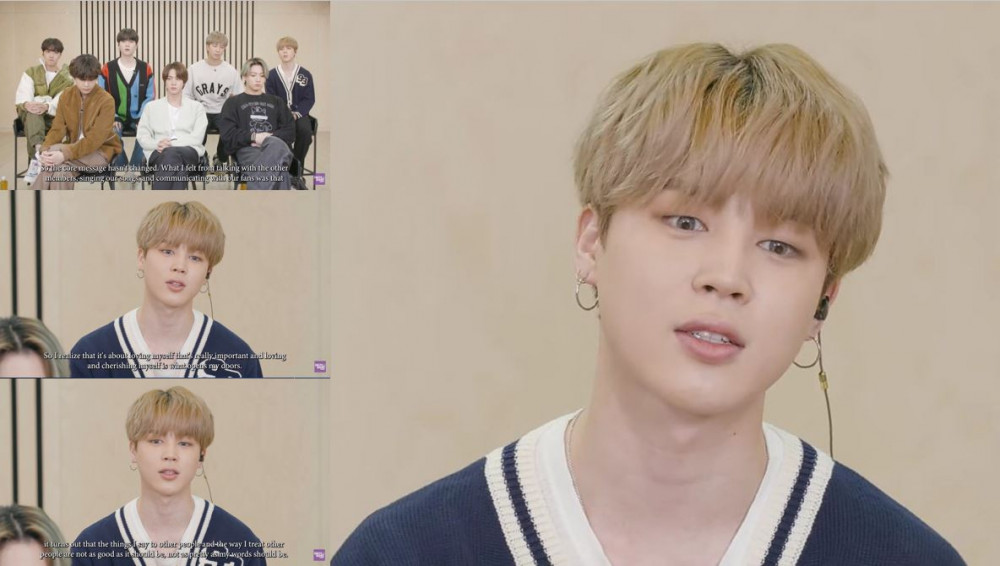
Anyone who has actually worked with 팬덤 operations in Seoul knows the hierarchy. Fan cafes coordinate the streaming, ARMY subunits handle the birthday drives, and translator accounts push messaging into ninety-plus languages within hours of a Korean-language post. What made ARMY a genuine philanthropic force is the mechanic they invented around member birthdays. When SUGA turned 28, he donated 100 million won to help children with pediatric cancer. Within a week ARMY had matched him globally. When J-Hope donated 200 million won to Asan Medical Center for his birthday, the fandom’s We Purple You collective ran parallel drives that planted trees in the Amazon and funded pediatric wards from Manila to São Paulo.
The 2020 Black Lives Matter moment was the inflection point. BTS donated one million dollars to the movement. ARMY matched the full million in about twenty-five hours, coordinated across dozens of Discord servers, currency-conversion spreadsheets, and receipt-verification bots. That is not spontaneous. That is a fandom running like a nonprofit ops team, and it exists because BTS treated 아미 like collaborators, not customers.
Weverse, and why the pipeline matters
None of the philanthropic muscle would have scaled without Weverse. HYBE launched the platform in mid-2019, absorbed Naver’s V Live audience in 2023, and by mid-decade was clearing over ten million monthly active users. From an ops standpoint, Weverse is a fandom CRM: direct posts from members, translated automatically, timestamped for pinpoint drop coordination. When a birthday drive kicks off, ARMY leads post the fundraising link on Weverse first, then it fans out to Twitter and Reddit within minutes. That pipeline is why an idea born in Seoul can hit a bank account in Lagos or Lima the same evening.
Is the platform perfect? No. The Korea Herald has documented ARMY frustration with HYBE’s aggressive merch pricing and its NFT push, and fans have publicly pushed back with #BoycottHYBE campaigns when they felt exploited. But the same infrastructure that lets HYBE monetize also lets ARMY organize, which is a rare feature in modern celebrity culture. Most artist platforms are one-way broadcast. Weverse is two-way, and BTS treats the return channel as real.
The bigger read: BTS built a template
The reason 방탄소년단’s impact keeps compounding is not the streaming numbers. It is that they proved a specific formula works: pair the music with a cause with structural funding, then treat the fandom as a distribution partner rather than a revenue target. Every K-pop label from HYBE to SM to JYP now allocates dedicated CSR budgets tied to release cycles because the Love Myself math turned out to be sustainable. Stray Kids ran a UNICEF collab. TWICE partnered with WWF. NewJeans quietly funds Korean pediatric hospitals through ADOR. None of that happens without BTS clearing the runway in 2017.
If you want the deeper Korean cultural context behind the songs, the collaborations, and the fandom rituals that shaped ARMY into a global movement, the Daebak Box is our monthly window into the artists, snacks, and culture that make 한류 what it is. It is the closest thing to a curated tour of what people mean when they say “Korean wave.”


