


Table of Contents
Si vous vous êtes déjà aventuré dans le rayon des ramyeon d'une épicerie coréenne, vous avez probablement repéré le mot bokkeum (볶음) imprimé à maintes reprises sur les paquets et les affiches. Le mot semble intimidant, mais sa signification est merveilleusement simple : le bokkeum est tout ce qui est sauté. Une fois que vous commencez à le remarquer, vous réalisez qu'une grande partie de la nourriture la plus addictive de Corée, du porc grésillant sur une plaque chauffante aux gâteaux de riz moelleux noyés dans une sauce rouge, est techniquement un plat de bokkeum. Ce guide explique ce que signifie le bokkeum, pourquoi c'est important et quels plats vous devez absolument essayer.
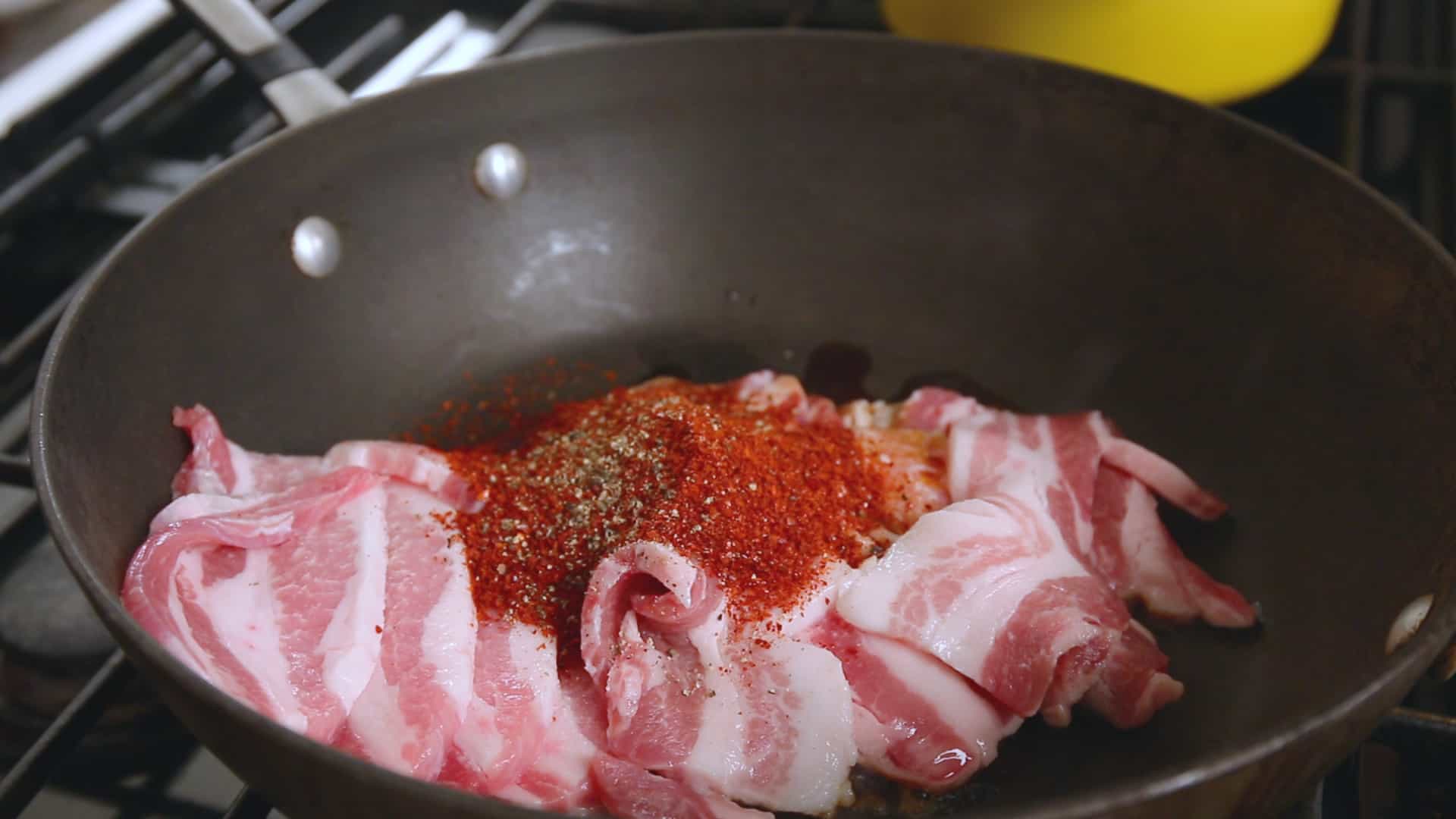
Que signifie réellement « bokkeum » ?
Bokkeum (볶음) vient du verbe bokkda (볶다), qui signifie sauter ou frire à la poêle à feu vif avec un minimum de liquide. C'est l'une des méthodes de cuisson fondamentales de la cuisine coréenne, aux côtés du grill (gui), de l'ébullition (jorim) et du ragoût (jjigae). Un plat de bokkeum commence généralement par une huile aromatique, puis incorpore des protéines ou des légumes, et se termine par une sauce relevée, souvent à base de gochujang (pâte de piment rouge), de sauce soja, d'ail et d'huile de sésame. Le résultat est quelque chose de brillant, profondément assaisonné et rempli de ces bords caramélisés que seule une cuisson à haute température peut produire.
Comme la technique est si flexible, le bokkeum apparaît partout sur la table coréenne. Il peut être un plat principal, un plat d'accompagnement (banchan), un anju (plat pour accompagner la boisson) ou même du riz frit. Certains plats de bokkeum sont très relevés avec du piment. D'autres, comme le japchae, sont doux, savoureux et délicats. L'ADN commun est toujours le même : chaleur élevée, cuisson rapide, grande saveur.
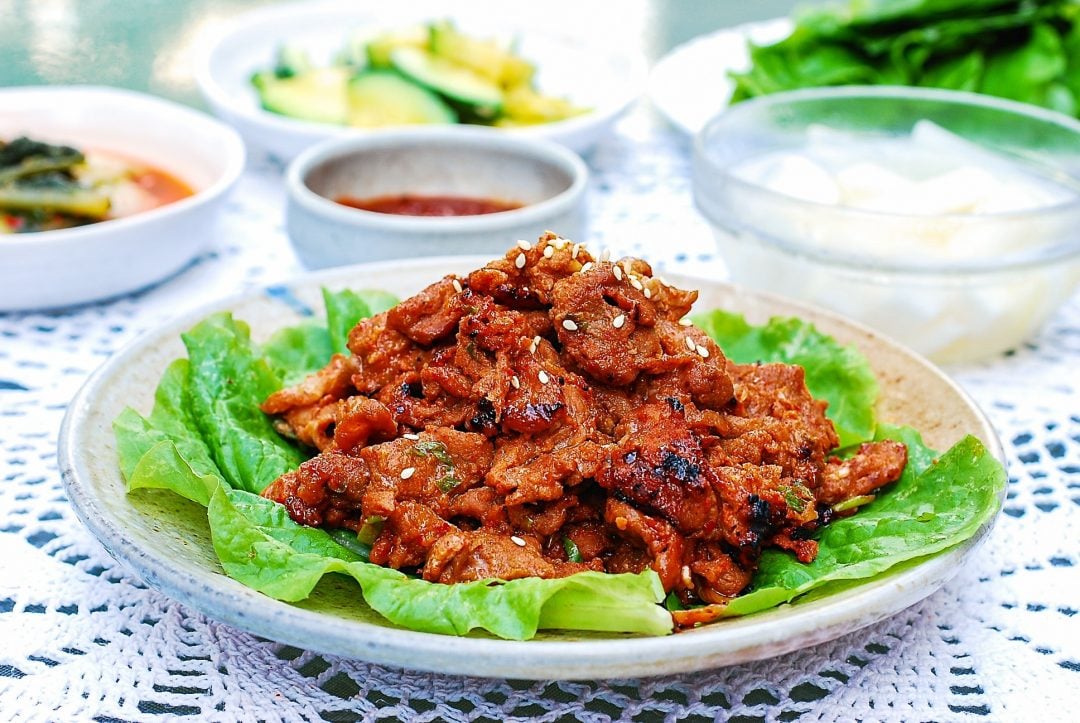
Jeyuk bokkeum : le classique du porc épicé
S'il y a un plat de bokkeum qui définit la cuisine familiale coréenne, c'est le jeyuk bokkeum (제육볶음), également appelé dwaejigogi bokkeum (돼지고기볶음). Des tranches fines de porc, généralement de l'épaule ou de la poitrine, sont marinées dans une sauce rouge ardente de gochujang, gochugaru, sauce soja, sucre, ail et gingembre, puis saisies dans une poêle chaude jusqu'à ce que les bords soient croustillants et que la sauce devienne collante. Selon Korean Bapsang, l'ail frais et le gingembre sont essentiels, à la fois pour la saveur et pour atténuer la richesse du porc.
Le jeyuk bokkeum est la protéine classique des déjeuners à emporter et la commande par défaut dans des milliers de restaurants des quartiers d'affaires coréens. La façon traditionnelle de le manger est de l'envelopper dans une feuille de laitue ou de périlla avec une noisette de ssamjang, une lamelle d'ail cru et un morceau de piment vert, le tout blotti autour d'un morceau de porc et de riz. C'est désordonné, glorieux et parti en quelques secondes.
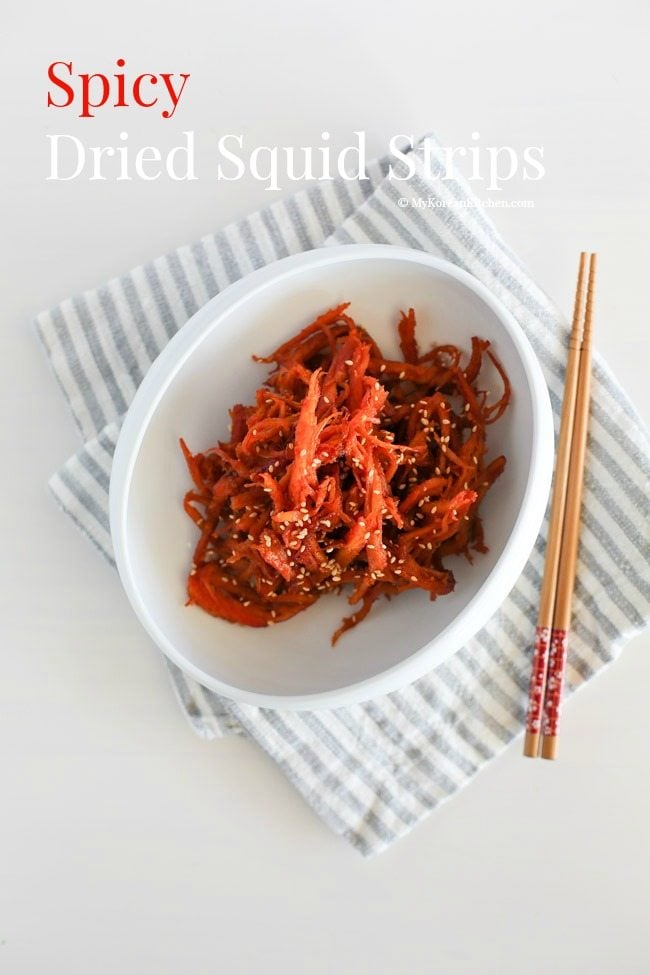
Ojingeochae bokkeum : l'addictif banchan
Le bokkeum n'est pas toujours un plat principal. De nombreux banchan coréens les plus appréciés sont des sautés servis en petites portions avec du riz et de la soupe. L'ojingeochae bokkeum (오징어채 볶음) en est l'exemple parfait. Le calmar séché râpé est brièvement trempé, puis mélangé dans une sauce brillante de gochujang, de sauce soja, de miel et d'ail jusqu'à ce que chaque filament soit enrobé d'une laque aigre-douce. Le résultat est moelleux, salé et légèrement collant, le genre de plat d'accompagnement que l'on ne cesse de grignoter directement dans le récipient.
Sue de My Korean Kitchen note que ce banchan est particulièrement apprécié des enfants, qui adorent la texture moelleuse et le goût sucré. C'est aussi un anju classique, servi en petites assiettes avec de la bière froide ou du soju. Pour une option de fruits de mer plus épicée, le nakji bokkeum (낙지볶음), poulpe bébé sauté, apporte une chaleur de piment ardent et des tentacules de poulpe tendres et élastiques. De nombreux Coréens le considèrent comme l'un des plats les plus épicés de toute la cuisine.
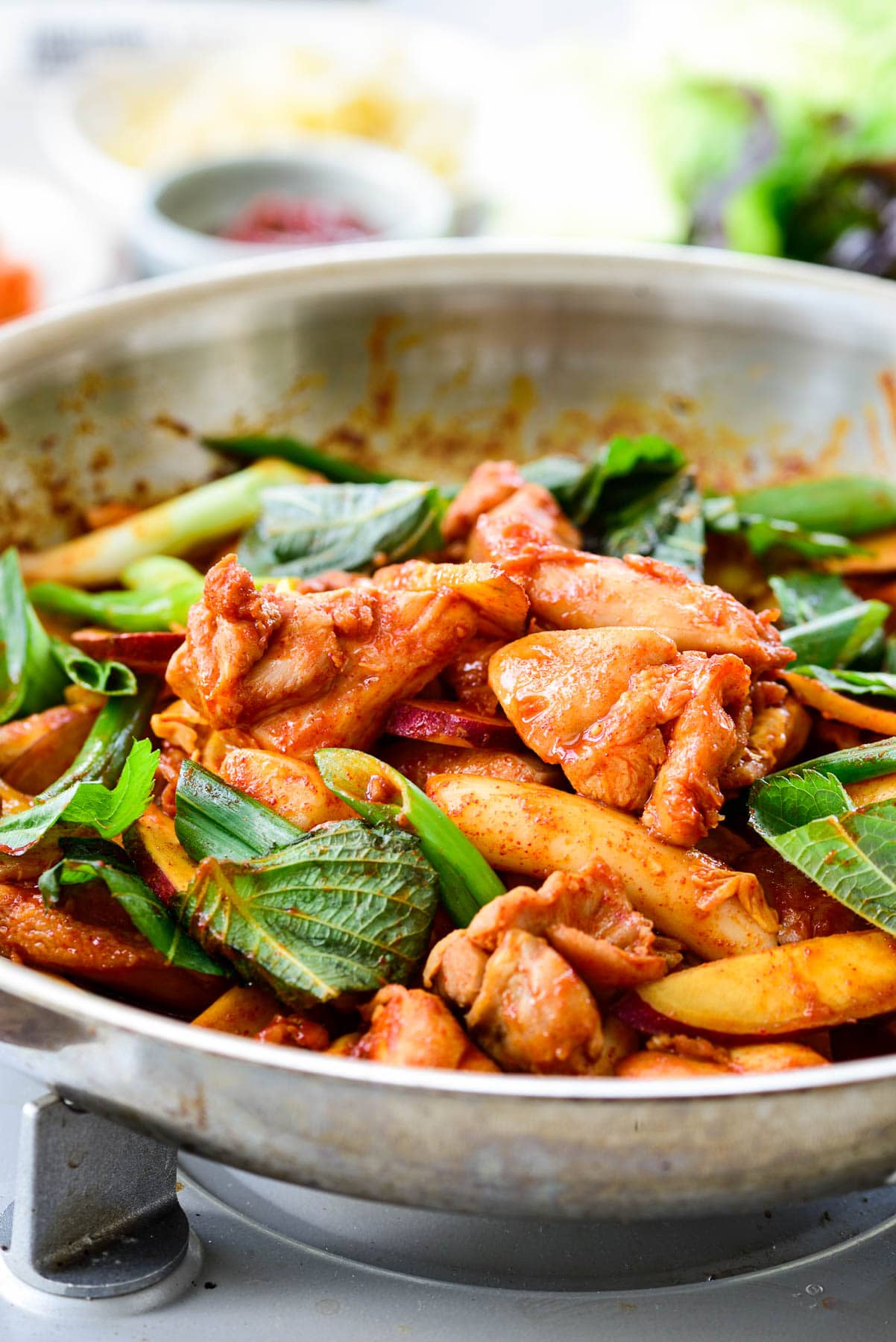
Dakgalbi : le phénomène de poulet sauté de Chuncheon
Peu de plats de bokkeum sont aussi théâtraux que le dakgalbi (닭갈비), le poulet sauté épicé de la ville lacustre de Chuncheon, dans la province de Gangwon. La cuisse de poulet coupée en dés est marinée dans une sauce gochujang-gochugaru relevée, puis cuite à table dans une grande poêle en fonte avec des morceaux de patate douce, du chou, des gâteaux de riz et des feuilles de périlla. La cuisson se poursuit jusqu'à ce que la sauce réduise, que le poulet caramélise et que tout fonde ensemble dans une seule poêle bouillonnante.
De nombreux restaurants terminent le repas en nettoyant la poêle, en ajoutant du riz froid, du gim (algue) et de l'huile de sésame, puis en faisant frire le tout jusqu'à ce qu'une croûte dorée se forme au fond, une tradition connue sous le nom de bokkeumbap. Selon Korean Bapsang, les versions modernes de dakgalbi incluent souvent une généreuse couche de mozzarella fondue sur le dessus, une torsion qui a envahi les aires de restauration coréennes dans les années 2010 et qui est maintenant un incontournable sur les médias sociaux.
Tteokbokki et autres stars de la cuisine de rue
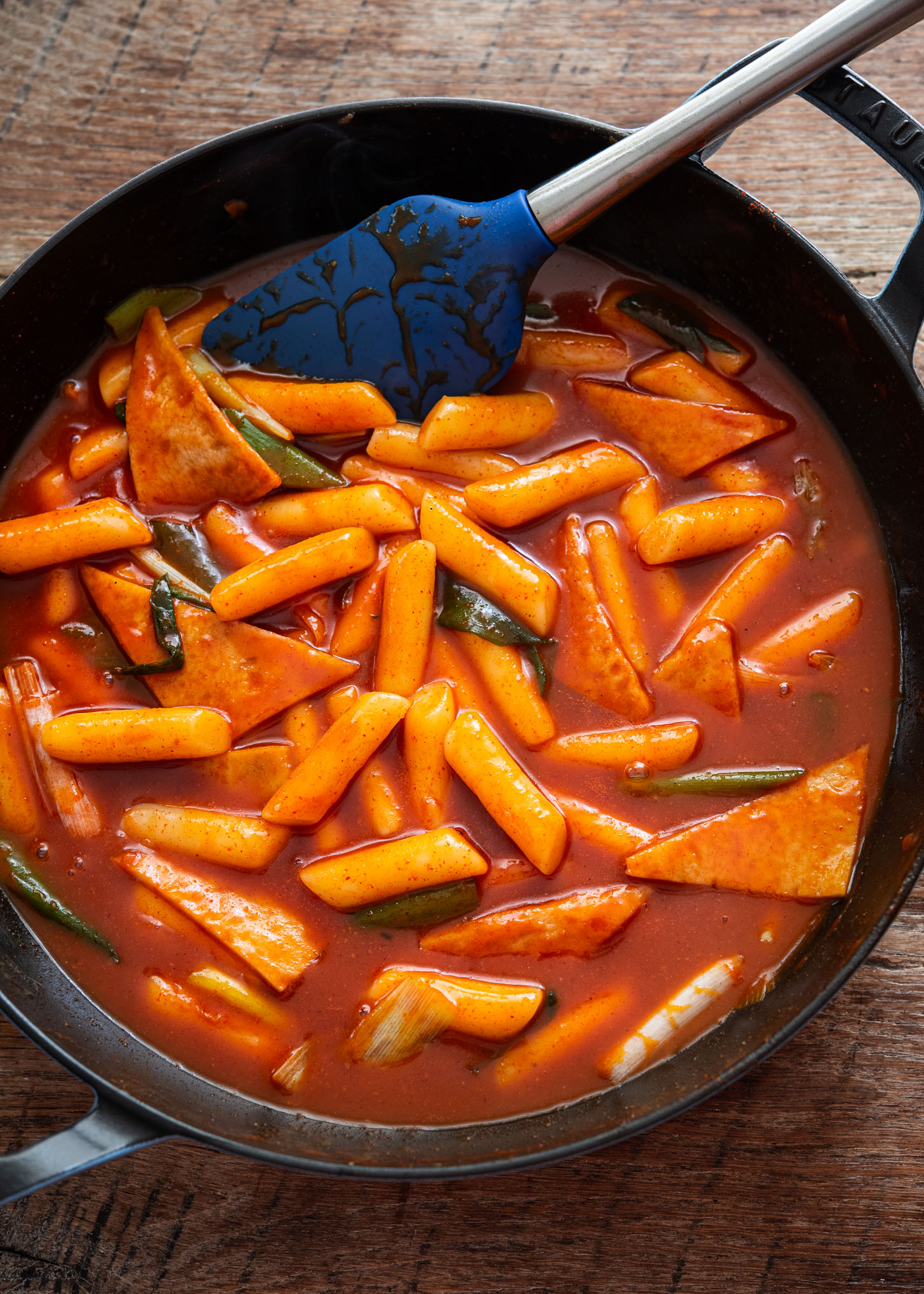
On ne peut pas parler de bokkeum sans parler de tteokbokki (떡볶이), sans doute le plat de rue le plus célèbre de Corée. Des gâteaux de riz cylindriques mijotent dans une sauce rouge profonde au gochujang et au gochugaru jusqu'à ce qu'ils soient moelleux, légèrement gonflés et enrobés d'un glaçage brillant, sucré-épicé. Ajoutez des gâteaux de poisson, des œufs durs, des oignons verts et parfois des nouilles ramen, et vous obtenez le snack qui alimente les séances d'étude nocturnes, les soirées arrosées et les courses du vendredi soir dans les supérettes à travers le pays.
L'équipe de Beyond Kimchee explique que le tteokbokki authentique utilise du bouillon d'anchois comme base, ce qui donne à la sauce sa saveur savoureuse sous la chaleur. D'autres bokkeum de rue très appréciés comprennent le kimchi bokkeumbap (riz frit au kimchi), le japchae (vermicelles de patate douce avec des légumes et du bœuf) et le dakttongjip (gésiers de poulet sautés), ce dernier étant un célèbre anju du marché de Pyeonghwa à Daegu, où une allée entière porte le nom du plat.
Comment déguster le bokkeum à la maison
La beauté du bokkeum réside dans sa souplesse. Vous n'avez pas besoin d'un wok, juste d'une poêle lourde et chaude, de quelques ingrédients de base de la cuisine coréenne (gochujang, gochugaru, sauce soja, huile de sésame, ail) et de toutes les protéines ou légumes que vous avez sous la main. Coupez vos ingrédients finement pour qu'ils cuisent rapidement, maintenez le feu vif et résistez à l'envie de remuer constamment. Quelques instants d'immobilité dans la poêle sont ce qui donne au bokkeum ses bords caramélisés caractéristiques.
Une fois que vous maîtrisez la technique, la liste des plats de bokkeum semble infinie : calmar épicé, vermicelles de verre, riz frit au kimchi, gésiers de poulet, anchois, même des champignons. Des snacks de rue aux banchan faits maison en passant par l'anju ardent, le bokkeum est le cœur sauté de la cuisine coréenne. Et une fois que vous commencerez à l'explorer, vous ne verrez plus jamais ce mot de la même manière.
Découvrez les snacks coréens avec Daebak
Vous aimez la cuisine coréenne ? Recevez des snacks et des ramen coréens authentiques directement chez vous avec la SnackFever Box de Daebak.


