


Table of Contents
Chuseok (추석) tombe le 15e jour du huitième mois lunaire, et chaque année, je reçois la même question de la part de mes amis non-coréens de l'industrie : « C'est juste l'Action de grâces coréenne, n'est-ce pas ? » Cette façon de voir les choses sous-estime la signification de la fête. Après une décennie passée à travailler dans le contenu K et le marketing culturel coréen, j'ai vu la culture culinaire de Chuseok devenir le repère visuel le plus constant de la manière dont les K-dramas, les émissions de variétés K-pop et les YouTubers coréens expliquent à un public mondial ce qu'est la « famille » en Corée. La nourriture est l'histoire.
Le 차례상 est le moteur, pas la table du dîner
Les Occidentaux voient une table de Chuseok et supposent qu'il s'agit d'un festin. Ce n'est pas le cas. Le 차례상 (charye-sang) est une table de rites ancestraux, et sa grammaire positionnelle est stricte. 홍동백서 (fruits rouges à l'est, fruits blancs à l'ouest). 어동육서 (poisson à l'est, viande à l'ouest). 좌포우혜 (viande séchée à gauche, poisson-riz fermenté à droite). Ma mère pourrait placer un kaki à deux centimètres de là et ma grand-mère l'ajusterait sans commentaire. C'est cette mémoire musculaire que vous observez lorsqu'une famille K-drama s'incline devant un paravent.
L'attrait pour les fans du monde entier n'est pas le symbolisme dans l'abstrait. C'est que la nourriture sur cette table est également mangée par la famille vivante juste après le rituel, ce qui réduit la distance entre l'ancêtre et le petit-enfant en une seule bouchée de jeon. Cette structure rituel-puis-repas-partagé est spécifiquement coréenne, et c'est ce qui rend le Chuseok différent de l'Action de grâces.
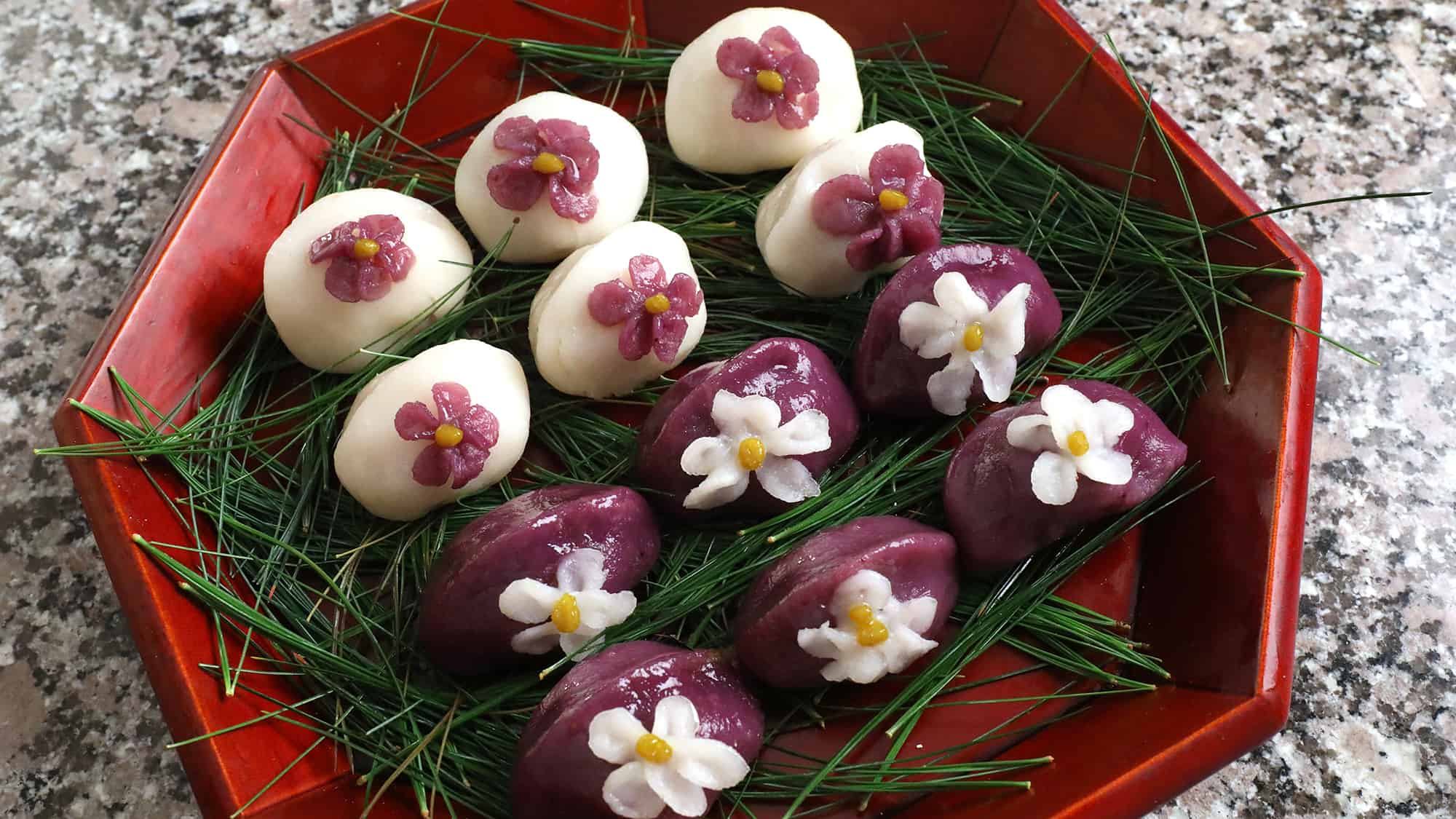
Songpyeon (송편) et l'économie du travail d'amour
Le Songpyeon est la signature de la fête, et la raison n'est pas le goût. C'est que façonner chaque gâteau de riz en forme de demi-lune à la main prend des heures, et les familles coréennes le faisaient historiquement ensemble la veille de Chuseok. Les mères enseignaient à leurs filles. Les grands-mères corrigeaient la technique de pincement. Il existe un dicton populaire selon lequel les femmes qui façonnent de jolis songpyeon auront de beaux enfants, ce qui semble désuet jusqu'à ce que l'on réalise que c'était la pression sociale qui maintenait les cuisines multigénérationnelles occupées pendant toute une soirée de transfert de connaissances.
Les garnitures vous renseignent sur le foyer : sésame et miel pour la douceur, pâte de haricots mungo pour une touche salée, châtaigne pour la richesse, haricot rouge pour la nostalgie. Les aiguilles de pin dans le cuiseur vapeur sont l'indice. Cet arôme résineux, légèrement amer, est l'odeur de Chuseok lui-même, et vous ne pouvez pas le reproduire avec un cuiseur vapeur ordinaire. Même la MZ세대 (la génération Z coréenne / les jeunes milléniaux) qui achète des songpyeon prêts à l'emploi chez Lotte Mart essaie toujours de recréer cette couche d'aiguilles de pin à la maison pour la photo.
Jeon (전) et pourquoi l'immeuble sent la même chose la veille de Chuseok
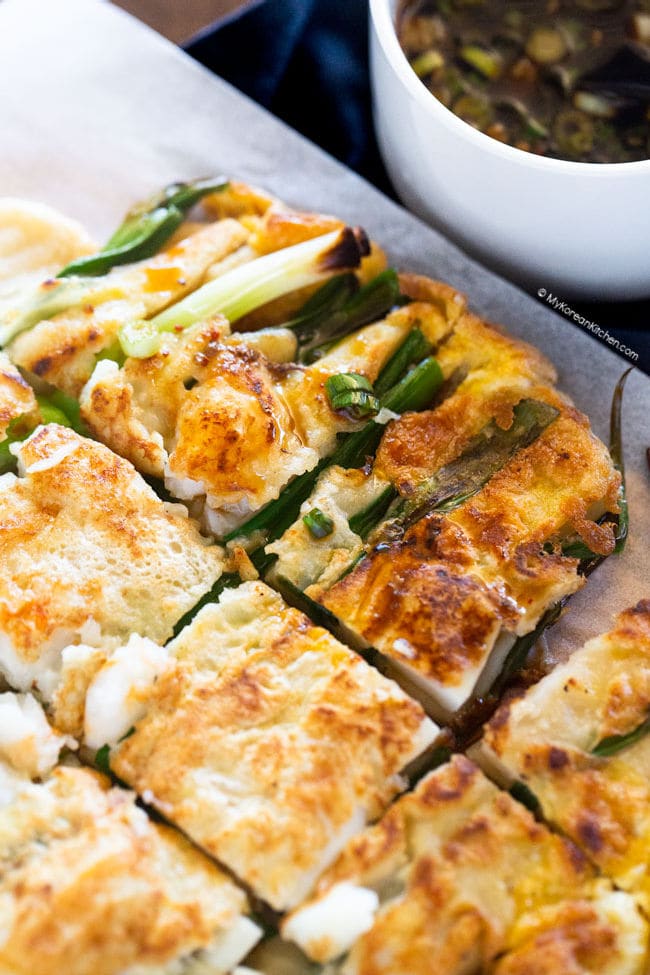
Le Jeon (전) est le terme générique désignant les crêpes salées coréennes poêlées et enrobées de pâte, et Chuseok est la fête où elles envahissent votre cuisine. La liste est standard : 동그랑땡 (dongeurangttaeng, mini-galettes de viande), 동태전 (dongtae jeon, filet de colin), 호박전 (hobak jeon, courgette), 깻잎전 (kkaennip jeon, feuille de périlla farcie de bœuf assaisonné), et 산적 (sanjeok, bœuf et oignon vert en brochettes). Mes amis qui travaillent chez HYBE, SM et CJ ENM partagent tous la même plainte chaque septembre : leurs mères s'attendent à ce qu'ils rentrent à la maison pour faire frire du jeon pendant six heures d'affilée, et aucune excuse de travail plausible ne fonctionne.
L'attrait pour un palais occidental est la technique elle-même. Chaque ingrédient est enrobé de farine, trempé dans de l'œuf battu, puis poêlé dans une fine couche d'huile. Le résultat est doré, légèrement moelleux et salé d'une manière que les crêpes françaises et les pancakes américains n'atteignent jamais. C'est pourquoi les scènes de K-drama où une belle-fille fait frire du jeon toute la matinée pendant que ses beaux-parents parlent sont si chargées de sens pour les téléspectateurs coréens. C'est du travail invisible rendu visible.
Japchae (잡채) : la nouille de patate douce qui a gagné sa place
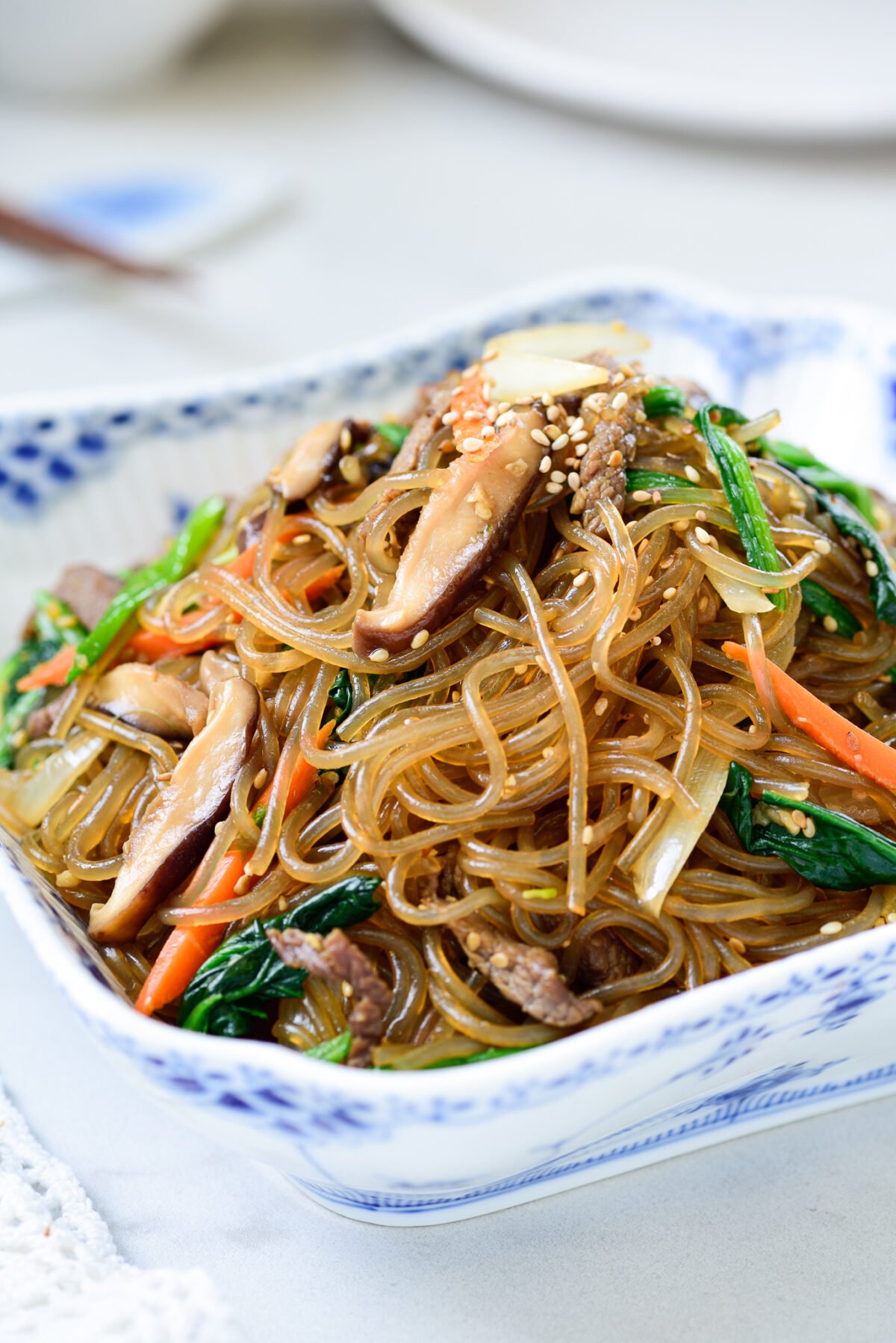
Le Japchae est un plat de la cour royale de la dynastie Joseon qui est devenu un classique des fêtes, et la raison pour laquelle il a survécu jusqu'à la table du Chuseok moderne est sa texture. Les 당면 (dangmyeon), des nouilles coréennes de fécule de patate douce, offrent un moelleux que les nouilles occidentales n'atteignent pas. Combinez ce 쫄깃 (jjolgit, bouchée moelleuse) avec le brillant d'huile de sésame des épinards, carottes, champignons et bœuf bulgogi sautés, et vous obtenez un plat qui est à la fois festif et digeste après trois tours de jeon et de viande.
Le Japchae est aussi le plat pour lequel les familles coréennes se disputent le plus en cuisine. Certains blanchissent chaque légume séparément pour préserver la couleur. D'autres font tout sauter ensemble au wok pour gagner du temps. Des figures du K-content comme Maangchi et Korean Bapsang ont construit des bases d'abonnés à six chiffres en partie parce que leurs recettes de japchae règlent un véritable débat intrafamilial sur la question de savoir si les raccourcis sont permis. C'est pourquoi les fans occidentaux de K-drama reconnaissent instantanément le japchae. Il apparaît dans chaque scène romantique où une mère prépare une boîte à lunch pour sa fille adulte.
Hangwa (한과) et la logique de l'économie du don de Chuseok
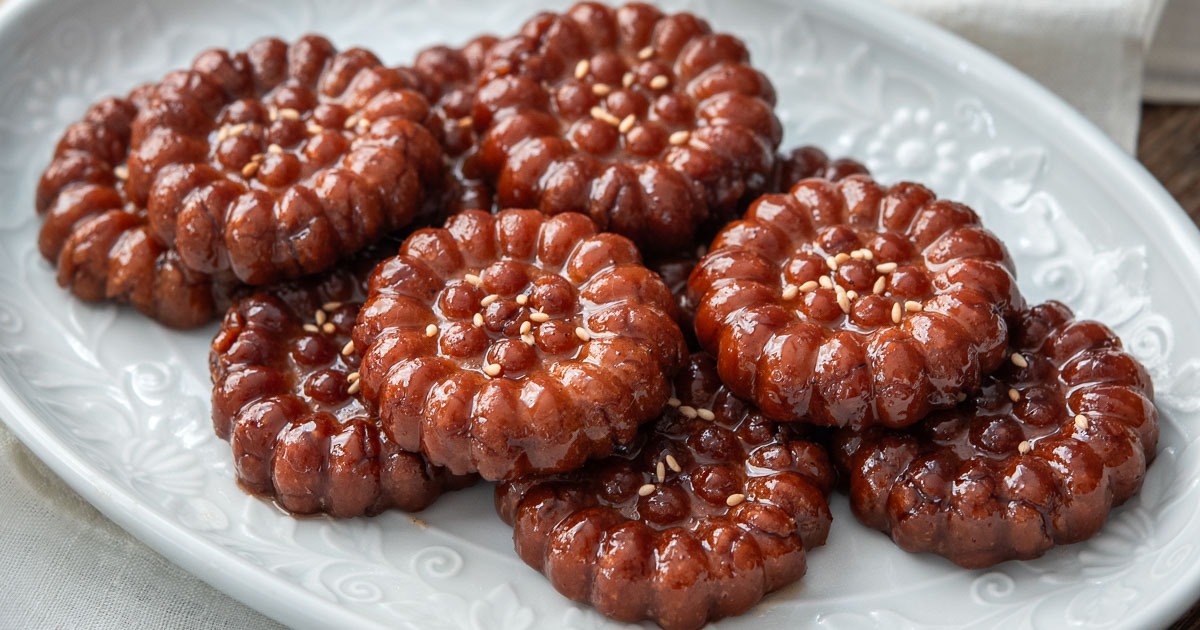
Le Hangwa (한과) est le terme générique pour les confiseries traditionnelles coréennes : 약과 (yakgwa, biscuit au miel frit trempé dans du sirop de gingembre), 유과 (yugwa, biscuit de riz soufflé), 다식 (dasik, bonbons à la poudre pressée) et 정과 (jeonggwa, fruits confits). Ce ne sont pas des collations. Ce sont la monnaie sociale des cadeaux de Chuseok. Entrez dans n'importe quel grand magasin Hyundai ou Shinsegae à la mi-septembre et le rez-de-chaussée se transforme en un marché de hangwa, avec des ensembles allant de ₩30 000 à ₩300 000.
Les données de l'industrie ici sont réelles. La Korea Agro-Fisheries & Food Trade Corporation estime le marché alimentaire des 명절 (myeongjeol, fêtes traditionnelles) à environ 2 milliards de dollars par an, et les ventes de kits de 차례상 préfabriqués ont augmenté de plus de 300 % après 2020, alors que la MZ세대 a discrètement renoncé au rituel de cuisine de toute une journée. Les gammes Bibigo de CJ CheilJedang et Shinsegae Food vendent désormais des kits complets de charye-sang avec du jeon, du japchae, du namul et du tteok déjà préparés. Cette tension entre le "vrai" Chuseok et le Chuseok "pratique" apparaît dans des drames comme My Mister et Hometown Cha-Cha-Cha, où la mère qui fait frire le jeon à la main est codée comme une autorité culturelle et la belle-fille qui déballe les kits CJ est codée comme un compromis moderne.
Sikhye (식혜) et la logique digestive des repas coréens
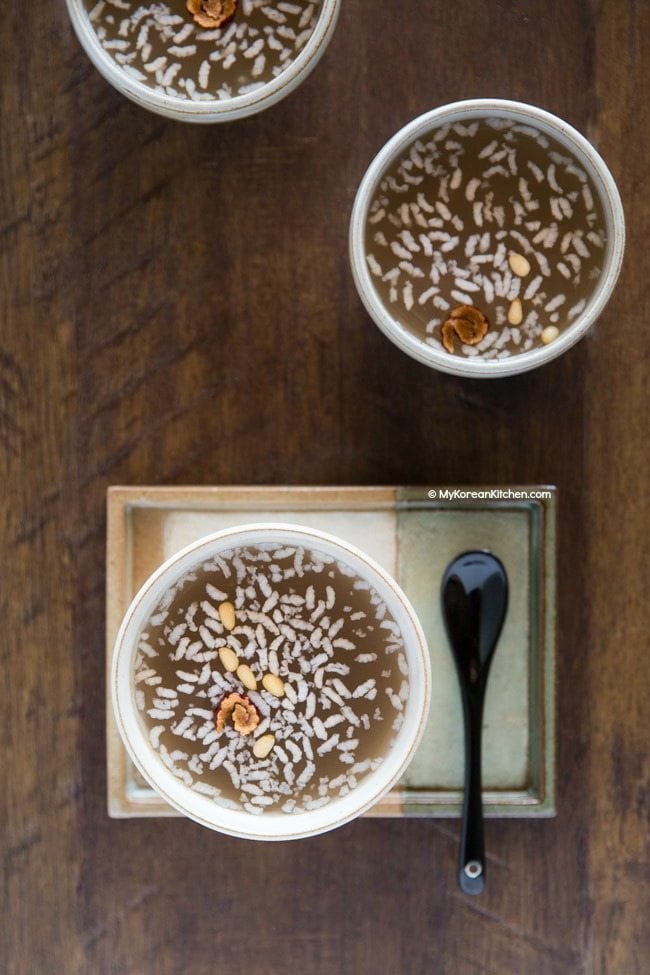
Le Sikhye est un punch au riz légèrement sucré et non alcoolisé, préparé en faisant fermenter du riz cuit dans de l'eau d'orge maltée. Il ressemble à de l'eau trouble avec des grains de riz flottants. Les palais occidentaux le rejettent souvent à la première gorgée car la douceur est très subtile, mais c'est là l'essentiel. Le Sikhye sert à clore un repas copieux. Les enzymes de malt aident littéralement à décomposer les amidons dans l'estomac, c'est pourquoi chaque jjimjilbang coréen le sert glacé à côté d'œufs rôtis.
À Chuseok, le sikhye est le pont entre les lourds plats de charye-sang et la longue après-midi de jeux de cartes et de télévision. Le recadrage de la MZ세대 ici est intéressant : le sikhye en bouteille de Binggrae, vendu dans les supérettes du pays, est devenu un produit toute l'année en partie parce que les jeunes Coréens veulent le goût des vacances à la demande. La boisson qui signifiait autrefois « la maison de grand-mère à Chuseok » signifie maintenant « j'ai la gueule de bois et j'ai besoin de quelque chose de doux ». Même boisson, script culturel différent.
Pourquoi cela est important pour les fans de K-content du monde entier
Chaque épisode majeur de Chuseok dans l'histoire des K-dramas utilise ces cinq catégories d'aliments comme raccourci visuel. La scène de préparation du 차례상 vous renseigne sur la classe et la tension générationnelle de la famille. Le montage de friture de jeon vous indique qui est la belle-fille dans l'ordre hiérarchique. Le bol de japchae sur le porche vous indique que quelqu'un est accueilli chez lui. La boîte de hangwa à la porte vous indique que le patron est passé. Le verre de sikhye à la fin vous indique que le repas est terminé et que la conversation peut commencer.
Si vous avez regardé My Mister, Reply 1988 ou Hometown Cha-Cha-Cha et que vous vous êtes demandé pourquoi les scènes de vacances semblaient si chargées, voici la réponse. La nourriture n'est pas une décoration. C'est le dialogue.
Découvrez les snacks coréens avec Daebak
Vous aimez la cuisine coréenne ? Recevez des snacks et des ramens coréens authentiques directement chez vous avec le SnackFever Box de Daebak.


