


Table of Contents
Le Doljanchi (돌잔치) est la fête du premier anniversaire coréen, un rituel qui marque depuis des siècles l'étape la plus importante de la petite enfance d'un enfant. Le mot combine dol (돌), qui signifie le cercle complet d'une année, et janchi (잔치), qui signifie festin. Ce jour honore la survie d'un bébé au cours d'une première année vulnérable et demande à la famille et aux ancêtres de bénir l'enfant avec la santé, la richesse et une longue vie.
Les origines du Dol et pourquoi la première année était importante
Cette tradition est attestée depuis le début de la période Joseon. Avant la médecine moderne, la mortalité infantile coréenne était très élevée. Selon certains récits, un quart des bébés dans les années 1950 n'atteignaient pas l'âge d'un an, et les siècles précédents étaient encore pires. Atteindre douze mois complets n'était pas acquis, c'est pourquoi les familles marquaient ce jour par des rituels de gratitude et de protection.
Les ménages préparaient d'abord un samsinsang, une petite table d'offrandes pour Samsin, la déesse du foyer qui veille sur les enfants. Ce n'est qu'après avoir remercié Samsin que la famille passait à la table de célébration, le dolsang. La structure de la journée, offrande rituelle d'abord et festin ensuite, façonne encore les doljanchi modernes.
Le Dol Hanbok : habiller le bébé d'anniversaire
Pour de nombreuses familles coréennes, le doljanchi est le jour où un enfant porte un hanbok complet pour la première fois. Les garçons sont généralement vêtus d'une veste rayée saekdong jeogori, d'un pantalon baji et d'un sagyusam ou d'un gilet, surmontés d'une casquette bokgeon ou jobawi. Les couleurs tendent vers le bleu, l'indigo et les rouges riches.
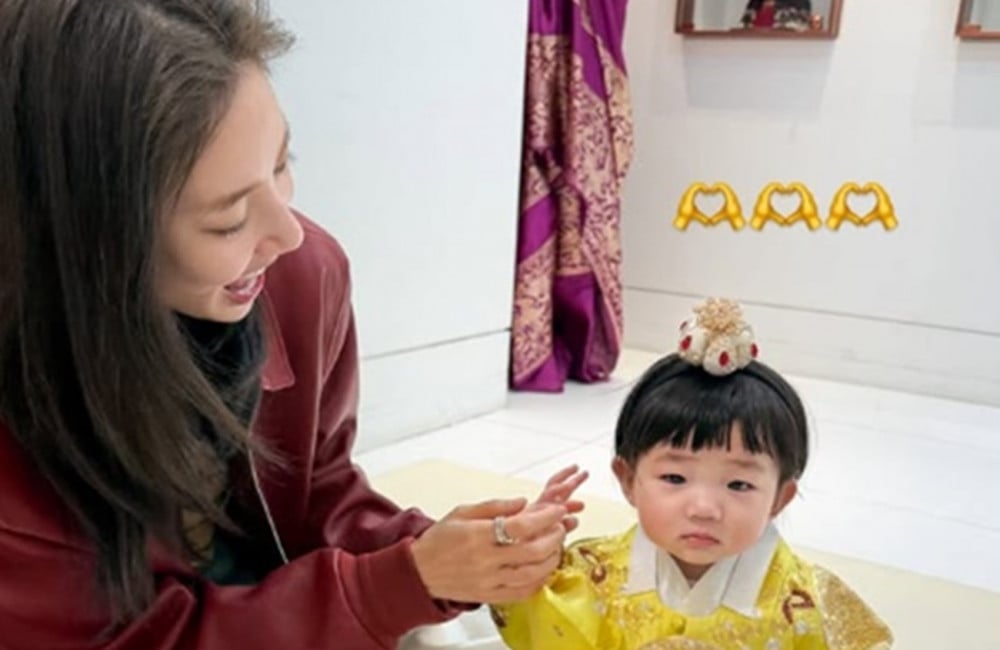
Les filles portent un jeogori coloré avec une longue jupe rouge chima et souvent une coiffe jokduri ou jobawi brodée de motifs floraux. De minuscules chaussettes brodées tarae beoseon complètent la tenue. La chanteuse Son Dam Bi a récemment partagé des photos de l'essayage du hanbok de sa fille Haei avant son doljanchi, le genre de publication qui inonde les réseaux sociaux coréens chaque printemps.
La table du Dolsang
Le dolsang (돌상) est la pièce maîtresse de la fête. Deux catégories d'articles remplissent la table : les aliments rituels et les objets doljabi. Les aliments sont empilés en hauteur sous des formes symboliques. Le gâteau de riz blanc baekseolgi représente la pureté. Le mujigae-tteok multicolore, le gâteau en couches arc-en-ciel, symbolise l'harmonie. On croit que les boules de haricots rouges susu kyeongdan éloignent les mauvais esprits, tandis que les nouilles longues et les écheveaux de fil blanc représentent une longue vie.
À côté de la nourriture se trouvent des fruits de saison, du jeon, des jujubes et du yakgwa. Dans le passé, le dolsang était placé dans l'anbang, la pièce intérieure principale d'un hanok. Aujourd'hui, il s'agit plus souvent d'un décor stylisé dans une salle de banquet ou un studio, mais la logique symbolique de chaque élément n'a pas changé.
Le rituel Doljabi : la prophétie d'un enfant d'un an
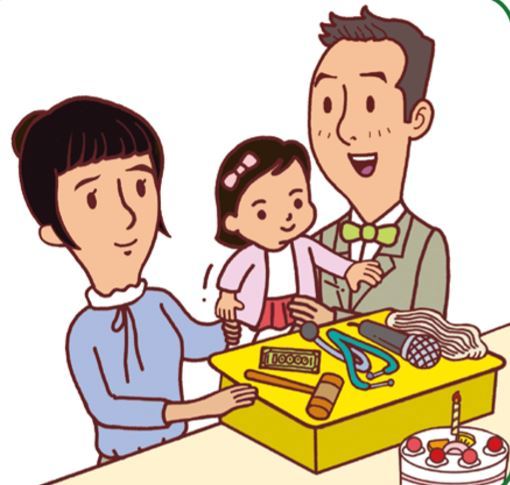
Le moment le plus attendu de la journée est le doljabi (돌잡이). Une rangée d'objets est placée devant le bébé, qui est encouragé à ramper et à en attraper un. On dit que le premier objet que l'enfant choisit prédit son futur chemin.
L'ensemble traditionnel comprend :
- 실 (sil, fil) : une longue vie
- 돈 (don, argent) : la richesse
- 책 (chaek, livre) : un érudit ou un étudiant brillant
- 쌀 (ssal, riz) : l'abondance et ne jamais avoir faim
- 활과 화살 (hwal-gwa hwasal, arc et flèche) : un guerrier ou une carrière militaire, traditionnellement pour les garçons
- 바늘과 자 (aiguille et règle) : habileté domestique, traditionnellement pour les filles
Les parents modernes ajoutent des objets qui correspondent aux carrières d'aujourd'hui. Un 청진기 (cheongjingi, stéthoscope) indique un médecin, un 마이크 (maikeu, microphone) un chanteur ou un artiste, une 골프공 (golpeugong, balle de golf) une star du sport, un marteau de juge, et une souris d'ordinateur un ingénieur logiciel. La cérémonie est maintenant autant un jeu familial qu'une prophétie, et les choix en disent autant sur les espoirs des parents que sur l'avenir de l'enfant.
Le Doljanchi des célébrités et l'influence de la culture populaire
Les émissions de téléréalité coréennes ont transformé les premiers anniversaires de célébrités en événements nationaux. Lors de l'épisode du 2 décembre 2018 de l'émission The Return of Superman de KBS, le comédien Sam Hammington et sa famille ont célébré le premier anniversaire de son fils Bentley. Les frères, Bentley et William, ont posé pour une séance photo en vêtements traditionnels, y compris des robes de savant de l'époque Joseon et des tenues royales. À la table du doljabi, Bentley a hésité sur le riz avant d'attraper le marteau de juge, ce qui signifie un avenir en tant que juge ou haut fonctionnaire.
La fille de Tablo, Haru, et Choo Sarang, la fille mi-japonaise mi-coréenne du combattant de MMA Choo Sung-hoon, ont également été présentées au public mondial grâce à la même émission après leurs années de dol. Les célébrations de leurs familles ont contribué à populariser le look doljanchi moderne, mélangeant la tradition coréenne avec le design de fête occidental.

Du rituel domestique au banquet traiteur
Les doljanchi modernes sont très différents d'un rituel domestique de l'ère Joseon. Dans les années 2000 et 2010, la célébration s'est transformée en un événement de type mariage. Selon The Korea Herald, un banquier au milieu des années 2010 a dépensé plus de 3,5 millions de wons, a invité plus de 150 personnes dans une salle de banquet d'hôtel, a servi des repas traiteur à 40 000 wons par personne et a engagé un animateur et un photographe professionnels.
Ce modèle est maintenant sous pression. Un sondage de Petit Elin en 2016 a révélé que plus de 30 % des mères ayant des nourrissons de moins d'un an ne prévoyaient pas d'organiser un doljanchi, la plupart qualifiant les fêtes de signe de vanité. Korea Bizwire a rapporté fin 2025 que l'inflation et la flambée des prix de l'or ont poussé de nombreuses familles vers des repas à domicile plus petits, des séances photo modestes en studio ou des dons de bienfaisance au lieu d'une fête.
Séances photo thématiques et la nouvelle industrie du Doljanchi
Même les familles qui évitent la salle de banquet ne manquent que rarement les photos. Les studios coréens proposent des forfaits photo dol thématiques avec des hanbok complets, des smokings et robes occidentaux, et des décors de dolsang stylisés. Les thèmes construits autour des personnages de Disney, des tenues de cour royale et des palettes de couleurs modernes minimalistes sont devenus populaires sur Instagram. Les tours de dol, des présentoirs à plusieurs niveaux de gâteaux de riz dduk et de macarons, sont devenus un élément central de nombreuses fêtes, souvent commandés sur mesure des semaines à l'avance.
Les kits doljanchi pré-emballés vendus via des centres commerciaux en ligne permettent aux parents d'organiser des petites fêtes à la maison sans sacrifier le symbolisme visuel. Les kits comprennent généralement une nappe stylisée, une pancarte dolsang imprimée, un ensemble d'objets doljabi et un hanbok en papier pour les photos de fond.
Cadeaux et étiquette du Doljanchi
Les cadeaux traditionnels de doljanchi mettaient l'accent sur la longévité. Une bague en or pur, le geumbanji, était la norme, placée au doigt de l'enfant comme un vœu de santé et de prospérité. Les aînés de la famille offraient souvent une bague en or 24 carats d'environ 3,75 grammes, appelée un don dans la mesure de poids coréenne. Alors que les prix de l'or ont grimpé, de nombreux invités offrent maintenant de l'argent ou une bague d'un demi-don, et certaines familles demandent des cartes de vœux sur le thème de l'or plutôt que des bagues physiques.
L'étiquette pour les invités est similaire à celle d'un mariage coréen. Apportez une enveloppe propre d'argent liquide, habillez-vous proprement mais pas en blanc, et évitez de détourner l'attention de l'enfant. Les invitations de collègues sont de plus en plus considérées comme un fardeau financier en Corée, et la loi anti-corruption Kim Young-ran de 2016 fixe des limites claires sur la valeur des cadeaux de doljanchi pour les fonctionnaires, les journalistes et les enseignants.
Le Doljanchi dans la diaspora coréenne
Le Doljanchi s'est répandu avec la diaspora coréenne aux États-Unis, au Canada, en Australie et au-delà. Les familles américano-coréennes de Los Angeles, New York et Toronto ont bâti une petite industrie de photographes de dol, de magasins de location de hanbok et de boulangeries de gâteaux de riz. De nombreuses célébrations de la diaspora sont des affaires hybrides, mélangeant rituels coréens, gâteaux d'anniversaire occidentaux et signalisation en anglais.
Le format varie selon les régions. Une famille coréenne basée à Hawaï pourrait organiser un dol de style luau en plein air avec des plats coréens. Une famille américano-coréenne de Chicago pourrait réserver une salle de bal d'hôtel avec un dolsang complet et une séance de "cake-smash" à l'occidentale. Quel que soit le cadre, le doljabi reste le rituel constant, le moment qui ancre une identité familiale coréenne mondiale dans une tradition d'enfance unique.
Explorez davantage la Corée avec Daebak
Vous voulez apporter un petit morceau de Corée dans votre vie ? La Daebak Box est remplie des meilleurs snacks coréens, de ramens et de goodies culturels livrés mensuellement à votre porte.


