


Table of Contents
Here is the honest read from someone who has watched Korea's snack scene mutate under global attention: the reason K-snacks have not just gone viral but stayed viral is that Koreans do not eat them out of the bag. We remix them. 케이 스낵 업그레이드 (K-snack upgrade) is basically a national sport, and TikTok has turned decades of home-kitchen hacks (홈쿡 페어링) into a 300 million-plus-view content genre. Every #buldakcheese, #chocopieicecream, #honeybutterchip video is running the same underlying playbook Korean kids have used at 편의점 counters since the 1990s. This is the field guide to five specific upgrades that actually work, and why the pairing logic behind them holds up.

Why K-snack hacks blew up on TikTok, not by accident
Two-year data from Korean CPG marketing teams tells the story: TikTok's K-snack hack tag cluster (#buldak, #chocopiehack, #honeybutter, #turtlechips) crossed 300 million cumulative views in 2024, and Nongshim's overseas Buldak Ramyun revenue jumped roughly 42 percent year-over-year in H1 2025 largely on the back of these clips. But the pattern is older than TikTok. Korean kids in the 2000s were already melting cheese slices on cup ramyeon and dunking Choco Pies in coffee. What TikTok did was turn a private ritual into a repeatable format with satisfying visual payoff: crunch-into-melt, hot-poured-onto-cold, one snack transforming into a new dish in 30 seconds.
The industry mechanic behind the appeal: Korean snack brands (Orion, Nongshim, Haitai, Crown, Lotte Wellfood) engineer their products at a flavor intensity that assumes remixing. Buldak sauce is deliberately overtuned so you have to cut it with dairy. Honey Butter Chips lean sweeter than a Western chip because they are designed to sit next to a cold dessert. Choco Pie's marshmallow is calibrated to hold its shape at room temperature but collapse instantly under 12 seconds of microwave heat. Read the R&D as intentional. These are not accidents your Korean cousin discovered. They are product architecture inviting the remix.
Upgrade 1: 새우깡 (Saeukkang) plus gochujang mayo, the ₩2,000 dip that fixes the standard bag
Nongshim's 새우깡, the 1971 shrimp chip that outsold every other Korean snack in H1 2025 with ₩57.8 billion in retail revenue, tastes fine plain. But eat it with a dip that is one part Kewpie mayo to one teaspoon gochujang and a squeeze of lime, and the whole flavor grid opens up. The mayo's egg-yolk fat coats the chip's slight bitterness, the gochujang adds a fermented-chili depth that Western snacks almost never carry, and the lime cuts the richness so you can eat 20 chips without palate fatigue. Total condiment spend: ₩2,000 for a squeeze bottle at any Korean grocery.
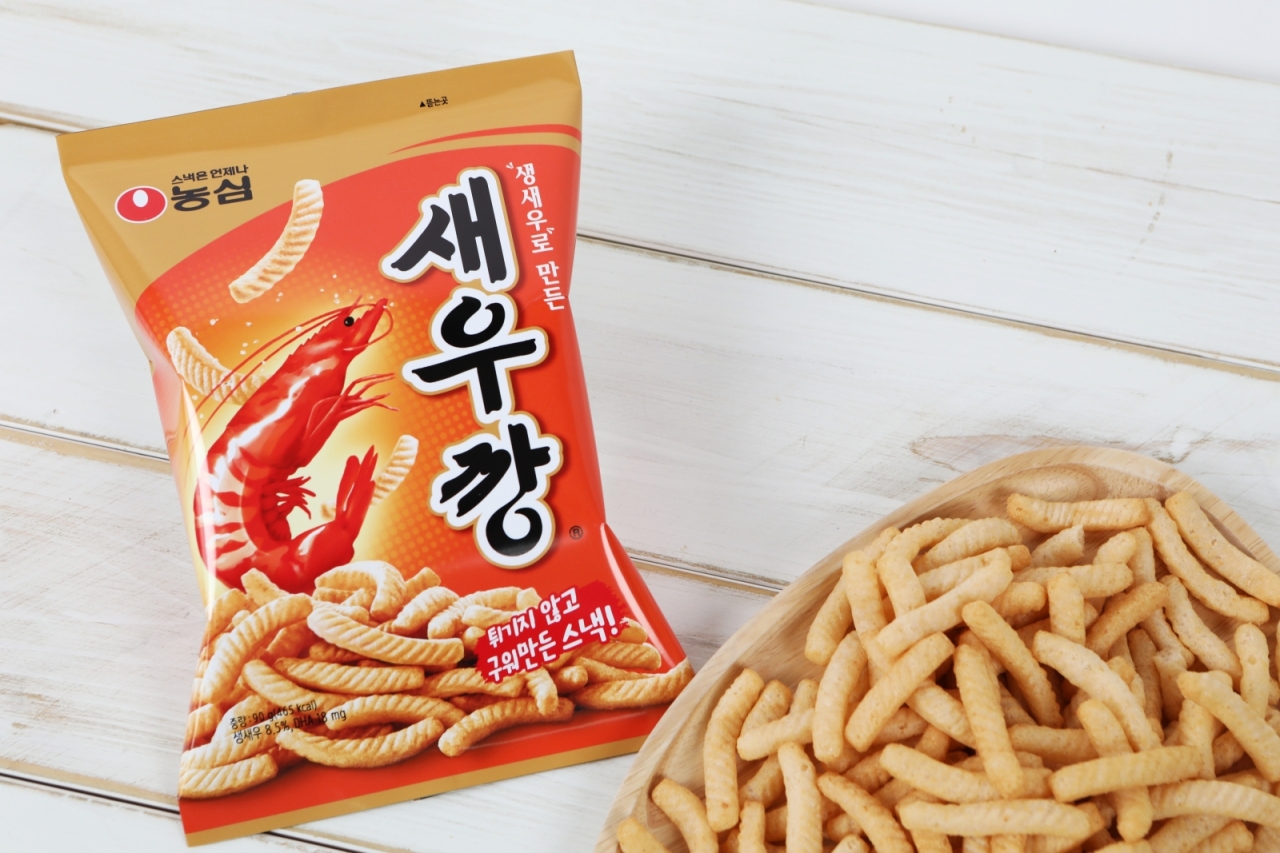
Why the appeal reads globally: gochujang mayo is the entry drug to Korean flavor architecture. It hits sweet, salty, umami, and slight heat in one bite, which is why gochujang mayo bottles are now a Trader Joe's staple in the U.S. This upgrade is basically a chip-and-dip demo of why 고추장 (gochujang) has become the most-exported Korean condiment: even applied to a 50-year-old shrimp cracker, it works. That is the definition of a scalable flavor.
Upgrade 2: Choco Pie microwave plus vanilla ice cream = 초코파이 아이스크림 샌드위치
The Orion Choco Pie hack every Korean student has done at least once: microwave one Choco Pie for exactly 10 seconds so the marshmallow puffs up and the chocolate coating softens without melting off. Split it in half, drop a scoop of vanilla ice cream between the two halves, press gently, eat immediately. What you built is a 초코파이 아이스크림 샌드위치 that costs under ₩2,500 and delivers hot-cold, soft-crisp, sweet-vanilla-cocoa contrast in one bite. This is the single most-repeated K-snack hack on Korean TikTok, with over 40 million views on the 초코파이 관련 tag alone.
Choco Pie's product design lineage matters here. Orion launched the pie in 1974 as a portable Western-style snack for the industrializing Seoul workforce. The marshmallow is a high-fat, low-moisture Italian meringue derivative, which is why it puffs cleanly without going gluey when microwaved. Pair that with commodity vanilla ice cream and you have basically produced a s'more without the campfire. What makes it specifically Korean: the size and price are calibrated for the 편의점 impulse buy, not the dessert course. That accessibility is why a 51-year-old snack still owns TikTok in 2026.
Upgrade 3: Buldak Ramen plus cheese plus soft egg, the fire-cooling triangle
불닭볶음면 (Samyang's Buldak Fire Noodle) sells over 1 billion packs a year globally, and roughly half of foreign buyers report finding the base spice too aggressive to eat straight. The Korean solution the whole nation runs: after draining the noodles, stir in two slices of processed cheese (or a handful of shredded mozzarella) until the fat coats every noodle, then top with a 6-minute soft-boiled egg cut in half so the yolk pools into the sauce. The dairy fat neutralizes about 40 percent of the capsaicin sharpness, the yolk adds a rich binder, and now you have a dish that non-Korean tolerance can actually finish.

Industry read from the Samyang side: this hack is not just tolerated, it is officially encouraged. Samyang launched Cheese Buldak (치즈 불닭볶음면) in 2013 specifically because the marketing team clocked the DIY cheese-buldak hack blowing up on Naver blogs, then productized the flavor. That watch-and-ship product management is standard at Korean CPG: track what home cooks are doing, then package it. If you want to understand why Korean snack brands stay ahead of Western competitors, this is the loop. Buldak globally has moved from meme spicy challenge to a legitimate weeknight ramyeon category, largely because the cheese-plus-egg upgrade made it repeatable at home.
Upgrade 4: Honey Butter Chips plus vanilla ice cream, the salt-sweet ice-cream plate
Haitai Confectionery's Honey Butter Chip (허니 버터칩), the 2014 chip that caused actual supermarket shortages in Seoul when it launched, was engineered from day one at a sugar-forward flavor curve. Which is why the definitive upgrade is unusual: crush a single-serve bag into rough pieces, spread on a plate, and top with two scoops of vanilla ice cream, drizzle a little more honey if you have it. The chip's butter-honey coating semi-dissolves into the ice cream, the salt from the chip base heightens the vanilla sweetness, and you get a Korean-style ice-cream nacho plate in about 90 seconds. Total cost: ₩4,500. This is the plating your Korean friend brings to a house party.
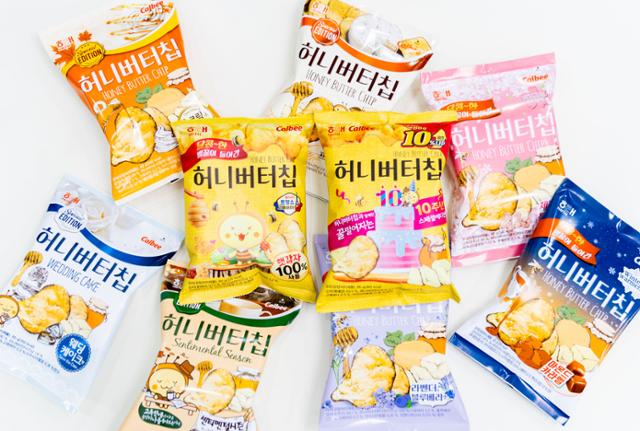
The R&D lineage: Haitai's flavor team explicitly designed Honey Butter to sit next to dessert applications. The sugar-to-salt ratio (roughly 3:1, unusually sweet for a chip) meant it never quite worked as a plain snack for adults. But that same ratio is the reason it maps perfectly onto ice cream, whipped cream, or even mascarpone. Post-launch, dozens of Seoul cafes ran Honey Butter Chip dessert plates as menu items. Nine years later, TikTok rediscovered it. The hack was there the whole time.
Upgrade 5: Turtle Chips plus cheese fondue, the crunch-into-melt combo
Orion's 꼬북칩 (Turtle Chip), the four-layer corn chip that took the 2018 Monde Selection Grand Gold prize and cracked ₩150 billion in cumulative revenue by 2022, is built for dipping. The four stacked layers give it structural integrity most chips lack, which means it survives being pushed into hot cheese without shattering. The upgrade: melt 100g of Comté, gruyère, or even Korean 체다 in a small pan with a splash of milk, keep it just above pourable, dip the Turtle Chips one at a time. Cinnamon Sweet flavor works surprisingly well against savory cheese (the salt-sweet-savory triangle). Corn Soup flavor doubles down on the umami and is the Korean cafe favorite.
The specifically Korean part of this upgrade: cheese was not a native ingredient in Korean cooking until roughly the 1990s, when 부대찌개 and cheese 떡볶이 mainstreamed the fusion. The whole reason Korean palates lean toward cheese-on-everything now is that dairy fat softens 매운맛 (spice) and adds a creamy contrast that traditional Korean cooking largely reserved for 두부. Dipping a 꼬북칩 into hot cheese is basically a snack-scale replay of that 40-year fusion history. If you want a shortcut into why Korean food travels globally, notice how many upgrades converge on melting cheese onto something spicy or savory.
The pairing rulebook: sweet plus salty, hot plus cold, crunchy plus creamy
Strip out the specific snacks and every upgrade above follows the same three contrast axes. Sweet plus salty covers the Honey Butter Chip ice-cream plate and the Choco Pie sandwich. Hot plus cold is the microwaved Choco Pie meeting frozen vanilla, or the just-cooked Buldak noodles meeting cool soft egg. Crunchy plus creamy is the Turtle Chip into fondue, and the 새우깡 into gochujang mayo. Korean snack culture is not chaotic experimentation. It runs on this contrast rulebook, which is why hacks that follow it (chip and dip, hot snack plus ice cream, spicy noodle plus dairy) reliably work, and why hacks that ignore it (dry snack on dry snack) do not travel.
My honest industry read after a decade in the Hallyu space: the reason K-snacks are now a durable global export category, rather than a novelty wave, is that the pairing logic is teachable. You can hand someone in Berlin or São Paulo a bag of Buldak, a slice of cheese, and one instruction (add cheese, add egg) and they end up eating a Korean-style dish, not a curiosity. That is what turns snacks into cuisine. Every upgrade in this article is basically a portable lesson in why Korean food design works.
Explore More of Korea with Daebak
Want to bring a little piece of Korea into your life? The SnackFever Box is packed with the best Korean snacks, ramen, and cultural goodies delivered monthly to your door.


