


Table of Contents
L'île de Ganghwa (강화도) s'étend sur 411 kilomètres carrés au large de la côte ouest d'Incheon, à environ trente minutes en voiture de l'aéroport de Gimpo. La plupart des guides de voyage la classent dans la catégorie « excursion d'une journée depuis Séoul » et passent à autre chose, ce qui est une erreur. J'ai passé la majeure partie d'une décennie à observer l'évolution du tourisme culturel coréen, et Ganghwa est l'une des deux ou trois destinations que les voyageurs intérieurs coréens gardent presque jalousement. Les visiteurs internationaux ne représentent encore qu'environ dix pour cent de l'affluence ici. Ce qui rend cette île spéciale ne fait pas partie du circuit standard des influenceurs.
Considérez les strates : un champ de dolmens de l'âge du bronze reconnu par l'UNESCO, une capitale temporaire de la dynastie Goryeo (고려) qui a résisté aux Mongols pendant 39 ans, deux batailles navales du XIXe siècle avec des puissances occidentales, une industrie du ginseng reconstruite par des réfugiés de la guerre de Corée, et l'un des derniers endroits de la péninsule où l'on peut observer des villages nord-coréens à travers un télescope payant. Si l'on ignore ce contexte, on ne fait que se promener dans une jolie campagne.
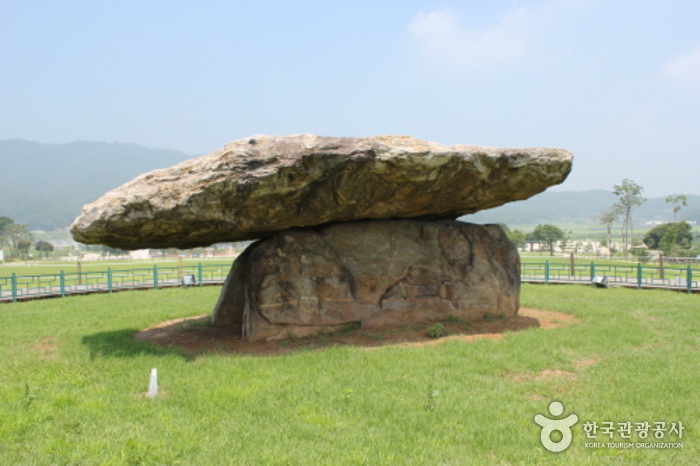
Les dolmens : des déclarations politiques vieilles de 3 000 ans
Commençons par les 고인돌, les dolmens. Ganghwa est l'une des trois zones de dolmens de Corée répertoriées par l'UNESCO, avec Gochang et Hwasun, et ensemble, ces trois sites détiennent environ 40 % de tous les dolmens connus sur Terre. Cette statistique est souvent citée. Il m'a fallu quelques visites pour comprendre ce que cela signifie réellement : cette île était, il y a trois mille ans, un endroit où quelqu'un avait suffisamment de capital politique et social pour commander une main-d'œuvre suffisamment importante pour soulever des pierres de 50 tonnes. Le dolmen de Bugeun-ri (부근리) est l'emblème, une dalle de type table d'environ 6,4 mètres de long, soutenue par deux pierres de support, comme une gigantesque table basse pour quelqu'un de très important.
L'attrait ici ne réside pas dans les pierres elles-mêmes. C'est l'arrogance silencieuse qui les sous-tend. Les pyramides égyptiennes sont généralement créditées de montrer une civilisation hiérarchique précoce, mais vous pouvez vous tenir à côté d'un dolmen de Ganghwa à 8 heures du matin avec presque personne autour et penser au fait que quelqu'un dans la Corée de l'âge du bronze envoyait déjà le même message : j'ai des gens, et mes gens peuvent déplacer des montagnes. C'est la récompense émotionnelle que les professeurs d'histoire coréens essaient de vous offrir dans un manuel. Se tenir sur le terrain réel est une expérience différente.
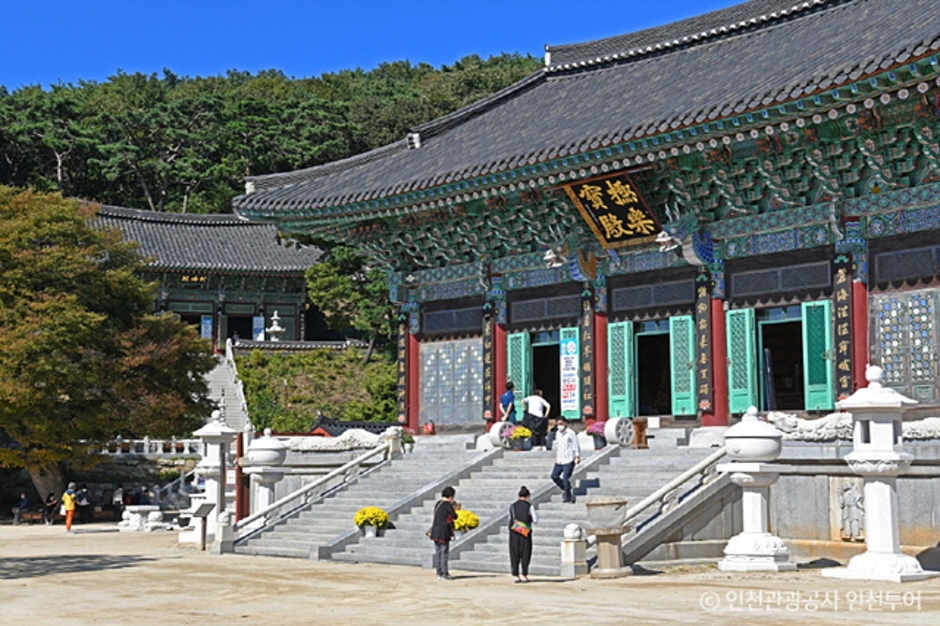
Temple de Bomunsa : coucher de soleil, mer et bodhisattva sculpté dans la falaise
Pour atteindre Bomunsa (보문사), vous traversez un court pont jusqu'à Seokmodo (석모도), et le pont lui-même est plus récent que vous ne l'imaginez. Il n'a été ouvert qu'en 2017. Avant cela, Bomunsa n'était accessible que par ferry, ce qui explique en partie pourquoi le temple donne toujours l'impression d'être une véritable destination et non un simple arrêt touristique. La date de fondation de l'ère Silla (traditionnellement 635 après J.-C. sous la reine Seondeok) est contestée par les érudits, mais personne ne conteste le visuel : un temple à flanc de montagne faisant face directement à la mer Jaune, avec un Avalokitesvara (Gwaneum Bosal) de 9,2 mètres sculpté dans la falaise au-dessus.
L'ascension pour atteindre la sculpture rupestre est d'environ 400 marches en pierre. Ce nombre n'est pas un détail aléatoire. Le bouddhisme coréen entretient une relation extrêmement pratique avec le pèlerinage : chaque pas est censé porter un vœu, et Bomunsa est l'un des trois grands temples de prière côtiers de Corée spécifiquement parce que les ajummas (grands-mères coréennes) s'y rendent lorsqu'un enfant est sur le point de passer un examen ou de commencer son service militaire. Arrivez vers 16 ou 17 heures, regardez le soleil commencer à descendre sur l'eau, et vous comprendrez tout. Voici pourquoi cela frappe fort : le bouddhisme coréen ne pratique pas d'esthétique zen aseptisée. Il fait de grandes et généreuses démonstrations de foi, et Bomunsa est architecturalement conçu pour ce registre émotionnel exact.
L'Observatoire de la Paix : Regarder la Corée du Nord autour d'un café matinal
C'est là que Ganghwa passe de l'historique au politique, et que le véritable poids de l'île commence à se faire sentir. L'Observatoire de la Paix de Ganghwa (강화 평화전망대) est situé à l'extrémité nord de l'île, à seulement 2,3 kilomètres du territoire nord-coréen, de l'autre côté de l'estuaire du fleuve Han. Insérez 500 wons dans un télescope au troisième étage et vous pourrez observer de vrais villageois nord-coréens travailler dans les rizières. Par temps clair, vous pouvez apercevoir le complexe industriel de Gaeseong, à 17 kilomètres de là.
Quelque chose que la plupart des visiteurs étrangers ne réalisent pas : l'observatoire fonctionne discrètement comme un lieu de mémoire pour les quelque 220 000 anciens résidents nord-coréens qui l'ont visité l'année dernière seulement. Beaucoup ont fui les plaines de Yeonbaek dans la province de Hwanghae pendant la guerre de 1950 à 1953 et n'ont jamais pu rentrer chez eux. Venez un matin de semaine et vous verrez des Coréens âgés en habits soignés, calmes, parfois en pleurs. Ce n'est pas du théâtre touristique. Le point : les visites de la DMZ depuis Séoul (Panmunjom, le troisième tunnel) vendent le spectacle géopolitique. Ganghwa vend le chagrin privé, et c'est une visite complètement différente.

Forteresse de Gwangseongbo et la bataille de 1871 dont personne ne parle
Gwangseongbo (광성보) est une petite forteresse côtière reconstruite en 1745 que la plupart des visiteurs contournent pour admirer le paysage. C'est une erreur. En 1871, cet endroit précis fut le théâtre de ce que les Américains appellent le Shinmiyangyo, et que les manuels scolaires coréens mentionnent à peine : un assaut amphibie mené par 1 230 Marines et marins américains sous le contre-amiral John Rodgers, envoyé pour forcer l'ouverture du commerce coréen sous la menace des armes. Le général Eo Jae-yeon et environ 350 soldats Joseon, armés principalement de fusils à mèche, défendirent la forteresse. Presque tous moururent en une quinzaine de minutes de combat rapproché.
Ce qui importe dans cette histoire, ce n'est pas la perte tactique. C'est le fait que le musée de l'Académie navale américaine ait conservé le Sujagi (le drapeau de commandement jaune du général Eo) comme trophée de guerre pendant 136 ans, et ne l'ait rendu à la Corée que sous forme de prêt à long terme en 2007. Ce type de négociation discrète sur les biens culturels est une intrigue secondaire que la plupart des récits de voyage omettent. Parcourez la forteresse, passez devant la tombe jumelle des soldats anonymes, et vous sentirez pourquoi Ganghwa apparaît sans cesse dans les drames coréens sur les traumatismes nationaux. C'est le lieu physique où la question coréenne moderne, "combien coûte la souveraineté ?", a été posée pour la première fois avec des balles.
Ginseng de Ganghwa : la racine que les réfugiés ont reconstruite
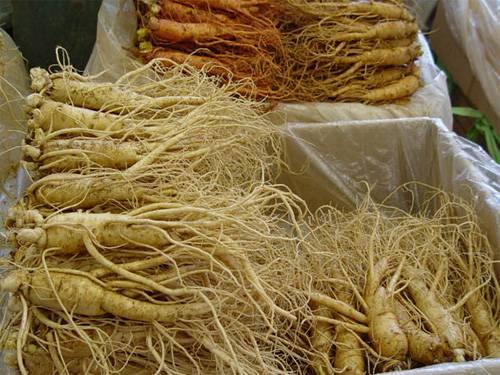
Parlez de ginseng à n'importe quel Coréen de plus de 60 ans et deux noms reviennent : Geumsan (금산) et Ganghwa (강화). Ce que la plupart des gens ignorent, c'est pourquoi Ganghwa est devenue codominante. La culture du ginseng en Corée était à l'origine centrée sur Gaeseong (개성), qui se trouve aujourd'hui en Corée du Nord. Lorsque la guerre a éclaté en 1950, les agriculteurs de ginseng de Gaeseong qui ont fui vers le sud ont physiquement transporté avec eux des semences et un savoir-faire de culture vieux de 400 ans, et le sol argileux de Ganghwa, ses brises côtières et ses nuits fraîches se sont avérés presque parfaits. Ce n'est pas une histoire d'office de tourisme. C'est un transfert industriel de réfugiés qui a sauvé une culture patrimoniale de la disparition.
Aujourd'hui, Ganghwa produit spécifiquement la racine de six ans (육년근) que les marques de ginseng rouge coréen (홍삼) comme Cheong Kwan Jang classent comme leur stock de plus haute qualité. Arrêtez-vous au Ganghwa Ginseng Center (강화 인삼센터) à Ganghwa-eup pour des échantillons réels, et non pas le prix des souvenirs d'aéroport. Si vous achetez une chose sur l'île, c'est celle-ci : une petite boîte de tranches de ginseng rouge de six ans pour le thé. C'est facile à transporter, ça passe la plupart des douanes internationales, et ça raconte une vraie histoire au lieu d'être juste une étiquette de prix.
Couche pratique : Ce que la plupart des guides oublient
Quelques notes pratiques de quelqu'un qui a fait ce voyage en toutes saisons. Louez une voiture si vous le pouvez. Le bus direct 3000 de Sinchon au terminal de bus de Ganghwa est bien, environ une heure et 45 minutes, mais une fois sur l'île, les destinations sont distantes de 20 à 40 minutes par la route, et les taxis sont rares en dehors de la ville. Manisan (마니산) vaut le coup de se lever tôt si vous faites de la randonnée. Il culmine à 469 mètres et abrite Chamseongdan (참성단), l'autel où, selon la légende, Dangun a accompli les rites de récolte pour le premier royaume coréen. La plage de Dongmak (동막해변) sur la côte sud est la seule vraie plage de l'île, meilleure à marée basse lorsque les vasières s'ouvrent et que vous pouvez observer les palourdes, les arénicoles et les crabes travailler le sable.
Angle culinaire à planifier : Ganghwa est célèbre pour l'anguille (장어). Les restaurants le long de la route côtière de Deokjinjin et Chojijin la grillent au charbon de bois, et la version locale penche vers le salé plutôt que le sucré. Accompagnez-la d'un petit verre de liqueur locale d'armoise de Ganghwa (약쑥). Cette combinaison est une culture culinaire d'Incheon de la vieille école servie dans un cadre de village pour un tiers des prix de Gangnam.
Pourquoi Ganghwa n'est pas encore sur le circuit international
Ganghwa reçoit environ 90 % de visiteurs nationaux et 10 % d'étrangers, et les professionnels de l'industrie vous diront que cette répartition est en partie délibérée. Le comté de Ganghwa a résisté à la forte pression immobilière que l'on observe à Yeongjongdo, Muuido ou dans certaines parties de Gapyeong, principalement parce qu'une grande partie de l'île se trouve dans une zone de protection du patrimoine culturel. Des revenus touristiques plus lents, certes, mais aussi une véritable atmosphère de village au lieu d'une énième rangée de cafés de chaîne.
Si vous parcourez la Corée et que vous voulez un endroit qui n'est pas conçu pour Instagram mais qui récompense une lecture lente, c'est votre île. Apportez de bonnes chaussures de marche, de l'argent pour le télescope de l'observatoire et les frais du temple, et consacrez-y une journée complète plutôt qu'un après-midi.
Vous voyagez en Corée et souhaitez continuer à découvrir les endroits que la plupart des touristes manquent ? Notre Daebak Box vous envoie chaque mois un colis soigneusement sélectionné de snacks coréens, d'articles de culture K et de trouvailles de voyage provenant d'endroits exactement comme Ganghwa, livrés où que vous soyez dans le monde.


