


Table of Contents
Park Hyung-sik (박형식) sits in a category that most K-pop insiders would tell you is nearly impossible to land in: the idol who actually pulled off a full actor pivot. After a decade in the industry watching label-manufactured career transitions collapse in the first drama season, the food he posts on Instagram feels less like celebrity oversharing and more like a running receipt of where his career has taken him. Clam chowder in San Francisco during ZE:A's global tour years, Parisian crêpes in the middle of a European PR run, food trucks sent by a Grammy-nominated best friend, birthday cake designed by a luxury Italian jeweler. It reads like a resume disguised as a foodstagram.

The Idol-to-Actor Transition That Wasn't Supposed to Work
Here is the industry math nobody at Star Empire wanted to publish in 2010. Of the K-pop idols who attempt a serious acting pivot, only around 20 percent land a lead role in a network primetime drama within five years of their acting debut. The rest cycle through supporting roles, cameos, and web dramas before quietly moving into hosting or MCing. Park Hyung-sik debuted with ZE:A in January 2010, moved into his first meaningful drama role (Sirius) by 2013, and by 2017 was carrying JTBC's Strong Woman Do Bong Soon (힘쎈여자 도봉순) as the male lead opposite Park Bo-young. That is a compressed climb most idol-actors never make. The reason it worked, and this is not a soft take, is that he was cast against the archness of his idol image. Ahn Min-hyuk is petulant, comic, and vulnerable in equal measure, which allowed viewers to see acting choices rather than idol charisma.
San Francisco Clam Chowder and the ZE:A Global Tour Era
His January 2014 Instagram post from Boudin Bakery in San Francisco, clam chowder inside sourdough, looks casual, but the timing is telling. ZE:A had just closed out a run of Japanese and Southeast Asian promotions and the group's global expansion strategy under Star Empire was in full swing. Idol groups in that period used North American stops less for revenue and more for reputation, and food posts were the currency of that soft-power push. What Park was really doing was building a fan-facing identity that could survive when the group activities slowed, which they eventually did. By the time ZE:A went on indefinite hiatus around 2017, Park's Instagram had already been reframed as an actor's personal channel, not an idol group promotional tool.
Suits Korea and the Bar That Idol-Actors Rarely Clear
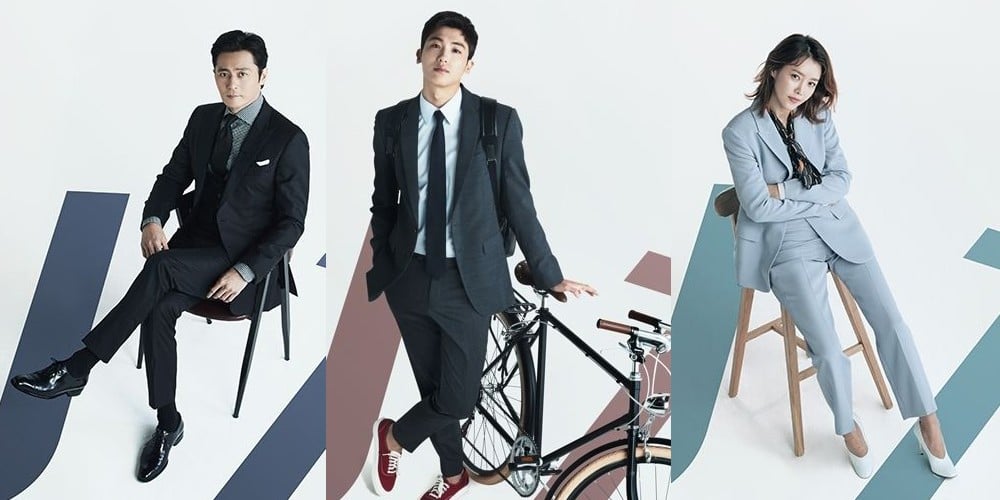
Being cast opposite Jang Dong-gun in KBS's 2018 remake of Suits was the kind of pairing that quietly makes or breaks an idol-turned-actor. Jang is film-generation, deliberate, and unforgiving on screen. Park had to hold the Mike Ross equivalent (Go Yeon-woo, the fake lawyer with the eidetic memory) across 16 episodes without visibly flinching. The Instagram food posts from that shoot period, the Parisian crêpes on the Eiffel Tower street, the frappé with sunglasses selca, are timestamps of the pressure cooker between projects. Actors on network drama schedules in Korea often shoot 20-hour days, and the calorie-heavy Western foods he was posting are a legible sign of what any Korean 배우 (actor) coming off a shoot needs: fast, dense, and not doenjang-jjigae for the tenth night in a row.
Food Trucks, Fandom Economy, and the WOOGA Squad Loop
The industry mechanic behind celebrity food trucks (커피차 and 밥차) is often misunderstood by international fans. When BTS's V sent Park Hyung-sik a food truck to the Suits filming set in 2018 with the hashtags #ThankYouTaehyung and #ILoveYouTae, that was not just friendship. It was public-facing verification of the WOOGA squad, which by then had already become one of Korean entertainment's most valuable friendship brands. WOOGA is short for 우리 가족인가 (are we family), and the members (V, Park Seo-joon, Park Hyung-sik, Choi Woo-shik, Peakboy) met on the set of KBS's Hwarang in 2016. That squad's cross-project promotion, one member sending a food truck, another showing up at a VIP screening, drove BTS-adjacent fandom directly into Park's drama projects. When Suits Korea and later Doctor Slump premiered, the ARMY spillover into ratings and international streaming numbers was measurable, not just anecdotal.

The Bvlgari Birthday Cake and What Bankability Actually Looks Like
In November 2018, Park posted a birthday cake designed by Bvlgari. It looks like a soft flex, and it is, but it is also a very specific signal about where he sat in the K-endorsement pyramid at that moment. Luxury Italian houses do not send custom cakes to actors casually. Park was actively modelling for Bvlgari's Asia campaigns, and the cake was internal-facing content designed to be reposted, which it was. This is where Korean entertainment biz differs from Hollywood: the actor is expected to convert luxury contracts into personal-brand content, which then feeds back into drama viewership, which then justifies the next contract. Park's food posts, whether it is a Bvlgari cake or the roadside sausage-as-microphone video from 2017, are all part of a fluent, self-directed personal brand loop. That fluency, more than any single drama, is what has kept him bookable across five distinct project cycles.

ZE:A Meal Prayers, Idol Training Diet, and Café Culture Habits
One of Park's most-shared clips is a short video from June 2014 of fellow ZE:A member Kim Tae-heon quietly saying grace before the group ate lunch: bap, banchan, and doenjang-guk. That kind of quiet, ritualized 정갈 (jeong-gal, meaning neat and orderly) meal is the exact opposite of what international K-pop consumers assume idol life looks like. The idol training pipeline in Korea, even in the early 2010s, was calorie-managed and heavily 한식 (Korean traditional food) based, with fried and processed food restricted almost entirely during promotion cycles. That habit does not leave the body when the contract ends. If you scan through Park's food posts across the last decade, the through-line is not indulgence, it is variety balanced against a very Korean baseline of rice and soup. Even the café frappé selca sits within Seoul's café culture, where visiting new cafés with friends is itself the activity, not the caffeine.

Doctor Slump, Ordinary Meals, and Why the Fandom Sticks
By the time JTBC's Doctor Slump aired in early 2024, Park had reunited with Park Shin-hye 11 years after The Heirs, playing a plastic surgeon in the middle of a career collapse. What made the show land, beyond the Netflix distribution, was how much of the drama's emotional weight sat on very ordinary meals shared between two people at rock bottom. That is the tonal register Park has built his adult acting career on: unpretentious warmth. It maps directly onto the food he has been posting for a decade. He is not selling omakase, he is selling the small stuff, and Korean audiences (and increasingly Western ones) read that as authenticity in an industry where authenticity is the hardest thing to fake. The idol-to-actor pivot is rare because it requires shedding a manufactured self. Park's food tour, taken cumulatively, is the paper trail of that shedding.
Explore Korean Snacks with Daebak
Love Korean food? Get authentic Korean snacks and ramen delivered straight to your door with the SnackFever Box by Daebak.


