


Table of Contents
Here is the honest read from someone who has spent over a decade watching Korean pop culture package itself for global export: 크리스마스 in Korea is nothing like 크리스마스 in the West, and it is nothing like Christmas anywhere else in Asia. On paper, December 25 has been a public holiday in South Korea since 1949, which makes Korea one of the very few Asian countries that gives every worker the day off. In practice, though, 크리스마스 was never really re-imported as a family holiday. Chuseok and Seollal already own that slot. Christmas got quietly rebuilt into something else entirely: a 커플 (couple) date holiday, wrapped around a strawberry cream 케이크, an illuminated 명동 stroll, and a K-pop Christmas single dropping on Melon at midnight. That reframe is the whole story, and it is the reason foreign visitors keep saying "Korean Christmas feels more like Valentine's Day with snow." They are not wrong. Here is the industry-insider read on how it got that way, and why it works.
Why December 25 is a public holiday in Korea (and why that matters)
Most Western readers assume every country treats Christmas as a day off. It is genuinely rare in Asia. Japan does not. China does not. Vietnam does not. Even in countries with sizable Christian populations like the Philippines, the mechanics look different. Korea does. Dec. 25 has been a legally recognized public holiday in the Republic of Korea since 1949, and Korea also made both Christmas and Buddha's Birthday substitute holidays in the 2010s, meaning if the date falls on a Sunday, the following Monday is now off. That policy detail sounds boring. It is not. It is the reason 명동 department stores can run months-long Christmas Wonderland promotions, the reason Paris Baguette and 뚜레쥬르 can build cake pre-order pipelines against a fixed peak-demand date, and the reason young Korean couples can plan an all-day date on 12월 25일 without negotiating with an employer. Take the public holiday away and 90 percent of the couple economy around Korean Christmas collapses. That is the base layer nobody in the English-language coverage bothers to explain.
How Christmas got rebuilt as a couple holiday, not a family one
The move that makes Korean Christmas culturally interesting, and the piece foreigners find hardest to intuit, is that 크리스마스 slots into a completely different social calendar than it does in the West. In the UK or US, Christmas is the family holiday of the year. In Korea, that job was already taken. 추석 (Chuseok, the harvest holiday) and 설날 (Seollal, Lunar New Year) are the multi-day family events that involve travel, jeon-cooking, ancestral rites, and family-drama television specials. There was no cultural gap for a second family holiday. What there was, when Christmas started scaling in Korea in the late 1980s and 1990s alongside Seoul's cafe-and-department-store boom, was a gap for a romantic couple holiday in the dead of winter. Korean youth culture filled it. The neologism sol-크 (솔크, "solo Christmas") only exists as slang because the assumption baseline is that you spend Dec. 24 and 25 with a partner. If you do not, you either lean into ironic self-deprecation or you organize a friend dinner and pretend it is fine. This is the appeal point that gets missed in most Christmas-in-Korea travel pieces: it is not that Korean Christmas is "less religious." It is that Korean Christmas is functionally Valentine's Day in December, with cake instead of chocolate.

The Christmas cake economy: why Paris Baguette sells millions of units in December
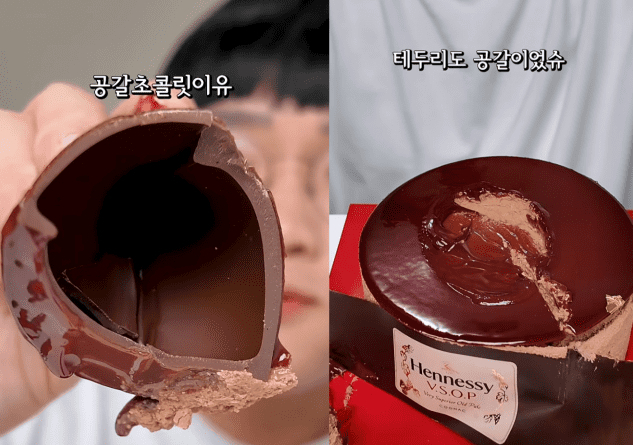
The 케이크 is the single most important product in the Korean Christmas retail calendar, and the mechanic is worth understanding. Every December, Korea's three big bakery chains (Paris Baguette, 뚜레쥬르 which is Tous les Jours, and CU/GS25 convenience-store lines through partners like Shany) run pre-order campaigns for limited-edition Christmas cakes. Paris Baguette alone consistently pushes several million Christmas cakes through pre-order and walk-in demand across the month, with the actual peak collapsing into a 72-hour window from Dec. 23 through Dec. 25. Price tiers stretch from 9,980 won at CU convenience stores for a petite personal cake, through the ~30,000 to 42,000 won mid-tier at Paris Baguette and Twosome Place, all the way up to 400,000 won at Hotel Shilla for the "Taste of Luxury" edition (a 30 percent price hike over their prior year's flagship, per The Korea Herald). The reason this scales is that the Christmas cake is not a family object in Korea. It is a couple object, or a friend-group object, or a small-office 회식 object. Nobody buys a cake to serve twelve relatives. They buy it to share with one partner, one photo, one candle-blowing moment, then finish it in three sittings. The unit economics of "small cake, high margin, short season" is why the category is aggressively defended by every major Korean bakery chain, and why fights over cake quality (as The Korea Herald's Song Seung-hyun reported in Dec. 2025 about Twosome Place's Hennessy V.S.O.P cake and Paris Baguette's Berry Bomb) hit YouTube reviewers within hours.

명동, 신촌, 이태원: the illumination map every couple already knows
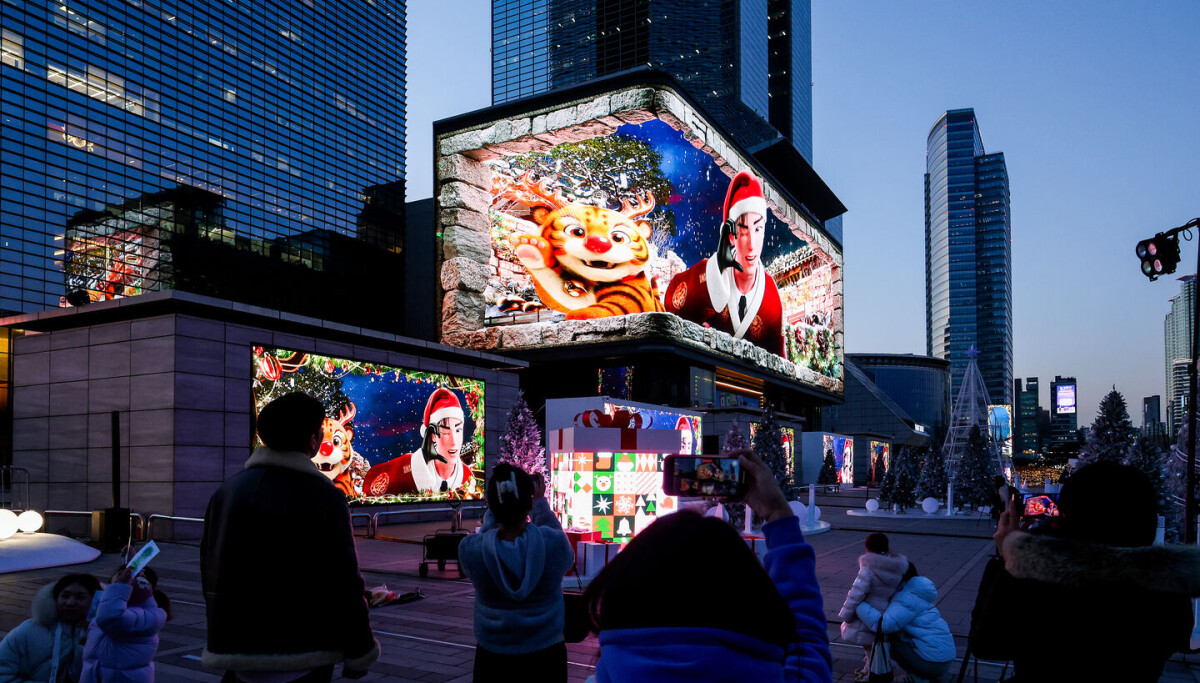
Ask any Seoul resident under 35 where you go on Christmas Eve with a partner, and you get a memorized shortlist. 명동 for the Shinsegae Department Store facade media wall (that huge screen and colorful light display in front of Shinsegae Main is the Instagram anchor of every K-Christmas story). 신촌 and 이태원 for the bar-and-hostel Christmas parties. 잠실 Lotte World Tower for the Lotte Town Christmas Market, popular specifically among couples in their 20s and 30s per The Korea Times' Kim Sur-hyun. 광화문 Square for the outdoor Christmas market with lantern-lit 청계천 walk-through. 강남 Samseong-dong for the Gangnam Media Winter Festa's LED media-art walls (7.5-meter Christmas tree, digital signage across 17 screens, Hechi the city mascot reimagined as Rudolph). The pattern is consistent: department store chains and city governments spend serious CapEx on illumination because the couple market shows up in known volumes. Shinsegae, Lotte, and Hyundai have all made Christmas photo-zone infrastructure a permanent line item, not a seasonal spend. This is why the same corners of 서울 look identical year over year in K-drama Christmas scenes. The infrastructure was built to stay.
Church, Midnight Mass, and the ~30 percent Christian slice
Roughly 30 percent of South Koreans identify as Christian (Protestant and Catholic combined), which is one of the highest Christian percentages in East Asia and the reason why Korean Christmas has genuine religious infrastructure sitting underneath the couple-and-cake layer. 명동성당 (Myeongdong Cathedral) runs its Midnight Mass with seating starting around 9 p.m. and the nativity re-enactment kicking off at 10:30 p.m. before Mass at midnight, drawing crowds that stretch down Myeongdong-gil. Yoido Full Gospel Church, one of the largest Protestant congregations in the world, runs multiple Christmas Eve and Christmas Day services with community meals that often serve traditional Korean side dishes alongside the more expected Christmas fare. This is the piece the "Korean Christmas is basically Valentine's Day" narrative flattens. Both are true at the same time: for one slice of the country, Christmas is a serious religious observance with the same weight it carries in the Philippines or Italy, and for another slice (often younger, secular, or lightly Christian) it is a date holiday. Korean pop culture accommodates both without much friction, which is quietly one of the country's more underrated soft skills.
The K-pop Christmas single: why every agency drops one in mid-December
Anyone who tracks the Korean music industry knows December has become K-pop's second-biggest single-drop window after summer. This is not accidental. Post-2020, K-pop agencies figured out that a Christmas-themed release captures three concurrent monetization windows at once: domestic streaming spike on Melon and Genie during the Christmas Eve to New Year's Day window, global Spotify holiday playlist inclusion (which pays year over year, not just at release), and short-form video traction on TikTok and Reels through fan-cover choreo. The Soompi decade-of-Christmas roundup captures the pattern cleanly. EXO's "Miracles in December" (2013), Girls' Generation-TTS "Dear Santa" (2015), IU's "Merry Christmas in Advance" (2016), TWICE's "Merry & Happy" (2017), BTS's V "Winter Bear" (2019), Stray Kids' "Christmas EveL" (2021), Red Velvet x aespa "Beautiful Christmas" (2022). SM in particular has treated the year-end Christmas single as brand-defense IP, running SMTOWN Christmas albums that stitch multiple agency artists into one package to guarantee playlist coverage across fandoms. The industry insight: a Christmas single almost never charts higher than the group's flagship comeback, but it stays profitable for a decade because seasonal playlists rebuild demand every year. It is the closest thing K-pop has to an annuity product.

K-drama Christmas scenes: Reply 1988, Goblin, and why the snow-and-couple frame travels
The reason global fans keep asking "is Korean Christmas really like the K-dramas?" is that K-dramas have spent 15 years teaching the world a very specific visual grammar for it. 응답하라 1988 (Reply 1988) treated Christmas as a nostalgic family-and-friend moment set against 쌍문동 winter streets. 도깨비 (Goblin, 2016) built its most-clipped scene around Gong Yoo and Kim Go-eun sharing a Christmas moment under snow, and the visual template (long coats, hot drinks, snow falling, single strand of illumination, two people not saying much) became reference material for basically every Korean romance drama Christmas scene that followed. 이상한 변호사 우영우 (Extraordinary Attorney Woo, 2022) did a quieter version at Han River. What these scenes actually export, and why they matter for the Korean Christmas retail machine, is a specific aesthetic package: snow-fall lighting, a warm interior lit against cold exterior, two people sharing a small cake or a warm drink, and enough silence that the moment reads as intimate rather than performative. When international fans book Seoul trips in December, they are trying to walk into that shot. Seoul retailers know this, which is why every Christmas market lighting install is engineered to be photographable at eye level, phone-first, no additional editing needed. That is not luck. That is production design applied at the city-block level.
The industry read: what Korean Christmas is actually worth
The Korean Christmas retail economy sits somewhere in the $2 to $3 billion range across F&B, fashion, entertainment, and travel spend, with roughly 90 percent of that revenue compressed into the Dec. 20 through Dec. 25 window. Cake alone is a several-hundred-billion-won category at Paris Baguette's scale. Illumination sponsorship (which is real B2B money, not just decoration) runs into the tens of billions of won across Shinsegae, Lotte, Hyundai, and city government line items. Hotel Christmas Eve packages (dinner course plus room, usually marketed at couples) run 300,000 to 1.5 million won per night at four-star and five-star tier and sell through by early November. K-pop Christmas singles generate high seven-figure streaming payouts inside the first month and annuitize from there. The pattern that ties this together is a phrase I have used with agency partners for years: Korean Christmas is a manufactured tradition that ran the playbook successfully. It was not inherited. It was engineered. The result is one of the few examples of a Western holiday that Korea absorbed, restructured to match domestic emotional logic (couple, not family), and then re-exported through Hallyu media so that the Korean version now shapes how younger fans in Manila, Jakarta, and Los Angeles imagine what Christmas is supposed to look like. That is the appeal point. It is Christmas rebuilt for a coupled-up, aesthetics-first, K-drama-literate generation, and it works because every layer of the industry cooperated to build the infrastructure it needs.
The Daebak read: why Korean Christmas is the most successful cultural port in the Hallyu playbook
Korean Christmas is worth paying attention to precisely because it is not a Korean tradition. It is a foreign holiday that Korea took, kept the surface (trees, Santa, red-and-green, carols) and completely rewired the underlying emotional logic (couple date holiday, cake-centric, illumination-driven, K-pop soundtracked). The finished product is now culturally exportable in a way the original never was for this audience. When a Filipina fan in Manila watches a Korean drama Christmas scene and books a Seoul trip in December to recreate it, she is not consuming Western Christmas. She is consuming Korean Christmas, which was Western Christmas 75 years ago and became something else. The fact that Dec. 25 has been a Korean public holiday since 1949 gave the industry the runway. Chuseok and Seollal blocking the family-holiday slot forced the rebuild into a couple holiday. K-pop and K-drama in the last decade completed the export packaging. For anyone thinking about how Hallyu actually scales globally, Korean Christmas is one of the cleaner case studies of the pattern: adopt a foreign form, redesign it around Korean social mechanics, wrap it in K-content aesthetics, and ship. 케이크 optional but recommended.
Bring the Korean Christmas Feeling Home with Daebak
If the Korean Christmas rebuild pulled you deeper into how Hallyu actually reshapes a holiday, the Daebak Box is your monthly deep-dive: curated Korean pop culture, snacks, and lifestyle picks that take you past the tourist headlines into what Korean fans actually love. Subscribe, and let each month land like a strawberry cake on 크리스마스 이브 at your door.


