


Table of Contents
Each spring, Korea transforms into a soft pink and white canvas as beotkkot (벚꽃), the country's beloved cherry blossoms, sweep north from Jeju to Seoul over roughly three weeks. The 2026 bloom is shaping up to be one of the earliest on record, with the Korea Meteorological Administration declaring Seoul's official first bloom on March 29, ten days earlier than the historical average. Whether you are chasing the first petals on Jeju, weaving through Jinhae's tunnels, or picnicking along the Han River, this guide covers when to go, where to stand, and how to make the most of cherry blossom season.

2026 Bloom Forecast: When to See Cherry Blossoms in Korea
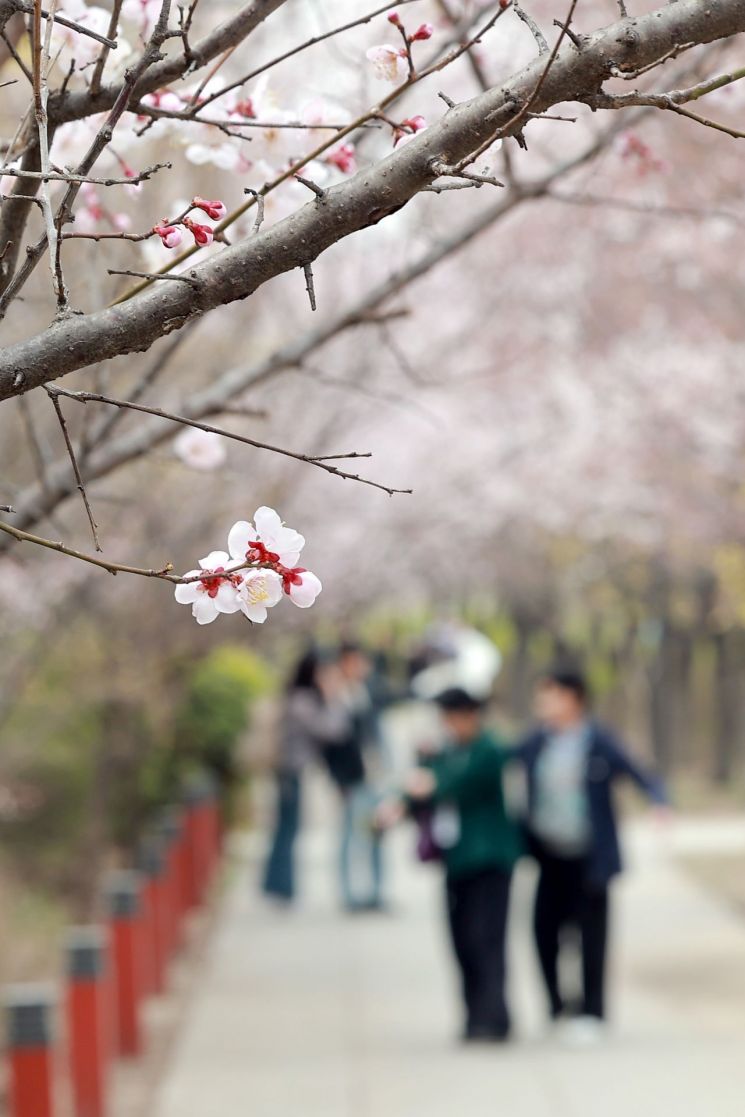
Korea's cherry blossoms travel south to north, and the warmer winter of 2025 to 2026 has pulled the calendar forward almost across the board. Jeju Island, the country's southernmost region, typically opens the season around late March, this year as early as March 22. Busan, Tongyeong, and Jinhae follow in the final days of March, with full bloom hitting Jinhae's famous streets in the first week of April. Seoul, Gangneung, and the central inland regions usually peak around early to mid-April, but in 2026 Seoul's official bloom arrived on March 29 with peak displays already at Yeouido and Seokchon Lake by the first weekend of April. Northern cities like Chuncheon and the slopes of Seoraksan close the season around mid-April. Aim to arrive three to five days after the local first bloom for the fullest canopies.
Yeouido Spring Flower Festival: Seoul's Iconic Han River Bloom
Held along Yunjungno (윤중로), the ring road that hugs the National Assembly building on Yeouido island, the Yeongdeungpo Yeouido Spring Flower Festival is Seoul's headline cherry blossom event. The Visit Seoul tourism office estimates 1,886 cherry trees and roughly 87,859 other flowers along the route, making it one of the most concentrated displays in any capital city. The Korea Times reported that 2026 cherry blossoms officially bloomed at Yunjungno on March 29, with peak crowds arriving the following weekend. Best access is via Seoul Subway Line 9 to National Assembly Station or Line 5 to Yeouinaru Station. The southern edge of Yeouido Park to the KBS Annex Building offers the best canopy, with food trucks, performances, and the VIAF arts program running throughout the festival.
Jinhae Gunhangje: Korea's Largest Cherry Blossom Festival
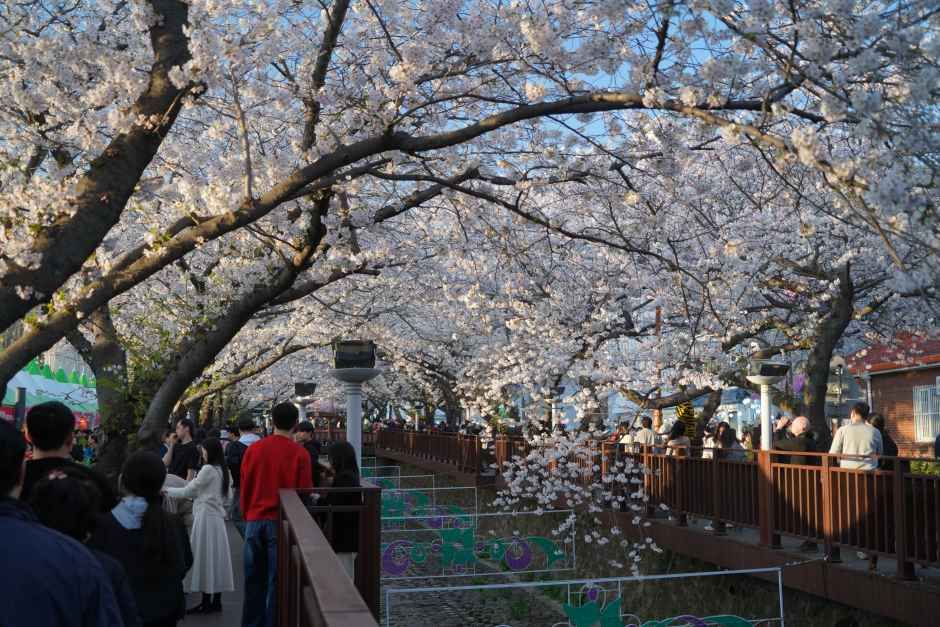
If you can only attend one cherry blossom festival in Korea, make it Jinhae Gunhangje. Held in the naval port city of Jinhae in Changwon, Gyeongsangnam-do, the festival fills 360,000 cherry trees across the entire downtown into a white sea, drawing more than 2 million visitors each spring. The 2026 edition runs from March 27 to April 5. The two photo zones you cannot miss are Yeojwacheon Stream, where a small footbridge known as the Romance Bridge sits inside a tunnel of blossoms reflected in the water, and Gyeonghwa Station, a disused rail line where cherry petals fall directly onto the tracks. Other key spots include Anmin Road, a 5.6 kilometer cherry blossom drive, and Jehwangsan Park. KTX trains to Changwon Jungang followed by a local bus to Jinhae are the fastest connection from Seoul.
Seokchon Lake: Cherry Blossoms with Lotte World Tower
For the most quintessentially modern Seoul photograph, head to Seokchon Lake in Songpa District. The 2.5 kilometer ring of cherry trees around the East and West Lakes reflects perfectly in still water, with the 555 meter Lotte World Tower rising behind the petals. According to the Korea Times, an estimated 8.62 million people visited Seokchon Lake and the surrounding area during the 2025 festival, and Songpa District expects similar numbers in 2026. The Seokchon Lake Cherry Blossom Festival runs March 29 to April 6 in 2026, with the West Lake offering the cleanest tower reflections at sunrise and after dark when both the trees and the tower are illuminated. Jamsil Station on Lines 2 and 8 puts you at the lakeshore within minutes.

Gyeongju Bomun Lake and Anapji: History Meets Spring
Gyeongju, the ancient capital of the Silla Kingdom, may be Korea's most romantic cherry blossom city because the petals brush up against royal tombs, pavilions, and palace ruins. Around 9,000 cherry trees ring 8 kilometers of Bomun Lake, with Bomunjeong Pavilion picked by CNN Travel as one of Korea's most beautiful spots. The full bloom typically lands in early April. Nearby Donggung Palace and Wolji Pond, often called Anapji, glow with cherry petals reflecting on water alongside the illuminated Silla pavilions. The Gyeongju Cherry Blossom Marathon and the Daereungwon Stone Wall Road Festival both fall during peak bloom, with the latter running March 27 to 29 in 2026 along a tree-lined road encircling the royal tombs.
Hwagae Cherry Blossom Tunnel: Hadong's Wedding Road
The Simni Beotkkotgil (십리벚꽃길), or Ten-Li Cherry Blossom Road, in Hadong County, Gyeongsangnam-do, is the most cinematic blossom drive in Korea. Stripes Korea reports that the 27th Hadong Hwagae Market Cherry Blossom Festival will run March 27 to 29, 2026, with parts of Hwagae-myeon closed to cars on festival weekends. The roughly 6 kilometer stretch links Hwagae Traditional Market to Ssanggyesa Temple along the Seomjingang River and was planted in 1931, making the trees among the oldest in the country. Local legend says couples who walk the road hand in hand will marry happily, earning it the nickname Honinno, or Wedding Road. The selected Wedding Road Photo Zone program on March 28 and 29 features professional shoots for couples chosen from over 200 applicants.
More Seoul Spots: Seoul Forest, Olympic Park, and Children's Grand Park
Beyond Yeouido and Seokchon, central Seoul offers several quieter cherry blossom alternatives. Seoul Forest in Seongdong-gu pairs blossoms with deer enclosures and a riverfront promenade, perfect for slow morning walks before crowds arrive. Olympic Park in Songpa is a 1.45 million square meter expanse where cherry blossoms cluster around the World Peace Gate and along the wide loop trail, ideal for picnics with families. Children's Grand Park in Gwangjin-gu wraps a small zoo and amusement park in a soft pink blanket from late March, and entry is free. For neighborhood charm, stroll Bukchon Hanok Village or Gyeongbokgung Palace where blossoms frame traditional roof tiles, then end the day along the cherry-tree-lined banks of Jungnangcheon Stream.
Jeju Jeonnongno: The First Blooms of Spring
Korea's cherry blossom season actually begins on Jeju Island, and the king cherry tree (왕벚나무), declared a natural monument, is native to the island. The most famous local route is Jeonnongno in Jeju City, a roughly 1.2 kilometer corridor lined with thick king cherry trees that bloom in late March, typically a week before mainland sites. The Seogwipo Cherry Blossom Festival runs in late March around the Jeju Sports Complex and Jeonnongno. Jeju's blossoms are noticeably larger and fluffier than the somei-yoshino variety planted across the mainland, and the volcanic backdrop of Hallasan adds a striking contrast. Combine your trip with Jeju's emerging matcha cafes and the spring rapeseed flower fields that bloom at the same time.
Photography Tips: Best Time of Day and Composition
The golden hour just after sunrise is the single best window for cherry blossom photography in Korea, mostly because crowds are thinner and the light catches the petals in a warm pink wash. For Yeouido and Seokchon Lake, plan to arrive by 6:30 a.m. for clean shots without people in frame. Overcast skies actually produce richer pink tones than direct midday sun, which tends to blow out the petals. Bring a polarizing filter if you are shooting near water, and shoot at f/2.8 to f/4 to keep individual blossoms sharp while softening the background. Evening blue hour shots at Seokchon Lake and Jinhae's Gyeonghwa Station produce magical results when paired with city lights. Always check Korea Meteorological Administration bloom maps before booking flights, since timing can shift a full week year to year.
What to Wear: Hanbok Rentals and Spring Style
Wearing a hanbok under cherry blossoms is one of the most popular Korean spring experiences for both locals and visitors. Around Gyeongbokgung, Bukchon, Insadong, and Gyeongju, hanbok rental shops typically offer two to four hour packages from around 15,000 to 30,000 won, with full hair styling and accessory sets available. Modern fusion hanbok, with shorter chima or contemporary fabrics, has become popular and photographs beautifully against pink blossoms. If you wear a traditional hanbok at major palaces, admission is free, a small bonus that more than covers the rental. Otherwise, layered spring outfits in soft pastels or whites complement the blossoms in photos. April weather in Korea swings between 8 and 18 degrees Celsius, so pack a light trench coat or cardigan.
Cherry Blossom Foods: Sakura Lattes and Spring Rice Cakes
Korean cafes go all in for cherry blossom season. The signature drink is the cherry blossom latte (벚꽃 라떼), a pale pink milk drink made with cherry blossom syrup, sakura petals preserved in salt, or strawberry powder swirled into steamed milk. Major chains like A Twosome Place, Tom N Toms, and Tous les Jours release limited spring menus, while specialty cafes such as those in Seongsu, Yeonnam, and Ikseondong design entire menus around the season. Sweet treats include beotkkot tteok, soft rice cakes flavored with cherry blossom and stamped with a flower shape, and cherry blossom macarons. The Seoul Forest area, Anguk's hanok cafes, and Hannam-dong all have standout seasonal menus worth queuing for.
How to Plan Timing: Logistics, Crowds, and a Sample Route
The trickiest part of a cherry blossom trip is timing, since peak bloom lasts only about a week per region. The most reliable approach is to chase the bloom northward. A common seven to ten day itinerary starts in Jeju in late March, moves to Busan and Jinhae for the festivals around March 27 to April 5, swings through Gyeongju for Bomun Lake and Daereungwon, then ends in Seoul for Yeouido and Seokchon Lake during the first or second week of April. KTX trains connect every leg in two to three hours. Avoid weekends at Jinhae and Yeouido if you can, since both can see over a million visitors in a single day. Book accommodation at least four to six weeks ahead, and download the VisitKorea or Visit Seoul app for live festival updates and crowd alerts.
Explore More of Korea with Daebak
Want to bring a little piece of Korea into your life? The Daebak Box is packed with the best Korean snacks, ramen, and cultural goodies delivered monthly to your door.


