


Table of Contents
Camping in South Korea is no longer a niche hobby. After the COVID-19 pandemic pushed Koreans toward outdoor leisure, the number of annual campers nearly doubled to over 7 million by 2023, roughly one in eight residents. The Korea Tourism Association recorded a record 3,600 registered campsite operators by September 2023, nearly triple the pre-pandemic figure. From luxury glamping cabins in Gangwon-do to fold-down SUV sleepovers known as chabak, outdoor culture has become a defining part of how Koreans relax.
The Post-Pandemic Camping Boom
Korean camping took off during social distancing because tents and cars allowed travel without crowded indoor venues. By 2022 the camping market reached 6.3 trillion won (about 46.5 billion US dollars), an 8 percent annual gain, according to data cited by Hyundai Motor's newsroom. A Korea Tourism Organization survey found that 41.6 percent of Koreans had tried car camping at least once by end-2022, up from just 4 percent the previous year. The growth held even after pandemic restrictions lifted, with campers shifting from emergency outdoor escapes to a long-term lifestyle hobby.
Chabak: Car Camping in an SUV or Van
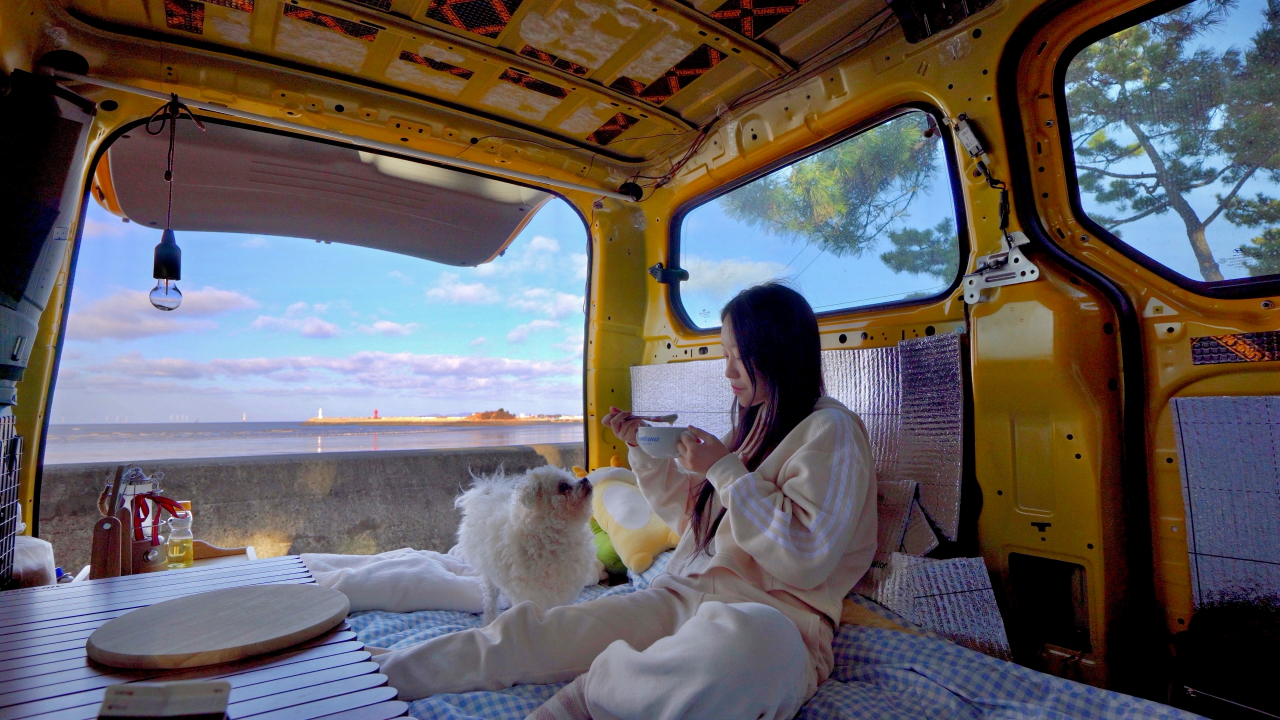
Chabak (차박) combines the words cha (car) and bak (overnight stay). Drivers fold down rear seats in an SUV or van, lay out a mattress, and sleep with the trunk hatch open toward a beach, river, or mountain view. SUVs made up more than 70 percent of Korean car sales in 2022 according to the Korea Automotive Technology Institute, and brands such as Hyundai Casper, Kia Carnival, and the Genesis GV80 have all been marketed to chabak owners. Car-sharing service SoCar launched dedicated camping van rentals in 2023 for 110,000 to 130,000 won per day.
Auto Camping, Glamping, and Backpacking
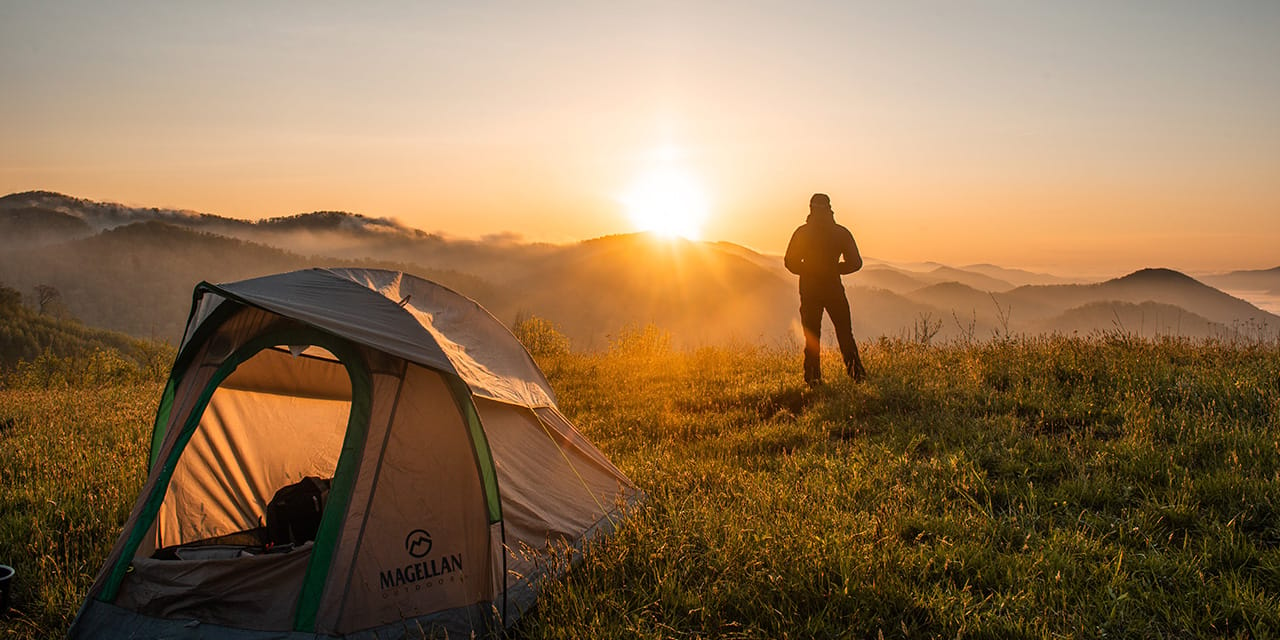
Korean campsites generally split into three formats. Auto camping uses dedicated parking-style sites where each pitch fits a car and a tent, costing 25,000 to 50,000 won a night. Glamping (글램핑) combines glamour and camping, offering pre-pitched safari tents or A-frame cabins with beds, heated floors, kitchens, and private barbecue decks, typically 200,000 to 300,000 won per night. Backpacking remains a smaller segment, popular on Jeju Olle Trail sections and mountain shelters in Seoraksan and Jirisan national parks. Many Koreans now mix all three on different weekends.
Most Popular Camping Destinations
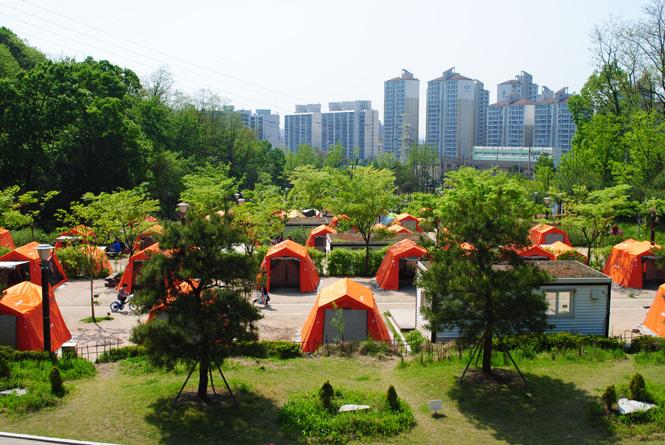
Gangwon-do is the headline region. Hongcheon's riverside auto camping grounds, the Donggang River campsite near Jeongseon, and Kensington Hotel Pyeongchang's glamping zone draw weekenders from Seoul. Pyeonghwa Dam in the north, Cheongpung Lake in Chungcheong, and Geoje's southern beaches are repeat favorites for water access. Jeju Island offers oceanfront glamping such as Jeju Starlight Glamping with private terraces. Within Seoul itself, Nanji Hangang Camping in Mapo and Noeul Park Campground in the World Cup Park complex give residents an inner-city option.
Korean Outdoor Brands: Helinox, Snow Peak Korea, and More
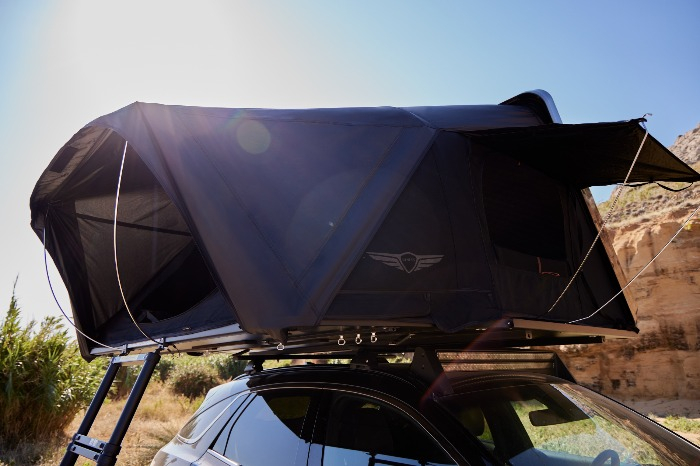
Helinox is the standout Korean outdoor success story. Founded in 2009 by Jake Lah in Anseong, it created the lightweight portable furniture category with the Chair One in 2012, a sub-1 kg seat that holds up to 145 kg. The brand now collaborates with Hyundai's premium Genesis line on the Camping Gear Black Edition alongside iKamper rooftop tents and Thule cargo systems. Snow Peak Korea distributes the Japanese specialist's stoves and titanium cookware, MSR sells high-end backpacking gear, and Naturehike from China dominates the budget tent segment thanks to large Coupang and Naver Shopping sales.
Glamping Operators and Camping Variety Shows
Korean glamping is supported by a handful of large operators. Camping Korea (캠핑 코리아), Glamping Korea (글램핑 코리아), and Bears Town in Pocheon run multi-site networks combining safari tents, modern cabins, and ski-season packages. Reservation portals such as Camfit and the government's Gocamping platform aggregate thousands of sites. K-content has fed the trend in return: variety shows including the survival-camping format Jageupjajok Mooindo (자급자족 무인도, often translated as Sponsor My Tent) and tvN's Three Meals a Day put outdoor cooking and tent setup into prime-time entertainment, turning chefs and idols into camping influencers.
Camping Food: Samgyeopsal, Ramyeon, and Camping Bap
Food is half the reason Koreans go camping. Samgyeopsal grilled over charcoal is the default centerpiece, served with kimchi, garlic, and ssam wraps. A late-night pot of ramyeon, usually Shin Ramyun or Jin Ramen cooked outdoors in a yellow aluminum kkokkuri pot, is treated as a ritual. Camping bap (캠핑밥) covers one-pot dishes built around the foil-wrapped trinity of butter, garlic, and shrimp, plus dakgalbi, kimchi bokkeumbap, and Dutch oven stews. Many sites sell pre-packaged BBQ sets and basic banchan so first-time campers can arrive empty-handed.
Tent Styles, Caravans, and the RV Surge
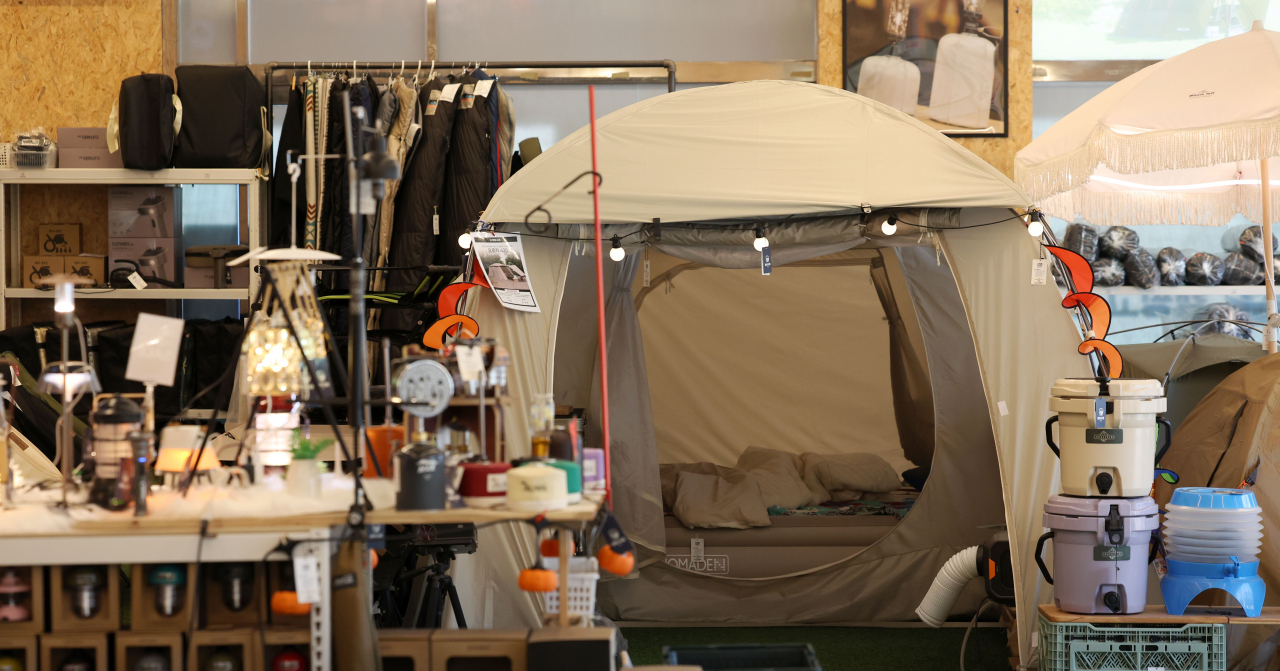
A-frame tents from brands like Coleman Korea, dome tents from Naturehike, and large cabin tents from Snow Peak dominate the family segment. Bell tents and Helinox Tactical shelters are popular among solo chabak users. Caravan and RV ownership has also jumped sharply: Car Is You data show 48,836 registered camping vehicles in Korea as of September 2022, up roughly eight times from 6,040 in 2012. Public parking issues with long-stay caravans have prompted Incheon and other cities to convert free lots into paid ones, an early sign that infrastructure is still catching up to demand.
Etiquette, Seasons, and Safety
Korean campsites enforce strict quiet hours, typically 10 pm to 7 am, and most sites post no-music rules near tents. Leave-no-trace habits are still uneven: Korea Herald has reported on albakgi (알박기), the practice of leaving tents unattended to reserve spots, prompting municipalities to update parking rules. Spring from April to May, with cherry blossoms and danpung-free clear days, and autumn from September to October are the most comfortable seasons. Winter camping is growing, but the National Fire Agency has logged carbon monoxide poisoning incidents from charcoal heaters in sealed tents, so electric heaters and CO detectors are now standard recommendations.
Explore More of Korea with Daebak
Want to bring a little piece of Korea into your life? The Daebak Box is packed with the best Korean snacks, ramen, and cultural goodies delivered monthly to your door.


