


Table of Contents
The Korean public bathhouse, known in Korean as mokyoktang (목욕탕), is one of the country's oldest communal rituals. While the larger jjimjilbang often grabs headlines abroad, the simpler neighborhood mokyoktang remains the original setting for Korea's bathing culture, a quiet space dedicated to soaking, scrubbing, and starting the day clean.
What Is a Mokyoktang, and How It Differs From a Jjimjilbang
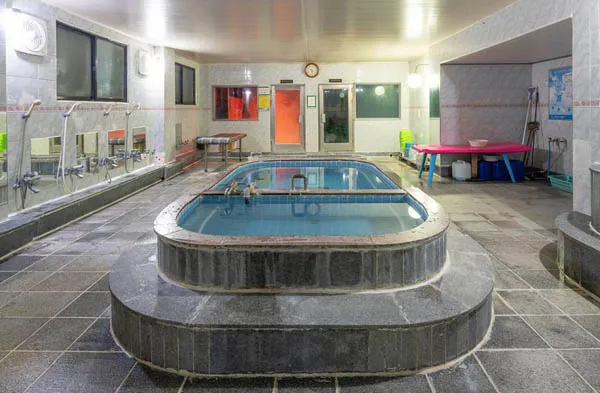
A mokyoktang is a bathing-only facility. It typically consists of gender-segregated wet zones with showers, hot tubs at varying temperatures, a cold plunge, and a steam room. According to Stripes Korea, entrance to a mokyoktang costs about 10,000 won for adults, while a full jjimjilbang, which adds unisex sauna lounges, sleeping areas and food courts on top of the bath section, runs closer to 15,000 won.
Put simply, every jjimjilbang contains a mokyoktang section, but a mokyoktang on its own does not include the lounging facilities that have made jjimjilbang famous in dramas and travel videos. The mokyoktang is purpose-built for washing, not for staying overnight.
A Short History From Joseon to the Postwar Housing Boom
Communal bathing in Korea has roots that reach back to the Joseon era, but the modern neighborhood mokyoktang took shape in the postwar twentieth century, when most urban homes lacked private bathing facilities. As cities densified through the 1960s and 1970s, the bathhouse with its tall chimney became a standard fixture of Korean blocks, serving households that relied on shared infrastructure for hot water.
Today the model is in decline. The Korea Herald reports that the nationwide bathhouse count fell from 8,904 in 2000 to 5,656 in 2025, a 13.3 percent drop in just the last five years. Closures have hit smaller rural facilities hardest, while larger urban venues attached to jjimjilbang continue to draw foreign visitors. Several local governments, including Taebaek and Jeongseon-gun in Gangwon Province, are now funding new public bathhouses as community welfare infrastructure for elderly and single-person households.

The Layout: Lockers, Pools, and the Cold Plunge
Inside a typical mokyoktang, guests pay at the front desk, separate by gender, and receive a locker key on a wristband or ankle band. The undressing room leads into a tiled wet area lined with low shower stations where bathers wash thoroughly while seated on plastic stools before stepping into any pool.
Standard features include a warm tub (ondang, 온탕) around 38 to 40 degrees Celsius, a hot tub (yeoltang, 열탕) above 42 degrees, a cool tub (chatang, 차탕), a cold plunge (naengtang, 냉탕), and a dry steam room or hanjeungmak. Rotating between hot and cold pools is the classic mokyoktang rhythm, said to improve circulation and condition the skin.
The Italy Towel and the Sesinsa Body Scrub
The signature item of Korean bathing culture is the ittari taol (이태리타올), the rough green or pink scrub mitt invented in Busan in the early 1960s. The Korea Times reports it was first manufactured from viscose rayon imported from Italy, which gave the towel its name. Annual sales surpass ten billion won, and at the Myeong-dong Daiso store, where roughly 70 percent of customers are foreign, sales of the towel rose 30 percent in the second half of 2025.
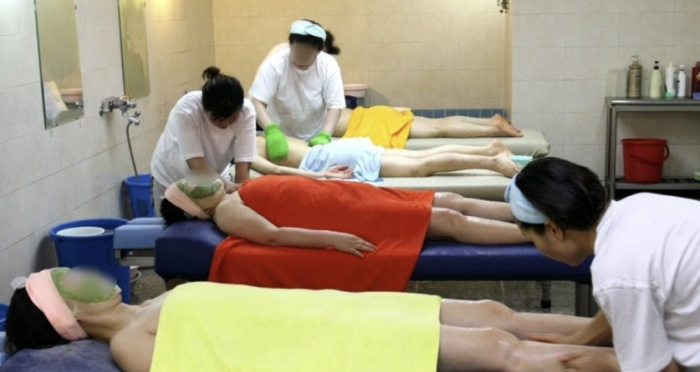
For a deeper exfoliation, bathers can hire a sesinsa (세신사), the bathhouse attendant who performs a vigorous full-body scrub known as ttae-mil-i (때밀이). Klook bookings for these treatments rose 11 percent after the Netflix film K-Pop Demon Hunters featured a bathhouse scene, with sauna bookings in the Hongdae area jumping 57 percent.
Etiquette: What to Do and Avoid
Mokyoktang etiquette is strict and largely silent. Bathers must wash thoroughly with soap before entering any tub, and the wet zone is fully nude, with swimsuits prohibited. Long hair must be tied up, and phones and cameras are banned in all bath areas. Conversation is kept low, and according to Stripes Korea, soaking is generally limited to about 20 minutes at a time to prevent dehydration.
Guests bring only a small towel and toiletries into the bath area, keeping the locker key visible on a wristband or ankle band. Elderly regulars often correct visitors who skip the pre-bath wash, an enforcement layer that has helped preserve the mokyoktang's hygiene standards for decades.
Hot Springs and the Oncheon Tradition
Beyond the urban neighborhood mokyoktang, Korea has a parallel tradition of natural hot spring bathing called oncheon (온천). According to the Korea Tourism Organization, Onyang Hot Spring dates back more than 1,300 years and was visited by Joseon kings, including King Sejong, for rest and treatment of physical ailments. Other major hot spring destinations include Suanbo in Chungju, Bugok in South Gyeongsang Province, and Yangji.
Suanbo's weakly alkaline water rises from 250 meters underground at 53 degrees Celsius and is offered in public baths, outdoor pools, and family rooms across the area's hotels and resorts. Oncheon bathing follows the same etiquette as a standard mokyoktang and adds a wellness travel layer that draws visitors during the winter months.

The Post-Bath Ritual: Banana Milk and Sikhye
Stepping out of the wet zone, the standard mokyoktang closer is a chilled drink from the front-desk refrigerator. Two items dominate: Binggrae's banana-flavored milk, sold in its signature pot-bellied bottle since 1974, and sikhye (식혜), a sweet fermented rice drink served cold. The Korea Herald reports that Binggrae is currently gathering documentation to nominate the banana milk bottle for inclusion on the national cultural heritage list, reflecting how deeply the post-bath drink is tied to Korean daily life.
The ritual is straightforward: shower, soak, scrub, dry off, then sit in the lobby with a cold drink before heading home. For many Korean families, the trip is intergenerational. Grandfathers, fathers, and sons often visit the same neighborhood mokyoktang together, a three-generation routine that gives the bathhouse part of its lasting social role.
How Tourists Can Try It
Foreign visitors who want a low-pressure introduction can start at a large jjimjilbang attached to a mokyoktang section, such as those highlighted by Stripes Korea in Seoul and Daegu. These venues are accustomed to foreign guests, offer English signage, and provide rental pajamas for the unisex lounge area outside the bath. Travelers seeking a more local experience can step into smaller neighborhood mokyoktang, which usually cost less and operate on shorter hours, often closing in the early evening.
Boutique scrub studios such as Damda near Hongdae now offer one-person private rooms for travelers who prefer a self-contained version of the seshin treatment. According to KED Global, roughly 40 percent of Damda's customers come from abroad, part of a broader trend in which sauna and scrub culture is moving from a local routine to a sought-after Korean wellness experience.

Why the Mokyoktang Still Matters
Even as private bathrooms have become standard in Korean homes, the mokyoktang continues to function as a community hub. Social welfare researchers cited by The Korea Herald argue that bathhouses serve as informal welfare facilities, especially for elderly residents who may struggle with utility costs or fear slipping in their own bathrooms. Several municipalities are now treating bathhouse access as part of basic public infrastructure, similar to senior centers.
For visitors, the appeal is different but related. The mokyoktang offers a window into a slower, communal version of daily Korean life, where the focus is washing thoroughly, soaking quietly, and ending with a familiar chilled drink before stepping back outside.
Explore More of Korea with Daebak
Want to bring a little piece of Korea into your life? The Daebak Box is packed with the best Korean snacks, ramen, and cultural goodies delivered monthly to your door.


