


Table of Contents
On Seollal morning, almost every Korean household fills with the gentle bubble of a clear beef broth, the soft thump of a knife sliding through chalky white rice cake logs, and the unmistakable savor of toasted gim. The dish at the center of it all is tteokguk (떡국), Korea's traditional Lunar New Year rice cake soup. It is more than a meal: it is the bowl you eat to become a year older, the symbol of a clean and prosperous start, and arguably the most emotional food in the Korean calendar.
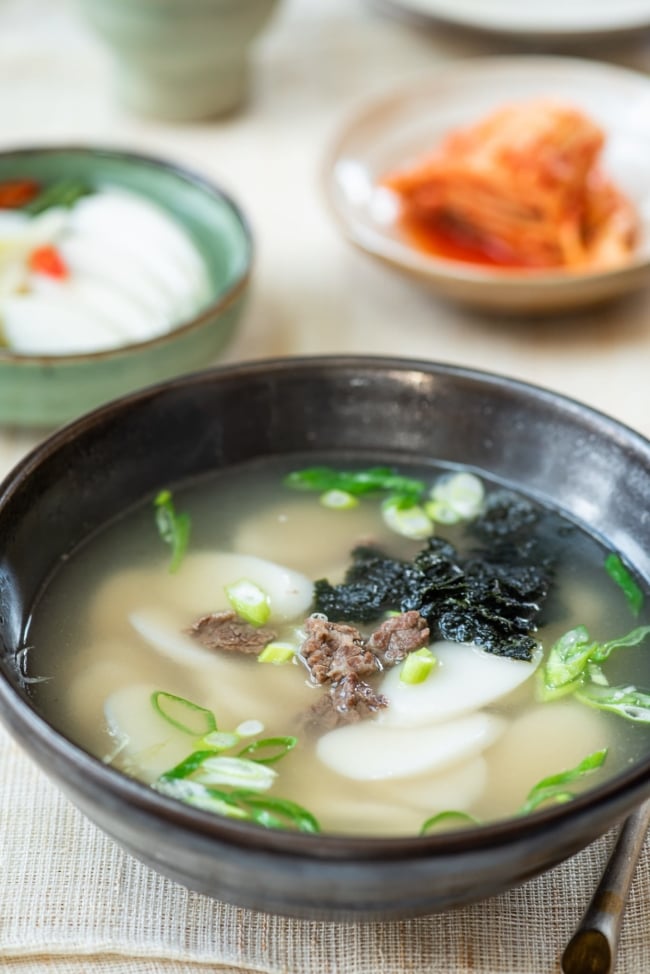
Why Koreans Eat Tteokguk on Seollal
There is a beloved Korean saying that you do not truly grow a year older until you have eaten a bowl of tteokguk. For generations, age in Korea was counted collectively on Lunar New Year's Day rather than on individual birthdays, and the ritual of slurping that first spoonful of rice cake soup made the transition official. Children would race through the bowl to brag about being a year older, and elders would offer blessings as the family gathered at the table.
The symbolism is layered. The clear broth and snowy white rice cakes are said to represent purity, a clean mind, and a fresh slate for the year ahead. The flat oval slices resemble old Korean coins, a wish for wealth and prosperity, while the long cylindrical garaetteok they are cut from echoes a hope for longevity and continued good fortune.
Garaetteok: The Soul of the Soup
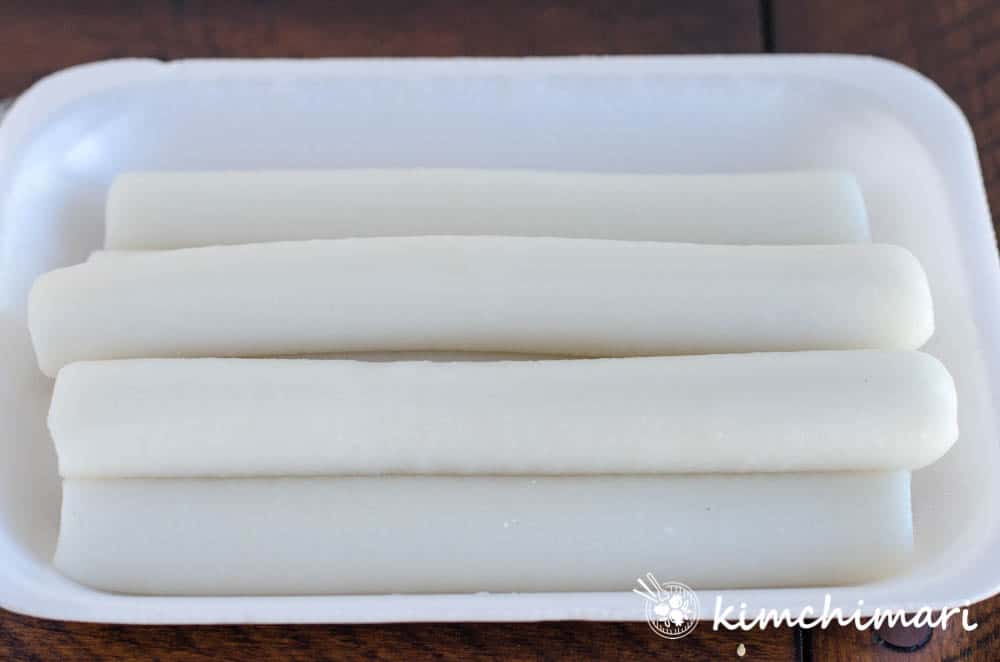
The rice cake at the heart of tteokguk is garaetteok (가래떡), an unsweetened cylinder of steamed and pounded short-grain rice. Traditionally, families would wait a day or two for fresh garaetteok from the neighborhood rice cake mill to firm up before slicing it on the diagonal into thin white ovals. These slices are sometimes called tteokguk tteok, literally rice cake made for soup.
The white color was historically linked to brightness and a clean start, while the round disc shape evoked the sun and old brass coins. Today most home cooks buy pre-sliced garaetteok at Korean grocery stores, soak it briefly in cold water to soften, and drop it straight into bubbling broth.
Regional Variations Across Korea
While the Seoul-style clear beef brisket tteokguk is the most familiar version abroad, regional cooks each put their own stamp on the dish. In Gaeseong, the historic capital just north of the modern border, the local style is jogaengi tteokguk made with small peanut-shaped rice cakes called manggu or jogaengi, often paired with Gaeseong-style mandu dumplings stuffed with beef and vegetables.
In parts of Chungcheong province, cooks sweeten and enrich the broth with a hint of jocheong, the dark grain syrup made from malted rice, giving the soup a deeper, gently caramelized backbone. Along the Gyeongsang coast, bowls are finished with briny touches such as gulchijigae-style oyster toppings or seaweed garnishes, while northern households are famous for stirring in kimchi mandu for a punchier, more aromatic finish.
The Broth: Clear Beef Brisket or Anchovy
Tteokguk lives or dies by its broth. The most traditional version simmers a large piece of beef brisket (yangjimeori) with onion, scallion whites, and garlic for an hour or more, producing a deeply savory clear stock. The meat is then pulled out, shredded, and seasoned with sesame oil, garlic, salt, and pepper to become the famous beef garnish on top.
For a lighter, weeknight-friendly bowl, many home cooks reach for an anchovy and dashima stock instead. It has a cleaner, ocean-bright taste and comes together in about fifteen minutes. Whichever base you choose, season with Korean soup soy sauce (guk ganjang) rather than regular soy sauce to keep the broth pale and elegantly savory.
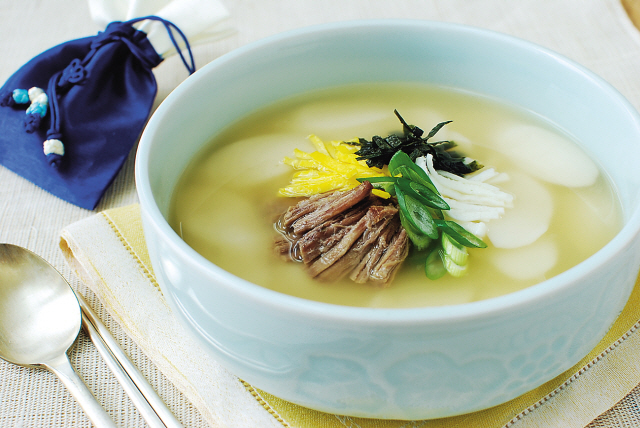
Classic Garnishes: Jidan, Gim, Beef, and Spring Onion
A proper bowl of tteokguk is finished with a small parade of toppings called gomyeong. The most iconic is egg jidan (계란지단), where the yolk and white are separated, cooked thinly in a non-stick pan, and sliced into delicate yellow and white ribbons. Other essentials include shredded seasoned beef brisket, lightly toasted gim (김) seaweed cut into thin strips, and finely sliced spring onion.
If making jidan feels fussy, the everyday shortcut is to drizzle a beaten egg over the simmering soup in a slow circle, then turn off the heat without stirring so it sets in soft ribbons, much like Chinese egg drop soup. A final crack of black pepper and a few sesame seeds tie everything together.
Modern Variations: Tteok Manduguk, Kimchi, and Seafood
One of the most popular modern twists is tteok manduguk (떡만두국), where plump mandu dumplings are dropped in alongside the rice cake slices to make a heartier, two-textured soup. Some families swap kimchi mandu in for an extra-spicy, North Korean inspired bowl.
Other contemporary spins include kimchi tteokguk, which adds chopped well-fermented kimchi and a spoonful of its juice for a tangy red-tinted broth; seafood tteokguk built on anchovy or kelp stock and finished with oysters, shrimp, or clams; and even vegan versions using shiitake mushroom and dashima stock with sauteed mushroom toppings.
How to Make Tteokguk at Home
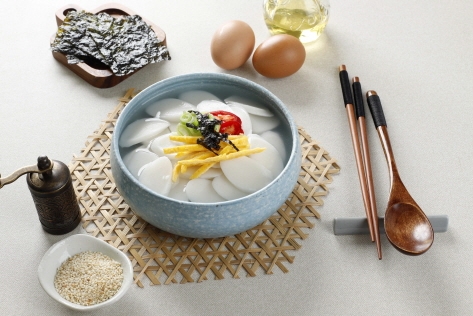
You do not need to wait for Seollal to enjoy a bowl. A simple home version uses about half a pound of beef brisket simmered in roughly 12 to 14 cups of water with onion, scallion whites, and garlic until tender, around one hour. Strain the broth, season with one to two tablespoons of soup soy sauce and salt to taste, then return it to a boil.
Soak about four cups of sliced garaetteok in cold water for 10 to 20 minutes, then add them to the boiling broth and cook for five to eight minutes until they float and feel soft and chewy. If adding mandu, drop them in with the rice cakes. Ladle into bowls and top with egg jidan, shredded seasoned beef, gim strips, sliced spring onion, and black pepper. Serve immediately, as leftover rice cakes turn pasty if they sit too long in the soup.

Where to Buy Garaetteok Outside Korea
The good news for diaspora cooks and Korean food fans is that garaetteok has become much easier to find. In the United States and Canada, H Mart stocks both fresh and frozen pre-sliced tteokguk tteok year-round, especially in the weeks leading up to Lunar New Year. Other Korean and Asian grocers such as Hannam Chain, Galleria Market, and Zion Market carry similar selections, and Trader Joe's has even started offering its own rice cake slices in some regions.
Online, retailers like Weee!, Sayweee, Umamicart, and Kim'C Market ship frozen Korean rice cakes nationwide, and Amazon stocks shelf-stable brands as well. Fresh garaetteok keeps a few days in the fridge, but for longer storage just pop it in the freezer and thaw with a quick soak in cold water. With a bag of rice cakes, a chunk of brisket, and a sheet of gim, you can bring a piece of Seollal to your kitchen anywhere in the world.
Explore Korean Snacks with Daebak
Love Korean food? Get authentic Korean snacks and ramen delivered straight to your door with the SnackFever Box by Daebak.


