


Table of Contents
I have been in the Korean food and hallyu marketing space for more than a decade, and there are only a handful of Korean cultural exports where the origin story is genuinely both a business story and a fandom story. Chimaek (치맥) is one of them. The word is a two-syllable mash-up of chikin (치킨) and maekju (맥주), and it names a ritual most Koreans do not even think of as a ritual: an order of Korean fried chicken with two, three, sometimes six liters of beer between friends after work. Daegu, the fourth-largest city in the country, turned that living-room habit into a stadium-scale event. The Daegu Chimac Festival draws more than a million visitors across five nights each July, and the reasons Daegu, of all cities, hosts it are more calculated than most tourists realize.
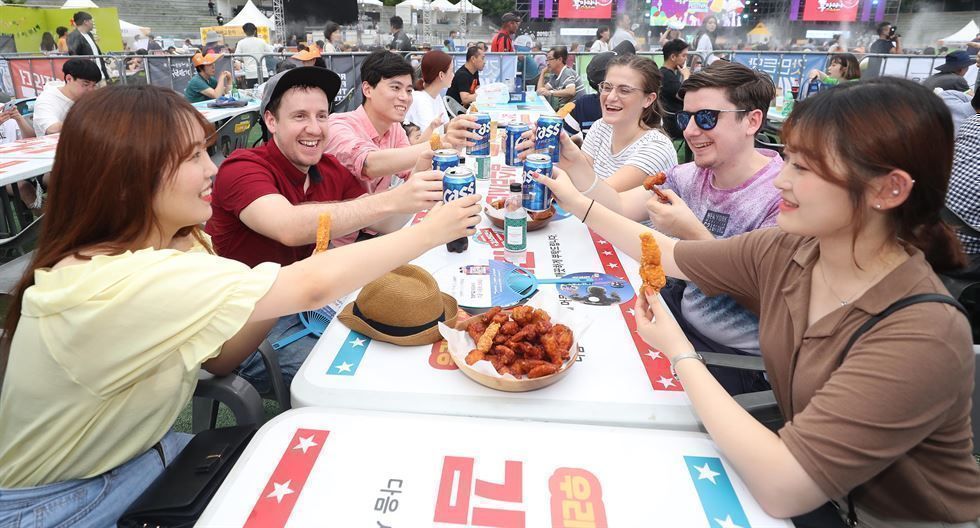
Why 치맥 Is a Ritual, Not Just a Meal
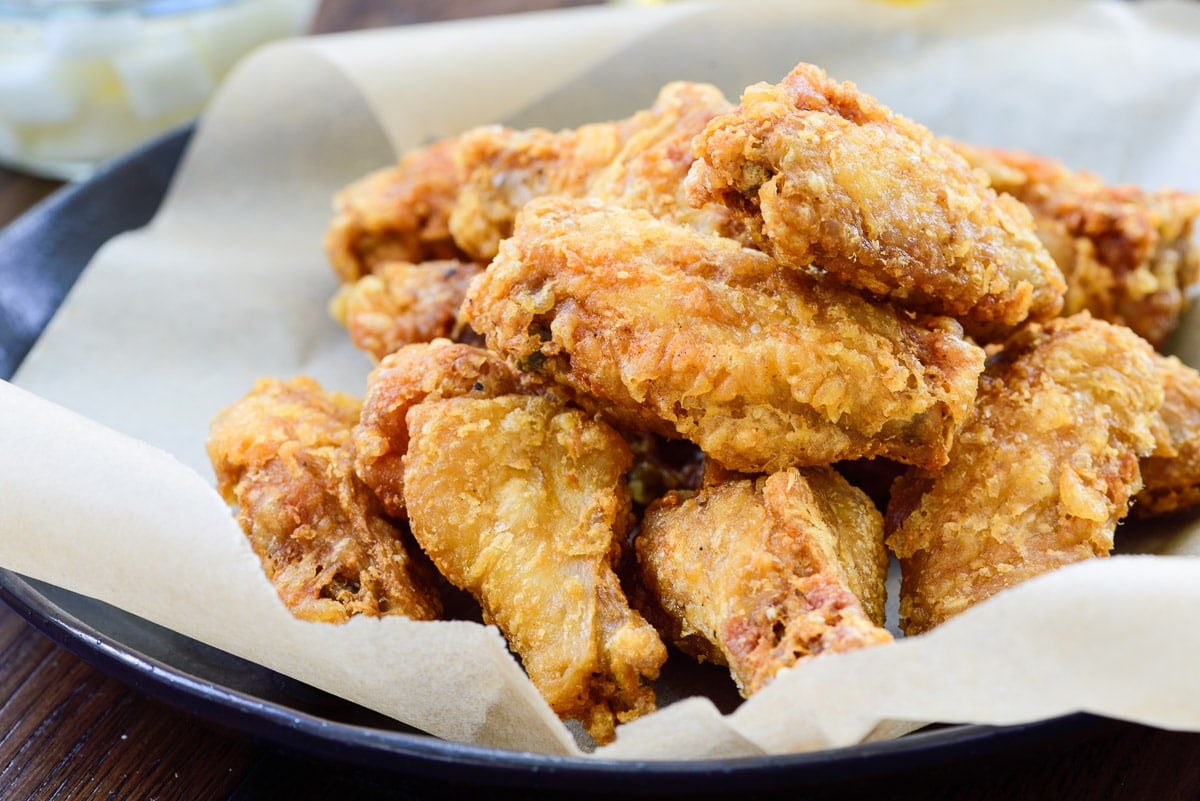
Foreigners often assume Korean fried chicken has always been a thing, the way Americans assume hamburgers have always been a thing. It has not. The KFC (Korean Fried Chicken) industry as we know it is barely fifty years old. Pelicana opened its first franchise in 1982, and it was Pelicana that popularized the double-fry technique that gives the crust its now-famous crackle. The pairing with beer was almost accidental. Draft OB and Cass beer went from a formal 회식 (company after-work drinking) accessory to a casual weeknight companion during the late 1990s and early 2000s, and the 2002 FIFA World Cup, co-hosted by Korea and Japan, is what industry people still point to as the tipping point. Cheering rooms across the country ordered fried chicken by the box to eat while watching Guus Hiddink's national team go all the way to the semifinals, and delivery chicken chains have never had a quiet summer since. What makes 치맥 specifically Korean is not the food itself. It is the pace. The chicken arrives at your table crackling because the shop double-fried it exactly for that arrival, the beer is cold enough that the glass is opaque, and the group is expected to stay through several rounds. That endurance-drinking pattern is inherited straight from Korean 회식 culture, not from any Western pub template.
How Daegu Built Korea's Answer to Oktoberfest
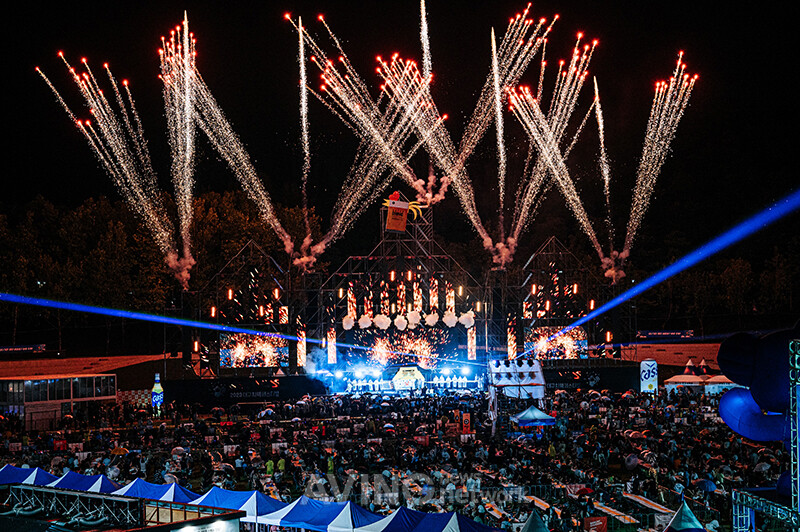
The first Daegu Chimac Festival ran in 2013 as a five-day pilot organized by the Daegu Chamber of Commerce, the city government, and the local fried chicken franchise association. The pilot was ambitious for a first-year event, staging brand booths from about thirty chicken franchises at Duryu Park and pulling in roughly 270,000 visitors. By the tenth edition in 2022, that number had crossed a million, and the city's own economic impact reports estimate the festival now injects more than 100 billion won into local hospitality, transport, and retail every year. That is not a small figure for a five-day event. It is the equivalent of what mid-sized Korean cities budget for a full year of tourism promotion. The industry mechanic is straightforward: the festival is a business-to-consumer trade show dressed up as a party. Every major chain, from BHC and Genesis BBQ to Kyochon, Pelicana, Nene, and Bonchon, puts up a branded 야장 (open-air seating tent) and treats the week as their single biggest annual PR window. Beer partners like OB, Hite, and craft brewery Playground pay for prime placement. The city fills in the entertainment layer with K-pop stages, DJ nights, and fireworks. What audiences see as a summer festival, the industry treats as its Cannes.
Why Daegu, Not Seoul
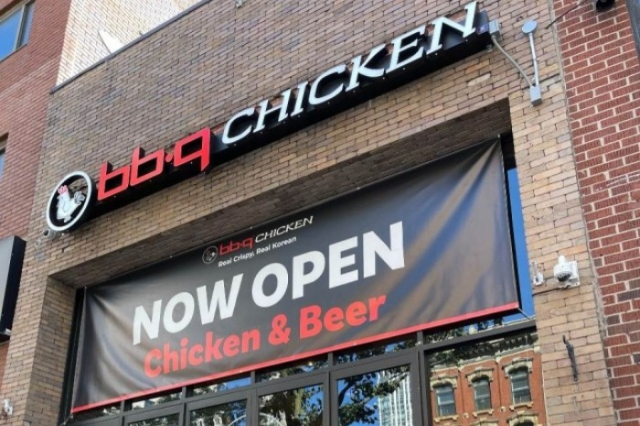
Everyone asks this eventually, and the answer is boring but decisive: the fried chicken franchise industry has always been physically concentrated in the Daegu-Gyeongbuk region. Genesis BBQ was founded in Daegu in 1995. Kyochon started in Gumi, about 40 kilometers north of Daegu, in 1991. Mexicana Chicken and Pelicana have long-standing supply hubs in the same region. Chicken feed, poultry processing, and franchise headquarters all cluster in the North Gyeongsang area, which meant Daegu had a plausible claim as the industry's spiritual home before it ever considered a festival. When the city was looking for a distinctive tourism identity in the early 2010s, chimaek was one of the few cultural exports it could credibly own. Seoul had already sewn up palace tourism, Busan owned the film festival, Jeonju owned traditional food. Daegu picked chimaek because the supply chain answered the question of authenticity for it. The festival is why foreign K-pop tourists now put Daegu on their July itinerary, and it is also why a summer weekend room rate in Duryu-dong can climb 300 percent during festival week. Locals grumble about the crowds, but the local retail associations quietly love it.

The My Love From the Star Effect
You cannot write about chimaek's rise without addressing what industry people call the Cheon Song-yi moment. When SBS aired My Love From the Star (별에서 온 그대) in late 2013 and early 2014, Jun Ji-hyun's alien-fascinated actress character famously declared that the first snow of the year demands chicken and beer. Chinese fans, watching in real time on iQiyi and Youku, made the scene go viral, and Korean fried chicken exports to China jumped by roughly 300 percent year over year in 2014. Genesis BBQ opened dozens of Chinese outlets within eighteen months. Kyochon, BHC, and Pelicana followed. The scene worked because Cheon Song-yi's delivery landed on a specific emotional beat: a lonely person craving the noisiest, most communal food Korea offers, in the snow, alone. That contrast, the shared food eaten in isolation, is the appeal point Western fans read the same way Korean fans did. K-drama scholars now cite the scene as the textbook example of Hallyu 2.0 product placement, where the food itself became the export rather than the actor's clothes or watch. Weightlifting Fairy Kim Bok-joo, Goblin, and Reply 1988 all leaned on chimaek scenes in the years after, effectively cementing the pairing as K-drama shorthand for warmth and friendship.
What Actually Goes Down at the Festival
If you go, the ground layout matters more than the schedule. Duryu Park is roughly a square kilometer of open grass and small woods in western Daegu, and the festival takes over the eastern plaza, the fountain area, and Duryu Baseball Stadium's forecourt. Brand tents run in tight rows so you can walk fifty meters and taste five different chicken styles side by side. Locals treat this as a survey exercise, not a meal. You order small portions, compare crusts, argue about which yangnyeom sauce is best (BHC's Ppuraida versus Kyochon's Honey Series is the perennial debate), and then commit to one brand for the actual sit-down 야장 round. Beer is sold in liter jugs, not pints, because Korean beer culture treats a pint as a personal-portion problem. The K-pop stage runs headliner-level lineups. Recent editions have featured NCT Dream, ITZY members, Kep1er, and trot star Young Tak, and the crowds skew young: mid-teens to late-thirties, roughly 60 percent Korean and 40 percent international during peak nights. Fireworks close each night around 10 p.m. Bring cash for the smaller vendors, because credit card queues get long, and pack a picnic mat if you want to claim a spot on the grass before 6 p.m.
Practical Tips for Visiting
The festival runs the first full week of July every year. Dates float slightly depending on the fried chicken franchise association's calendar, but the anchor days are always Wednesday through Sunday. Admission to the park and stages is free. You pay only for the food and drink you consume, which usually runs 15,000 to 25,000 won for a chicken order and 5,000 to 8,000 won per liter of beer. Get to Duryu Park via Seoul KTX, which takes about one hour forty minutes to Dongdaegu Station, then transfer to Daegu Metro Line 2 and exit at Duryu Station, exit 15. The walk to the festival grounds is about ten minutes. If you want the full effect, arrive on Wednesday for opening night, when the mayor's toast happens and the K-pop opening set is heaviest. Skip Saturday if crowds bother you. Book accommodation in Sinam-dong or Duryu-dong at least three months ahead, because rooms sell out by April. Bring wet wipes, hand sanitizer, and a small foldable stool if you plan to eat on the grass. Do not try to bring outside chicken into the branded 야장 tents, and do pace yourself: Korean beer glasses look small, but the liter jugs add up faster than you think when the crust is that crispy.
Explore Korean Snacks with Daebak
Love Korean food? Get authentic Korean snacks and ramen delivered straight to your door with the SnackFever Box by Daebak.


