


Table of Contents
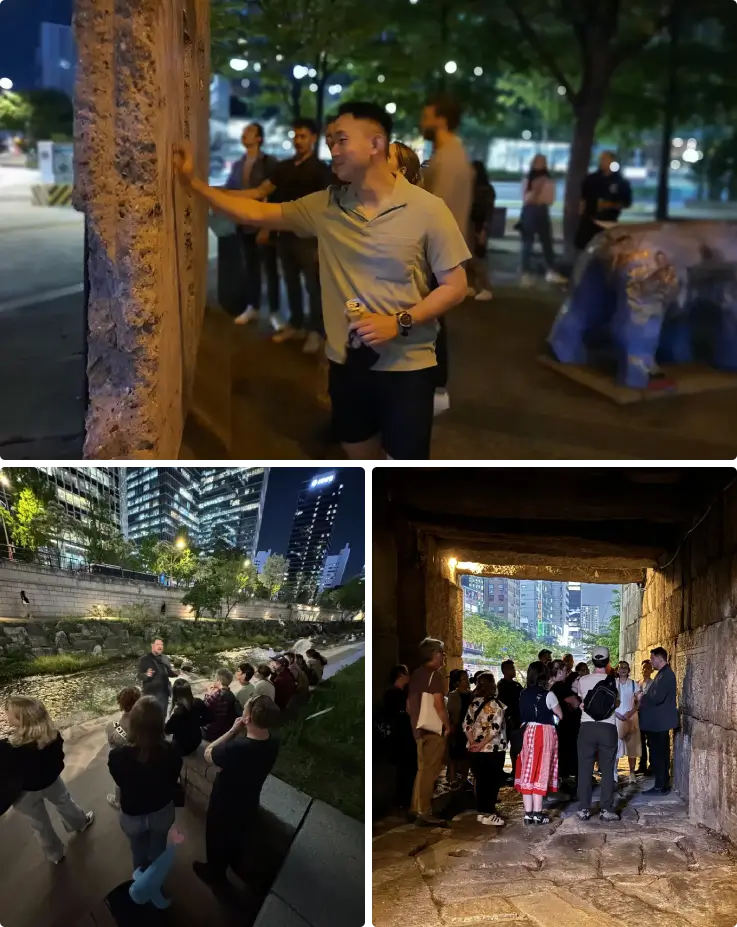
Seoul at 8 p.m. feels like a different city. Rush hour has emptied, neon lights blink over Jongno's back alleys, and if you know where to look, small clusters of tourists start gathering under streetlamps, led by a foreigner speaking English. These are the guests of The Dark Side of Seoul, an English-language 유령 투어 (ghost tour) that has quietly become one of the most-booked niche experiences in the capital.

What the Dark Side of Seoul actually is (and what it isn't)
A quick correction to what most listicles get wrong. This is not a haunted house, and it is not a costume-driven Halloween attraction. The Dark Side of Seoul is a walking tour founded in 2012 by Joe McPherson, an American who moved to Seoul in 2004 and built his reputation running the food blog ZenKimchi. The premise is simple. 600 years of Seoul's history include royal massacres, murdered queens, colonial-era executions, and folk beliefs about wandering souls, and almost none of that survives in the tourist-brochure version of the city.
McPherson's original frustration was that foreign visitors kept walking away thinking Korea's history was uninteresting, when the actual archive is bloody, political, and dense with 귀신 이야기 (ghost stories). He spent a full year in research before running the first tour, and it shows in the delivery. His co-guide Shawn Morrissey, a Canadian with a background in heritage interpretation, joined in 2016 and built a second route that leans into 도깨비 folklore and urban legend rather than dynastic dates. The two run distinct itineraries on different nights, which anyone in the small-group tourism industry recognises as smart product design. You can book both without repeating a single site.
Why an English-language ghost walk filled a real hole in the market
Korea has plenty of ghost tours. What it did not have, until 2012, was one in English. Seoul City has run its own dark-tourism programs since roughly 2015, but they rely on Korean-speaking cultural guides trained by the Cultural Heritage Administration, and foreign guests routinely miss the punchlines. That mismatch is the business insight McPherson caught early.
Foreign residents in Korea's tourism sector have quietly built the entire English-speaking layer of Seoul's guided experiences, from cooking classes to hanok stays to hiking clubs, because the Korean Tourism Organization's foreign-language guide pipeline has always been thin. Look at who runs the popular English tours: O'ngo Food Communications, Adventure Korea, Enjoy Korea, and Dark Side of Seoul. All expat-founded or expat-led. That is not a coincidence, it is a structural gap that outsiders keep filling. Interestingly, the Korean Tourism Organization now co-sponsors and promotes several of these operators through its Discover Seoul Pass and Visit Korea channels. The government eventually leaned into what the expat tour community had already proven works.

The route: Cheonggyecheon, Pimatgol Alley, and the ghosts of Gyeonghuigung
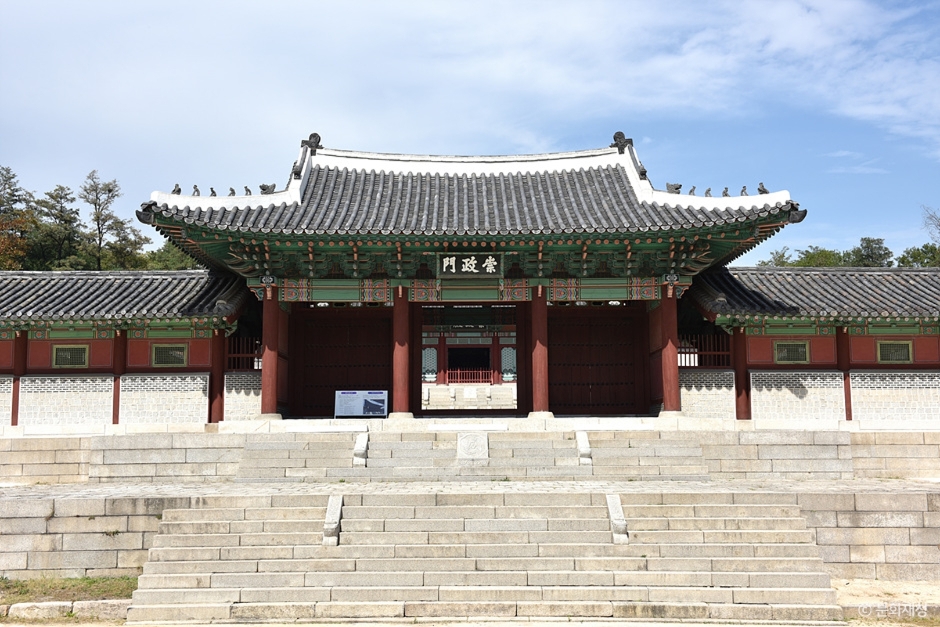
McPherson's tour meets outside Anguk Station exit 2 on weekends and walks through Unhyeongung Royal Residence, Tapgol Park, the former red-light corner of Jongno 3-ga, and the Cheonggyecheon Stream corridor, ending near Gwanghwamun. The Extended Edition adds the site of Queen Min's assassination (Empress Myeongseong, killed by Japanese agents in 1895), the American ambassador's attacked residence, and the ghost stories of Gyeonghuigung Palace. Morrissey's route meets at Seodaemun Station exit 4 on weekdays and threads through folk-belief landmarks around the same palace, which multiple Joseon queens are said to have refused to sleep in.
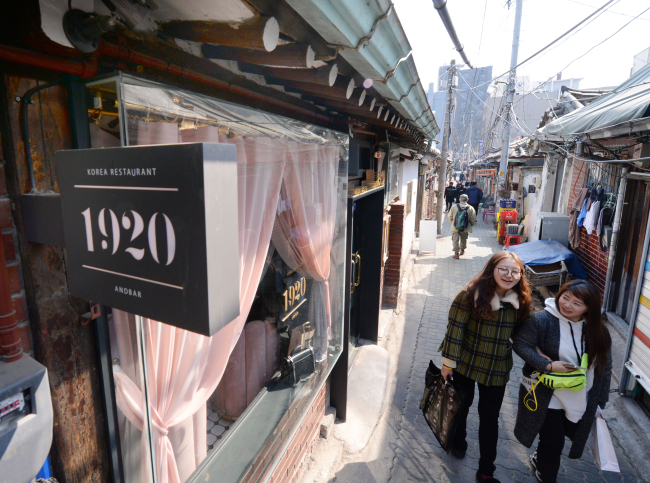
Pimatgol Alley deserves its own paragraph. This 600-year-old back lane was originally cut so commoners could avoid bowing to horseback aristocrats passing through Jongno's main road. During the 1987 democracy uprising, protesters used it as a discreet escape route from riot police. The alley was largely demolished in 2009 for the D Tower and Gran Seoul developments, though a 300-meter reconstruction still runs through those buildings, and both tour guides walk you through the historical footprint. Most Seoulites have never heard the aristocrat-avoidance origin story. That is the appeal of the tour in one detail. It surfaces urban memory that even locals have lost.
도깨비, 조선시대 spookery, and the deeper appeal for foreign fans
Here is why this tour keeps growing when generic ghost content stays flat. Korean folklore is not scary in the Western sense. 도깨비 are not demons, they are mischievous nature spirits born from old objects, often described as horned, hairy, and fundamentally amoral rather than evil. They wrestle humans, gamble with them, and sometimes leave gold in exchange for chickens. That texture is what Western horror fans notice first, and it is what Morrissey's ghostlore route leans into.
Morrissey treats folk belief with what he calls suspended disbelief during the walk, avoiding the trap of belittling beliefs still held by many Koreans today. The appeal for foreign guests is not the fright, it is the cultural texture. You learn why 조선시대 hanok have specific ridge-beam configurations to ward off spirits, why funeral rites include feeding wandering souls that do not know they are dead, and why the landscape itself, from mountains to intersections, is read as spiritual infrastructure. That is a level of detail no palace changing-of-the-guard show will ever hand you.
What K-drama Goblin did, and why the ghost walk industry benefits
The 2016 tvN drama Goblin (도깨비), starring Gong Yoo and Lee Dong-wook, reshaped how international audiences approach Korean folklore. Before Goblin, "Korean supernatural" was a niche interest. After Goblin, small tour operators around Ganghwa Island, Deoksugung, and Gyeongju all reported new international demand, with several regional tourism boards citing a roughly 200 percent lift in searches for 도깨비-themed experiences. Dark Side of Seoul rode that wave without ever chasing it. The podcast McPherson and Morrissey launched in 2020 during COVID lockdowns pulled in guests who then flew to Seoul and booked the walk. In 2019 they served 995 guests. By 2023 they had crossed 2,255 in a single year. That is roughly triple growth in four years for a two-person outdoor walking product with no PPL contract, no CJ ENM partnership, and no Netflix cross-promotion. In the Korean cultural-tourism industry, that kind of growth without a media anchor is rare.
Similar operators have appeared in the wake of that momentum. The Seoul Sunset Ghost Tour focuses on shorter, family-friendly folklore walks around Bukchon, and the Old Seoul Ghost Walk positions itself as a more academic history-focused tour around Insadong and Jongmyo Shrine. Both stay small, niche, and locally guided. That is the sustainable model for a certain kind of hallyu-adjacent tourism. Not scale, but depth.
Practical details before you book
Tours run Tuesday through Sunday starting at 8 p.m. The Regular Edition is roughly 1.5 hours, the Extended Edition is roughly 2.5 hours, and prices sit at about $35 and $42 respectively when booked direct at darksideofseoul.com. Weekday routes leave from Seodaemun Station exit 4, weekend routes leave from Anguk Station exit 2. The content is 18-plus by design, with dark humor and profanity, so it is not for children. Comfortable shoes are essential, and both guides recommend a camera because guests have reported unusual images in playback. Booking direct through the official site saves the middleman markup that platforms like Klook and Viator layer on top. For a two-hour immersive introduction to Seoul that Gyeongbokgung's daytime tour never delivers, this is one of the strongest single-purchase decisions in the city's small-group tourism market.
Explore More of Korea with Daebak
Want to bring a little piece of Korea into your life? The Daebak Box is packed with the best Korean snacks, ramen, and cultural goodies delivered monthly to your door.


