

Table of Contents
Korean summers do a very specific thing to the film industry, and it is not what Hollywood does. When Seoul cracks a third consecutive tropical night and the humidity climbs into the mid-thirties, distributors do not chase family blockbusters. They release 공포영화 (gongpo yeonghwa, horror films). This is a genuinely Korean seasonal ritual, part 이열치열 (fighting heat with heat, sweating out the summer by shivering in an air-conditioned theater), part industrial calendar. After more than a decade working around K-content licensing and Korean film markets, I can tell you the July-August slot is where Korean horror gets its real marketing spend, and it is why the genre keeps producing titles that punch well above their $3 to $8 million weight class.
What makes K-horror land for global audiences is not the jump-scare frequency. It is the craftsmanship on limited budgets, and a willingness to blend genre in ways a Hollywood test-screening committee would flag. Kim Jee-woon's A Tale of Two Sisters cost about $3.7 million in 2003 and still gets film-school dissection twenty years later. Na Hong-jin's The Wailing braided Christianity, Korean shamanism, and Japanese folklore into a 156-minute anti-thriller that Cannes invited to Midnight Screenings. This is a genre where restraint is the calling card, and the post-Squid Game era has only sharpened Netflix's appetite for it. Here are five Korean horror films worth queuing up for the season, plus one honorable mention that redefined the entire conversation.
1. The Wailing (곡성, 2016): Na Hong-jin's rural nightmare
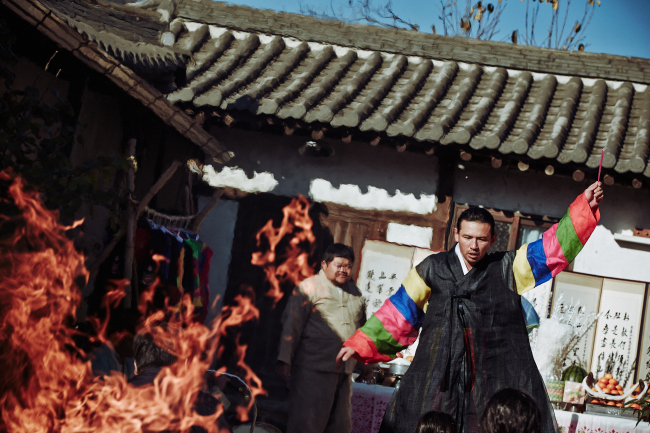
Na Hong-jin took six years off after The Yellow Sea to write The Wailing (곡성, Gokseong), and you can feel every one of those years on screen. Set in a real South Jeolla village of the same name, the film opens with a countryside cop, Jong-gu (Kwak Do-won), investigating a bizarre family murder before a mysterious sickness starts sweeping through his neighbors. The plot machinery is a Christian parable smuggled inside a shamanism versus outsider standoff, with a Japanese stranger (Kunimura Jun) as the point of paranoid focus. The film ran 156 minutes, and Cannes still put it in Midnight Screenings in 2016 because Na's control of tone is that good.
Here is what makes The Wailing hit differently for Korean audiences and, increasingly, for everyone else. The shaman ritual sequence with Hwang Jung-min is the closest thing modern cinema has to a genuine 굿 (gut) performance filmed with feature-film budget and reverence. Anyone who grew up hearing older relatives talk about village shamans in Gyeongsang or Jeolla will recognize the drum patterns, the animal offerings, the possessed choreography. What is genuinely unsettling is that Na never tells you which spiritual framework is correct. Christian, Buddhist, shamanist, folk. All of them get airtime, none of them are safe. That refusal to give the audience a stable moral center is the reason the film keeps drawing new international fans a decade later.
2. The Witch: Part 1 and Part 2 (마녀, 2018 and 2022): Park Hoon-jung's sci-fi horror hybrid
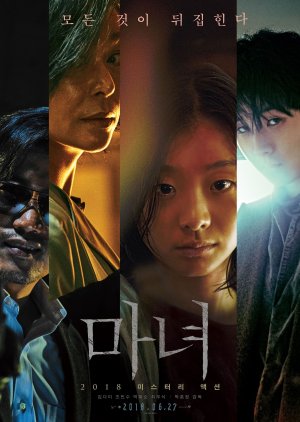
Park Hoon-jung is a writer-director best known for the New World screenplay, and The Witch: Part 1. The Subversion (마녀, 2018) is where he made his cleanest genre statement. Ja-yoon (Kim Da-mi in her breakout role) is a farm-girl high schooler with a mystery in her past and a monster in her physiology. The film sits at the collision point of body horror, sci-fi, and the Korean action-thriller tradition. It uses a slow-burn first act to lull you into thinking it is a coming-of-age drama, then the final thirty minutes turn into one of the most brutal set pieces in recent Korean cinema. Choi Woo-shik is almost unrecognizable as the antagonist Nobleman, four years before he became a global name in Parasite.
Part 2. The Other One (2022) shifts protagonists to Ark 1 (Shin Si-ah, in her debut) and adds Park Eun-bin (Extraordinary Attorney Woo) and Lee Jong-suk to the cast. The appeal point Korean fans articulate for this franchise is that Park Hoon-jung is doing something Hollywood no longer does well: patient world-building through character rather than exposition dump. The witches themselves are barely explained in Part 1 because the reveal is the point. Part 3 has been in development since 2022, and if the pattern holds, expect a summer 2027 slot. Korean genre fans call this the 마녀 유니버스 (Witch universe), and it is the closest thing Korean cinema currently has to a superhero franchise built on horror bones.
3. A Tale of Two Sisters (장화, 홍련, 2003): Kim Jee-woon's psychological masterwork
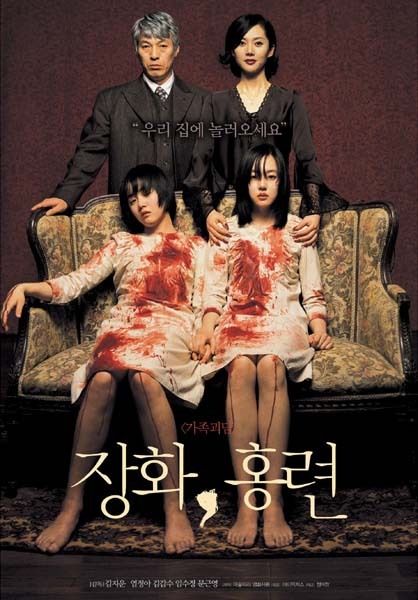
If a Korean film school picks one horror film to teach, it is this one. A Tale of Two Sisters (장화, 홍련, Janghwa Hongryeon) adapts the Joseon-era folktale of the same name, but Kim Jee-woon strips the source down into a chamber piece about two sisters (Lim Soo-jung and Moon Geun-young), their remote father, and a stepmother (Yum Jung-ah) whose menace works because she never quite becomes cartoonish. Cinematographer Lee Mo-gae composes the countryside house like a color-graded Chekhov play, and the sound design does more heavy lifting than any effects budget ever could. Made on roughly $3.7 million, the film out-grossed most of that year's Hollywood horror imports on Korean soil.
What makes it a permanent K-horror reference point, not just a cult favorite, is the structural twist. Without spoiling it, Kim uses a reveal that most Western horror films of that era attempted and mishandled. Here the payoff earns its runway because Kim has been coding the emotional geometry from the opening frame. Hollywood remade it as The Uninvited (2009). Most Korean fans will tell you the remake missed exactly what made the original work: the specifically Korean weight of stepmother stigma inside a Confucian family structure, and the way Kim treats mental illness as tragedy rather than plot device. It is why 장화 홍련 still shows up on best-horror-of-the-2000s lists across international publications twenty plus years on.
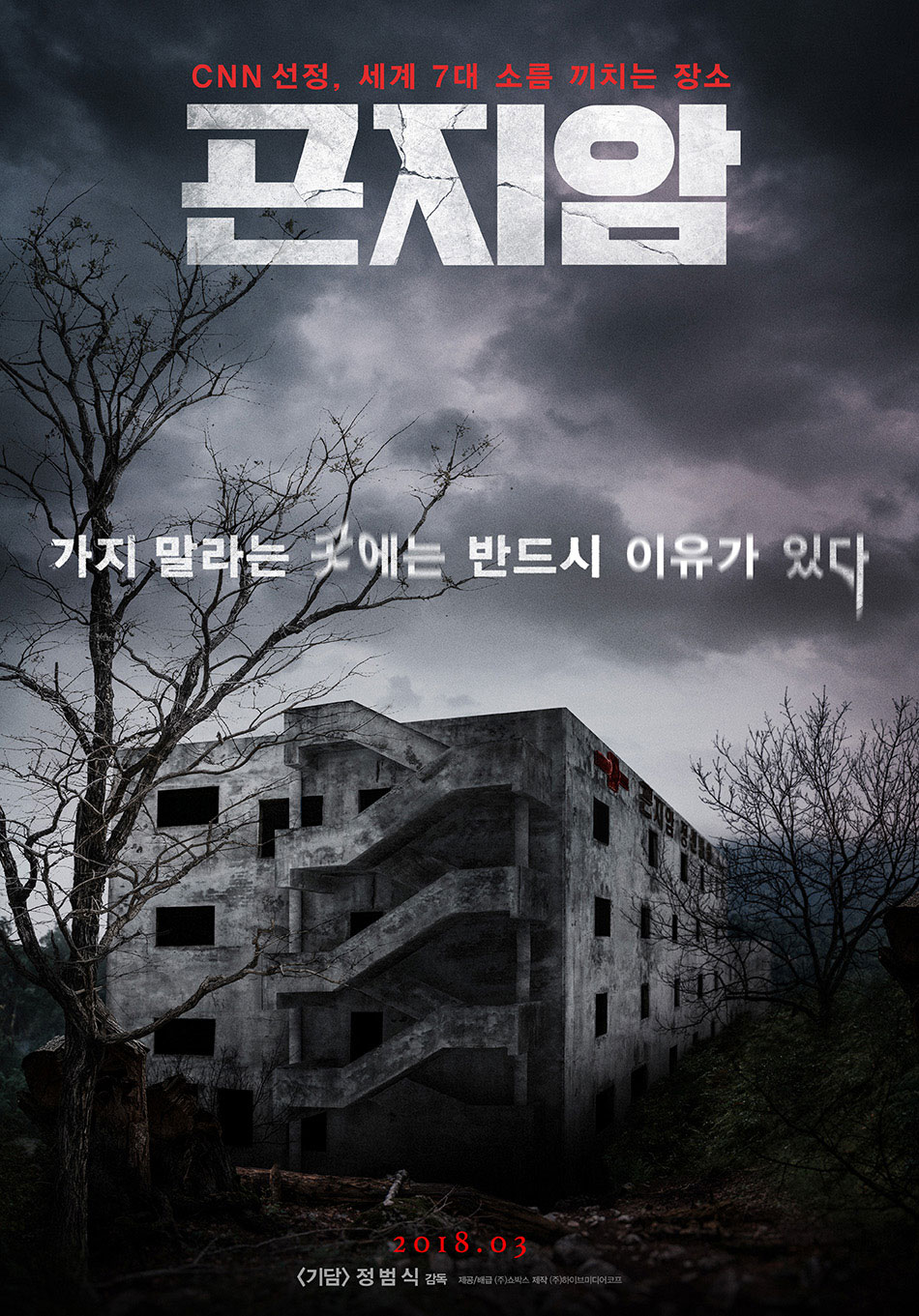
4. Gonjiam: Haunted Asylum (곤지암, 2018): The found-footage phenomenon
Gonjiam (곤지암) is the story of what happens when a YouTube horror channel called Horror Times decides to livestream from a real abandoned psychiatric hospital in Gyeonggi Province, one that CNN Travel actually named as one of the seven freakiest places in the world back in 2013. Director Jung Bum-shik built a body-mounted rig with two GoPros per actor: one facing outward for POV, one aimed at the face for reactions. That technical choice is why Gonjiam avoids the motion-sickness problem that killed found footage as a marketable genre after the Blair Witch imitators oversaturated it. Made on about $1 million, it earned over $20 million in the Korean box office and became the third most-watched horror film in Korean history, behind A Tale of Two Sisters and The Phone.
The industry lesson global horror producers took from Gonjiam is that Korean found footage understood something the American Paranormal Activity sequels forgot. The horror is not really in the ghost. It is in the group dynamic. Every unspoken calculation between the six broadcasters (they think they know each other, they do not) is the actual scare. The film also launched Wi Ha-jun (later Squid Game, The Glory) and Park Sung-hoon (Jeon Jae-jun in The Glory) as leads. The real Gonjiam hospital site was eventually demolished in 2018, partly because of the tourism traffic the film generated. That is the strange feedback loop only Korean genre cinema seems to trigger.

5. The Call (콜, 2020): The Netflix thriller that made Jeon Jong-seo dangerous
The Call (콜) is technically a psychological thriller rather than pure horror, but nobody who has watched Jeon Jong-seo's performance will argue about which shelf it belongs on. A young woman in 2019, Seo-yeon (Park Shin-hye), picks up an old cordless phone in her family home and finds herself in a conversation with Young-sook, a woman living in the same house in 1999. When the past starts influencing the present, and Young-sook realizes she can trade favors for information about her own future, the film pivots hard from mystery into serial-killer horror. Director Lee Chung-hyun adapted the 2011 British and Puerto Rican film The Caller and turned it into his feature debut, which is a remarkable calling card.
What makes The Call a study case for the current Netflix K-horror pipeline is the release history. It was scheduled for theatrical release in early 2020 and moved to Netflix global after the pandemic canceled its window. Instead of dying quietly, it became one of the platform's most-watched non-English titles that November and pushed Jeon Jong-seo (Burning, Money Heist Korea) into international casting conversations. Park Shin-hye told the Korea Times the shoot rebuilt her confidence as an actress. The appeal for Korean fans specifically is watching two of the most technically demanding actresses of their generation share almost none of their screen time in the same physical space, and still generate a co-dependent dynamic that outperforms most romantic co-star pairings.
Honorable mention: Train to Busan (부산행, 2016)
The most globally recognized Korean horror film on this list, and the one that essentially forced Netflix and Amazon into bidding wars for K-genre licensing. Yeon Sang-ho's Train to Busan (부산행, Busanhaeng) traps its cast on a KTX bullet train from Seoul to Busan as a zombie outbreak spreads through the country. Gong Yoo plays the absent divorcee father Seok-woo, Ma Dong-seok is the burly husband whose selflessness became a meme, and Choi Woo-shik makes his second appearance on this list as the high-school baseball team member. Made on about $8.5 million, it grossed over $93 million worldwide and pulled 11.5 million admissions domestically, making it that year's top Korean film.
Yeon came from independent animation (Seoul Station, King of Pigs) and used the constrained train setting as a class allegory: Korean government failure, corporate self-interest, and the labor-worker sacrifices the story rewards. Anyone who lived through the 2015 MERS response will read that subtext instantly. The reason the film keeps winning new audiences seven plus years on is that Yeon prioritized specific character deaths over generic mass horror, which is why viewers still remember Sang-hwa's holding-the-door scene the way earlier generations remember Casablanca farewells. If you watch only one film on this list, it should probably be this one. Then work backward through A Tale of Two Sisters, and forward into the rest.
Why Korean horror wins the summer box office
Behind every one of these films is the same industrial reality. Korean horror runs on budgets Hollywood considers a marketing spend, not a production spend. The genre's economic case rests on three things: relatively cheap production, strong domestic returns anchored by the summer 공포영화 tradition, and, since 2020, Netflix and Amazon willing to pay premium licensing to fill their non-English horror shelves. The post-Squid Game halo pushed those licensing fees higher across the 2020 to 2024 stretch, which is why the current wave of K-horror (Exhuma, Sleep, Cobweb) is being produced with more genre confidence than the mid-2010s slump years suggested was possible. Watch these five, and you will understand why Korean film-market analysts consider horror the country's most reliable cultural export after K-pop.
Explore More of Korea with Daebak
Want to bring a little piece of Korea into your life? The Daebak Box is packed with the best Korean snacks, ramen, and cultural goodies delivered monthly to your door.


