


Table of Contents
Korea is one of Asia's most underrated ski destinations. Mountainous Gangwon Province gets heavy lake-effect snow from late November, and the country's compact size means you can fly into Incheon at noon and be carving turns under floodlights by dinner. The 2018 PyeongChang Winter Olympics also upgraded the entire snow infrastructure, leaving behind world-class venues that still operate as commercial resorts today.
This guide walks through Korea's biggest ski resorts, the best slopes for every level, how to get from Seoul, what skiing in Korea actually feels like, and the unique culture that surrounds it, from night skiing to chimaek and jjimjilbang spa packages.
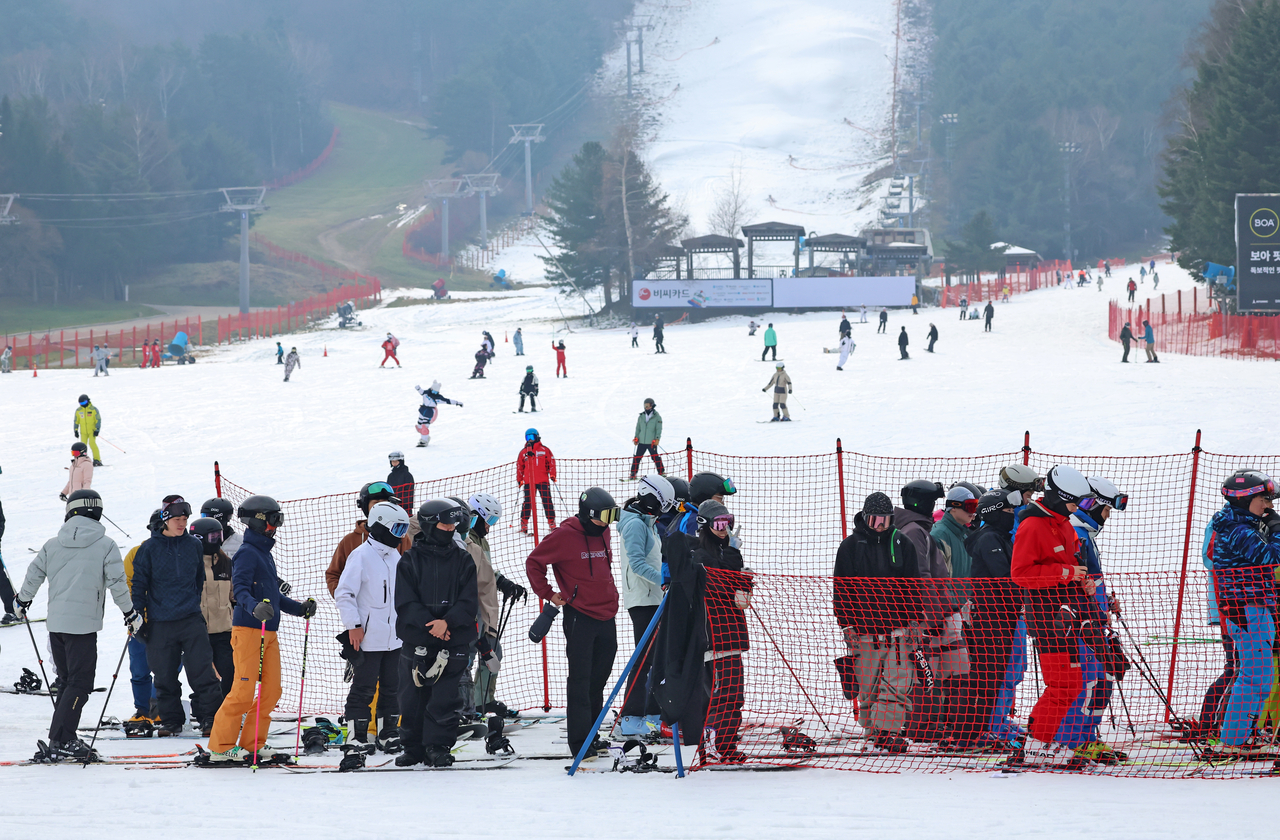
Yongpyong Resort: Korea's Oldest and Olympic Alpine Venue
Yongpyong Resort in Pyeongchang, Gangwon Province, opened in 1975 as Korea's first commercial ski resort. It is still the country's largest, with 28 slopes and 14 lifts spread across Balwangsan Mountain. The signature Rainbow Paradise course runs about 5.6 kilometers from a 1,458-meter summit and hosted the technical alpine skiing events at the 2018 PyeongChang Winter Olympics.
Yongpyong gets roughly 250 centimeters of natural snow per season, and the layout is famously friendly. Beginners stay near Dragon Plaza, while advanced skiers head for the Rainbow slopes and Gold course. K-drama fans will also recognize the resort as the filming home of Winter Sonata.
High1 Resort Jeongseon: High Altitude and Long Cruisers
High1 Resort sits on Baegunsan Mountain in Jeongseon at 1,340 meters, the highest base elevation of any Korean resort. It is operated by Kangwon Land and offers 17 to 18 FIS-certified slopes across three peaks (Mountain Top, Valley Top, and Mountain Hub) connected by gondolas.
High1's headline run is a 4.2-kilometer gentle beginner cruiser that lets first-timers descend all the way from the summit to the valley. Advanced skiers can take on Zeus and Athena black diamond pitches, both used in international competitions. Snow World at the summit adds group rafting sleds, igloo photo zones, and panoramic mountain views for non-skiers.

Phoenix Pyeongchang: Olympic Snowboard Park
Phoenix Pyeongchang, formerly Phoenix Park, was the snowboarding and freestyle skiing venue at the 2018 Winter Olympics. The resort has 23 slopes, 12 of them FIS-certified, and roughly 15 kilometers of skiable terrain on Mount Taegi.
The 2.4-kilometer Panorama slope is wide, gentle, and ideal for beginners, while the Extreme Park has an Olympic-spec halfpipe, table tops, and quarter pipes for serious freestylers. Families gravitate to Snow Village's sledding zone and the year-round Blue Canyon indoor water park.
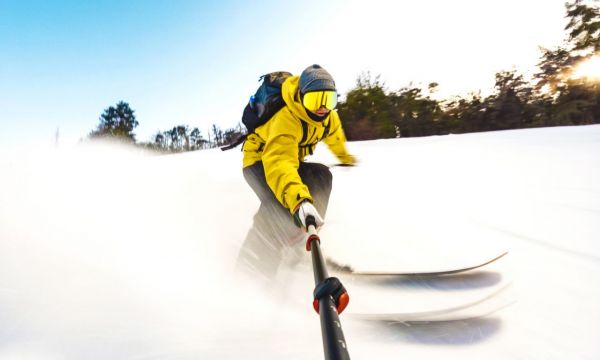
Vivaldi Park Hongcheon: Closest to Seoul, Best for Night Skiing
Vivaldi Park Ski World in Hongcheon is the closest major resort to the capital, about 90 minutes by car or shuttle bus. It runs 12 slopes with playful names like Hip-Hop, Techno, and Funky, plus one gondola and 10 lifts.
The resort is most famous for night and dawn skiing. Slopes stay open from 9 a.m. all the way to 3 a.m. the following morning, making it a favorite for Seoul university students chasing late-night runs and après-ski. Snowy Land sledding hill and Ocean World indoor water park round out a strong family offering.
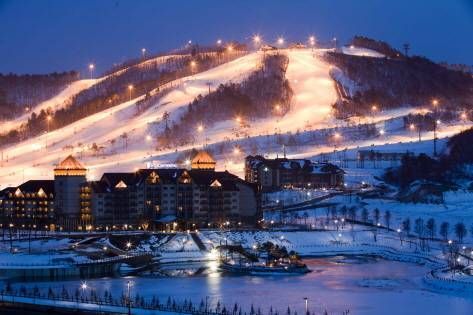
Alpensia Resort Pyeongchang: Ski Jump and Spa Combo
Alpensia Resort sits at about 700 meters above sea level in Daegwallyeong, Pyeongchang, and houses the Olympic ski jumping, biathlon, and cross-country venues. The Ski 700 area features six to seven slopes with a wide mix from gentle greens to the Foxtrot black for advanced skiers, plus a long sledding hill for families.
Alpensia's biggest draw is the post-ski combo. The on-site Alpensia Ocean 700 spa and water park, the Holiday Inn and InterContinental hotels, and the ski-jump tower observatory mean you can spend three days here without leaving the complex.
Bear's Town and Konjiam: Day-Trip Resorts Near Seoul
For travelers based in Seoul without time for a Gangwon overnight, the Gyeonggi-do day-trip resorts are a smart pick. Bear's Town in Pocheon sits roughly an hour from Seoul and offers 11 slopes plus night skiing until 4 a.m., a long-running favorite for beginner lessons.
Konjiam Resort in Gwangju, Gyeonggi-do, opened in 2008 and is the newest major resort in the Seoul metro area. It is famous for using a reservation system that caps daily visitors, so the slopes stay uncrowded even on weekends. Most of its nine slopes are designed for beginner and intermediate skiers, with a strong app-based booking system for lifts, lessons, and rental gear.
Beginner, Intermediate, and Advanced Slopes
Korean resorts grade slopes by color and number. Greens and blues are wide, gently pitched cruisers, with Yongpyong's Pink slope, High1's 4.2-kilometer beginner run, and Phoenix's Panorama all great first runs.
Intermediates should aim for red slopes such as Yongpyong's Silver and Gold, Vivaldi's Techno, and Alpensia's Charlie. Advanced skiers will get the most reward at Yongpyong's Rainbow Paradise, High1's Zeus and Athena, and Phoenix's Olympic Extreme Park with its FIS-spec halfpipe.
When to Ski in Korea
The Korean ski season runs roughly from late November to early March. Peak conditions are January and February, when daytime highs sit between minus five and minus ten degrees Celsius and the snowpack is deepest. Early December and late February offer fewer crowds and discounted lift tickets but more reliance on machine-made snow. Avoid Lunar New Year week if possible, as domestic crowds spike.
How to Get to Korean Ski Resorts from Seoul
The easiest option is the KTX Gyeonggang line from Seoul Station. Trains reach Jinbu Station (for Yongpyong, Alpensia, and Phoenix) in about 90 minutes, and Gangneung in roughly two hours. From the station, free resort shuttle buses run to each property.
Paid ski shuttles like Purplebus and Klook ski buses also run direct from Myeongdong and Hongdae in central Seoul to most resorts, usually for around 30,000 to 50,000 won round trip. For Vivaldi Park, Konjiam, and Bear's Town, a 90-minute drive or shuttle from Seoul is enough, no KTX needed.
What to Bring, Rentals, and Prices
You do not need to fly in with gear. Every major Korean resort runs a full rental shop with skis, snowboards, boots, helmets, goggles, and even ski jackets and pants. A full-day rental package, including outerwear, runs about 50,000 to 80,000 won. Lift tickets typically cost 70,000 to 100,000 won for a day pass, with cheaper night-only sessions starting around 40,000 won.
Bring base layers, gloves, sunscreen, and a neck warmer. Mountain conditions can swing from bluebird sun to wind chill below minus 20 degrees Celsius, so layering matters more than thick coats.
Korean Ski Etiquette and Slope Rules
Korean resorts run a tight ship. Smoking is banned on the slopes and lift lines, with designated smoking shelters at the base. Slow zones near the lift exits are strictly enforced by patrol staff, and most resorts now mark official photo zones to keep people from stopping mid-piste for selfies.
Bow slightly and say "annyeonghaseyo" to ski school instructors and lift operators, and always remove your snowboard before riding the moving walkways. Helmets are not mandatory but are strongly recommended, especially with children.
Korean Ski Culture: Night Skiing, Chimaek, and Jjimjilbang
Skiing in Korea is as much a social ritual as a sport. Night skiing under floodlights is huge here, with most resorts running slopes until 10 or 11 p.m. and Vivaldi Park pushing to 3 a.m. After the last run, groups head straight to chimaek (Korean fried chicken paired with beer) at resort village restaurants.
Many resorts also bundle ski-and-jjimjilbang spa combo packages. A typical day ends in a jjimjilbang sauna with herbal baths, hot stone rooms, and shikhye sweet rice drink. Modern facilities, K-pop concert events on the slopes during peak weekends, and themed light shows make Korean skiing feel distinctly different from European or North American alpine trips.
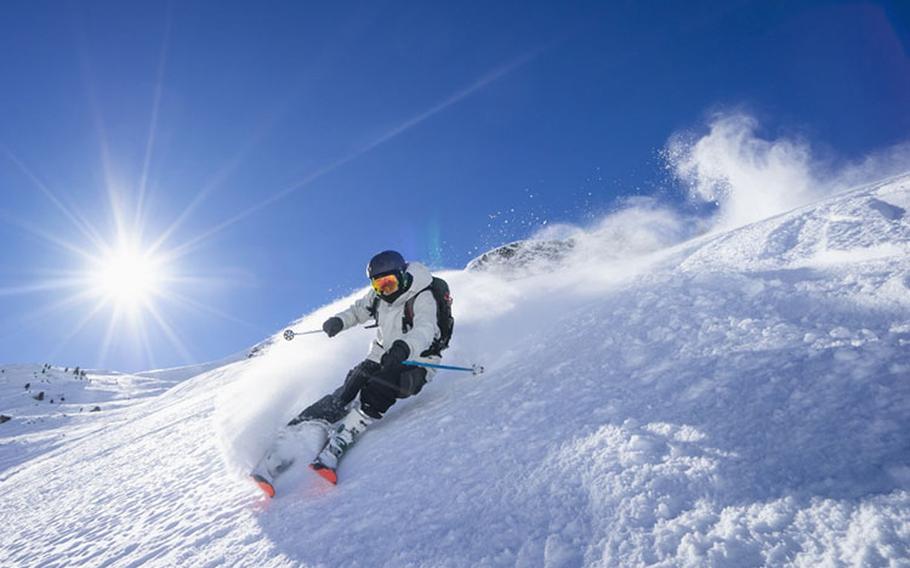
Accommodations: Mountain Hotels and Hanok Stays
Each major resort runs its own ski-in, ski-out hotels and condos. Yongpyong has the Dragon Valley Hotel and Tower Condominium, High1 has the InterContinental Alpensia and High1 Hotel, and Alpensia hosts both the Holiday Inn Resort and InterContinental.
For a quieter night, traditional hanok stays in nearby villages like Daegwallyeong-myeon and Jeongseon's Auraji area pair the ondol heated floor experience with locally brewed makgeolli. Booking ahead is essential during peak January and February weekends.
What Makes Korean Skiing Different
Compared to Japan's deep powder or Europe's vertical drops, Korean skiing is about modern facilities, accessibility, and the after-ski scene. Slopes are shorter and snow is more often machine-groomed, but the K-pop concerts on the slopes, jjimjilbang spa packages, late-night skiing, and a 90-minute KTX ride from Seoul make it a uniquely Korean winter experience that suits both first-timers and serious skiers.
Explore More of Korea with Daebak
Want to bring a little piece of Korea into your life? The Daebak Box is packed with the best Korean snacks, ramen, and cultural goodies delivered monthly to your door.


