


Table of Contents
Korean pottery is one of the most quietly powerful artistic traditions in East Asia. From the jade green celadon of the Goryeo court to the unadorned moon jars of the Joseon scholars and the dark, breathing onggi that still ferment kimchi in countless backyards, Korean ceramics tell a thousand year story of skill, restraint, and everyday life. This guide walks through the major styles, the modern artisans keeping them alive, and the best places to see and buy authentic Korean pottery.

Goryeo Celadon (Cheongja): Korea's Jade Green Triumph
Goryeo celadon, known in Korean as cheongja, is widely considered one of the greatest achievements in world ceramics. Produced during the Goryeo dynasty (918 to 1392), these wares are prized for a soft jade green or blue green glaze that potters in Korea pushed to a level of refinement even the Chinese masters envied. The color owes much to the presence of iron, manganese oxide, and quartz in the glaze, fired in reduction kilns at around 1,200 to 1,250 degrees Celsius for two to three days at a stretch.
Goryeo celadon is celebrated for two signature techniques. Sanggam inlay involves carving fine designs into the leather hard clay, filling them with white or black slip, and then glazing over the surface, producing crisp patterns of cranes, clouds, lotuses, and chrysanthemums. Openwork and applied sculpture, as seen in the National Treasure incense burners housed at the National Museum of Korea, push the form into delicate, three dimensional fantasies. At its 12th century peak, cheongja was used for tea cups, wine bottles, vases, brush rests, and even roof tiles.
Joseon White Porcelain (Baekja) and the Moon Jar
When the Joseon dynasty (1392 to 1910) embraced Neo Confucian ideals of restraint, the palette of Korean pottery shifted from green to white. Baekja, Joseon white porcelain, became the official ware of the court and the literati. It is recognized by its quiet forms, minimal decoration, and a glaze so subtle it can read as bluish, ivory, or milky depending on the light. While Goryeo cheongja contained about two to three percent iron, baekja was refined down to one percent or less, allowing that pure white to emerge.
The most famous baekja form is the dalhangari, or moon jar, popular from the mid 17th to the mid 18th century. Because of its scale and the softness of the clay, a moon jar is thrown in two hemispheres, joined at the equator, and gently coaxed into a slightly imperfect sphere. That asymmetry is part of the appeal. Kim Whanki and many contemporary artists have treated the moon jar as a near spiritual object, and museum collections from the National Museum of Korea to the British Museum showcase the form alongside cobalt blue painted bottles and iron underglaze jars.
Buncheong Stoneware: The Free Spirit of Early Joseon
Between the polished elegance of Goryeo celadon and the austerity of Joseon baekja sits buncheong, a stoneware that emerged in the 15th century and flourished for about 200 years. Buncheong starts with a grayish body, often coated in white slip, then decorated with stamping, incising, sgraffito, iron painting, or simple slip brushed across the surface. The results feel rough, immediate, and almost contemporary, which is why modern designers and ceramicists keep returning to it.
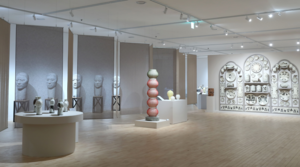
The Korea Ceramic Foundation's 2025 Living Breathing Buncheong exhibition gathered around 100 works by 27 Korean ceramicists, exploring how buncheong's improvisational charm speaks to today's audiences. Influential potters such as Shin Sang ho, whose work sits in the British Museum and the Victoria and Albert Museum, have spent decades stretching the language of buncheong, while the late British potter Phil Rogers became one of its most devoted international interpreters.
Onggi: The Breathing Pottery of Korean Kitchens
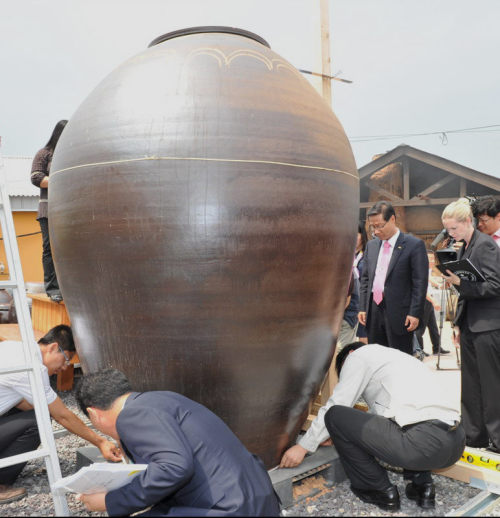
If celadon and baekja are the courtly side of Korean ceramics, onggi is the kitchen and back porch side. Onggi is a coarse, dark brown earthenware shaped from clay with fine sand particles, then fired in a way that leaves microscopic pores in the wall. Those pores let air pass through, which is why onggi is often called breathing pottery and why it has been the vessel of choice for fermenting kimchi, doenjang, ganjang, and gochujang for centuries.
Every traditional Korean home once had a jangdokdae, a sunlit terrace lined with onggi jars at different stages of fermentation. The largest jars, dok, hold soy sauce, soybean paste, and chili paste. Smaller danji store the same condiments for daily use, while specialized kimchi dok are buried partly underground to keep their contents cool through winter. UNESCO has recognized onggi making as part of Korea's intangible cultural heritage, and master onggijang artisans like the Kim family in Yeoju continue to pass the craft down through the generations.
Modern Korean Ceramicists Keeping the Tradition Alive
Korean pottery is not a museum relic. A vibrant network of contemporary potters keeps each tradition active and evolving. Shin Sang ho is widely credited with bringing Korean ceramics into a global contemporary conversation, working across buncheong, baekja, and celadon. Lee Kang hyo is internationally known for monumental buncheong jars decorated with sweeping slip brushwork. In the moon jar lineage, potters like Park Young sook have pushed baekja into pristine, sculptural forms that sell at major auction houses.
Younger artists are also reinterpreting traditional shapes for modern tables, blending celadon glazes with minimalist tableware, reviving onggi for craft beer and natural wine fermentation, and translating buncheong patterns into contemporary design objects. The 2025 K Heritage Day event at Deoksu Palace, which invited ambassadors from 18 countries to try buncheong techniques, is part of a wider push to share these crafts with the world.

Where to See Korean Pottery: Icheon, Mungyeong, and Gangjin
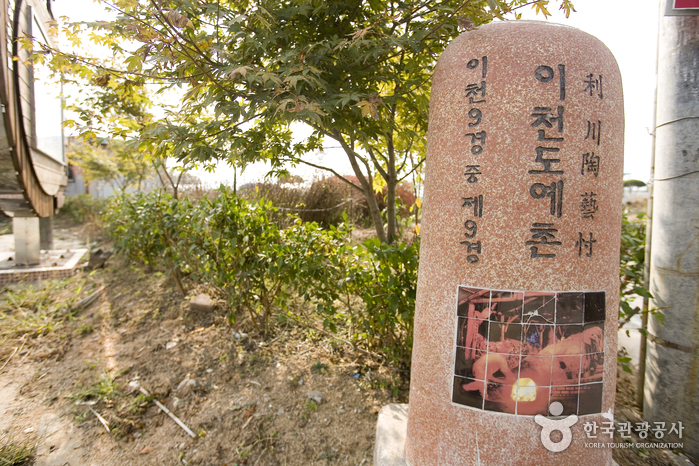
Three towns in Korea form the backbone of any pottery road trip. Icheon, about an hour southeast of Seoul in Gyeonggi do, is the country's most accessible ceramic hub. Designated a UNESCO Creative City of Crafts and Folk Art, Icheon Ceramics Village hosts around 80 ceramic studios and 300 kilns producing celadon, baekja, buncheong, and modern designer pieces. Visitors can throw their own cup at studios in Sagimakgol and Yeoju, browse the contemporary work at Cerapia and Ye's Park, and time a trip to coincide with the Icheon Ceramics Festival each spring.
Mungyeong, in North Gyeongsang Province, has produced pottery since the Goryeo dynasty and is famous for chasabal, traditional Korean tea bowls used in temple tea ceremonies. The Mungyeong Ceramic Museum at the foot of the Mungyeong Saejae mountain pass traces 900 years of local kiln history, and the annual Mungyeong Traditional Chasabal Festival lets visitors meet sagijang masters in person. Gangjin, on the southern coast of South Jeolla Province, is the spiritual home of Goryeo celadon. Around 180 historic kiln sites cluster around Daegu myeon, and the Gangjin Goryeo Celadon Museum displays national treasure pieces alongside hands on wheel throwing experiences.
How to Buy Authentic Korean Ceramics
If you want to bring home real Korean pottery rather than a mass produced souvenir, the simplest rule is to buy from a studio or museum shop in one of the pottery towns. In Icheon, Ye's Park collects work from dozens of resident artists, and the Korea Ceramic Foundation's official shops in Icheon and Yeoju vet each piece for quality. In Gangjin, the Tamjin Celadon brand is certified by the Korea Quality program for traditional celadon. In Seoul, the gift shops at the National Museum of Korea, the Leeum Museum of Art, and Insa dong galleries are reliable starting points.
Look for a few authenticity markers. Genuine Goryeo style celadon will usually carry the artist's chop or signature on the base and the studio name on the box. Real baekja moon jars are hand thrown in two halves and show a faint horizontal seam line inside. Onggi should feel slightly rough to the touch, and a tap should produce a low, dull note rather than a high ring. Prices reflect time and skill, so a small celadon cup may cost 30 to 80 USD while a master signed moon jar can run into the thousands. Whatever you buy, ask for a certificate of authenticity and the artist's name.
Explore More of Korea with Daebak
Want to bring a little piece of Korea into your life? The Daebak Box is packed with the best Korean snacks, ramen, and cultural goodies delivered monthly to your door.


