


Table of Contents
Every June 1st, Korean farmers do something delightfully specific: they throw a holiday for a single vegetable. 오이데이 (Oi Day), organized by cucumber growers through the Nonghyup farmers association, exists to remind Koreans that summer eating starts with 오이. It has no religious weight, no dynastic history, no royal court origin. What it does have is two decades of momentum, backed by farming associations who watched declining domestic consumption and decided to fight back with the most Korean weapon available: strategic 반찬 (banchan) messaging.
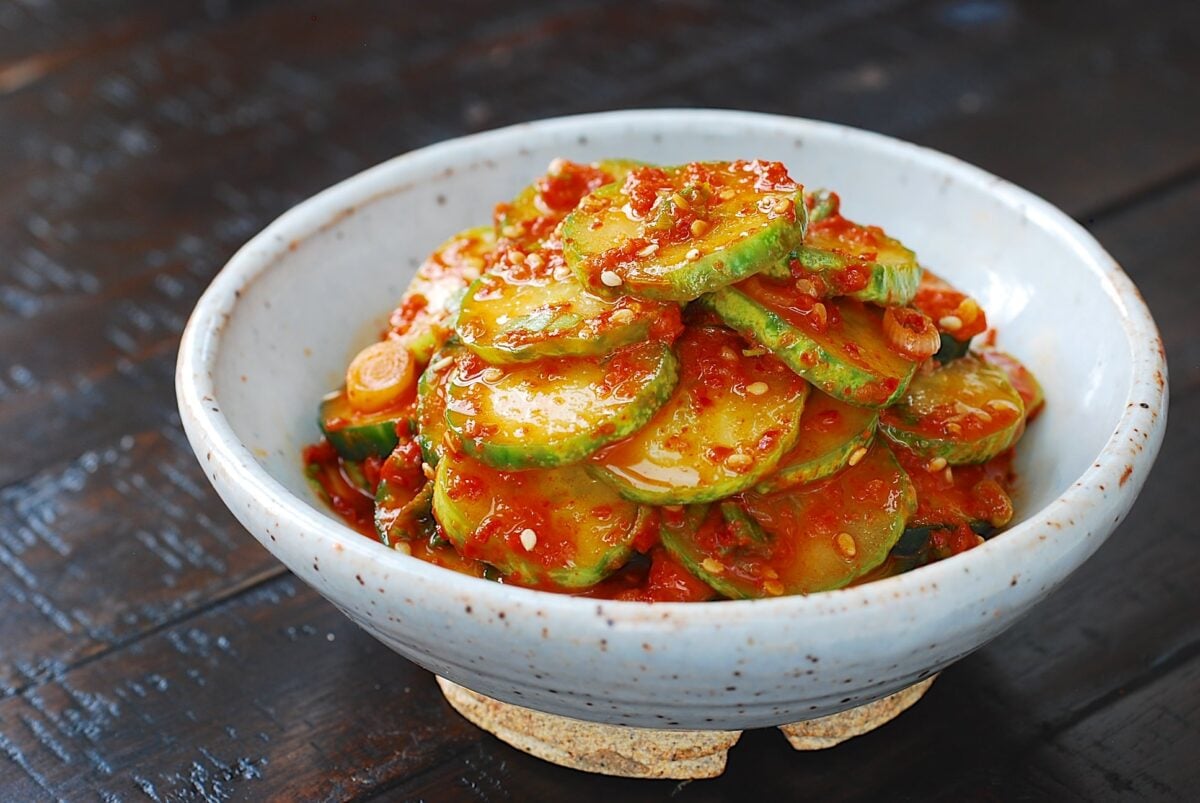
I have spent over a decade watching how Korean food narratives get built, first from the industry side and now from the diaspora media side, and 오이데이 is a textbook case of an agricultural PR play that actually landed. The farmers association picked a summer date on purpose. By early June, cucumber vines in Chungcheong and Jeolla start hitting peak yield, and demand needs to catch up before oversupply crashes wholesale prices. So instead of dumping cucumbers, they turned it into a food story. Twenty years later, K-drama viewers overseas can name 오이소박이 by sight.
What Actually Happens on 오이데이
The day itself is low key. There is no parade, no idol endorsement (idols famously hate cucumber, more on that later). What you get is coordinated promotion at 하나로마트 (Nonghyup Hanaro Mart), farmers market pop-ups in Seoul, discounted crates of 취청 cucumbers, and a wave of recipe content across Naver blogs and food YouTube. Big grocery chains like E-Mart and Lotte Mart run parallel promotions because cucumber is the anchor SKU for the entire cold-side-dish category through 삼복 (the three hottest days of summer).
What makes this holiday sticky is the timing. 오이데이 lands right when Koreans start swapping heavy stews for cold dishes. It is a mental trigger: cucumber season is here, and by extension the entire cold-banchan playlist is unlocked. That is the retail logic, and it works.
오이무침: The Fastest 반찬 You Will Ever Make
If a Korean grandmother had to teach one dish to a foreigner about summer eating, she would pick 오이무침. Total prep time: about 8 minutes. Ingredient count: seven, and you already have five of them. Slice cucumber diagonally, hit with 고춧가루 (gochugaru), minced garlic, 참기름 (sesame oil), a splash of soy sauce, sugar, and toasted sesame seeds. Mix. Done.
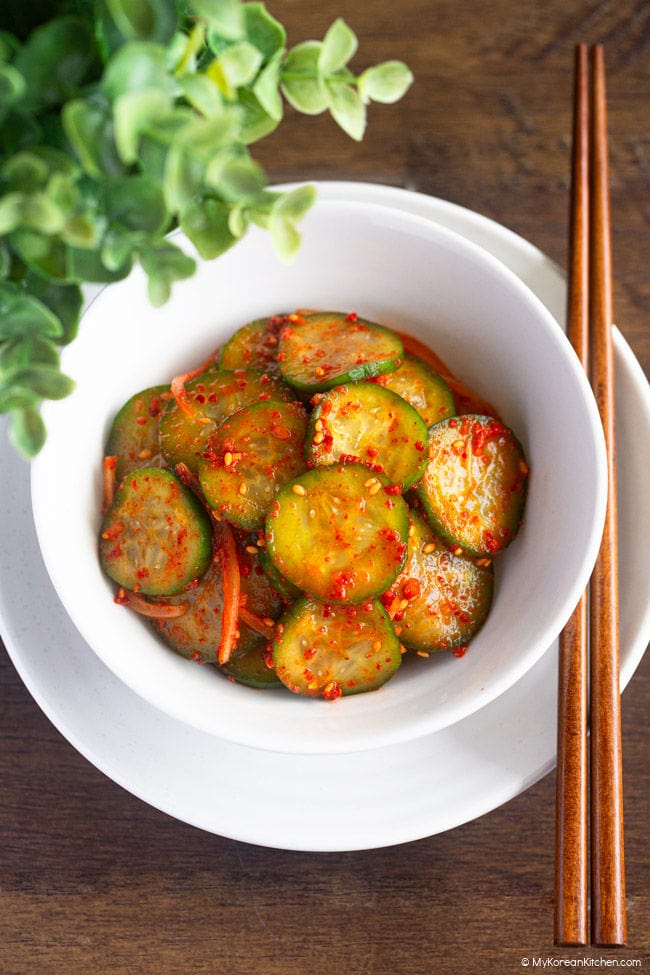
The appeal here is not complexity, it is textural precision. The dish lives or dies on 쫄깃 (chewy) crunch. If the cucumber gets waterlogged, the whole thing collapses into sad slaw. This is why Korean home cooks salt-drain the slices first and season immediately before serving. It is a discipline more than a recipe. What Western salads chase with acid and vinaigrette, 오이무침 achieves with sesame oil coating cold cucumber flesh, which is why it works so well as a palate reset next to grilled 삼겹살.
오이냉국: The Soup That Is Not Really a Soup
Foreigners often get confused by 오이냉국 on their first Korean-restaurant visit because it arrives cold, watery, and unsalted looking. It is technically a broth (dashima kelp and sometimes miyeok seaweed steeped in cold water) seasoned with soup soy sauce, vinegar, sugar, and garlic, then topped with julienned cucumber and ice cubes.
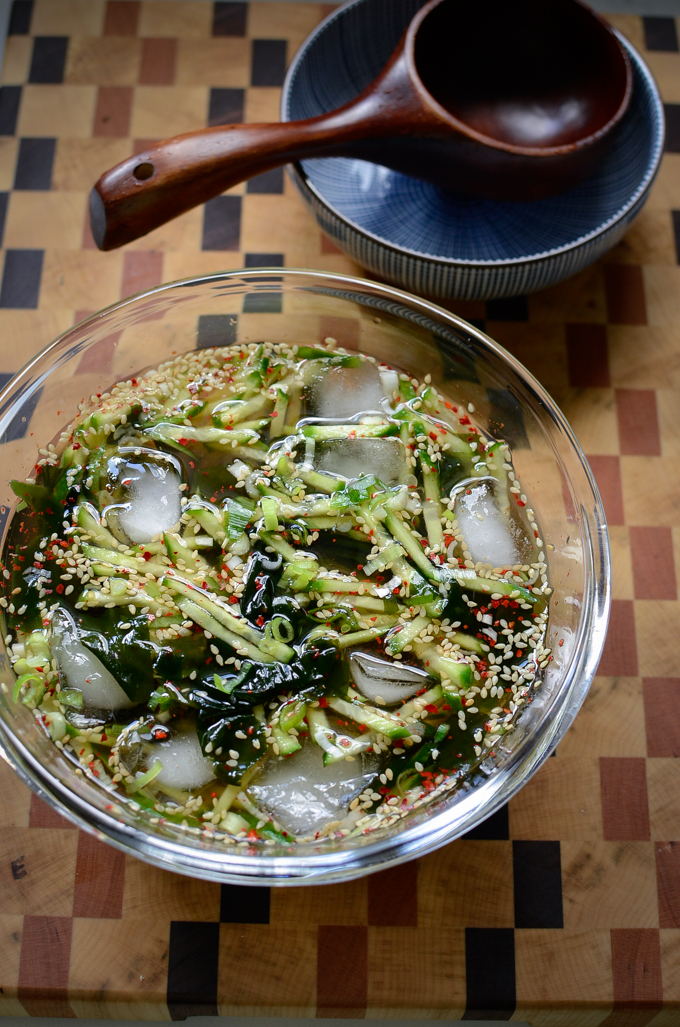
Here is the industry insight most K-food explainers skip: 오이냉국 is functional food dressed up as cuisine. During 삼복 (the three peak-heat periods across July and August), Koreans traditionally believed you needed to cool the body from the inside. Ice water was actually discouraged because it was thought to disrupt digestion. Cold cucumber soup solved the problem: it hydrates through cucumber's 95 percent water content, adds electrolytes via soy sauce and salt, and the vinegar sharpens the appetite. This is why Korean office workers still order 오이냉국 as a side to 삼계탕 in August, even though the pairing sounds contradictory. It works.
오이소박이: The Kimchi That Does Not Wait
Every kimchi has its own timeline. 배추김치 (napa kimchi) benefits from weeks of fermentation. 오이소박이 is the opposite: it wants to be eaten within days, ideally after one night of light fermentation in the fridge. This is a summer kimchi, and the whole point is that crunch survives.
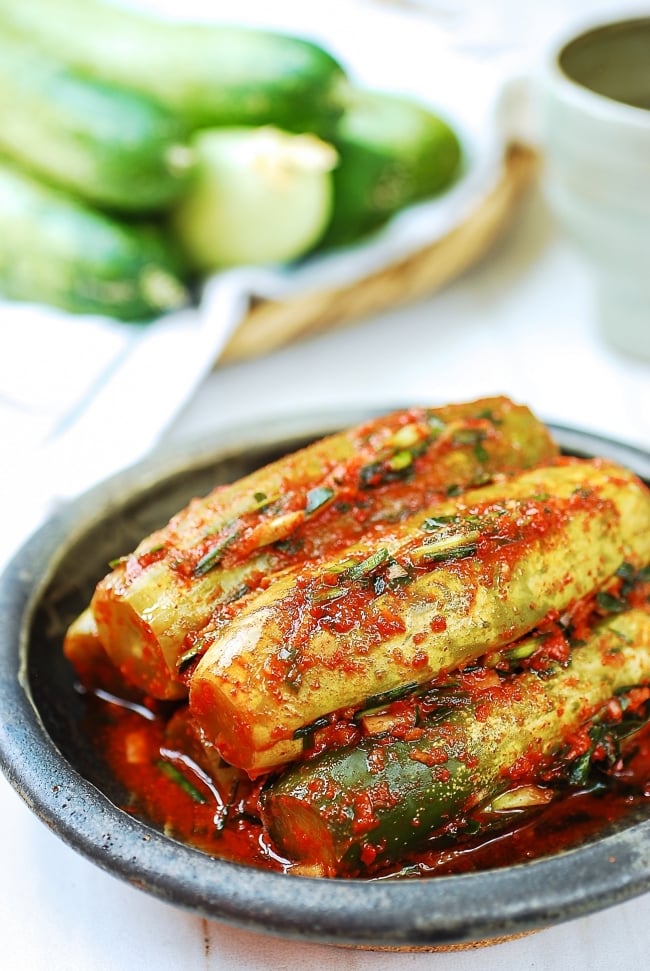
The technique matters more than most recipes admit. You brine whole cucumbers in hot salt water (yes, hot; this locks in the crunch through cell wall changes), then cut a plus-shape slit halfway through and stuff the pockets with a mix of 부추 (garlic chives), gochugaru, saeujeot (fermented salted shrimp), and sometimes julienned radish. Korean home cooks who grew up in cucumber-farming families will insist on 부추 as non-negotiable, because its allium sharpness cuts the cucumber sweetness in a way that scallion cannot quite replicate.
오이지: The Century-Old Preservation Trick
Before refrigeration, Korean households preserved summer cucumbers by submerging them in salt brine for 4 to 6 weeks. The result, 오이지, turns golden yellow, develops a chewy-sour texture, and lasts through winter. It is a peasant food that never left the table because urban Koreans still crave that sharp funk in July heat, sliced thin and mixed with a fresh gochugaru dressing to make 오이지무침. Even now, department-store food halls in Seoul sell artisanal 오이지 in glass jars for 20,000 won, marketed as heritage 반찬 for the diaspora market.
The Two Korean Cucumbers: 다다기 vs 취청
Non-Korean cucumbers do not quite work for these recipes, and the reason is horticultural. Korea grows two dominant varieties. 다다기 is short, thick, and mild, used for salads and quick eating. 취청 is long, slender, and dense with fewer seeds, favored for kimchi and pickling because the flesh holds up through fermentation. When Korean-American home cooks substitute English or Persian cucumbers, they are typically approximating 취청 for 오이소박이 and 다다기 for 오이무침. It is a reasonable compromise but not identical. If you have access to a Korean grocer with actual 취청, the difference in 오이소박이 crunch is dramatic.
Why Idols Hate Cucumbers (And Why It Went Viral)
One of the more entertaining chapters in cucumber discourse involves K-pop. SEVENTEEN's Seungkwan, EXO's Baekhyun, and TWICE's Momo have all publicly declared their hatred of cucumbers on variety shows, spawning years of fancam compilations. Korean netizens even coined the term 오이 안티 (cucumber anti). This is not a stunt; it is a real polarization in Korean palates driven by a bitter compound called cucurbitacin, which some people taste more strongly due to genetics. The debate became such a cultural fixture that food companies started marketing cucumber-free 김밥 and cucumber-alternative side dishes just for 오이 안티 customers.
The TikTok Cucumber Wave
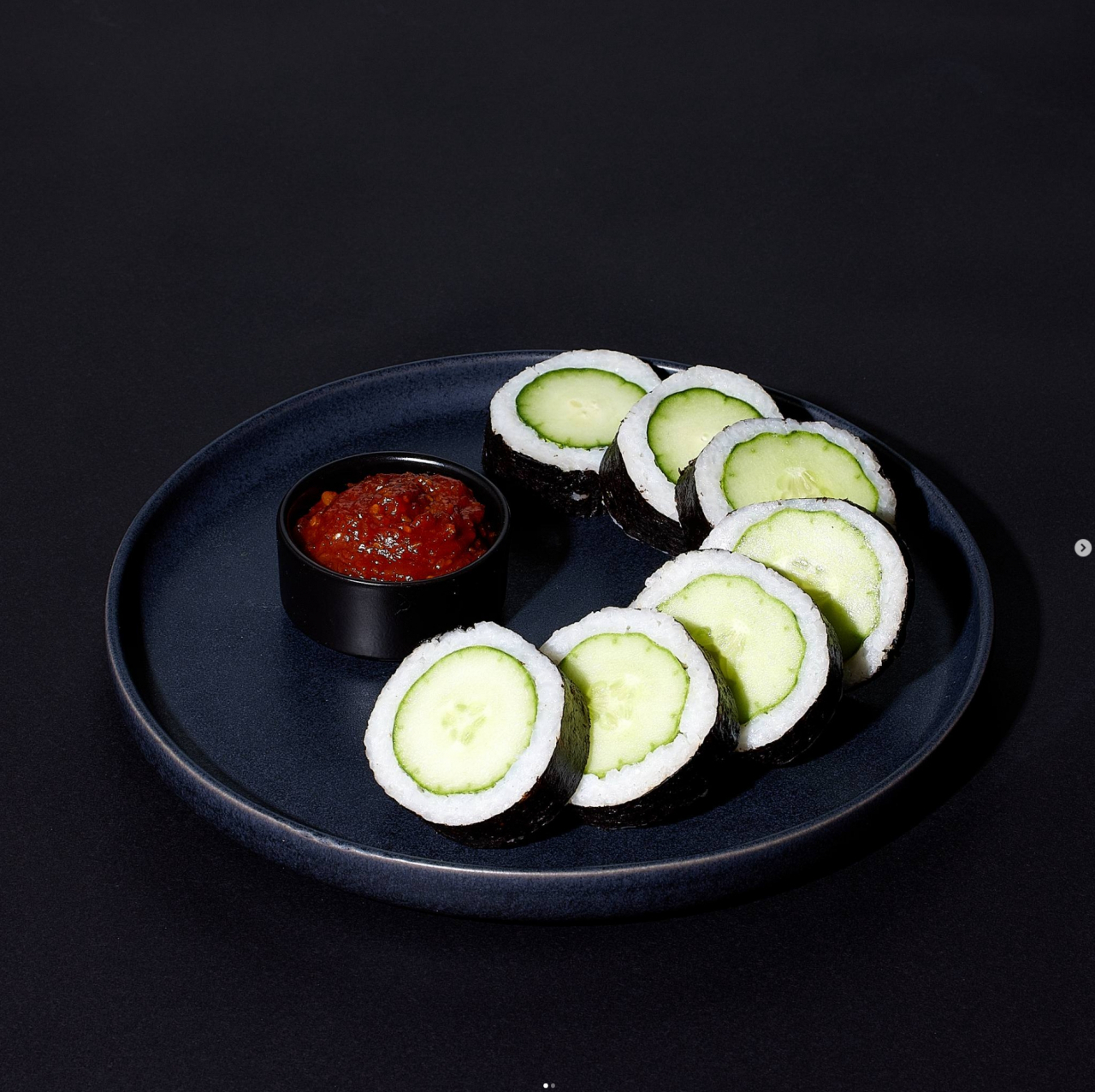
Post-2020, Korean cucumber dishes had an unexpected global moment. The #cucumbersalad tag on TikTok crossed 500 million views across 2023 and 2024, driven partly by creator Logan Moffitt's shredded-cucumber recipes that lean heavily on Korean flavor profiles. Chef David Chang has featured 오이무침 variations on Momofuku menus for years, and Maangchi's YouTube channel remains the anglophone gateway for 오이소박이 tutorials. Meanwhile in Korea, TV personality Choi Hwa-jung's whole-cucumber 김밥 clip pushed convenience-store chain GS25 to launch a cucumber-only gimbap SKU in 2024. The Korean cucumber industry, worth roughly 500 billion won annually with 30 percent of consumption concentrated in summer months, benefits directly from every one of these viral moments.
What is fascinating from an industry perspective is that 오이데이 was designed to boost domestic consumption, but the real payoff came globally. Korean cucumber recipes are now foundational content in K-food creator ecosystems from Sydney to Berlin, all traceable back to those quiet farming-association campaigns that started in the early 2000s.
How to Actually Celebrate 오이데이
You do not need to be in Korea. Pick up 취청 or Persian cucumbers, make one dish from the list above (오이무침 is the entry point), and eat it cold with a bowl of rice. That is it. The whole holiday exists because someone decided cucumbers deserved a spotlight, and the best way to honor it is to actually put one in your mouth.
Explore Korean Snacks with Daebak
Love Korean food? Get authentic Korean snacks and ramen delivered straight to your door with the SnackFever Box by Daebak.


