


Table of Contents
Every K-food conversation eventually gets to the same question: what counts as Korean when 김치 shows up between two slices of buttered bread, or 고추장 gets whisked into melted butter, or bulgogi ends up on a corn tortilla with a squeeze of lime? Having tracked the K-content industry since well before Squid Game made every American finally learn the word 케이푸드, I can tell you the answer most Korean chefs I know actually agree on. Hybrid Korean food is not a compromise. It is the second act of the Korean diaspora, and it has quietly grown into a $500 million to $1 billion category inside US grocery and restaurant sales in just over a decade.

The 2008 catalyst: Roy Choi's Kogi, and why it changed the rules
The modern 하이브리드 K-food story starts in November 2008, when Roy Choi rolled the first Kogi BBQ truck out of a Culver City commissary and parked it in front of a Hollywood club at midnight. The menu, short-rib bulgogi tacos with kimchi salsa on double-corn tortillas, was not designed as a marketing stunt. It was the food a Korean-American chef trained at the CIA actually cooked at home for his Mexican-American coworkers. That specific gesture, Korean flavors on the format your Latino line cook grew up with, is what every serious food critic (Jonathan Gold on down) understood was different from every "Asian fusion" moment that came before. Newsweek called Kogi "America's first viral eatery." That was accurate but underselling. Kogi legitimized the whole concept of hybrid K-food as a mainstream category, and Food and Wine gave Roy Choi Best New Chef in 2010 for exactly that reason (the first food-truck chef ever to win it).
The industry insider point most English-language coverage misses: Kogi worked because Roy Choi is Korean and the tacos were his. The dish was not a white chef borrowing 고추장 for a trendy menu, it was a diaspora kid feeding his own neighborhood. When the same template gets copied without the diaspora context, it usually falls flat. Fans can taste the difference, and Twitter (the platform Kogi practically weaponized in 2009) ruthlessly surfaces the inauthentic versions.
Kimchi grilled cheese: fermentation times the American comfort baseline
The reason kimchi grilled cheese has become the single most-cloned recipe in English-language Korean food blogging is not the novelty. It is the chemistry. Well-fermented 김치 (묵은지, aged kimchi) brings lactic-acid tang and umami depth that mozzarella and butter completely lack, and mozzarella brings the creamy fat that neutralizes kimchi's rougher acidic edge. The two ingredients cover each other's weaknesses. Maangchi's recipe (mozzarella not cheddar, kimchi stir-fried in butter first, and the finishing butter added last so the bread does not burn) has been the reference version since 2021, and every serious variant since basically iterates on her ratio. Even if you skip the recipe, the principle is the takeaway: Korean fermented ingredient plus Western dairy plus bread equals a hybrid dish that eats like it should have existed already.
Gochujang butter chicken and the sauce-forward Korean-American template

Gochujang butter chicken is a younger phenomenon, chef-driven rather than diaspora-street-driven, and it exploded post-2015 alongside David Chang's Momofuku empire and Danny Bowien's Mission Chinese. The idea is deceptively simple: whisk 고추장 into softened butter with garlic, honey, and a splash of rice vinegar, then finish grilled or fried chicken with it. Gochujang provides sweet-spicy funk, butter carries the sauce onto the skin, honey balances the salt. Maangchi's own soy-butter grilled chicken (a family recipe from her grandmother who used margarine, since butter was a rare thing in older Korea) is the ancestor most modern gochujang-butter variants are quietly copying. The judgment call worth naming out loud: gochujang is not just "Korean sriracha." It is fermented, which means it carries background umami no fresh chili paste can match. That is why gochujang butter beats sriracha butter on a fried chicken wing every single time, and it is why the sauce is now showing up in mainstream US recipe columns (New York Times Cooking, Bon Appetit, Serious Eats) as a legitimate pantry staple.
Korean-Mexican 퓨전 after Kogi: from food truck to Coachella mainstage
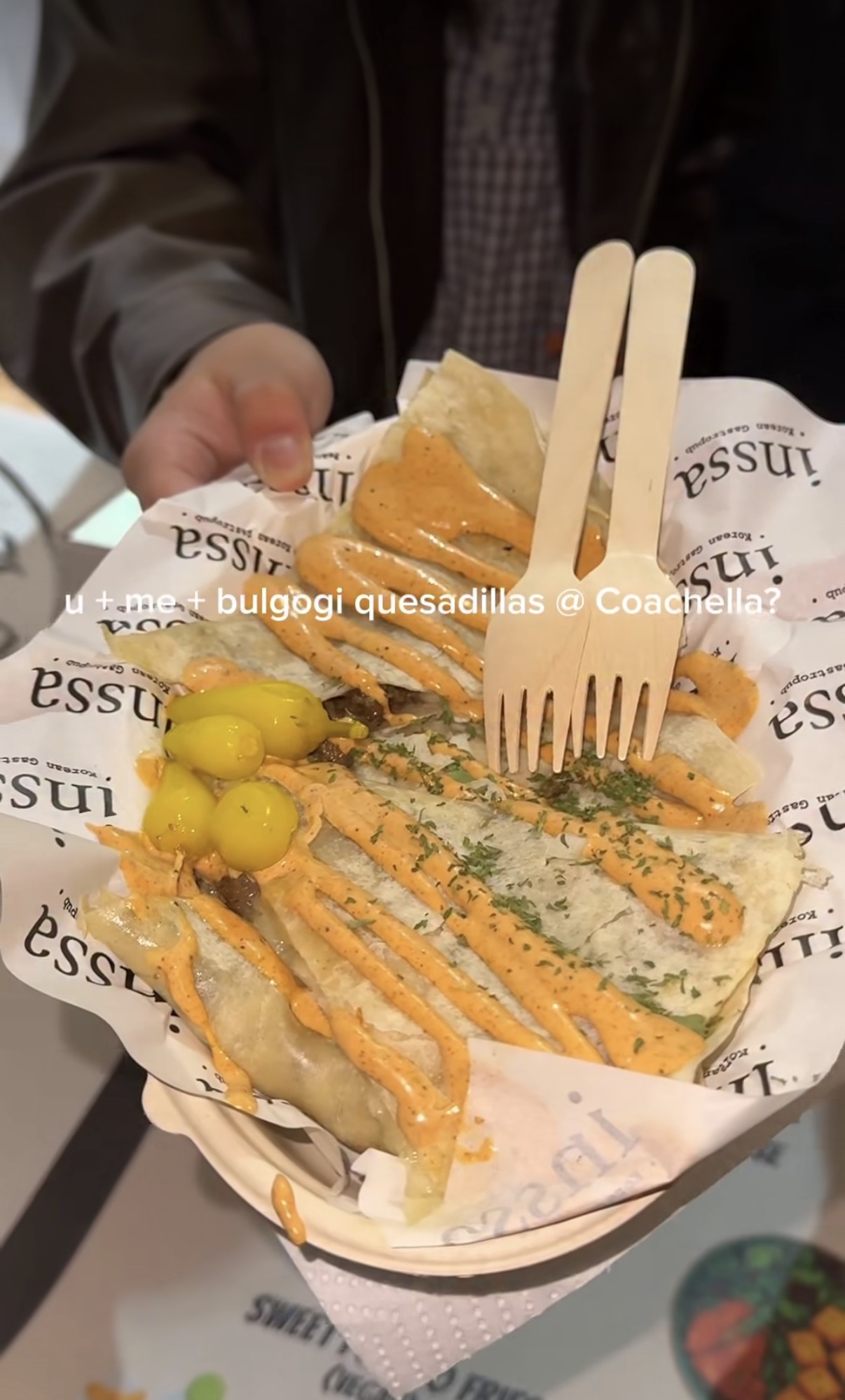
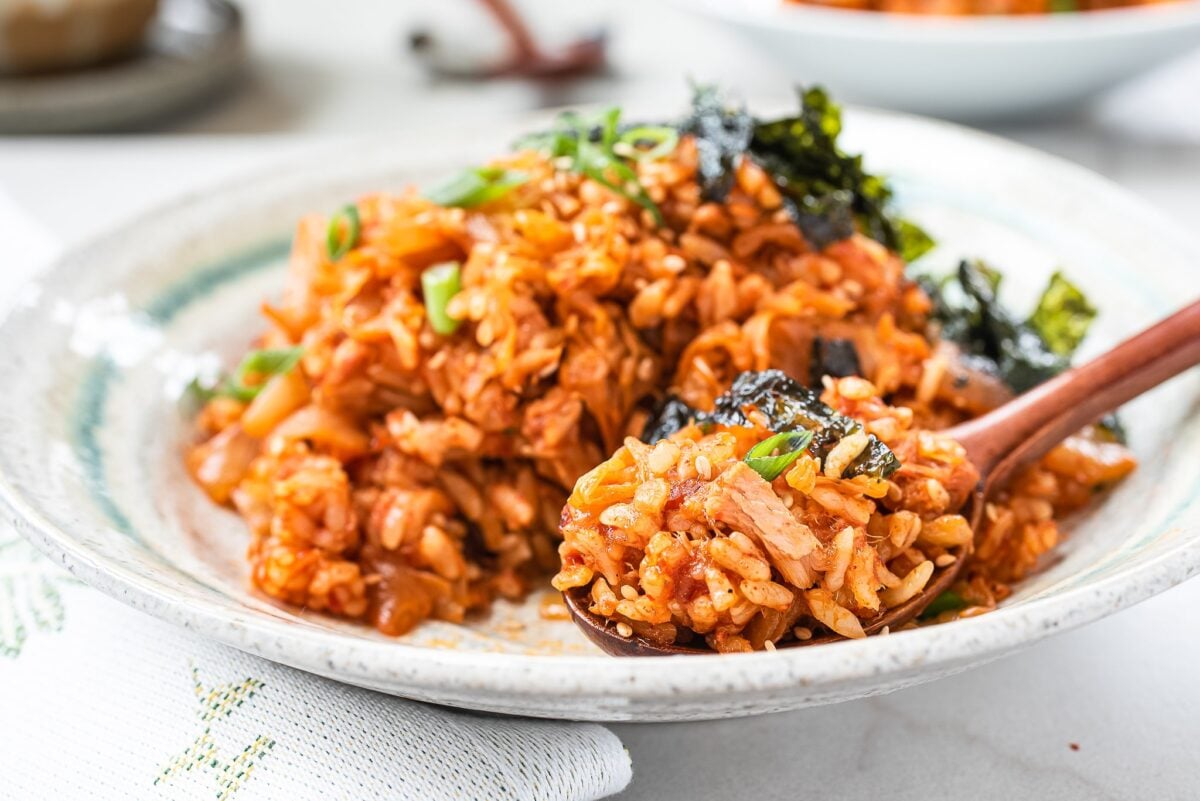
Sixteen years after that first Kogi truck, Korean-Mexican 퓨전 is no longer a niche. Kogi itself was on the Coachella lineup this April, sharing the food footprint with brands like ROKStar Chicken and Inssa Korean Gastropub, whose bulgogi quesadillas and kimchi fried rice are core menu items rather than seasonal pop-ups. The template Roy Choi wrote has been iterated by hundreds of Korean-American chefs and food truck operators, from Korilla in New York to Yumbii in Atlanta to Calbi on the West Coast. The fusion has stopped feeling like fusion. It reads as its own American regional cuisine now, with its own conventions (marinated protein, quick-pickled radish or kimchi slaw, gochujang crema, sesame seed finish, cilantro on top) that a working line cook can execute without prompt. When Korea Times ran their 2011 dispatch calling it "kimchi diplomacy," they were early to name what turned out to be a permanent category shift.
Retail mainstream: Bibigo at Costco, Trader Joe's, and Jongga's 60-country footprint

The retail side of the hybrid boom is the quiet part of the story that matters most. CJ CheilJedang's Bibigo brand pushed Korean BBQ street tacos, mandu, tteokbokki, and kimchi into Costco's national rotation over the past several years, and Trader Joe's has been running Korean-inspired frozen SKUs (bulgogi beef fried rice with kimchi, kimchi cauliflower fried rice, Korean-style beef bulgogi) since 2021, iterating them every quarter based on sales velocity. Daesang's Jongga kimchi, the top-selling kimchi brand globally, is now sold in over 60 countries and has released kale, carrot, and vegan (no jeotgal) variants specifically to hit European and North American consumers who want the fermented tang without the salted-seafood funk. The 케이푸드 category jumped from Asian-grocery-only to mainstream shelf in under a decade, and the hybrid formats (fried rice, tacos, sauces, ready-to-heat pouches) are what made that jump possible. A shopper who would never buy raw napa kimchi will absolutely buy kimchi cauliflower fried rice.
Diaspora authorship, not appropriation
The one point I want to leave any reader who is nervous about the "fusion" label with: nearly every dish that broke K-food into the American mainstream was created by a Korean or Korean-American chef feeding a specific community. Roy Choi in LA. David Chang in New York's East Village (Momofuku Ssam Bar opened 2006). Danny Bowien (Korean-American adopted into an Oklahoma family, then classically French-trained) in the Mission. Sohui Kim at Insa in Brooklyn. Hooni Kim at Danji, the first Korean restaurant to earn a Michelin star in the US. These are diaspora creations, engineered from the inside, not outsider borrowings. The fermentation-plus-spice-plus-umami baseline that makes hybrid K-food work (김치 tang, 고추장 heat, doenjang depth, sesame finish, gochugaru bloom) is unmistakably Korean even when the format around it is a taco or a grilled cheese or a bar-food chicken wing. That is why the category has staying power. It is not a trend that expired with the food truck moment. It is Korean-American food doing what every immigrant cuisine eventually does in the US, which is become its own genre with its own canon of dishes and its own regional variations.
Ready to build the pantry that lets you cook every dish in this article at home? The Daebak Box ships a curated set of Korean snacks, sauces, and pantry ingredients (real Chungjungwon gochujang, aged Jongga kimchi, seasoning packs, banchan starters) hand-picked in Seoul each month, so you get the shelf-fresh ingredients Korean home cooks actually use. Start with one box and you have the base for kimchi grilled cheese, gochujang butter chicken, kimchi fried rice, and whatever hybrid iteration you dream up next.


