Table of Contents
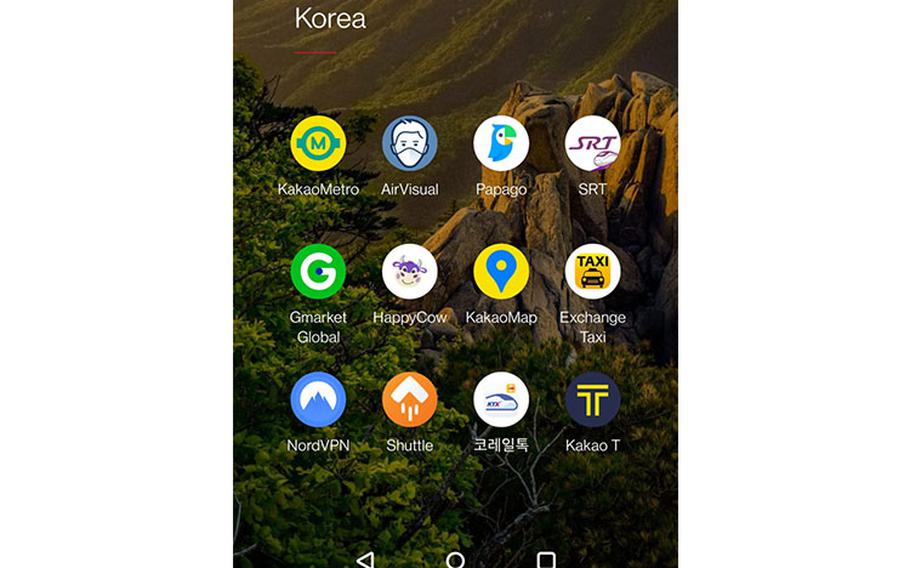
Korea is one of the most digitally connected countries in the world, and that becomes obvious the moment you land at Incheon. Locals run their entire day through a handful of mobile apps, from grabbing the subway to ordering late-night fried chicken. The catch for foreign visitors is that Google Maps barely works for walking and transit directions inside Korea because of long-standing mapping export restrictions, so the apps you rely on back home will not get you very far in Seoul or Busan.
Before your trip, download these five essentials. They are free, available on both iOS and Android, and they will save you hours of getting lost, mistranslating menus, and arguing with taxi drivers about where you actually want to go.
1. Naver Map: The Map That Actually Works in Korea
Naver Map is the go-to navigation app for almost everyone living in South Korea, and as of late 2024 it is fully available in English, Chinese, and Japanese. Unlike Google Maps, which cannot give walking or driving directions inside the country, Naver Map shows you accurate transit routes, exit numbers, real-time bus arrivals, restaurant menus, and local photo reviews. It is now the only navigation app in Korea supporting four languages, with multilingual review translation and detailed transit guidance for foreign tourists.
Use it to find a hidden cafe in Seongsu, plan a bus-to-subway combo to Bukhansan, or look up which exit at Gangnam Station leads to your dinner reservation. The English interface is excellent, and the search bar accepts Romanized names like "Gyeongbokgung" without needing Hangul.
2. Papago: The Translator That Beats Google Translate for Korean
Papago is Naver's neural machine translation app, and for Korean it consistently outperforms Google Translate on context, slang, and honorifics. It crossed 20 million monthly active users in 2024, and a Korean Ministry of Culture survey found that 48.3 percent of foreign visitors to Korea used Papago for translation during their travels.
The killer features for tourists are camera translation and image translation. Point your phone at a Korean-only menu at a pojangmacha tent, and Papago overlays the English translation on top of the original text in real time. You can also upload screenshots of websites, reservation pages, or signs, and it will translate them in seconds. Voice translation handles spoken Korean cleanly enough to hold a basic conversation with a taxi driver or shopkeeper.
3. Subway Korea: Decode the World's Densest Metro
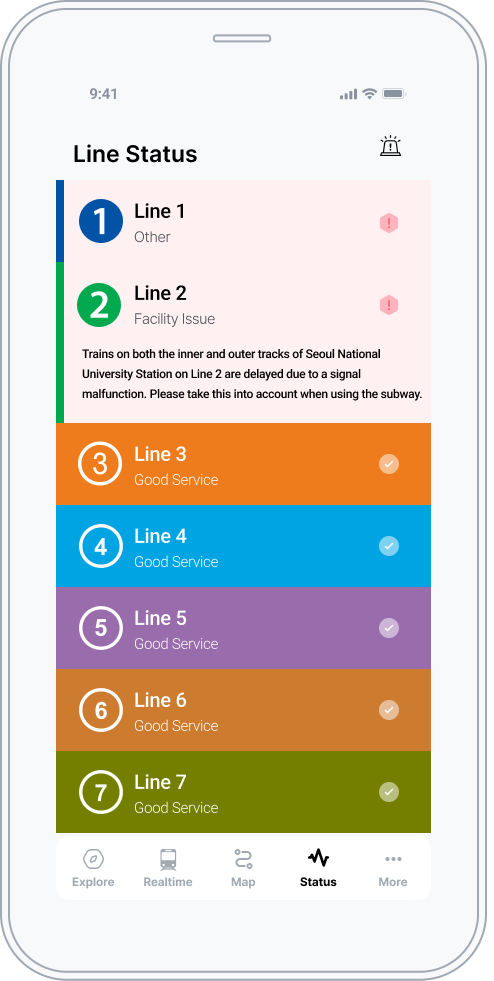
Seoul's metro system is one of the largest and most efficient on the planet, but the sheer number of lines, transfer stations, and exit numbers can overwhelm first-time visitors. The Subway Korea app is the simplest way to plan a trip from any station to any other, with real-time train schedules, transfer guides, total travel time, and even the optimal car number to board so you exit closest to your transfer point. It covers Seoul and the metropolitan area plus the Busan, Daegu, Daejeon, and Gwangju systems.
Seoul Metro also recently overhauled its own official Seoul Subway app to add Chinese and Japanese alongside Korean and English, AI-translated emergency alerts, and a redesigned interface specifically built for first-time foreign riders.
4. Kakao T (and K.ride): The Uber of Korea
Uber barely exists in Korea. Kakao T is the dominant ride-hailing app, with roughly 38 million users and around 90 percent of the taxi-hailing market. You set your pickup and destination in the app, watch the driver approach in real time, and pay through the app or to the driver. No haggling, no language barrier, no risk of being told a cab is "out of service."
For foreign visitors, Kakao Mobility also launched a dedicated app called K.ride in June 2024. K.ride lets you sign up with a Google, Apple, or email account instead of needing a Korean Kakao Talk ID, supports credit cards issued overseas, and provides automatic translation in about 100 languages for destination search and driver chat. It is available in app stores in 14 countries including the US, Japan, Singapore, and China.
5. VISITKOREA: The Official Tourism Companion
VISITKOREA is the Korea Tourism Organization's official app, and it functions as a one-stop travel companion once you are on the ground. It uses your preferences to recommend tourist attractions, restaurants, and accommodations, includes subway route maps for Seoul, Busan, Daegu, Gwangju, and Daejeon, and gives you direct access to the 1330 Korea Travel Helpline for 24/7 real-time chat and phone support in eight languages, including emergency assistance and embassy contacts.
The app pulls trip-planning tools, the Travel Planner itinerary builder, festival calendars, and curated theme tours like UNESCO World Heritage sites, Hallyu locations, and DMZ tours into one place. Pair it with the revamped english.visitkorea.or.kr website for booking suggested itineraries before you fly.
Bonus Tip: Set Up Apps Before You Land
Most of these apps require either a phone number for SMS verification or an Apple, Google, or email login. Set them up at home over Wi-Fi so you are not fighting unfamiliar Korean prompts at Incheon Airport. If you plan to use Kakao T with a Korean number, look into K.ride or a tourist eSIM with a Korean number before arrival. Pair these five apps with a Tmoney transit card, comfortable shoes for endless subway transfers, and an open mind, and you will move through Korea like a local from day one.
Explore More of Korea with Daebak
Want to bring a little piece of Korea into your life? The Daebak Box is packed with the best Korean snacks, ramen, and cultural goodies delivered monthly to your door.