Hyunwoo Cho

Hyunwoo Cho

With over 10 years of experience in the Hallyu industry, Hyunwoo has dedicated his career to connecting Korean culture with the world. As the founder of Daebak, he works closely with Korean brands and stays ahead of the latest trends to deliver an authentic taste of Korea to fans globally.

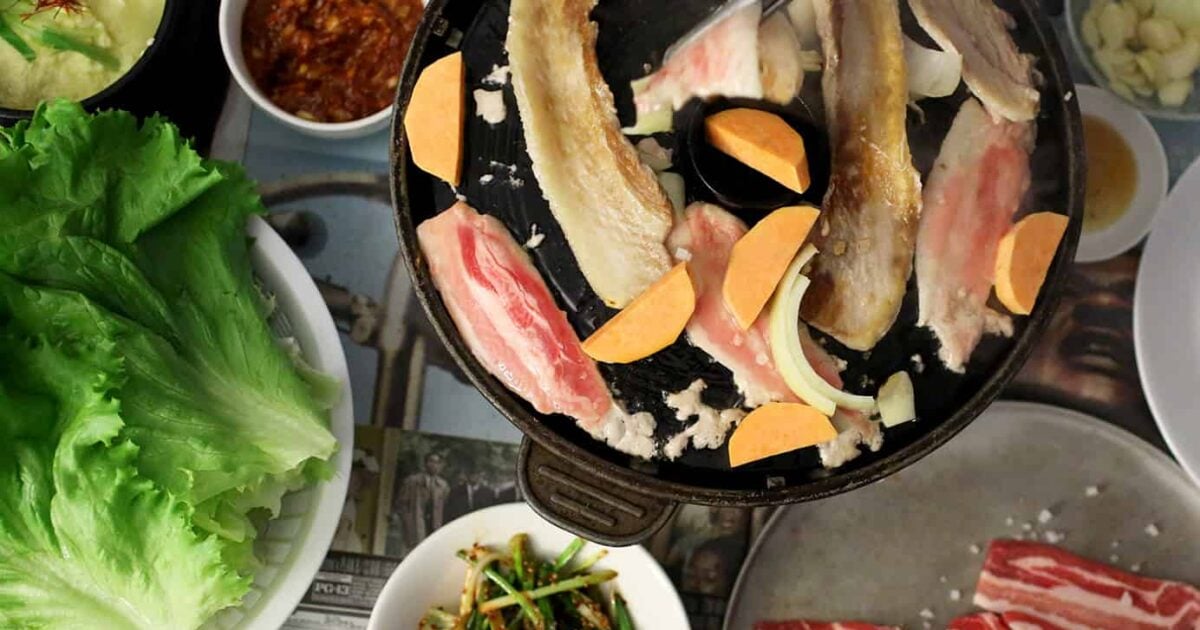
Sizzling samgyeopsal Korean BBQ pork belly grilling at the table, the centerpiece of a classic Korean BBQ feast

Beginner's Guide to Eating Korean: Dishes, Etiquette, and Ordering Tips

Hyunwoo Cho

Table of Contents

Trying a new cuisine can feel like reading a foreign menu in real life. There are unfamiliar dish names, ingredients you have not tasted, and that nagging worry about whether you have ordered the right thing. If Korean food is the cuisine on the menu tonight, take a breath. This beginner's guide walks you through the most popular Korean dishes, the unspoken table manners that put locals at ease, and the small ordering tips that turn a first bite into a craving you will keep chasing.

Sizzling samgyeopsal Korean BBQ pork belly grilling at the table, the centerpiece of a classic Korean BBQ feast
Samgyeopsal grilling at the table is the social heart of a Korean BBQ meal. | Source: Maangchi

Bibimbap: Korea's Most Famous Mixed Rice Bowl

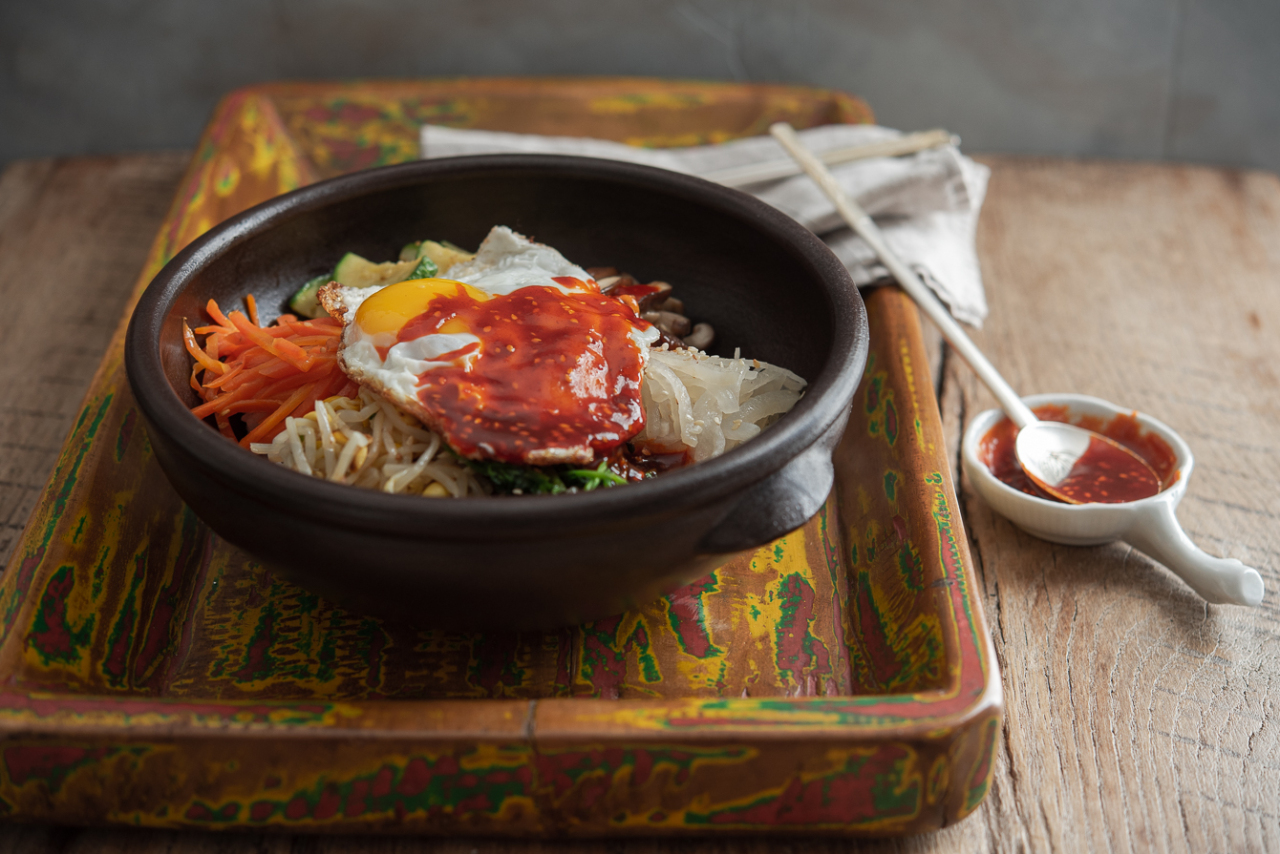
Bibimbap literally means "mixed rice," and it is one of the easiest dishes to fall in love with on a first Korean meal. A bowl arrives with warm rice topped with neatly arranged seasoned vegetables, a protein such as beef or tofu, and a raw or fried egg crowning the top. A spoonful of gochujang (Korean red chili paste) goes on the side, and you mix everything together vigorously before eating. Vegetables commonly include julienned cucumber, zucchini, spinach, mushrooms, and soybean sprouts. Order the dolsot version if you want extra texture: it arrives in a heated stone pot, and the bottom layer of rice crisps into a golden, nutty crust called nurungji that is half the fun of the dish.

Classic Korean bibimbap rice bowl topped with seasoned vegetables, ground beef bulgogi, and a sunny-side-up egg ready to be mixed with gochujang
Bibimbap layers seasoned namul vegetables and beef over rice, finished with an egg and a dollop of gochujang. | Source: The Korea Herald

Korean BBQ: A Meal You Cook Together at the Table

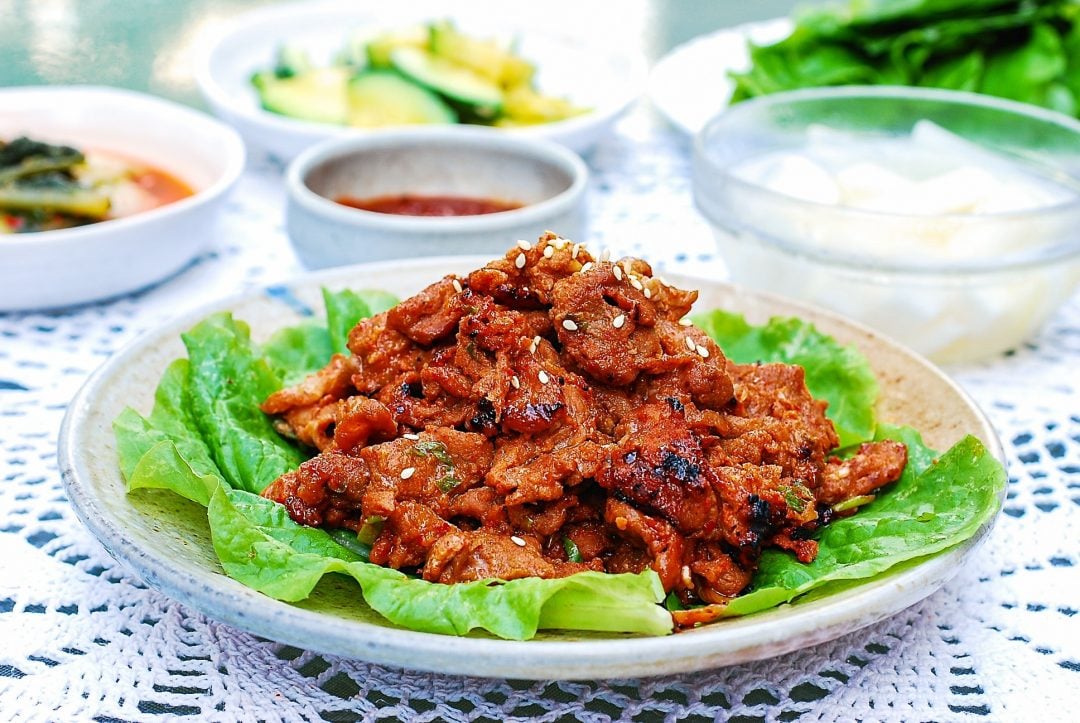
When it comes to Korean BBQ, the food is only half the experience. You sit around a table with a built-in grill, choose your cuts of meat, and cook them yourself while side dishes spread out around you. For first-timers, three cuts are practically required reading. Bulgogi is thinly sliced beef in a sweet soy-and-sesame marinade. Galbi is short ribs marinated in a similar but richer sauce. Samgyeopsal is thick, unmarinated pork belly that sears into crispy, fatty perfection. The traditional way to eat it is to grab a lettuce leaf, lay down a slice of grilled meat, add a smear of ssamjang (a paste of doenjang mixed with gochujang), top with kimchi or pajeori (spicy scallion salad), wrap it up, and eat the whole bundle in one bite.

Spicy Korean pork bulgogi (jeyuk bokkeum) glazed in gochujang sauce with sesame seeds and green onion, a classic Korean BBQ favorite
Jeyuk bokkeum, spicy pork stir-fried in gochujang, is a fiery favorite that goes hand in hand with lettuce wraps. | Source: Korean Bapsang

Banchan: The Side Dishes That Come Free With Every Meal

The little plates of food that appear before your main course arrives are called banchan, and they are not appetizers in the Western sense. They are free, refillable, and meant to be picked at throughout the meal to balance out your rice and stew. Kimchi (fermented spicy cabbage) is the most famous one, but a single restaurant might serve three to ten different banchan, including seasoned spinach, pickled radish, anchovies, fish cake, and braised potatoes. Two etiquette notes will help you here. First, banchan are shared from the center of the table, so use the serving chopsticks if they are provided, or your own pair if not, and move pieces to your own bowl rather than eating straight from the communal dish. Second, do not be shy about asking for refills. Saying "ri-pil ju-se-yo" (refill please) is completely normal.

Korean Fried Chicken: The Snack That Started a Global Obsession

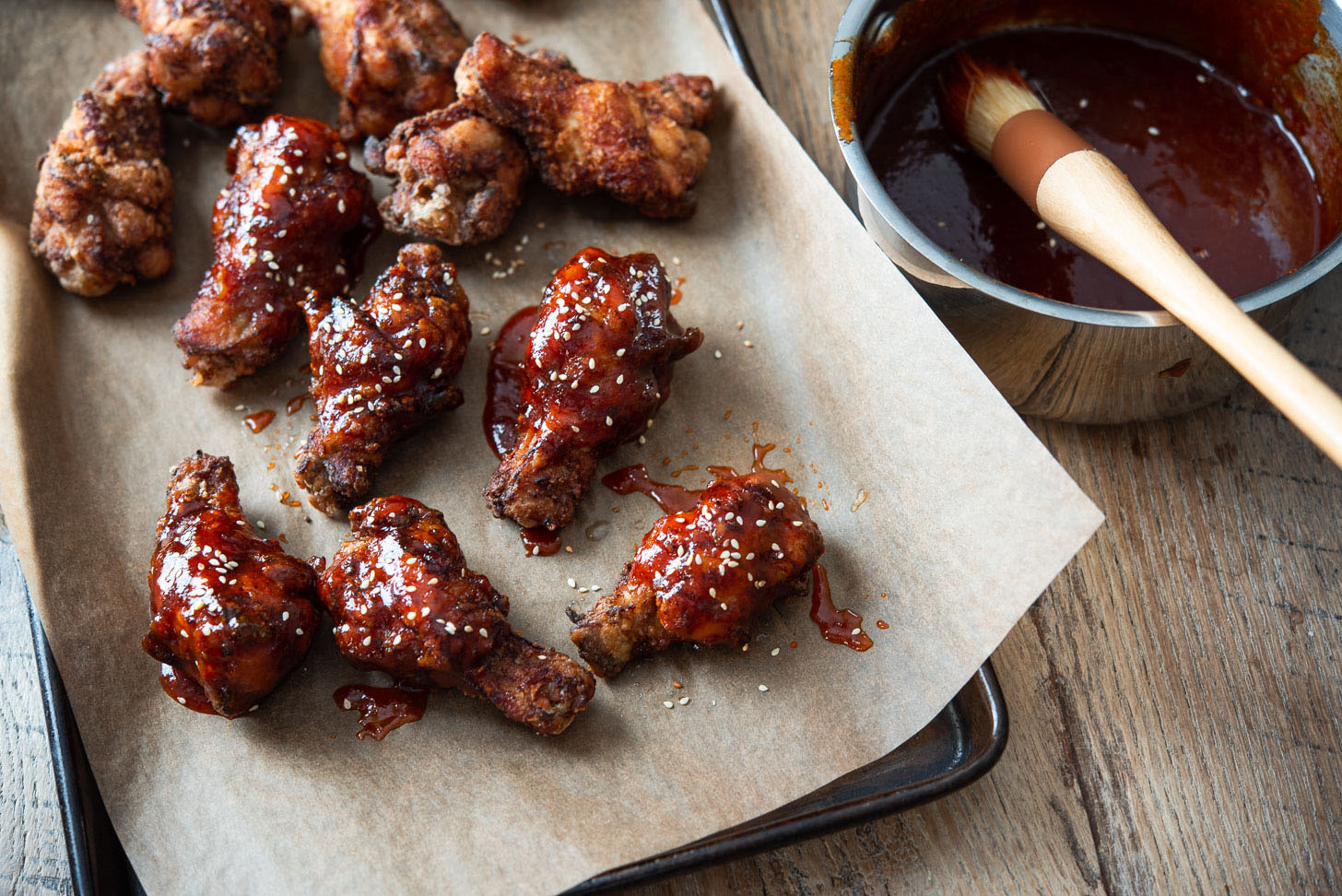
Korean fried chicken is its own genre and looks almost nothing like the American version. The chicken is lightly battered and fried twice, which is what makes the skin shatter-crisp and the meat juicier and far less greasy. You can order it plain (huraideu) or coated in a sweet-and-spicy gochujang glaze called yangnyeom. Many shops also do soy-garlic, honey butter, and snow cheese variations. The classic pairing is chicken and beer, a combination so beloved that Koreans gave it its own portmanteau: chimaek (chi for chicken, maek for maekju, beer). Order half-and-half if you cannot decide between flavors, and prepare for the pickled radish cubes that always arrive on the side, they cut through the richness perfectly.

Crispy Korean fried chicken wings glazed in sweet-spicy gochujang yangnyeom sauce and finished with sesame seeds
Double-fried for extra crunch and brushed with yangnyeom sauce, Korean fried chicken is the unmissable star of chimaek night. | Source: Beyond Kimchee

Jjigae: The Bubbling Stew at the Center of Every Korean Table

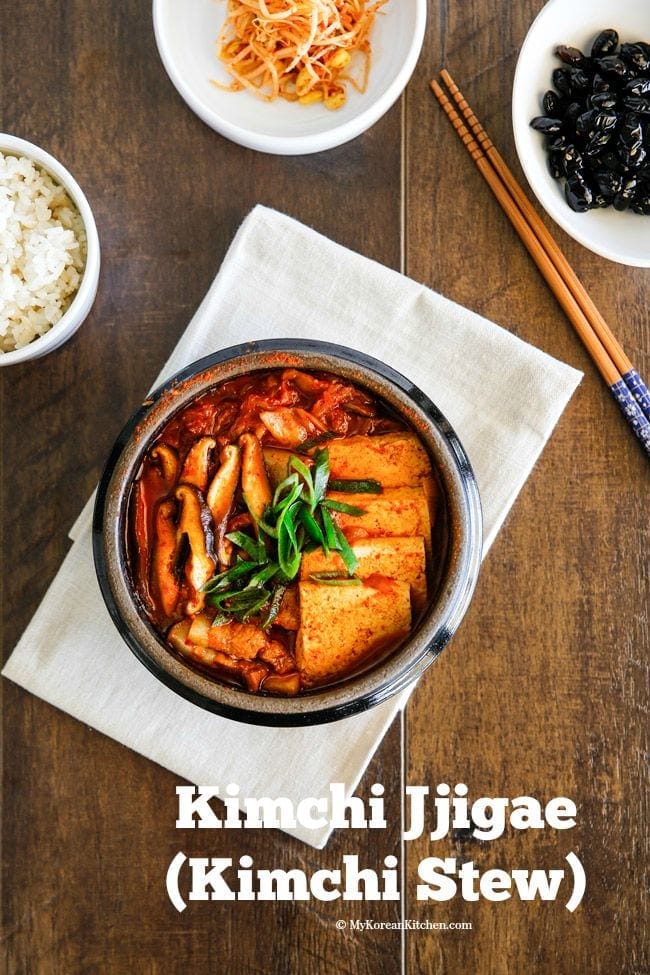
If you only learn one Korean comfort food word, make it jjigae. Jjigae is a thicker, saltier, more heavily seasoned stew than its cousin guk (soup), and it is almost always served bubbling-hot in a stone or earthenware pot meant for the whole table to share. Kimchi jjigae uses well-aged kimchi simmered with pork belly and tofu, and it is the dish many Koreans will tell you tastes like home. Doenjang jjigae is built around fermented soybean paste with seasonal vegetables, mushrooms, and clams or tofu. Sundubu jjigae is a fiery silken-tofu stew, often cracked with a raw egg the moment it hits the table. All three are served with a bowl of white rice on the side, which you can either eat alongside or, more commonly, mix into the leftover broth at the end of the meal.

Bubbling kimchi jjigae Korean kimchi stew with aged kimchi, pork belly, and tofu in a stone pot
Made with well-aged kimchi and pork belly, kimchi jjigae is the cozy stew many Koreans crave at home. | Source: My Korean Kitchen

Korean Table Etiquette for First-Timers

Korean dining etiquette is more relaxed than people expect, but a few small gestures will earn quiet approval from anyone you eat with. The biggest rule is age-based: wait for the oldest person at the table to lift their spoon or chopsticks before you start eating. Use the spoon for rice and soup, and chopsticks for everything else. Never stick your chopsticks straight up in a bowl of rice (it resembles incense at a funeral) and avoid lifting your rice bowl off the table the way you might in Japan or China. When someone older pours you a drink, hold your glass with both hands as a sign of respect, and turn your head slightly away from them when you take a sip of alcohol. Pour for others before you pour for yourself, and never pour your own soju (someone at the table should always be looking out for your empty cup).

Ordering Tips: How to Read a Korean Menu Without Panic

A Korean menu can look intimidating at first, but a few keywords unlock most of it. Bap means rice, guksu or myeon means noodles, guk is soup, jjigae is stew, gui means grilled, bokkeum means stir-fried, and twigim means fried. Anything ending in jeon (like haemul pajeon, seafood scallion pancake) is a savory pancake, and anything ending in kimbap is rolled in seaweed. If a dish is marked "maeun" or has a red chili icon, it is spicy. When you sit down, water and banchan typically arrive without being asked. To call a server in casual restaurants, say "jeo-gi-yo" (excuse me) or press the call button on the table. Many places list set menus or "for two" portions, which is a great way to sample multiple dishes without ordering blindly. And if you are not sure where to start, ordering one stew, one BBQ or fried item, and one rice or noodle dish is a foolproof first round.

Explore Korean Snacks with Daebak

Love Korean food? Get authentic Korean snacks and ramen delivered straight to your door with the SnackFever Box by Daebak.

ブログに戻る

Straight from Korea

Bring Korea home, every season

Loved this? Get curated Korean goods delivered to your door. Subscribe & save 10%, cancel anytime.

Explore the boxes →