Hyunwoo Cho

Hyunwoo Cho

With over 10 years of experience in the Hallyu industry, Hyunwoo has dedicated his career to connecting Korean culture with the world. As the founder of Daebak, he works closely with Korean brands and stays ahead of the latest trends to deliver an authentic taste of Korea to fans globally.

Visitors browsing food and beauty stalls at Gwangjang Market in central Seoul, Korea's oldest permanent traditional market

Korean Traditional Markets: Gwangjang, Namdaemun, Tongin and Beyond

Hyunwoo Cho

Table of Contents

For generations, Korean traditional markets, known as jeontong sijang (전통시장), have been the beating heart of daily life. Older Koreans still walk to these open-air arcades for fresh produce, hand-pressed tofu, dried seafood and a hot bowl of noodles, while younger shoppers come for street food and Instagram-ready alleyways. The rise of hypermarkets and online delivery thinned out market traffic from the late 1990s, but a wave of government revival efforts and a new generation of tourists are reshaping these centuries-old hubs.

Visitors browsing food and beauty stalls at Gwangjang Market in central Seoul, Korea's oldest permanent traditional market
Shoppers explore food stalls and new branded shops at Gwangjang Market in central Seoul. | Source: The Korea Times

Why Traditional Markets Still Matter

Traditional markets are more than retail spaces. They are social institutions where neighborhood ajumeoni catch up over kimchi prep, where bargaining is part of the conversation, and where the smell of frying jeon mixes with the steam of simmering broth. Markets traditionally divided into ajeun-jang (morning markets) and permanent storefronts, with vendors specializing in everything from grains and textiles to live seafood. As large discount chains such as E-Mart and Lotte Mart expanded in the late 1990s, customer numbers at traditional markets dropped sharply, prompting concern over the loss of an entire layer of small-merchant economy.

The 2002 Revival Act

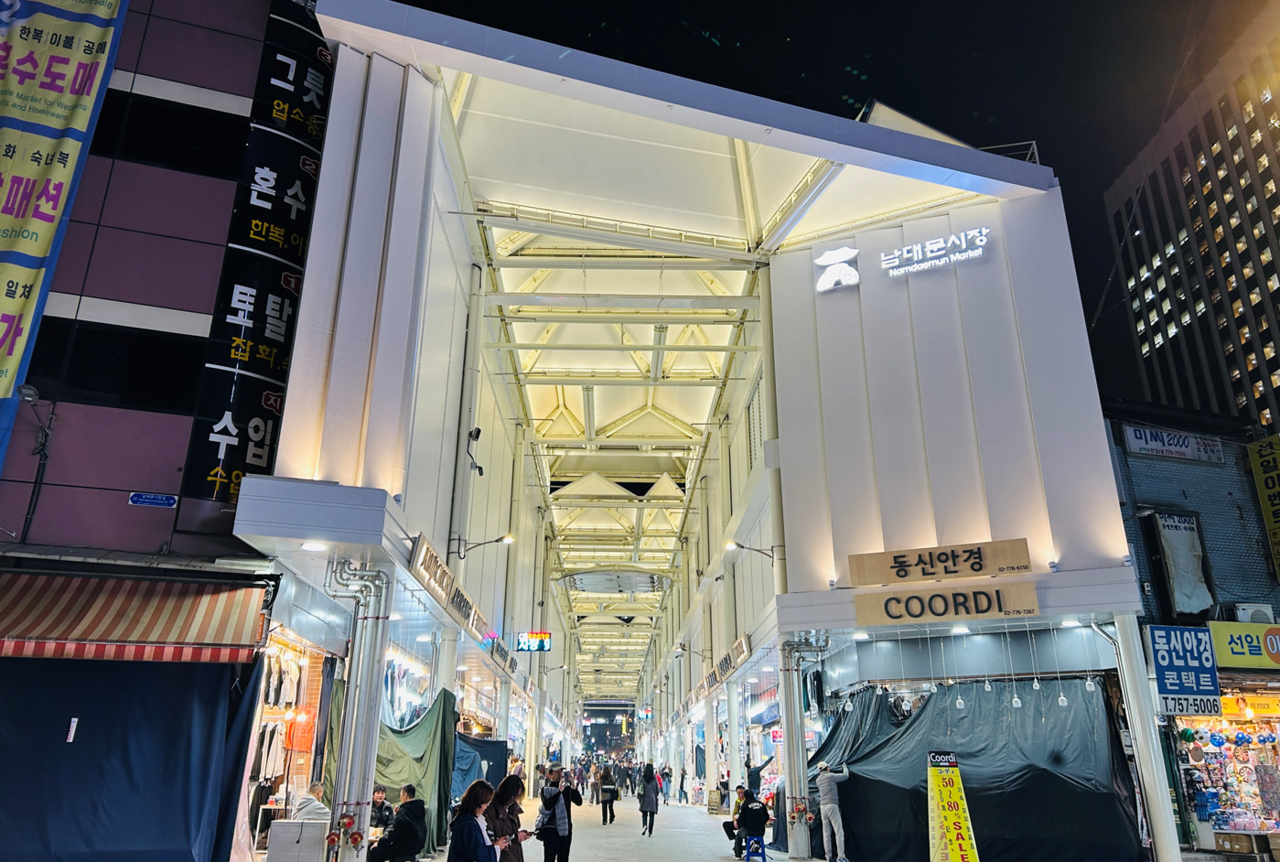
The Korean government responded in 2002 with the Special Act on the Development of Traditional Markets and Shopping Districts, often called the Traditional Market Revitalization Act. Funding was directed toward arcade roofs, modern toilets, parking, signage and merchant training. Cities also restricted hypermarket hours, requiring monthly closures so shoppers would return to neighborhood markets. The most ambitious recent initiative is Seoul's Global Heritage Market Project, unveiled in November 2025, which is overhauling Namdaemun Market with a 135-meter Design Arcade inspired by traditional hanok rooftops.

The newly built Design Arcade at Namdaemun Market in Jung-gu, central Seoul, with a hanok-inspired membrane roof
The new Design Arcade at Namdaemun Market, part of Seoul's Global Heritage Market Project. | Source: The Korea Herald

Gwangjang Market: The Oldest Permanent Market

Founded in 1905, Gwangjang Market (광장시장) in Jongno-gu is Korea's first permanent market. A group of wealthy Koreans formed Gwangjang Corp. that year and rented stalls to vendors who had been operating informally in the area. For decades it was Seoul's go-to place for fabric and custom hanbok, and at its peak it housed roughly 5,000 stores. Today it is the most internationally known market in the country, propelled by the 2019 Netflix documentary Street Food: Asia, which featured a knife-cut noodle vendor here. Visitors line up for bindaetteok (mung bean pancake), mayak gimbap (bite-size seaweed rolls), and yukhoe (Korean steak tartare), and a Starbucks branch designed around the market's textile heritage opened in May 2025.

Namdaemun Market: 600 Years of Trade

Namdaemun Market (남대문시장) dates to 1414 and sits beside Sungnyemun, the old southern gate of the city. It is Korea's largest traditional market, home to about 20,000 vendors selling everything from hand-knit children's clothes and eyeglasses to bulk dried seafood. The market is also famous for its kalguksu (knife-cut noodle) alley, where elderly cooks pull dough by hand at lunchtime. The Seoul Metropolitan Government's 2025 overhaul includes the new Design Arcade, a pedestrian-only walkway connecting the market to Namsan, and a Sungnyemun Viewing Road with widened sidewalks and clear sight lines to the historic gate.

Dongdaemun and the Wholesale Night Markets

Dongdaemun Market (동대문시장) is the engine of Korea's garment industry. Spread across high-rise wholesale buildings such as Doota and apM, it operates close to 24 hours a day, with buyers from across Asia arriving after midnight to stock retail shops. The surrounding district is anchored by the Dongdaemun Design Plaza and remains the easiest place in Seoul to source affordable Korean fashion directly from designers and small manufacturers.

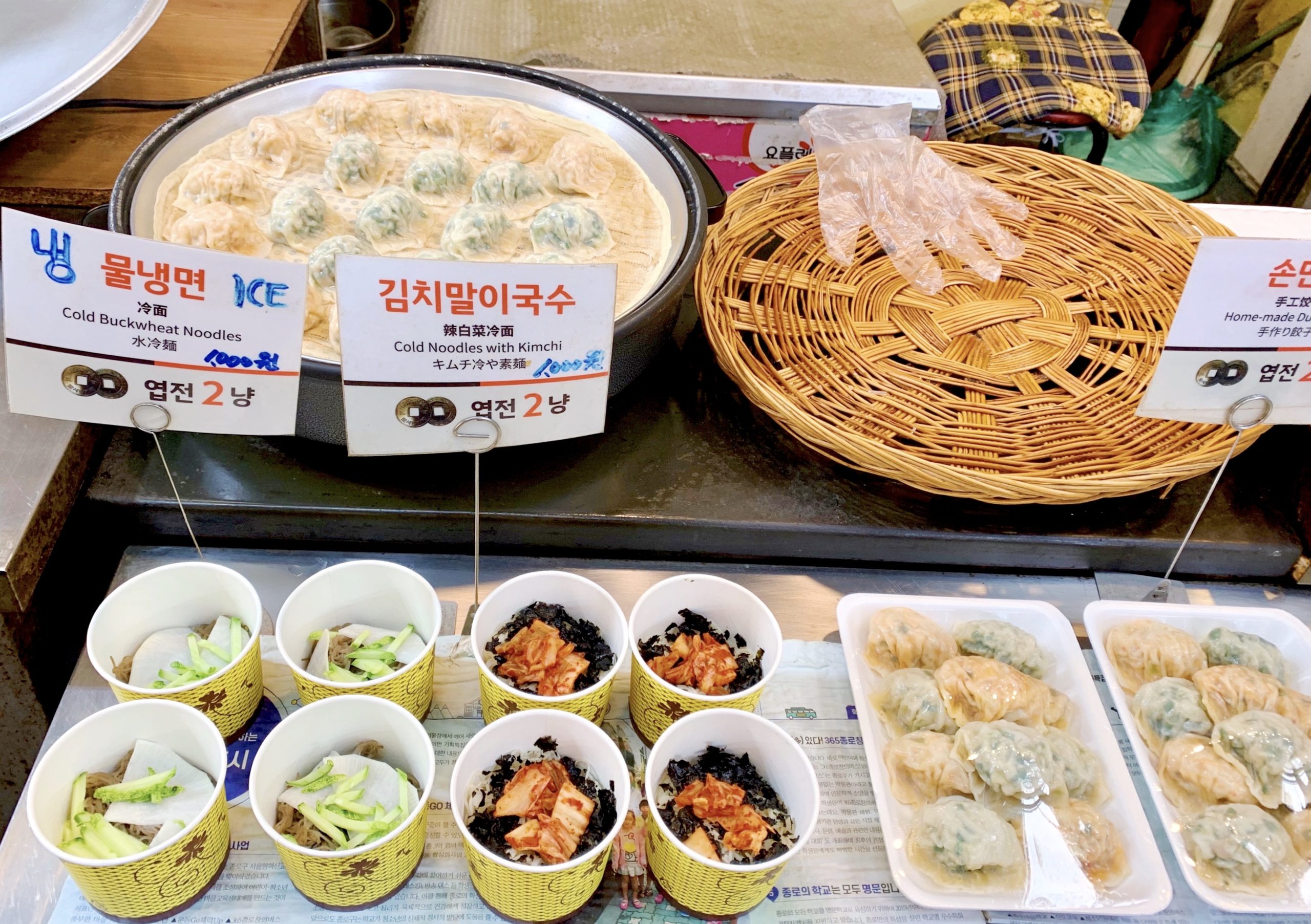
A build-your-own dosirak lunchbox filled with jeon, tteokbokki and banchan from Tongin Market in Seoul
A build-your-own dosirak lunchbox assembled with brass yeopjeon coins at Tongin Market. | Source: 10 Magazine

Tongin Market: The Brass-Coin Lunchbox Cafe

A short walk west of Gyeongbokgung Palace, Tongin Market (통인시장) is best known for its dosirak (lunchbox) program. Visitors pay 5,000 won at the second-floor Coin and Lunchbox Cafe and receive an empty tray plus ten brass yeopjeon coins modeled on currency used during the Joseon Dynasty. They then walk the alley, swapping coins for jeon, tteokbokki, fried mandu, japchae and banchan from participating stalls, before returning upstairs for rice and soup. The program runs weekdays 11 a.m. to 3 p.m. and weekends until 4 p.m., closed Mondays and public holidays. Unlike Gwangjang and Namdaemun, prices are fixed, so there is no bargaining.

Mangwon Market: A Local Favorite in Mapo

Mangwon Market (망원시장) in Mapo-gu is the kind of place locals shop on weekdays and tourists discover on weekends. Within walking distance of Hongdae and the Han River, it is famous for handmade kalguksu, slow-braised jokbal, croquettes filled with kimchi or japchae, and bite-size dakgangjeong. It is also a favorite of Korean variety-show producers, who use it to film celebrity foodie segments. Many stalls now accept cards and T-money, making it easier than ever for foreign visitors to drop in.

The green-roofed entrance of Mangwon Market in Mapo-gu, Seoul, with vendors and shoppers in the alley
The entrance of Mangwon Market, a budget-friendly local market in Mapo-gu. | Source: Visit Seoul

Markets Beyond Seoul

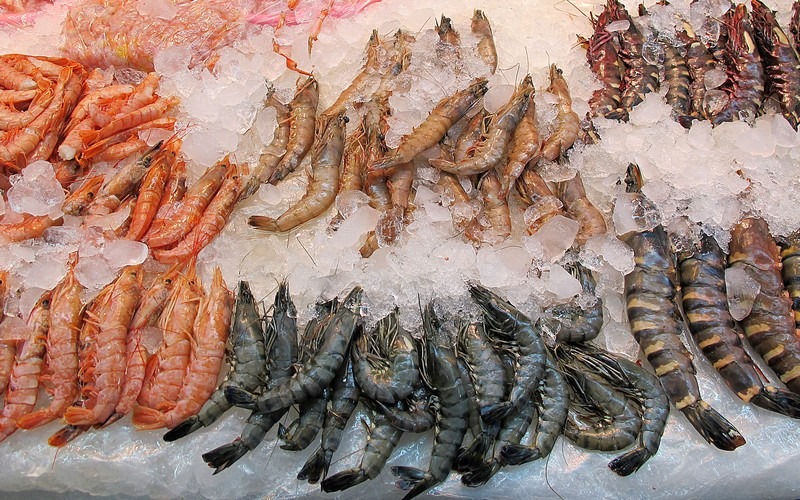
Outside the capital, Busan's Jagalchi Market (자갈치시장) is Korea's largest seafood market, a sprawling indoor and outdoor complex along the harbor in Jung-gu where female vendors known as Jagalchi Ajumeoni sell live octopus, hagfish, sea squirts and king crab. Daegu's Seomun Market (서문시장), one of Korea's three largest historical markets, is famous for textiles, kalguksu and an evening night-market section. Busan's Gukje Market (국제시장), made famous by the 2014 film of the same name, grew from a Korean War refugee bazaar into a sprawling commercial district. The Mapo Wangsogeum Gui (마포 왕소금구이) area near Gongdeok Station is essentially an open-air pork belly street where charcoal grills line the sidewalks at sunset.

Vendors selling live seafood at Jagalchi Fish Market in Busan, Korea's largest fish market
Vendors selling live seafood at Jagalchi Market in Busan. | Source: The Soul of Seoul

What to Eat at a Korean Market

Market food is a category of its own, leaning on cheap, hand-held, deep-fried or griddled snacks. The classics include bindaetteok (빈대떡) mung bean pancake, hotteok (호떡) sweet syrup-filled pancake, eomuk (어묵) fish cake skewer served with broth, tteokbokki (떡볶이) spicy rice cakes, steamed or fried mandu (만두) dumplings, dakgangjeong (닭강정) crispy soy-garlic chicken, mayak gimbap (김밥) the addictively small seaweed roll associated with Gwangjang, and kalguksu (칼국수) handcut wheat noodles in anchovy broth. Many stalls specialize in just one item perfected over decades.

Market Etiquette and Best Times to Visit

Bargaining is part of the culture at clothing and dry-goods stalls in Gwangjang, Namdaemun and Dongdaemun, especially on bulk purchases. It is not expected at Tongin, where prices are fixed in coins, or at most food stalls. Cash is still preferred at smaller vendors, although a growing number now accept credit cards and T-money. Small tastings of fruit, kimchi, banchan or rice cake are typically offered for free. The freshest atmosphere is in the morning around 9 to 11 a.m. at food markets and 5 to 10 a.m. at Jagalchi. Most stalls close by 8 or 9 p.m. except in wholesale zones like Dongdaemun.

Five-Day Markets and Modernization

Outside the cities, rural Korea still runs oiljang (오일장), or five-day markets that rotate between neighboring towns on days ending in specific digits. Famous examples include the Mojeon Five-Day Market in Jeongseon and the Seongnam Moran Market. Many smaller towns rely on these gatherings for fresh produce, livestock and seasonal goods. Meanwhile in cities, merchants' associations have rolled out mobile apps for delivery, QR-code payments and digital gift certificates issued by local governments. The result is a layered modernization that keeps the cultural texture of the markets intact while making them easier to use.

Tourist-Friendly Versus Locals-Only

Gwangjang, Namdaemun and Tongin are the most foreigner-friendly Seoul markets, with English signs, picture menus and staff who handle credit cards. Mangwon, Mapo Wangsogeum Gui and many regional markets remain primarily local and reward a little Korean phrase practice. Either way, traditional markets offer the most affordable, atmospheric and historically grounded way to taste Korea in a single afternoon.

Explore More of Korea with Daebak

Want to bring a little piece of Korea into your life? The Daebak Box is packed with the best Korean snacks, ramen, and cultural goodies delivered monthly to your door.

ブログに戻る