Hyunwoo Cho

Hyunwoo Cho

With over 10 years of experience in the Hallyu industry, Hyunwoo has dedicated his career to connecting Korean culture with the world. As the founder of Daebak, he works closely with Korean brands and stays ahead of the latest trends to deliver an authentic taste of Korea to fans globally.

Changdeokgung Palace in Seoul Korea showing the UNESCO World Heritage Joseon dynasty royal palace complex with traditional Korean architecture and grounds

Korea's UNESCO World Heritage Sites: A Travel Guide

Hyunwoo Cho

Table of Contents

South Korea has 16 UNESCO World Heritage Sites, the most of any East Asian country relative to its size, and the list spans almost the entire arc of Korean history: from prehistoric dolmens older than the pyramids, to Buddhist temple grottoes from the Silla dynasty, to royal palaces and fortresses from the Joseon dynasty, to entire historic villages preserved exactly as they were 500 years ago. For travelers who want to understand Korea beyond K-pop and street food, the UNESCO circuit is the deepest and most rewarding cultural itinerary the country offers.

This guide walks through Korea's most accessible UNESCO World Heritage Sites: what each one is, why it earned UNESCO recognition, where it sits geographically, and how to fit them into a Korea travel itinerary.

Changdeokgung Palace in Seoul Korea showing the UNESCO World Heritage Joseon dynasty royal palace complex with traditional Korean architecture and grounds
Changdeokgung Palace in Seoul, the most beloved of the Joseon royal palaces and a UNESCO World Heritage Site since 1997. | Source: Changdeokgung Palace Complex on VisitKorea

1. Changdeokgung Palace and the Secret Garden

Changdeokgung Palace (창덕궁) is the most beloved of the Joseon royal palaces and was designated a UNESCO World Heritage Site in 1997. Built in 1405 as a secondary villa, it became the official Joseon royal residence after Gyeongbokgung Palace was destroyed in the 1592 Imjin War. Unlike Gyeongbokgung's grid layout, Changdeokgung's halls follow the natural contours of the surrounding hills, creating a more organic, intimate atmosphere.

The highlight is the Huwon (Secret Garden), a 78-acre walled royal garden hidden behind the main palace complex. The garden was reserved exclusively for the royal family during the Joseon dynasty and remains today one of the best-preserved examples of Korean classical landscape design. Entry to the Secret Garden requires a separate timed-ticket reservation and a guided tour (English tours available daily).

2. Jongmyo Shrine

Jongmyo Shrine (종묘) is the Confucian royal ancestral shrine of the Joseon dynasty, designated UNESCO in 1995. The complex houses the spirit tablets of the deceased Joseon kings and queens and remains the site of the world's oldest continuously performed Confucian ritual, the Jongmyo Jerye, held annually on the first Sunday of May.

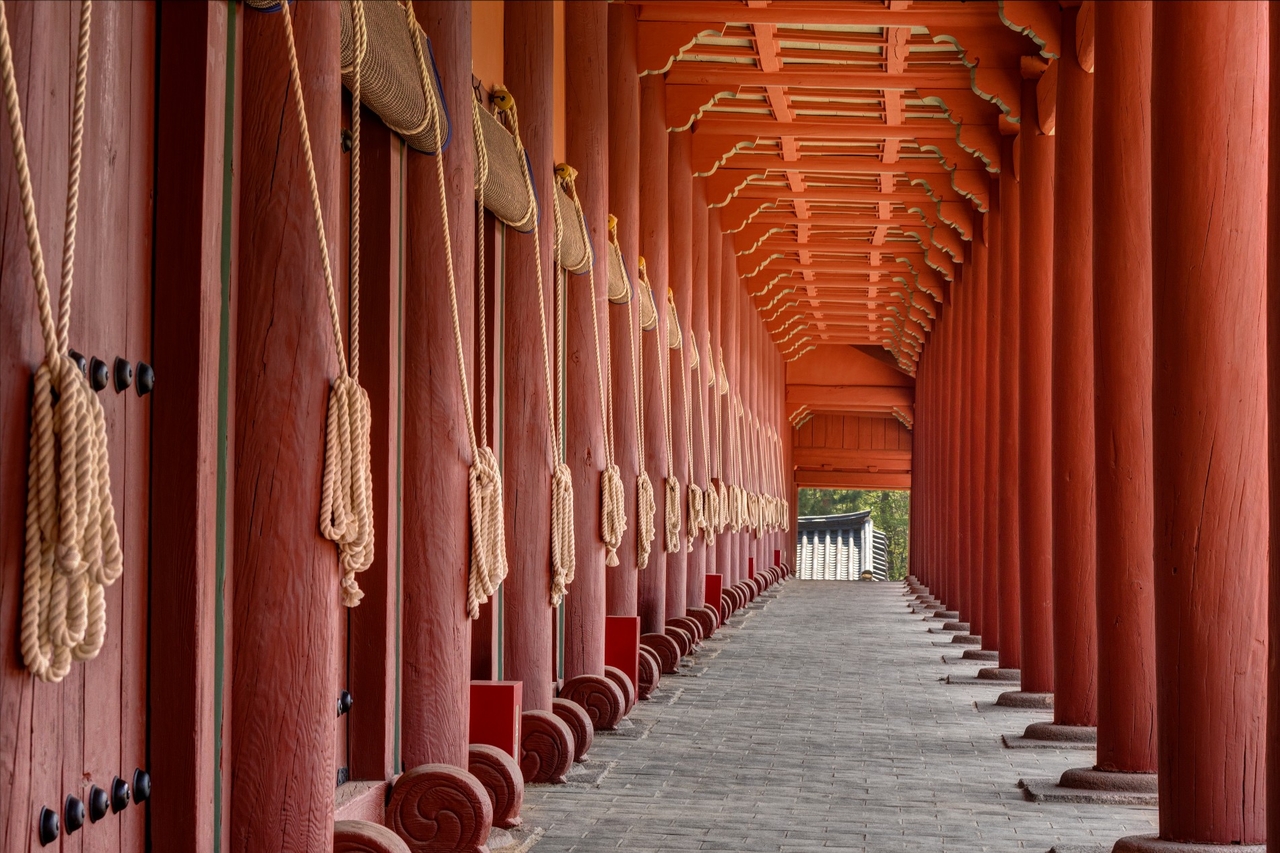
Jeongjeon Hall the central building at UNESCO World Heritage Site Jongmyo Shrine in Seoul Korea showing the long horizontal Joseon dynasty royal ancestral shrine after restoration
Jeongjeon Hall at Jongmyo Shrine, reopened in April 2025 after a five-year restoration, where royal ancestral rituals have been held for about 600 years. | Source: Jongmyo main hall reopens after restoration on The Korea Herald

The two main buildings, Jeongjeon and Yeongnyeongjeon, are striking examples of austere 16th-century Korean architecture. Long horizontal halls with deep, sweeping eaves stretch across vast empty courtyards, creating a sense of dignified emptiness that is genuinely moving in person. Jongmyo is a 15-minute walk from Changdeokgung and easy to combine with the palace in one morning.

3. Gyeongju Historic Areas

The Gyeongju Historic Areas (designated 2000) protect what remains of the Silla dynasty capital, which ruled Korea from 57 BC to 935 AD. The UNESCO designation covers five distinct areas: the Mount Namsan Belt (with Buddhist rock carvings and ruins), the Wolseong Belt (the royal palace site), the Tumuli Park Belt (the famous royal tomb mounds), the Hwangnyongsa Belt (a destroyed temple complex), and the Sanseong Belt (mountain fortresses).

Gyeongju is a two-hour KTX ride from Seoul or one hour from Busan. The most-visited sites within the historic areas include the Daereungwon tomb park (with the open Cheonmachong tomb), the Cheomseongdae astronomical observatory (built in 647 AD, one of the oldest in the world), and the Donggung Palace and Wolji Pond night view. Allow at least a full day for a meaningful Gyeongju visit.

4. Bulguksa Temple and Seokguram Grotto

Bulguksa Temple and Seokguram Grotto, designated together in 1995 as Korea's first UNESCO listing, sit on the slopes of Mount Toham just east of Gyeongju. Both were built in 751 AD under King Gyeongdeok of Silla, at the height of Silla Buddhist art.

Bulguksa Temple in Gyeongju South Korea showing the UNESCO World Heritage Silla dynasty Buddhist temple complex with iconic stone pagodas and traditional wooden temple architecture
Bulguksa Temple in Gyeongju, designated together with nearby Seokguram Grotto as Korea's first UNESCO listing in 1995. | Source: Gyeongju Bulguksa Temple on VisitKorea

Bulguksa is a wooden temple complex with two iconic stone pagodas (Seokgatap and Dabotap) and several halls dedicated to different Buddha forms. Seokguram, an artificial granite grotto perched higher on Mount Toham, houses a single 11-foot seated Buddha statue facing the East Sea. The Buddha is widely considered one of the greatest masterpieces of East Asian sculpture. The combined visit takes a full half-day from central Gyeongju.

5. Haeinsa Temple and the Tripitaka Koreana

The Janggyeongpanjeon Depositories at Haeinsa Temple (designated 1995) hold one of the most extraordinary artifacts in Buddhist history: the Tripitaka Koreana, a complete Buddhist scripture carved onto 81,258 wooden printing blocks between 1237 and 1248. The blocks have survived for nearly 800 years thanks to the unique ventilation and humidity-control architecture of the wooden depositories.

Haeinsa is in Gayasan National Park in South Gyeongsang Province, about a 90-minute drive from Daegu or Busan. The temple itself is one of the most important active Buddhist temples in Korea, and the depository buildings (technically the UNESCO-listed structures) are open to visitors who walk through quietly. The visit pairs well with a temple-stay experience at Haeinsa, which several international travelers describe as a highlight of their Korea trip.

6. Hwaseong Fortress in Suwon

Hwaseong Fortress (designated 1997) is a late-18th-century walled fortress in Suwon, an hour south of Seoul. Built by King Jeongjo between 1794 and 1796 as a planned new city to honor his executed father Prince Sado, the fortress combines traditional Korean military architecture with then-cutting-edge ideas from Chinese and Western engineering.

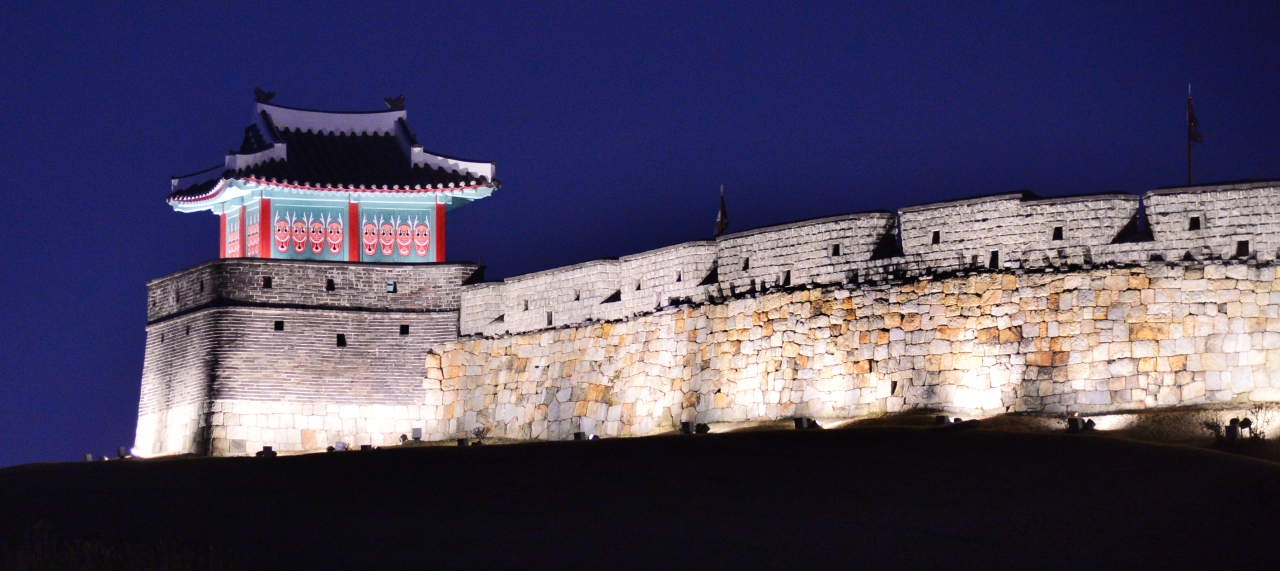
Suwon Hwaseong Fortress UNESCO World Heritage Site walls and watchtower at sunset showing the late 18th century Joseon dynasty fortress built by King Jeongjo in Suwon Korea
Hwaseong Fortress in Suwon, the 5.7-kilometer Joseon-era fortress designed by King Jeongjo and registered as UNESCO World Heritage in 1997. | Source: Look into King Jeongjo's dream city: Hwaseong Fortress on The Korea Herald

The fortress walls stretch for 5.7 kilometers and include 48 separate structures: command posts, observation towers, water gates, and the four main city gates. The complete walking circuit takes about three hours and offers some of the best preserved views of Joseon-era urban planning. Suwon is easy to reach from Seoul (40 minutes by metro), and Hwaseong is walkable from Suwon Station.

7. Korean Historic Villages: Hahoe and Yangdong

Two Korean folk villages were jointly designated UNESCO in 2010: Hahoe (in Andong) and Yangdong (in Gyeongju). Both are 500-year-old aristocratic villages that survived intact through the Joseon dynasty, the Japanese colonial period, and the Korean War. The villages still house active residents (mostly elderly), which means they function as living museums rather than restored historical sites.

Andong Hahoe UNESCO World Heritage folk village showing traditional Korean Hanok homes preserved along the Nakdonggang River banks in North Gyeongsang Province
Andong Hahoe Folk Village, a 600-year-old Joseon-era clan village along the Nakdongang River, preserved as a UNESCO World Heritage Site. | Source: Queen Elizabeth II remembered in Hahoe Folk Village on The Korea Times

Hahoe is famous for its annual Hahoe Mask Dance festival and its preserved hanok (traditional Korean houses) clustered along a bend of the Nakdong River. Yangdong is larger, more sprawling, and considered the more architecturally important of the two. Both villages require a half-day visit and feel dramatically different from urban Korea.

8. Other Korean UNESCO World Heritage Sites

Beyond the famous eight above, Korea's UNESCO list also includes the Royal Tombs of the Joseon Dynasty (2009, 40 separate tombs across central Korea), Namhansanseong Fortress (2014, a mountain fortress south of Seoul), the Baekje Historic Areas (2015, the kingdom that preceded Silla), the Sansa Buddhist Mountain Monasteries (2018, seven temples across Korea), and the Seowon Korean Confucian Academies (2019, nine schools of Joseon-era classical learning).

Korea also has natural and intangible UNESCO listings worth knowing: Jeju Volcanic Island and Lava Tubes (Natural Heritage, 2007), the Korean Tidal Flats (2021), Korean Royal Cuisine, Pansori storytelling music, the Yeongdeungje shamanistic ritual on Jeju, the Ganggangsullae circle dance, and the Falconry tradition all hold intangible cultural heritage status.

How to Plan a Korean UNESCO Tour

The two most efficient Korean UNESCO itineraries are: a Seoul-centric trip (Changdeokgung, Jongmyo, Suwon Hwaseong, and the nearby Royal Tombs, all within an hour of central Seoul) and a Gyeongsang-province trip (Gyeongju Historic Areas + Bulguksa + Hahoe Andong, accessible from Daegu or Busan).

For a comprehensive Korean culture trip, plan three to four days in Seoul (covering the palace UNESCO sites, plus museums and food) and two to three days in the Gyeongsang region (covering Gyeongju, Andong, and a day of Korean BBQ in Daegu). Most major UNESCO sites in Korea are well-equipped for international visitors with English signage, audio guides, and reasonable entry fees (typically 3,000 to 10,000 won).

Explore More of Korea with Daebak

Want to bring a little piece of Korea into your life? The Daebak Box is packed with the best Korean snacks, ramen, and cultural goodies delivered monthly to your door.

ブログに戻る