


Table of Contents
Ask anyone who's ever tasted Korean BBQ to name their favorite dish, and bulgogi (불고기) will almost certainly top the list. Sweet, savory, smoky, and tender, bulgogi is the dish that has introduced millions of people around the world to the magic of Korean cuisine.
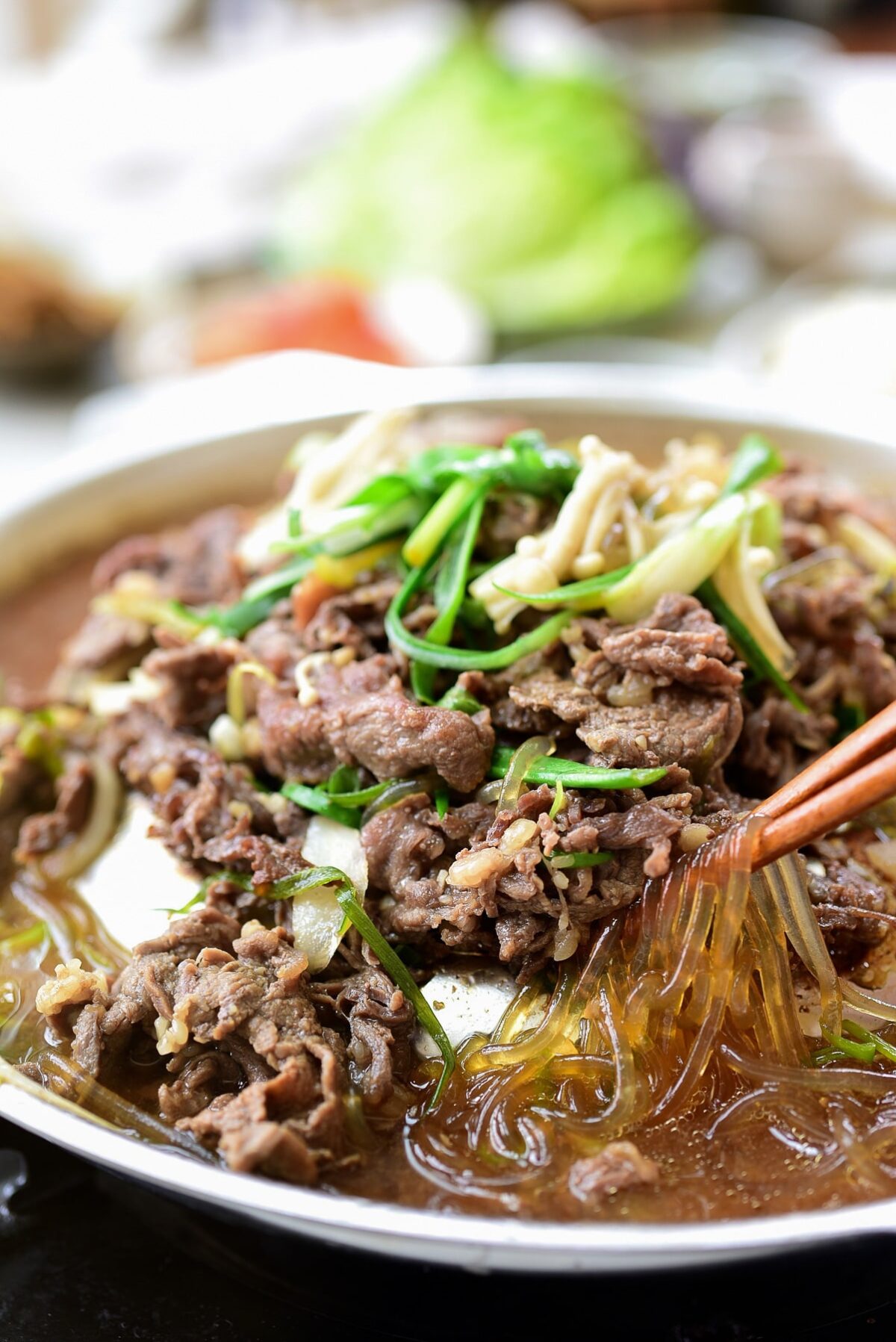
What Is Bulgogi?
Bulgogi (불고기) literally means "fire meat" in Korean — bul (불) means fire, and gogi (고기) means meat. Traditionally, it refers to thinly sliced beef (usually sirloin or ribeye) marinated in soy sauce, sugar, sesame oil, garlic, and Asian pear, then grilled over an open flame or in a hot pan. The result is extraordinarily tender, juicy beef with caramelized edges and a depth of flavor from the perfect balance of sweet, salty, and umami.
The History of Bulgogi
Bulgogi's origins trace back to the Goguryeo era (37 BC–668 AD), where a dish called maekjeok — skewered and grilled meat — was recorded in historical texts. During the Joseon Dynasty, it evolved into neobiani, a thinly sliced marinated beef dish served to royalty. The modern form became widely popular in the mid-20th century, spreading from Korea's cities to homes across the country.
The Bulgogi Marinade
The marinade is the heart of bulgogi. A classic recipe includes soy sauce, sugar or honey, sesame oil, garlic, ginger, green onions, black pepper, and the secret ingredient: Asian pear or kiwi. The fruit contains natural enzymes that break down protein, making the beef incredibly tender. Marinate for at least 30 minutes, ideally overnight.
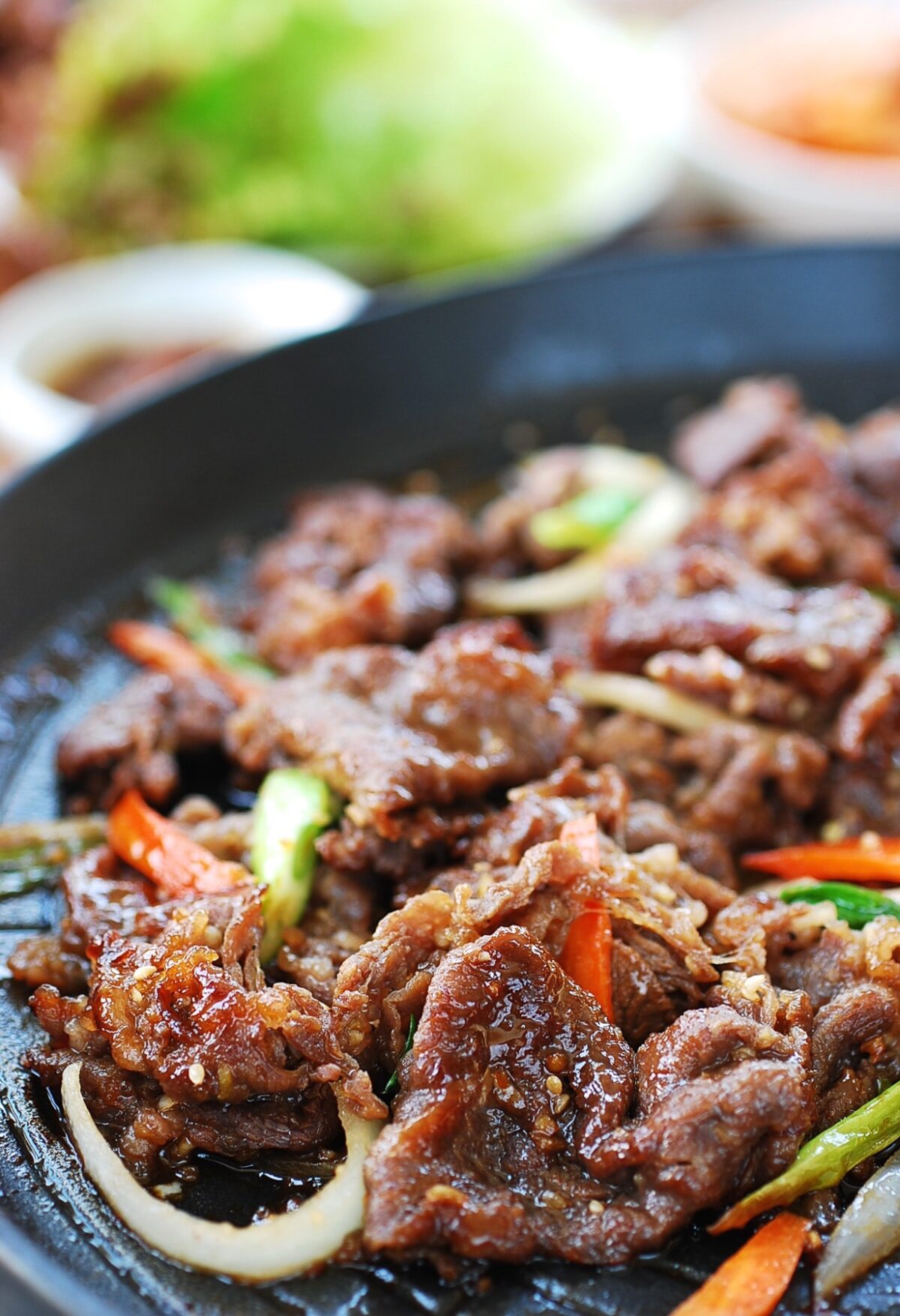
Types of Bulgogi
Classic Beef Bulgogi
The original uses thinly sliced sirloin, ribeye, or tenderloin. The thin cut allows the marinade to penetrate fully and ensures quick, even cooking. In Korea, butchers will slice the meat paper-thin on request — a service that makes all the difference.
Dak Bulgogi (Chicken, 닭불고기) & Dwaeji Bulgogi (Pork, 돼지불고기)
Dak bulgogi uses chicken thighs with a marinade often incorporating gochujang for extra heat. Dwaeji bulgogi uses pork with a spicier gochujang-based marinade and is especially popular in the Gyeonggi region around Seoul. Both are staples at Korean BBQ restaurants.
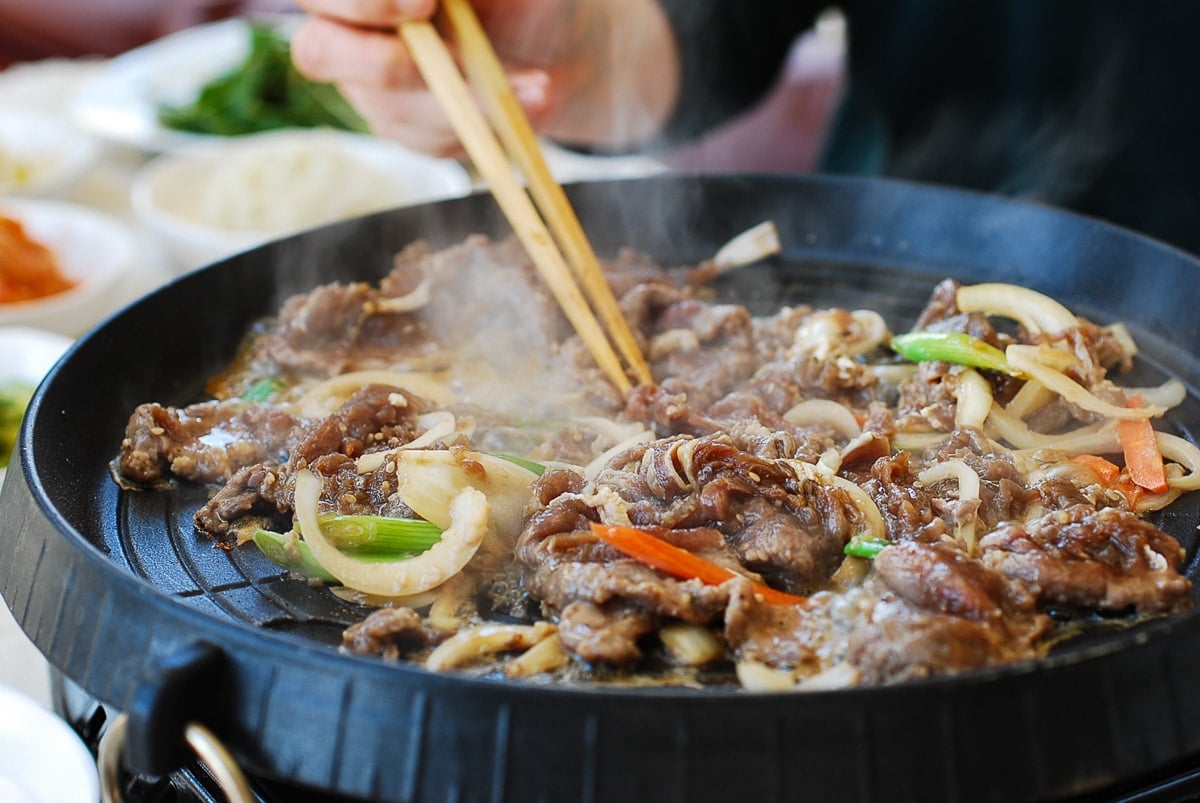
How to Cook Bulgogi
- Cast iron skillet: The best home method. Get the pan very hot before adding the meat, and don't overcrowd. Work in batches for proper browning.
- Tabletop grill: The traditional Korean BBQ method. High heat creates beautiful caramelization and slight char.
- Outdoor grill: Excellent for summer cookouts. The smokiness adds an extra flavor dimension.
How to Serve Bulgogi
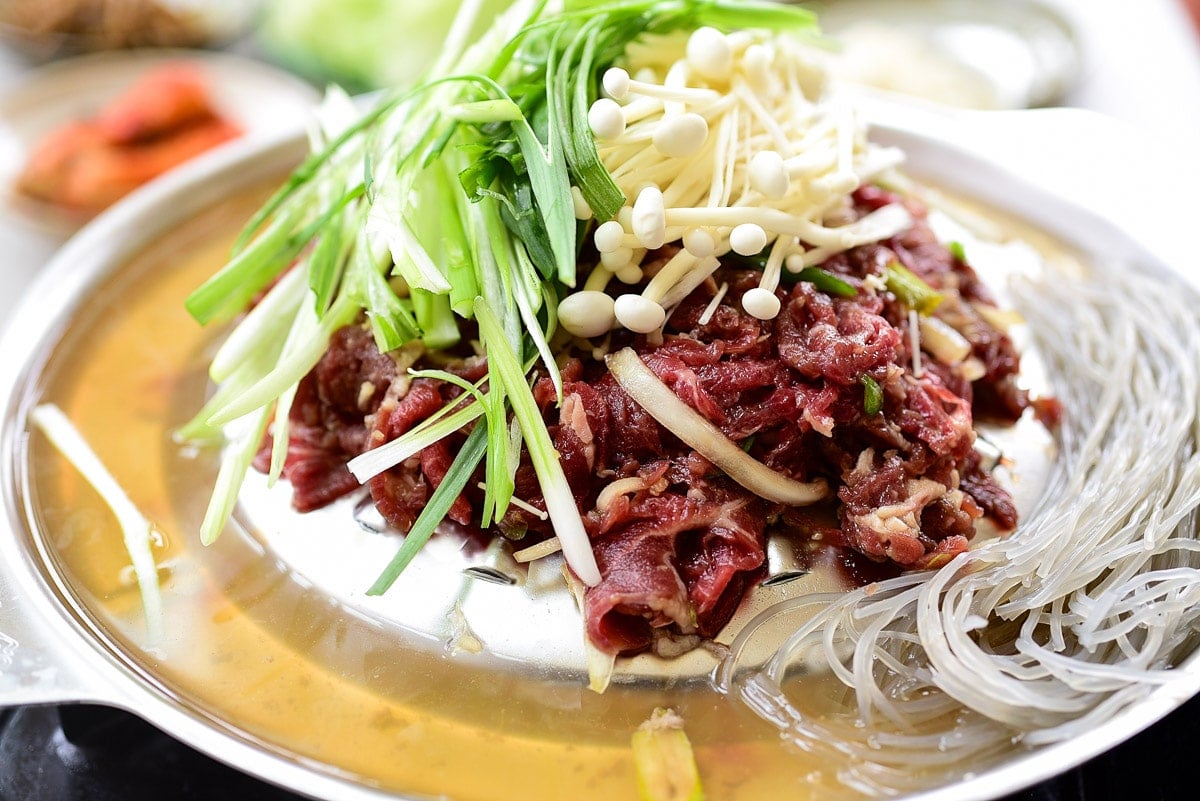
Bulgogi is incredibly versatile. The most iconic way is as ssam (쓸) — wrapped in lettuce or perilla leaves with rice, garlic, and ssamjang (savory paste). You can also serve it simply over steamed rice, in a bulgogi bowl with kimchi and vegetables, or mixed with glass noodles (dangmyeon) that soak up the marinade beautifully.
Bulgogi Tips for the Best Results
- Use well-marbled beef — the fat keeps meat juicy during high-heat cooking
- Freeze the meat for 30 minutes before slicing for easier thin cuts
- Pat meat dry before cooking to ensure browning rather than steaming
- Cook in a very hot pan — medium heat leads to grey, steamed meat
- Don't skip the fruit in the marinade — it's the key to signature tenderness
Explore More of Korea with Daebak
Love Korean food culture? Bring it home with Daebak's lineup of curated Korean boxes:
- Daebak Box – Monthly Korean snacks, ramen, and food items delivered to your door
- SnackFever – Korea's most beloved snack subscription, now part of the Daebak family
- Daebak K-Beauty Box – Premium Korean skincare and beauty products, handpicked from Seoul
Whether you're a K-food fanatic, a K-beauty enthusiast, or just starting your Korean culture journey — Daebak has something for you.


