


Table of Contents
A flash of jade, a swing of silk tassels, the soft clink of an amber bead against a coral pendant. That is the signature sound and silhouette of norigae (노리개), the ornamental pendant that turned a plain hanbok into a personal storybook for Joseon women. Beloved by queens, court ladies and commoners alike, norigae carried wishes for fortune, fertility and protection on every silk cord.
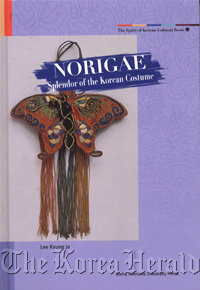
What Is a Norigae?
A norigae is a decorative pendant hung from the inner or outer tie (goreum) of the jeogori, the short jacket of a hanbok, or from the waistband of the chima skirt. The word originally meant "pretty and playful things," and during the Joseon dynasty (1392 to 1897) it was cherished by women of every class, from queens to commoners. The size, materials and number of strands changed with rank, season and occasion, turning the accessory into a quiet code of identity.
The Three Parts of a Traditional Norigae
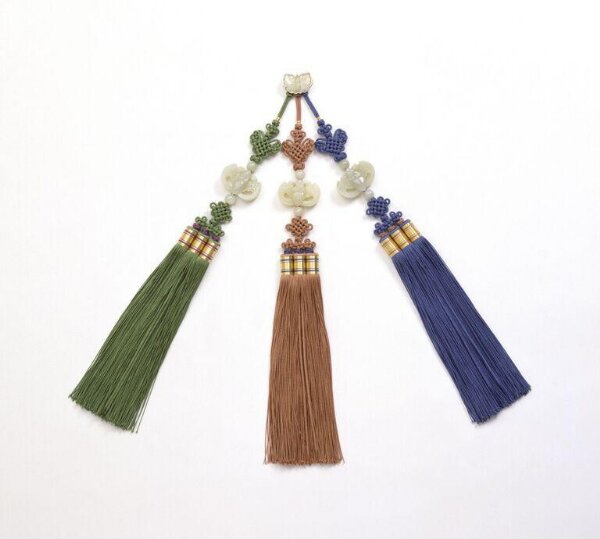
Every classic norigae shares the same basic anatomy. At the top sits a small brass or silver disc called the ttidon, which clips onto the goreum. From there, a central jewel pendant hangs, carved from jade, coral, amber, amethyst or pearl. Beneath the jewel a maedeup knot is tied in patterns like the butterfly or chrysanthemum knot, and a long silk tassel finishes the design so it sways with the wearer's every step.
Materials: Pearl, Jade, Coral, Amber, Amethyst
Joseon women named their norigae after the main jewel. Jinju norigae featured lustrous pearls, ok norigae used carved jade in green or white, sanho norigae centered on branches of red coral, hobak norigae glowed with amber, and jasujeong norigae sparkled with amethyst. Royal pieces often combined gold and silver filigree with the gemstone. According to The Korea Herald, the motifs ranged from bats and ducks to chili peppers and the auspicious characters "bok" (fortune) and "su" (longevity), each chosen to bless the wearer.
Samjak vs Danjak: Three Pendants or One
The most prestigious form is the samjak norigae (삼작노리개), a set of three pendants worn together by aristocrats and royal women on weddings and major ceremonies. The largest samjak sets were reserved for queens and senior court ladies, with medium sets for noblewomen and smaller versions for young girls. Commoners and everyday court wear used the simpler danjak norigae (단작노리개), a single pendant on one strand. The Victoria and Albert Museum in London preserves a samjak by Korean master Kim Eun-Young that beautifully shows the three-strand structure.
The Hidden Symbolism on Every Strand
Norigae were never simply pretty. Tiger claws and tiny swords (jangdo) warded off evil and protected the wearer. Pomegranates and grapes wished for fertility, eggplants and chili peppers prayed for many sons, and butterflies symbolized marital bliss. Bells were thought to frighten away malevolent spirits, while ducks signaled love and harmony in marriage. Some women hollowed out the main jewel as a perfume case to carry musk, while others attached needle cases or even tiny silver spoons used to test food for poison.
Royal Court vs Commoner Norigae
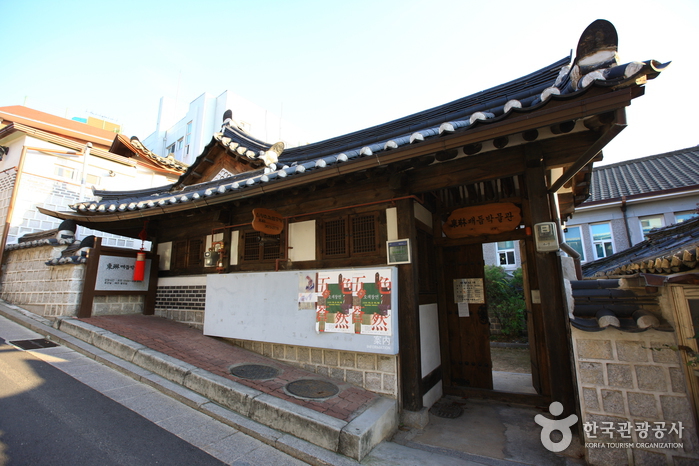
At the Joseon court, queens layered massive samjak norigae of gold, jade and coral over their wonsam ceremonial robes, signaling rank in a glance. Yangban noblewomen wore slightly smaller jade-and-silver versions, often in seasonal sets: cool jade in summer, warm amber in winter. Commoner women could not afford imperial jade but still wore modest danjak made of wood, glass beads or embroidered silk pouches. The National Folk Museum of Korea in Seoul holds one of the world's most complete norigae collections, alongside maedeup specialists like the Dong-Lim Knot Museum in Bukchon.
Norigae in K-Drama Costume Design
Recent Korean period dramas have made norigae instantly recognizable to global viewers. Jewelry designer Kim Soung-eun of NASCHENKA has supplied pieces to more than seventy productions, including Netflix's zombie epic Kingdom, tvN's Mr. Queen and the historical romance Mr. Sunshine, where each pendant signals the wearer's rank and inner ambition. In a Korea Times interview, Kim called norigae her favorite traditional jewelry: "It is soothing and quietly beautiful."

BLACKPINK, K-Pop and the Modern Revival
When BLACKPINK's Jisoo, Jennie, Rose and Lisa walked through their How You Like That music video in modernized hanbok by designer Danha, traditional accessories suddenly trended worldwide. Designers like Leesle and Tchai Kim Young-jin now style norigae onto streetwear, while Naschenka pairs jade pendants with minimalist chains. Even the 2025 Netflix animation KPop Demon Hunters integrates stylized norigae into the Huntrix members' stage outfits, prompting Incheon International Airport to launch a hands-on norigae-making class in partnership with the Korea Heritage Agency.
Where to Buy a Norigae in Seoul
The easiest place to start is Insadong, where boutiques along the main street sell embroidered danjak norigae from about 10,000 won upward. Bukchon Hanok Village hosts the Dong-Lim Knot Museum, which holds workshops by living national treasures in maedeup. Hanboklab, Leesle and Naschenka run polished studios for higher-end pieces, while Insadong's Ssamziegil complex offers boutique designers who reinterpret norigae for everyday wear. For a curated set of artisan pieces shipped worldwide, the Daebak SULSUL Box features two handcrafted norigae alongside a dragonfly brooch and a DIY maedeup bracelet kit.
How to Care for and Store Your Norigae
Silk tassels lose their shape if crushed, so always store norigae flat in a soft pouch or padded box, never folded. Keep them out of direct sunlight, which fades natural dyes, and away from humidity, which can tarnish silver and warp jade settings. To clean, gently dust with a soft brush rather than washing, and reshape the tassels by stroking them downward with your fingers. With careful storage, a well-made norigae can be passed down through generations, much as Joseon mothers once gifted them to their daughters at marriage.
Discover Korean Craft with SULSUL
Bring home a piece of Korea's living craft tradition with the SULSUL Box by Daebak, featuring handcrafted norigae, a dragonfly brooch, and a DIY knotted bracelet kit that celebrate traditional Korean artistry.


