


Table of Contents
When most people picture Korean alcohol, they think of green soju bottles and milky makgeolli. But Korea has a vast, centuries-old world of jeontongju (전통주), traditional spirits brewed from Korean grains, fruits, and indigenous yeast cultures called nuruk. From clear refined Cheongju to ginseng-laced Baekseju and ruby-red Bokbunja, jeontongju is enjoying a powerful revival among young Koreans and curious drinkers worldwide. This guide walks you through the styles, the breweries, and the rituals that make Korean traditional liquor special.
What Defines Korean Jeontongju
By Korean law, jeontongju refers to alcoholic beverages produced with traditional brewing methods, made from agricultural products grown, fermented, and brewed in Korea. Crucially, they are often crafted by people designated as national, municipal, or provincial intangible cultural heritage holders or culinary masters. The category includes yakju (medicinal rice wine), cheongju (clear rice wine), traditional distilled soju, and fruit wines like bokbunjaju. The category has grown explosively, jumping from about 53 billion won in 2019 to over 160 billion won by 2022 as young Koreans rediscover heritage brewing.
Cheongju (청주): Korea's Clear Refined Rice Wine
Cheongju literally means "clear liquor." It is made similarly to makgeolli, by fermenting steamed rice with nuruk and water, but the cloudy lees are filtered out, leaving a golden, transparent wine. Many historians consider cheongju the predecessor of Japanese sake, which evolved from brewing techniques transmitted from the Korean peninsula during the Three Kingdoms era. Famous cheongju styles include Gyeongju Gyodong Beopju from Gyeongju and Hansan Sogokju from Seocheon, a 1,500-year-old recipe. Cheongju has always carried ceremonial weight, being used in ancestral rites (charye) and weddings.

Baekseju (백세주): Kooksoondang's 100-Year Wine
Baekseju, literally "hundred-year wine," is one of Korea's most beloved branded traditional liquors. Launched by Kooksoondang in 1992, it is a glutinous rice-based fermented beverage at around 13 percent ABV, infused with ten medicinal herbs including ginseng, omija (five-flavor berry), ginger, licorice, and astragalus. The name comes from a folk belief that drinking it regularly helps you live to 100. Baekseju was the first Korean alcoholic beverage to earn the K-Ribbon Selection as an Excellent Cultural Product and remains a flagship of Korean liquor exports.
Bokbunja (복분자): Korean Black Raspberry Wine from Gochang
Bokbunjaju is a sweet, tart, inky-red wine made from Rubus coreanus, the Korean wild black raspberry. The fruit thrives in the mountainous terrain of Jeollabuk-do, especially around Gochang County, which hosts an annual Bokbunja Festival every summer. The wine typically ranges between 13 and 19 percent ABV and is rich in anthocyanins, with up to four times the antioxidant content of red grapes. Major producers like Bohae Brewery and Gochang Myungju have made bokbunja Korea's signature gift wine, often presented in luxurious boxes. The hanja behind the name tells a cheeky legend: a hunter who ate the berries felt so invigorated that he overturned his chamber pot.

Andong Soju (안동소주): The Real Traditional Soju
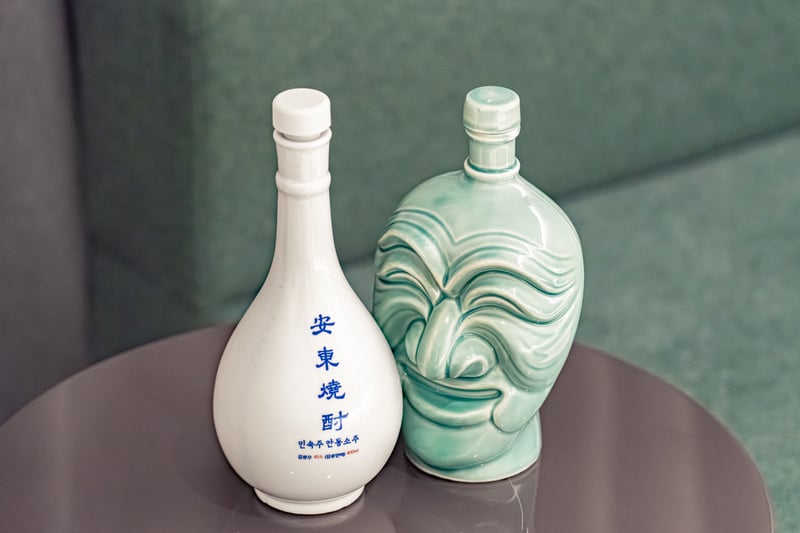
Forget the 16 percent green bottle. Andong Soju is the original Korean spirit, a grain-based distilled liquor with an alcohol content of 40 to 45 percent, designated by the Korea Heritage Service as Intangible Cultural Heritage. Brewed in Andong, Gyeongsangbuk-do, since at least the Goryeo era, it uses high-quality rice and traditional nuruk, fermented and then distilled in a copper soju gori still. The result is a clean, smooth, deeply aromatic spirit. The Andong Soju Museum inside the main brewery, run by master artisans like Cho Ok-wha, lets visitors trace the entire process.
Munbaeju, Hwayangju, and Insam-ju: The Lesser-Known Royals
Munbaeju (문배주) is a floral, fruity distilled spirit originally from Pyongyang, named for its aroma resembling the wild munbae pear (though no pears are actually used). It was famously served at the 2000 inter-Korean summit and is designated as National Intangible Cultural Heritage No. 86-1. Hwayangju was a refined royal court wine of the Joseon dynasty, brewed with multiple fermentations for an unusually elegant profile. Insam-ju (인삼주) is ginseng-infused liquor, traditionally distilled with whole Korean ginseng roots steeped inside the bottle, prized both as a tonic and as a luxurious gift.
Top Traditional Liquor Breweries
A handful of breweries lead the modern jeontongju scene. Kooksoondang (Seoul) is the giant behind Baekseju and a wide range of premium makgeolli and yakju. Bohae Brewery, founded in 1950, dominates the bokbunja category with its Bohae Bokbunjaju. Andong Soju Brewery, led by master Cho Ok-wha, preserves the original 45 percent ABV distilled soju. Sansawon, run by Bohae's Im family in Pocheon, operates as a traditional liquor museum and produces award-winning premium liquors like Myeonghaengju and Sansacha-ju. Smaller craft producers like Hwayo, Chunha, and Kim Brewery have also won international competitions.
How to Drink Korean Traditional Liquor
Serving temperature matters. Cheongju and yakju are best chilled or served at room temperature in small porcelain cups. Distilled liquors like Andong Soju and Munbaeju are traditionally sipped neat at room temperature or slightly warmed in winter, never iced. Bokbunja and other fruit wines shine chilled, often as an aperitif or after dinner. Pour for elders first, hold the cup with both hands when receiving, and turn your head away when sipping in the presence of seniors. Pairings follow tradition too: cheongju with jeon (savory pancakes) and seafood, Baekseju with jokbal or bossam, Andong Soju with grilled meats, and bokbunja with dark chocolate or strong cheeses.
The Modern Jeontongju Revival
For decades after Japanese colonial rule and Korea's 1965 Grain Management Law, traditional brewing was nearly extinguished. The 1986 Asian Games and 1988 Seoul Olympics sparked official efforts to revive heritage liquors, and since the 2010s, young Korean drinkers and craft sool bars in Seoul have driven a renaissance. Trendy speakeasies in Itaewon and Mapo now feature jeontongju pairing menus that rival wine programs, and over 2,000 different traditional liquors are produced across Korea today. Sool tastings, brewing workshops, and even subscription boxes have made jeontongju cool again.
Where to Buy Outside Korea
Outside Korea, look for Baekseju and Bokbunja at Korean supermarkets like H Mart, Zion Market, and Hannam Chain in the U.S., as well as Oriental Mart and New Malden Korean shops in the U.K. Online, specialty importers like Co-Ho Imports, Honey Spirits, and Koryo Mart ship to many countries. For Andong Soju and rarer cheongju, try Korean liquor specialty sites or duty-free shops at Incheon Airport when you visit. Always check your country's alcohol import rules before ordering.
Explore Korean Snacks with Daebak
Love Korean food? Get authentic Korean snacks and ramen delivered straight to your door with the SnackFever Box by Daebak.


