


Table of Contents
In Korea, the night you drink and the morning you recover are two halves of the same ritual. The bridge between them is haejangguk (해장국), a steaming bowl of broth whose name literally means "soup to chase a hangover." From wood-cutters in 1930s Jongno to office workers stumbling out of Gangnam karaoke rooms in 2026, generations of Koreans have leaned on this bowl to settle a queasy stomach, replace lost electrolytes, and reset the body for another day.
This guide walks through what haejangguk is, the major regional varieties, the iconic Seoul restaurants that built its reputation, how Koreans actually eat it, and how you can recreate the bowl at home, even outside Korea.
What Haejangguk Means
The word breaks down into hae (해, to release or relieve), jang (장, intestines), and guk (국, soup). Put together, it is a soup that loosens the knot alcohol leaves in the gut. The Korea Herald defines it simply as "a thick and hearty soup" that serves as a go-to hangover remedy after a night of heavy drinking, with variations built around pork backbone, ox neck bone, congealed ox blood, dried pollack, or bean sprouts, often finished with perilla seed powder for a creamy, herbal lift.
An older synonym, sulguk (술국, alcohol soup), hints at its long history. Records of hangover-curing broths appear as early as Joseon-era texts, when laborers and scholars alike paired heavy rice-wine sessions with the next morning's hot, restorative bowl.
The Cultural Role: Why Korea Needs a Morning-After Meal
Korean drinking culture, fueled by soju shots, beer bombs (somaek), and round after round of company dinners, builds in a kind of guaranteed hangover. The cure is institutional. Nearly every neighborhood has at least one 24-hour haejangguk house, and busy districts like Jongno, Euljiro, and Jongno 3-ga keep their lights on through the dawn for civil servants, journalists, and night-shift workers.
Haejangguk is functional comfort food. Bone broth replaces fluids and minerals, fermented pastes like doenjang feed the gut microbiome, and ingredients like bean sprouts contain asparagine, an amino acid often credited with helping the liver process acetaldehyde. Whether or not the science is airtight, the cultural belief is unshakable: a real Korean hangover ends in a steaming earthenware bowl.
The Top Haejangguk Varieties
There is no single haejangguk. Each region, and often each restaurant, has its own version. These are the five you are most likely to encounter.
- Seonjiguk (선지국): The classic Seoul-style bowl, simmered for hours with ox bones and finished with slabs of seonji, congealed beef blood. Soft, custardy, and iron-rich, seonji is the centerpiece that Cheongjinok in Jongno has built almost 90 years of fame on.
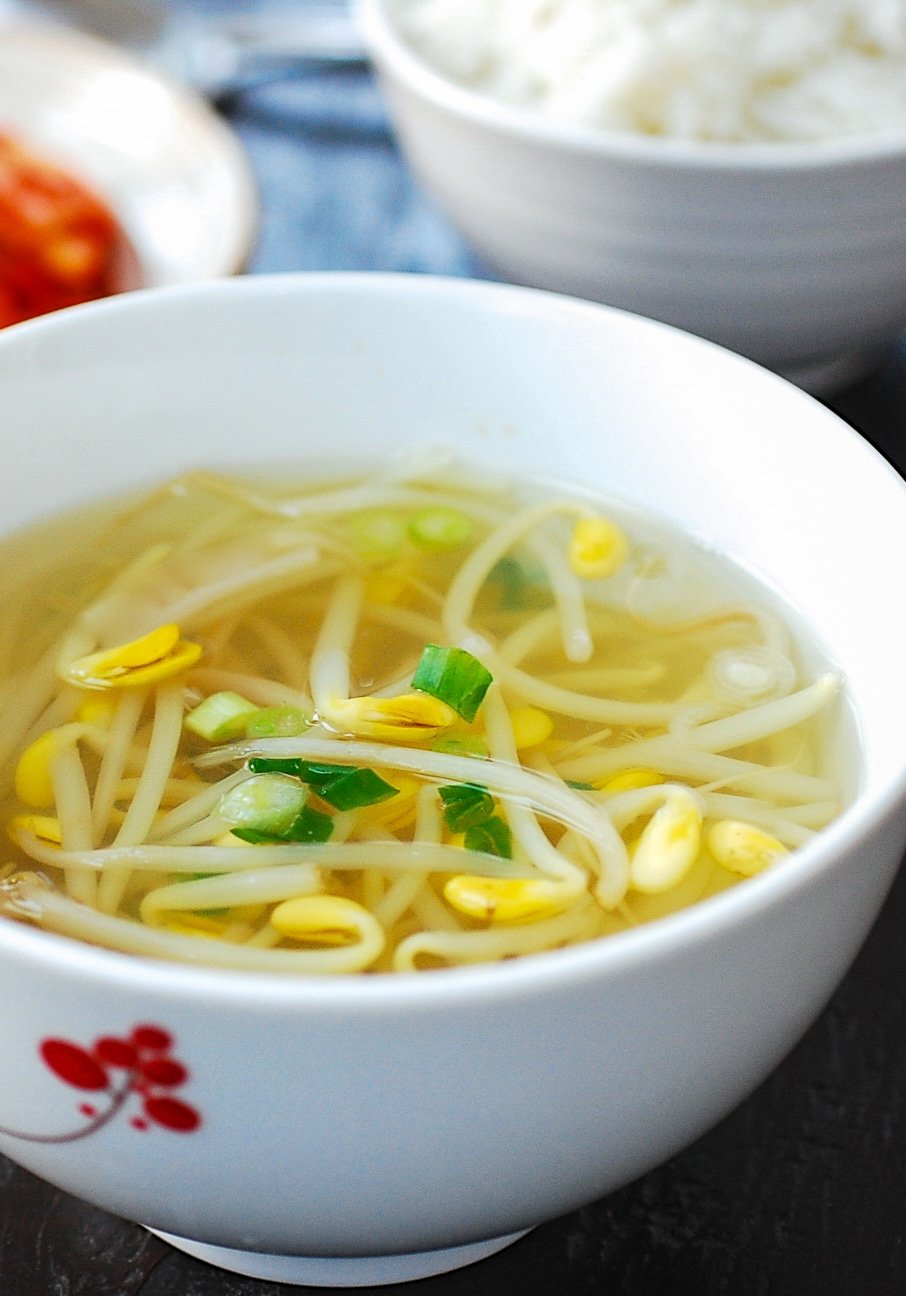
- Kongnamulguk (콩나물국): A lighter, clearer soup of soybean sprouts in anchovy-kelp broth. Maangchi describes it as "one of the most common, typical, and popular Korean soups," and it is widely viewed as the gentlest entry point for hangover recovery.
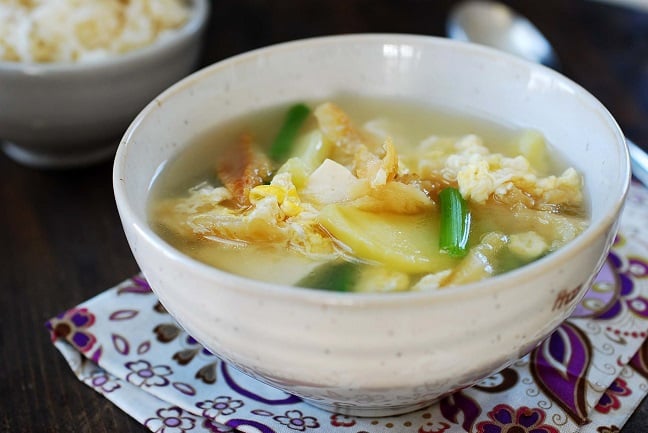
- Bukeoguk (북어국): Dried pollack soup, often with tofu and beaten egg. Korean Bapsang notes that bukeoguk "is very popular as a hang-over remedy" thanks to dried pollack's reputation for detoxifying and soothing effects. It was even served to President Obama at a 2009 state luncheon in Seoul.
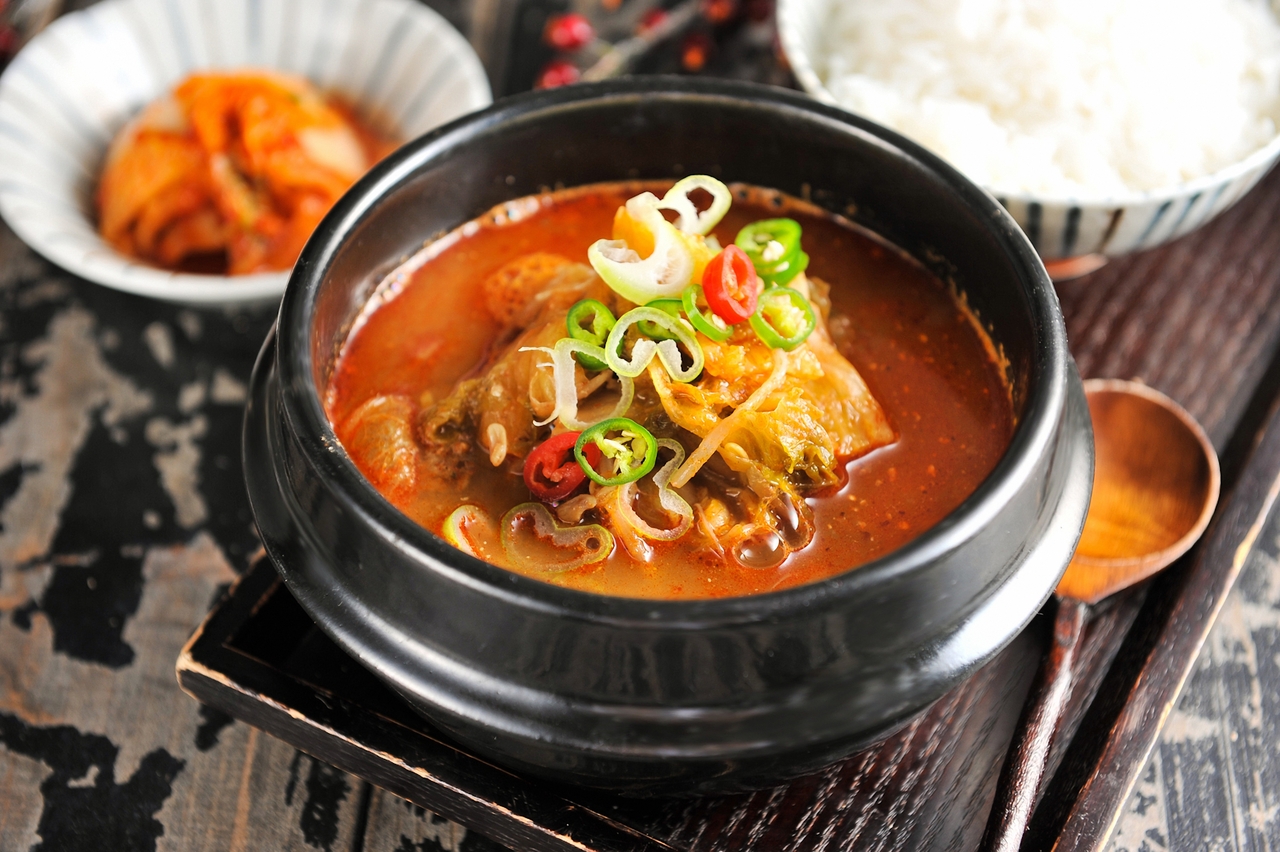
- Ugeoji haejangguk (우거지 해장국): Made with the outer leaves of Korean napa cabbage simmered in doenjang broth, often with pork backbone. Earthy, slightly bitter, and deeply savory.
- Hwangtae-guk (황태국): A cousin of bukeoguk, hwangtae is pollack repeatedly frozen and thawed through Gangwon-do winters. The resulting soup is paler, fluffier in texture, and especially prized in skiing and mountain towns.
Iconic Seoul Haejangguk Restaurants
If you want the real thing, Seoul is the world's haejangguk capital. A short list of pilgrimage-worthy stops:
- Cheongjinok (청진옥), Jongno: The patriarch of Seoul haejangguk. According to Visit Seoul, Cheongjinok opened in 1937 as a small soup house for wood-cutters, simmering beef bones for 24 hours and adding intestines, tripe, and seonji. Now run by the third generation of the same family, it is open from 6 a.m. to 10 p.m. and serves what many Koreans consider the benchmark bowl.
- Yangji Gamjatang (양지 감자탕), various locations: A long-running chain specializing in gamjatang, the pork-spine variant of haejangguk loaded with potatoes, perilla seeds, and ugeoji. Korea Herald includes it among Korea's defining hangover stews, with pork backbone and daikon radish leaves as the signature combination.
- Sinmieok Haejangguk (신미옥 해장국), Jongno: A 24-hour spot beloved by night-shift workers and reporters. Heavy on seonji and ox-bone broth, it represents the workaday, no-frills tradition that turned Jongno's Nakwon-dong into Seoul's unofficial "haejangguk street."
How Haejangguk Is Eaten
Order haejangguk and a small army of side dishes arrives: rice, kkakdugi (cubed radish kimchi), salted shrimp, fresh chili, sometimes raw garlic and ssamjang. The rice is usually tipped into the soup, or eaten in alternating spoonfuls.
The most paradoxical Korean tradition? Ordering a fresh shot of soju with your haejangguk. Called haejang-sul, the "hangover drink," it is the so-called hair of the dog, half joke and half genuine ritual among older drinkers. It is also why the joke goes: Koreans drink to need haejangguk, and eat haejangguk to drink again.
Regional Variations
Travel beyond Seoul and haejangguk shape-shifts.
- Jeonju kongnamul gukbap: The bean-sprout capital of Korea. Korea Bizwire reports that National Geographic UK once named Jeonju kongnamul gukbap one of the world's top nine hangover cures, served boiling in a stone pot with sprouts, scallions, sliced chili, and an anchovy-kelp broth. Locals crack a raw egg into the bowl or onto the side.
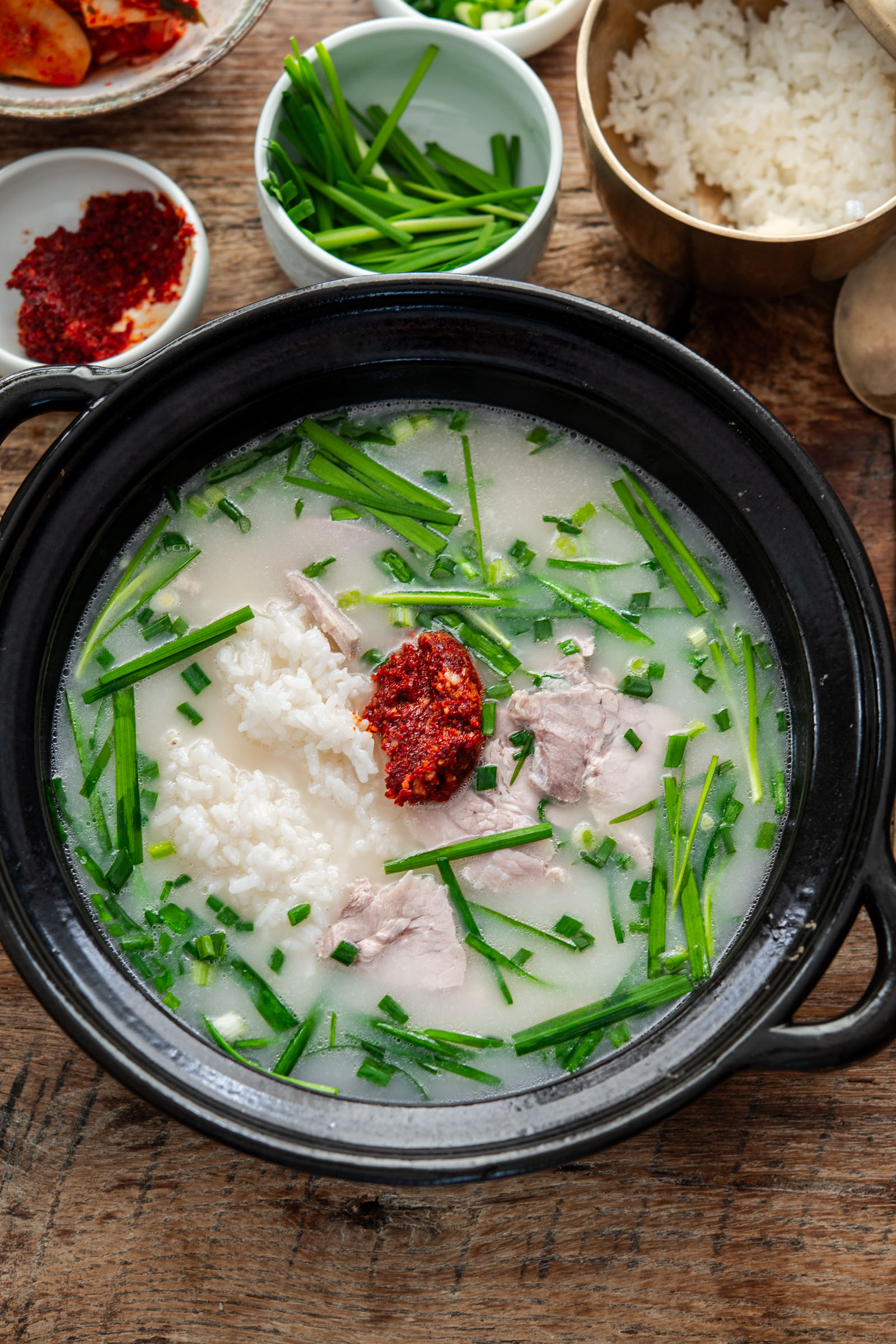
- Busan dwaeji gukbap (돼지국밥): Strictly speaking a gukbap rather than a haejangguk, but it functions as the same morning-after balm in port cities. Beyond Kimchee traces it to the Korean War, when refugees used pork bones discarded by the U.S. military to build a milky broth, sliced pork, and a spicy dadaegi chili paste added at the table.
- Yangpyeong haejangguk: The Gyeonggi-do town of Yangpyeong is so synonymous with seonji-and-tripe haejangguk that you can find Yangpyeong-style branches across Seoul.
How to Make Haejangguk at Home
The most beginner-friendly version is bukeoguk. Korean Bapsang's home recipe goes like this:
- Soak shredded dried pollack (bukeo or hwangtae) in warm water for about 20 minutes, then squeeze out the water and reserve the soaking liquid.
- Saute the rehydrated pollack in sesame oil over medium-high heat for 2 to 3 minutes to deepen its nutty flavor.
- Add 6 cups of water (using the soaking liquid) and 1 tablespoon of guk-ganjang (Korean soup soy sauce). Boil, covered, for 7 to 8 minutes.
- Add cubed potato or Korean radish, tofu, and minced garlic. Cook another 5 minutes.
- Drop in chopped scallions and drizzle one beaten egg over the boiling broth right before turning off the heat. Season with salt and pepper.
For a kongnamulguk version, swap the pollack for 8 ounces of soybean sprouts, simmer with anchovy-kelp broth and a clove of garlic, and keep the lid on the entire time the sprouts cook to avoid a raw bean smell.
Where to Find Haejangguk Outside Korea
Haejangguk has followed the Korean diaspora. In Los Angeles, Cheongjinok itself runs a Koreatown branch, and Western Avenue is dotted with 24-hour haejangguk houses serving seonji and bukeoguk to night-shift workers and clubgoers. New York's Flushing and Midtown Koreatowns, Toronto's North York, Sydney's Strathfield, and London's New Malden all have at least one dedicated haejangguk specialist.
If a Korean restaurant near you offers gukbap, ask whether they serve seonjiguk, kongnamul gukbap, or bukeoguk. Most will, even if it is not on the English menu. Otherwise, the home recipes above turn one trip to a Korean grocer into a very legitimate Sunday-morning haejangguk.
Explore Korean Snacks with Daebak
Love Korean food? Get authentic Korean snacks and ramen delivered straight to your door with the SnackFever Box by Daebak.


