


Table of Contents
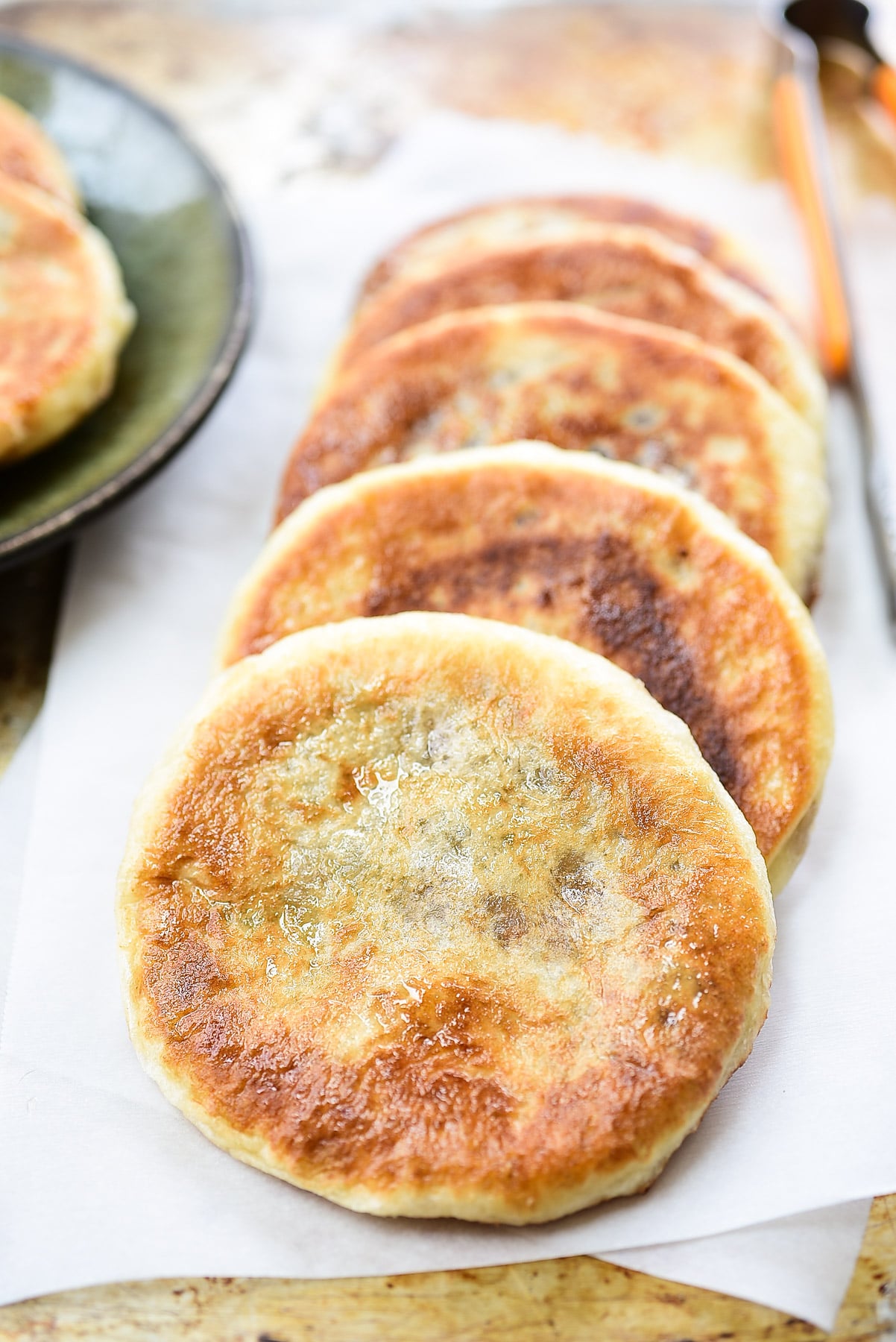
Bite into a warm hotteok on a cold winter day in Seoul and you will instantly understand why Koreans consider it one of the greatest street foods ever made. Golden and crispy on the outside, soft and chewy within, these filled sweet pancakes are a staple of Korean street food culture, loved by children and adults alike for generations.
What Is Hotteok?
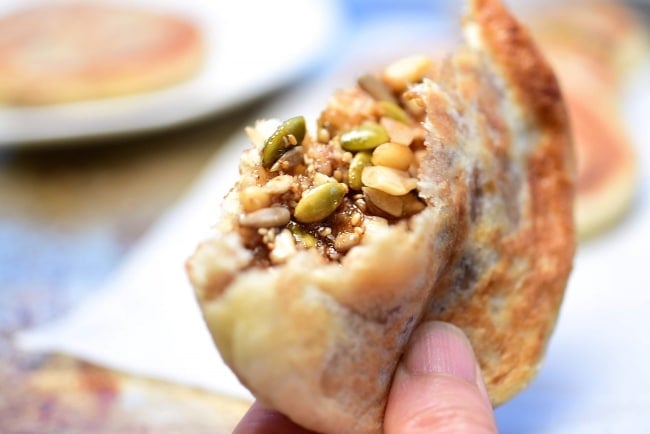
Hotteok (호떡) is a pan-fried stuffed pancake made from a yeast-leavened dough filled with a sweet mixture of brown sugar, cinnamon, and chopped nuts. The dough is typically made with a blend of all-purpose flour and sweet rice flour, which gives hotteok its signature chewy texture. Once stuffed, the dough balls are flattened on a hot, lightly oiled griddle, where they cook until both sides are deeply golden. When you bite through the crispy exterior, the filling melts into a warm, gooey caramel-like syrup that makes each pancake irresistible. The name hotteok is thought to combine a Chinese-derived word for a type of wheat cake with the Korean love for chewy, filled dough foods, reflecting the dish's blended origins.
A Pancake with Chinese Roots
Hotteok traces its origins to Chinese merchants who migrated to the Korean Peninsula during the late Joseon Dynasty in the 19th century. These traders brought with them a savory Chinese wheat cake known as xian bing, filled with beef and onions. Over time, Koreans adapted the recipe to match their own palate, swapping the savory filling for a sweet combination of brown sugar and nuts. The result became one of the most beloved Korean street foods, especially during the winter months when vendors set up griddles at busy markets and along pedestrian streets. Today, hotteok remains a deeply nostalgic food for many Koreans, evoking memories of cold afternoons, warm mittens, and the sweet smell of caramelizing sugar rising from a street cart.
The Classic Filling: Brown Sugar, Cinnamon, and Nuts
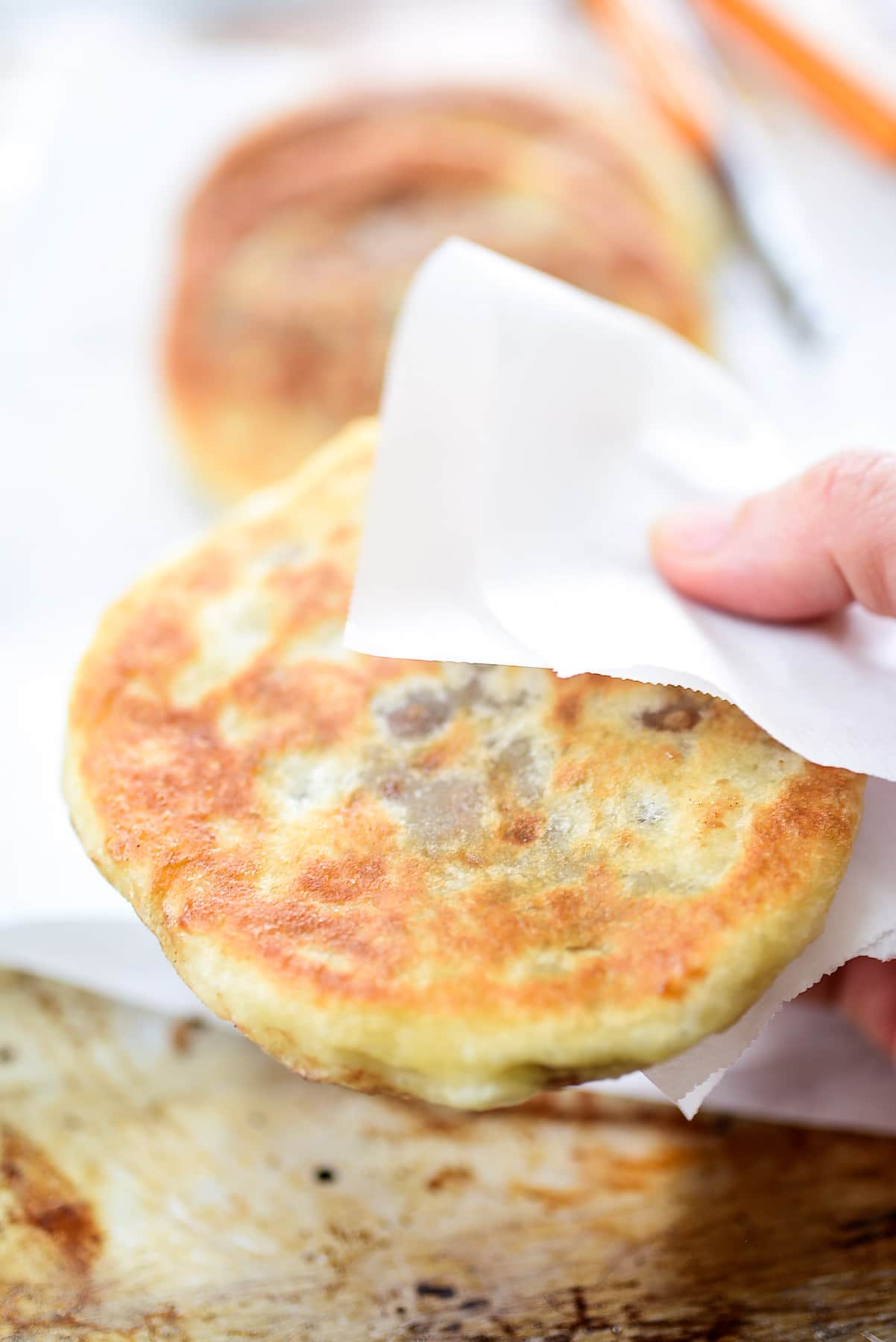
The traditional hotteok filling is simple but deeply satisfying. Light brown sugar forms the base, melting into a rich syrup as the pancake cooks. Cinnamon adds warmth and spice, while a generous handful of chopped nuts and seeds (sunflower seeds, pumpkin seeds, peanuts, walnuts, or pine nuts) provides texture and a nutty depth of flavor. The balance between the sweet, caramel-forward sugar and the earthy crunch of the nuts is what makes the classic filling so addictive. Some recipes use a combination of regular sugar and dark brown sugar to deepen the molasses notes. The key is to pack the filling generously, so that when the pancake is pressed on the griddle, the sugar melts fully and creates that sought-after sticky, syrupy center.
Hotteok Variations You Need to Try
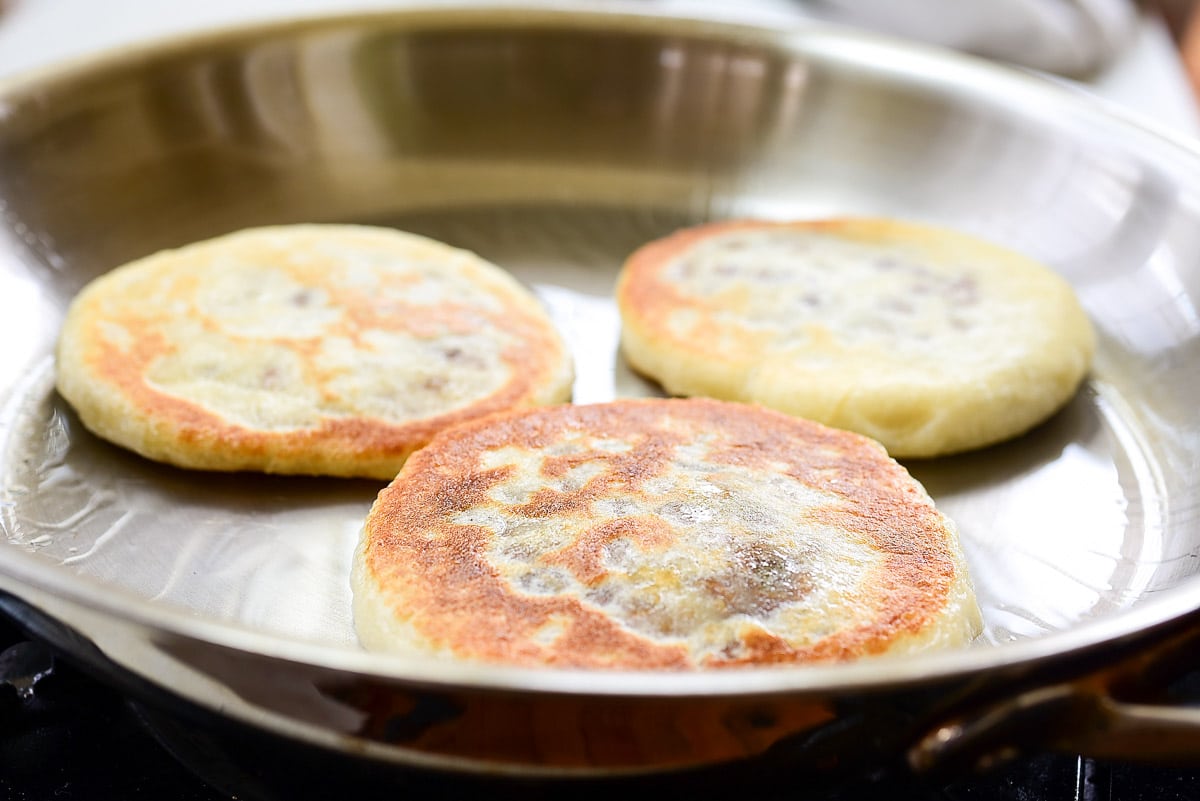
While the classic brown sugar and nut version remains the gold standard, Korean street food vendors are endlessly creative, and hotteok has evolved into dozens of exciting variations. Ssiat hotteok, the Busan specialty, is first deep-fried and then slit open and stuffed with a heaping spoonful of mixed seeds and nuts, creating an intensely flavorful snack served in a small paper cup. Green tea hotteok features a matcha-tinted dough that gives the pancake a subtle earthy bitterness to contrast the sweet filling. Pizza hotteok swaps the sugar filling for cheese and tomato sauce, while japchae hotteok is filled with savory glass noodles and vegetables. Red bean hotteok uses sweet red bean paste as the filling, a classic alternative beloved across Korea. For those who enjoy bold flavors, cheese-and-corn hotteok has become a popular modern variation at Korean cafes and street markets.
How to Make Hotteok at Home
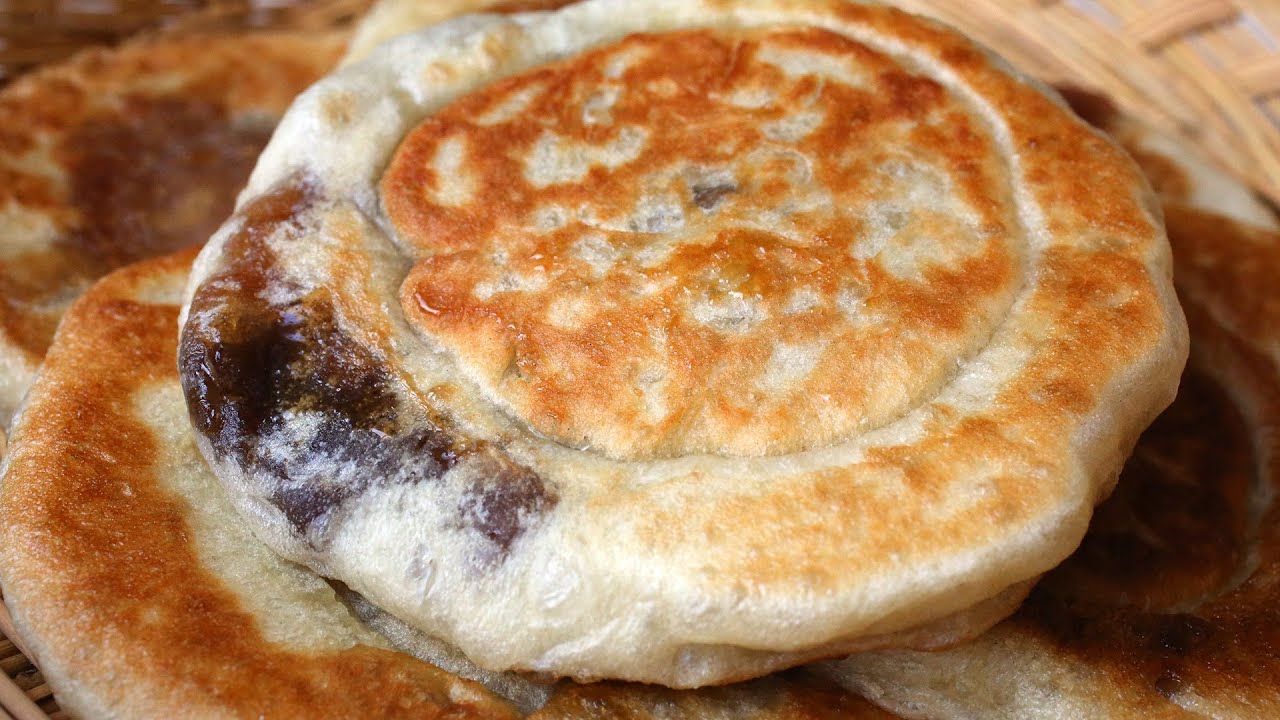
Making hotteok at home is more approachable than it might seem. You start by proofing active dry yeast in warm water with a little sugar, then combining it with all-purpose flour, sweet rice flour, salt, sugar, oil, and warm milk. The sticky dough is kneaded until smooth and left to rise until doubled in size, about an hour. While the dough rises, prepare the filling by mixing brown sugar, cinnamon, and your choice of chopped nuts and seeds. Once the dough has risen, pull off a golf-ball-sized piece, flatten it in your oiled palm, add a generous spoonful of filling, pinch the edges together to seal, and place it sealed-side down on a lightly oiled skillet over medium heat. Press it flat with a spatula, cook until golden, flip, and cook until both sides are deeply browned. Finished hotteok freezes well and can be reheated in a toaster oven or air fryer for a quick treat any time.
Explore Korean Snacks with Daebak
Love Korean food? Get authentic Korean snacks and ramen delivered straight to your door with the SnackFever Box by Daebak.


