


Table of Contents
Korean embroidery, known as jasu (자수), is a silk-thread art tradition stretching back more than 1,500 years to the Three Kingdoms period. From the densely embroidered hwarot bridal robes of Joseon princesses to the colorful norigae pendants that dangle from a hanbok, jasu has long been the quiet language of celebration, status, and prayer in Korean dress. Today it lives on through museum collections, designer hanbok, K-drama costumes, and contemporary craft objects that put traditional techniques into modern hands.
What Is Jasu? A 1,500-Year Silk Thread Tradition
The word jasu (자수) combines the Chinese characters ja, meaning to pierce, and su, meaning to be colorful. The craft itself predates the term: embroidered fragments and historical records trace silk-thread work in Korea to the Three Kingdoms period, before flourishing through Goryeo Buddhist banners and reaching its peak in the Joseon dynasty. Jasu was never only decoration. Stitches carried meaning, wealth, status, blessings, and protection, all sewn onto silk by women working long hours in inner quarters.
Two parallel traditions emerged. Gungsu (궁수), or palace embroidery, was the formal court style: tightly controlled compositions worked in fine silk with gold and silver thread, reserved for royal hanbok, ceremonial robes, and gifts. Minsu (민수), folk embroidery, was its lively counterpart, made by ordinary women in vivid colors and often a freer, more naive style, decorating pillow ends, pouches, screens, and children's clothes.
Jasu on Hanbok: Royal Robes, Hwarot, and Children's Wear
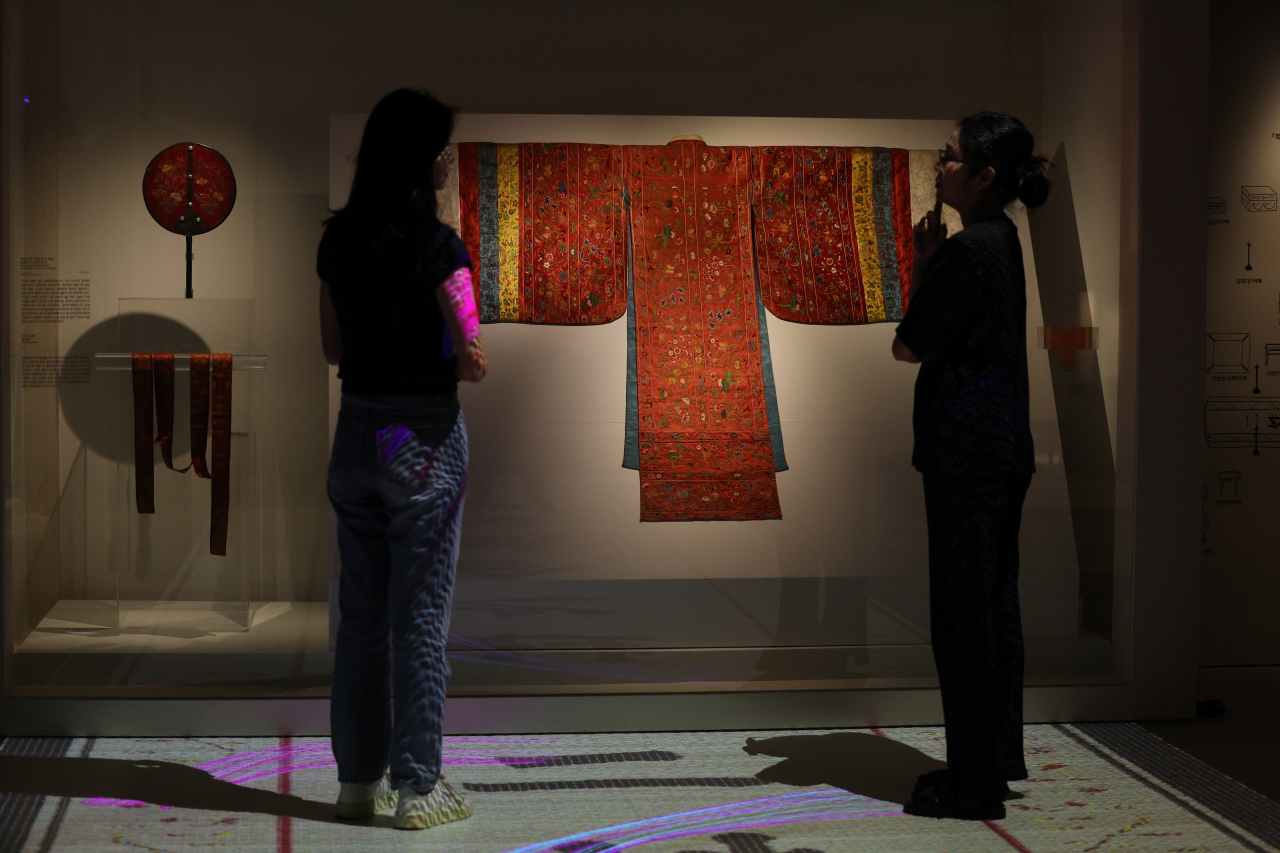
Jasu most famously dressed hanbok. On royal jeogori, embroidered shoulders, collars, and cuffs marked rank and occasion, with dragons reserved for kings and phoenixes for queens. The most spectacular embroidered garment is the hwarot (활옷), the ceremonial wedding robe of the Joseon royal court. Layered over multiple skirts and jackets, the hwarot was worked in colorful silk threads with phoenixes, peonies, butterflies, lotus, and waves, symbolizing happiness, fertility, and longevity. Children also wore jasu: the first-birthday dollbok (돌복) often featured embroidered character symbols wishing the child a long and prosperous life.

Motifs and Their Meanings: Phoenix, Peony, Crane, and Ten Symbols of Longevity
Every motif in jasu speaks. The phoenix (봉황) represents royal authority and is paired with queens and brides. The crane (학) symbolizes longevity, the peony (모란) wealth and honor, and the lotus (연꽃) purity. Pine and bamboo together (송죽) stand for integrity through hardship. Whole compositions of the Ten Symbols of Longevity (십장생), including sun, mountains, water, pine, bamboo, cranes, deer, turtles, clouds, and the elixir mushroom, were embroidered onto folding screens and ceremonial robes as visual prayers for long life.
The artistry lies as much in stitching as in symbol. Pyeongsu (평수) is a flat satin stitch used to fill smooth color fields. Jaryeonsu (자련수) is a continuous, slightly overlapping stitch that builds shading. Gareumsu (가름수), a splitting stitch, defines edges and details. Maedeupsu (매듭수), the knot stitch, leaves a tiny bead-like dot on the surface, Korea's equivalent of a French knot, perfect for flower centers and pomegranate seeds.
Norigae, Maedeup, and Other Everyday Jasu Objects
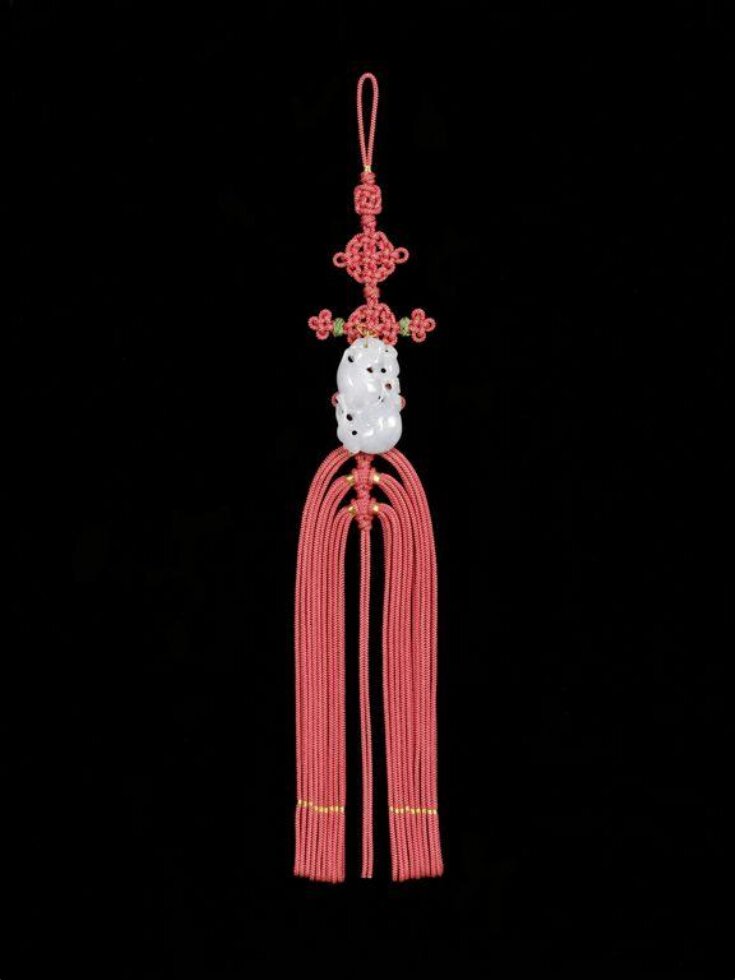
Jasu lived far beyond robes. Embroidered pouches held seals, mirrors, or charms. Folding screens (병풍) brought entire embroidered gardens indoors. Spoon cases, eyeglass cases, and book covers were stitched with auspicious symbols. The most personal accessory was the norigae (노리개), a pendant suspended from a hanbok's coat strings, combining an ornamental main piece, intricate maedeup (매듭) knots, and silk tassels. Maedeup knotwork itself dates back to the Silla Kingdom, and women of every class wore embroidered norigae as both fashion and good-luck charm.
Living National Treasures: Han Sang-soo and the Embroidery Masters
In 1984 the Korean government designated embroidery as Important Intangible Cultural Property No. 80, and named the late Han Sang-soo (한상수, 1932 to 2016) as its master holder. Born in colonial Korea, Han spent her life gathering surviving jasu artifacts, restoring lost techniques, and recreating about 100 Buddhist embroideries from the Joseon dynasty for Jogyesa Temple in Seoul. Her Han Sang Soo Embroidery Museum (한상수자수박물관) first opened in Bukchon Hanok Village in 2005 and now operates in Seongbuk-dong under the leadership of her daughter, who is preparing the next generation. Other masters such as Choi Yoo-hyun have likewise been recognized for keeping the tradition alive.
Jasu Today: Designer Hanbok, K-Drama, and Modern Craft
Jasu is having a renaissance. The late hanbok designer Lee Young-hee (이영희) brought embroidered hanbok to Paris Pret-a-Porter in 1993 and later layered jasu motifs into modern silhouettes for Seoul Fashion Week, with her work admired by figures from Karl Lagerfeld to Giorgio Armani. K-drama wardrobes have made the craft pop-culture mainstream: shows such as Mr. Queen and The Crowned Clown showcase embroidered court robes in close-up, while BTS wore tailored hanbok with subtle jasu motifs in the Idol music video. Museums also keep the conversation alive, including the MMCA Deoksugung's 2024 exhibition Korean Embroidery in Modern Times: The Birds Trying to Catch the Sun, which traced jasu's rise from pastime to academic discipline.

Where to See and Learn Jasu in Korea
The best place to start is the Han Sang Soo Embroidery Museum in Seongbuk-dong, which runs exhibitions and hands-on classes that teach basic stitches and motifs on small silk samplers. Bukchon Hanok Village hosts several smaller jasu workshops, often combined with norigae or maedeup making, and the Seoul Museum of Craft Art near Anguk Station now holds a major collection of embroidery, including donations from the former Museum of Korean Embroidery. Outside Korea, Korean Cultural Centers in London, Los Angeles, and Tokyo regularly tour jasu and maedeup exhibitions, while museums such as the V&A, Cleveland Museum of Art, and LACMA have important hwarot and norigae in their permanent collections.
Korean Jasu vs Chinese and Japanese Embroidery
Korean jasu shares roots with Chinese and Japanese embroidery, yet keeps a distinct character. Chinese silk embroidery tends toward photo-realistic shading and dragon imagery on imperial robes. Japanese nihon shishu favors restrained motifs and gold couching for kimono. Korean jasu sits between the two: bold flat color blocks and clear outlines like folk minhwa painting, with knots and lines that feel sculptural rather than illusionistic. Its closeness to Korean folk art is part of what makes jasu instantly recognizable on a hanbok shoulder or a norigae pendant.
Discover Korean Craft with SULSUL
Bring home a piece of Korea's living craft tradition with the SULSUL Box by Daebak, featuring handcrafted norigae, a dragonfly brooch, and a DIY knotted bracelet kit that celebrate traditional Korean artistry.


