


Table of Contents
Korean slang evolves at the speed of broadband. A phrase that lights up KakaoTalk on Monday can dominate Instagram captions by Wednesday and feel embarrassingly outdated by the following month. The country's compact geography, near universal smartphone ownership, and tightly networked youth culture create the conditions for words to spread quickly across schools, fandoms, and offices. Decoding this vocabulary is one of the fastest ways to understand how young Koreans actually talk, joke, and bond online.

Why Korean Slang Moves So Fast
The pipeline that fuels new Korean expressions has changed shape several times in two decades. Naver and Daum cafes in the early 2000s built the first nationwide vocabulary, where forum users coined typo-based humor and consonant abbreviations. KakaoTalk's launch in 2010 turned those forum jokes into texting shorthand, since the app reaches over 90 percent of Korean smartphone users. Twitter became the engine of K-pop fandom slang in the mid-2010s, and Instagram and TikTok now incubate the visual-first phrases that flood Reels captions and short-form videos. Every platform shift compresses the cycle further.
The audience driving this language is the MZ generation, a uniquely Korean grouping that bundles Millennials and Generation Z into a single demographic block, roughly anyone born between 1981 and the early 2010s. As The Korea Herald has noted, MZ세대 has become a shorthand for the country's most digitally fluent cohort, and the slang they produce often migrates to corporate marketing, news headlines, and political messaging within months.

Laughter, Reactions, and Intensifiers
Korean laughter rarely shows up as written words. The consonant chain ㅋㅋㅋ, pronounced kekeke, is the universal stand-in for LOL, with the number of ㅋs scaling roughly to how funny something is. The softer ㅎㅎ, drawn from the Korean syllable he, signals a polite chuckle or warm hehe. A more recent variant, ㅋㅋㄹㅃㅃ, gets read out as kekekerupoppo and carries a sarcastic, almost theatrical edge that is popular in group chats when someone is being mocked gently.
Reaction words tend to be punchy single syllables. 헐 (heol) expresses disbelief, somewhere between what and no way. 대박 (daebak) is the all-purpose awesome that gives this magazine its name. 진짜? (jinjja) means really and is used to question a story in real time. 짱 (jjang) marks the best, the top, or the coolest. Intensifiers stack on top of these reactions. The prefix 갓 (gat), borrowed from the English word God, transforms anything into a god-tier version of itself, as in 갓생 (godsaeng), the godly productive lifestyle popular among MZ professionals. 핵 (haek), meaning nuclear, works the same way in words like 핵잼 (haekjam) for super fun. The word 존맛 (jonmat) and its trendier extension 존맛탱 (jonmattaeng), often abbreviated JMT, describe food so good it deserves an expletive. 인생 (insaeng), literally of one's life, turns any meal or moment into a personal record, as in 인생 맛집, the best restaurant of my life.
Social Identity: Insiders, Outsiders, and Stans
A second cluster of slang sorts people by where they fit in a social scene. 인싸 (inssa), short for insider, describes the popular kid who hops between friend groups and trends. Its mirror image, 아싸 (assa), comes from outsider and labels someone who keeps to themselves, often with self-deprecating pride. The teasing line 너 미쳤어? (neo michyeosseo), literally are you crazy, is a playful jab among close friends rather than a serious accusation. 띵곡 (ddinggok) is one of the cleverest entries in the category. It comes from 명곡, meaning masterpiece song, but Korean MZ users intentionally typo the first character as 띵 to mimic the look of a typewriter glitch, an aesthetic that has become a meme of its own. The suffix 빠 (ppa) attaches to any artist or franchise to mark a devoted stan, so BTS빠 reads as a BTS stan.
Dating Vocabulary: From Some to Solo
Romance in Korea generates its own dictionary. 썸 (sseom), borrowed from the English word something, captures the ambiguous talking stage before two people officially date. 솔로 (sollo) is the loanword for single, and 모쏠 (mossol), a contraction of mother-solo, refers to someone who has never dated. The phrase 헤어진 사이 (heeojin sai) means broken up and quietly closes the relationship. Each of these terms shows how MZ Koreans freely blend English roots, abbreviation, and emotional shading into compact labels.

Work, Life, and Generational Friction
The MZ workplace has produced its own vocabulary tied to office hours and power dynamics. 워라밸 (worabal) compresses work and life balance into four syllables and has become a standard talking point in Korean job postings. 야근 (yageun) is the long-running word for overtime, and complaints about it are frequent. 꿀팁 (kkultip), a honey tip, names a useful hack worth saving. 꼰대 (kkondae) is one of the most loaded entries, describing an older coworker stuck in a boomer mentality who lectures younger employees. The labels 갑 (gap) and 을 (eul) come from contract language but now describe everyday power dynamics, with 갑 holding leverage and 을 stuck in the weaker position.
Internet Abbreviations Decoded
The shortest layer of Korean text is consonant-only. These have to be sounded out in your head to make sense.
- ㅇㅋ equals OK.
- ㄴㄴ means no no, a quick refusal.
- ㅈㅅ is the abbreviated form of 죄송 (joesong), sorry.
- ㄱㄱ reads as go go, used to start an activity.
- ㅂㅂ is bye bye.
- ㄱㅅ is thanks, from 감사 (gamsa).
- ㅇㄷ? asks where, from 어디 (eodi).
- ㄹㅇ means real, from 리얼 (rieol), and is used to agree emphatically.
Mastering these consonants is the entry point for reading actual Korean group chats without translation help.
K-Pop Fandom Vocabulary
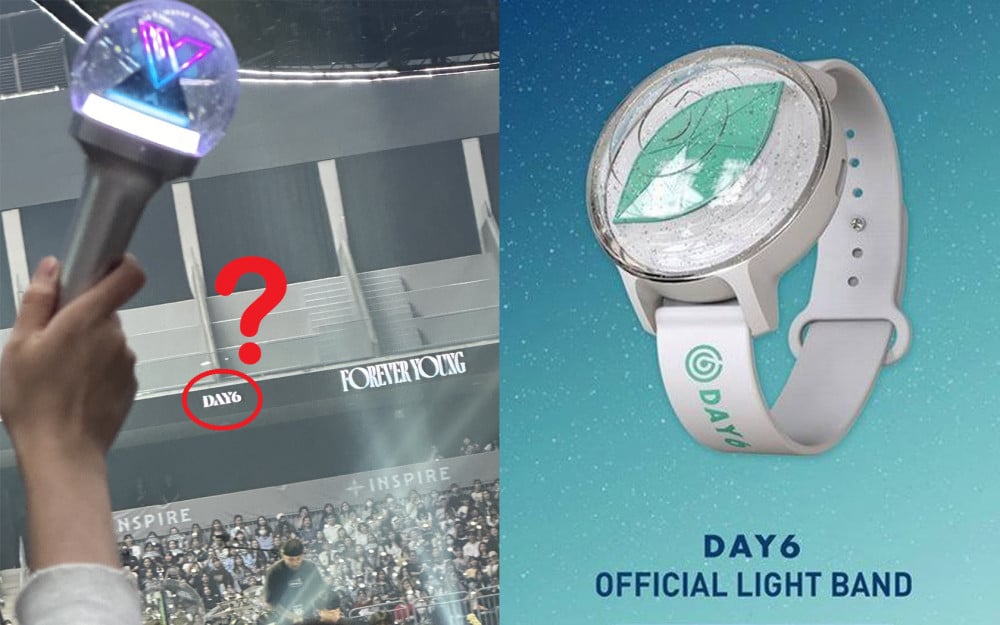
K-pop fans have built one of the most elaborate slang systems on Korean Twitter. 덕질 (deokjil), borrowed from the Japanese otaku root, refers broadly to fangirl or fanboy activity, including streaming, fanart, and concert prep. 입덕 (ipdeok) marks the exact moment of falling into a fandom, while 탈덕 (taldeok) describes leaving it. 댓글 (daetgeul) refers to comments on posts and videos, where most fan-to-fan arguments take place. 본방 (bonbang) means first broadcast and matters because Korean ratings reward viewers who watch live rather than catching a rerun, which is why fans coordinate group viewings. K-pop media has documented an even deeper layer of fan slang covering ticketing, concert sections, and fanlight gear.
The TikTok Era: New Coinages Going Mainstream
The latest wave of slang has been incubated on TikTok and short-form video. 뇌피셜 (noepicial) fuses 뇌 (brain) with the English word official to describe a personal opinion presented as if it were a verified fact, a useful jab in online arguments. 갓생 (godsaeng) puts the 갓 prefix on the word for life to describe a hyper productive routine of early wakeups, study sessions, and gym visits, often documented in vlogs. 받는 사람 (badeun saram), the receiver, has become a meme format used to label whoever is on the receiving end of a joke or compliment. 미친 가성비 (michin gaseongbi) means crazy good value and shows up in restaurant reviews and product hauls. These phrases tend to start in viral videos and reach corporate ad copy within a few weeks.
Where Hongdae Slang Is Born
Many of these expressions take root in neighborhoods like Hongdae, the area around Hongik University in Seoul known for its busker performances, independent music venues, and dense youth crowds. Stripes Korea describes Hongdae as a place where university life, indie music, and street culture overlap for years at a time, which makes it a natural incubator for the visual and verbal jokes that filter outward through KakaoTalk and Instagram. Cafes in Yeonnam-dong and Seongsu-dong play a similar role for slightly older MZ workers who run their digital nomad routines from laptop tables.

How to Keep Learning
Slang is the part of Korean that textbooks struggle to cover because it changes too quickly to print. Learners who want to stay current can post sample sentences on the HiNative app to get native speaker corrections in minutes, browse the slang section of the Naver Korean dictionary for recently added entries, or pay close attention to K-drama subtitles, where translators wrestle with how to render 대박 or 헐 in English. Reading Korean Twitter timelines and KakaoTalk open chats is the most effective form of immersion because the words appear in their natural environment, complete with the typos and abbreviations that make them feel alive.
Explore More of Korea with Daebak
Want to bring a little piece of Korea into your life? The Daebak Box is packed with the best Korean snacks, ramen, and cultural goodies delivered monthly to your door.


