


Table of Contents
Soju is Korea's most famous drink, but Koreans rarely stop at the shot. The clear green bottle is also the base for a whole family of sweet, fizzy, and surprisingly creative cocktails that show up at every age group, from college pre-games in Hongdae to corporate hoesik dinners in Gangnam. The Korean approach to soju cocktails is simple: take a single bottle of soju, add one or two cheap convenience-store ingredients, stir, and pass the glass around the table.
This guide covers five Korean soju cocktails worth trying, with quick recipes for each, where the drink usually shows up in Korean culture, and tips for making them at home with the soju brands you can actually find abroad.
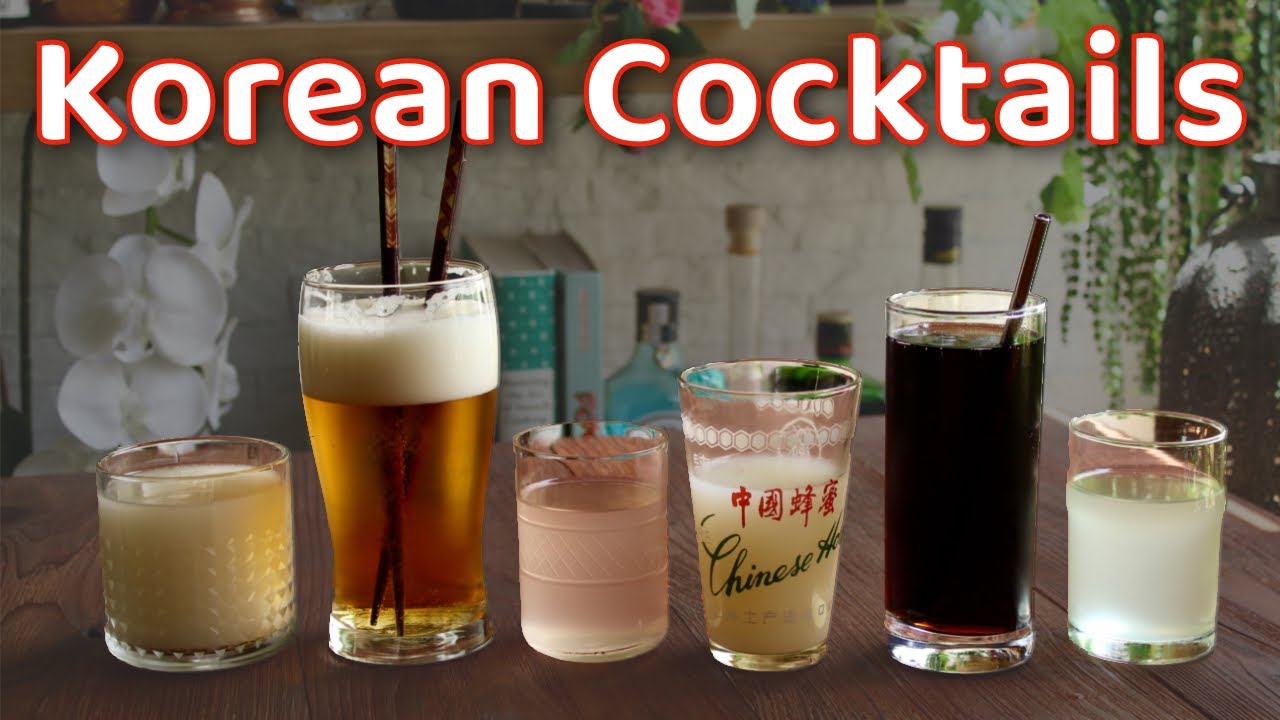
Why Soju Cocktails Took Over Korea
Soju is one of the world's best-selling spirits, and its low alcohol content (typically 16 to 20 percent ABV in modern bottles), neutral flavor, and very low price make it almost custom-built for mixing. A 360 ml bottle of standard Jinro or Chamisul costs roughly 2,000 won at a Korean convenience store, so cocktail-style drinks at home or at pojangmacha tents cost a fraction of a single drink at a bar.
The mixing tradition also fits Korean drinking culture, which leans group-oriented. A pitcher of fruit soju or a tower of somaek (soju and beer) is meant to be shared across a table of four or six, and the ritual of pouring rounds for each other matters as much as the drink itself.
1. Somaek (소맥): The Classic Soju + Beer
Somaek is the most famous Korean soju cocktail and the unofficial pairing for almost every Korean BBQ meal. The recipe is simple: a half-filled glass of beer (Cass and Terra are the most common choices), one shot of chilled soju, and a quick stir or a tap on the rim to release the bubbles. The drink is meant to be downed in one go.
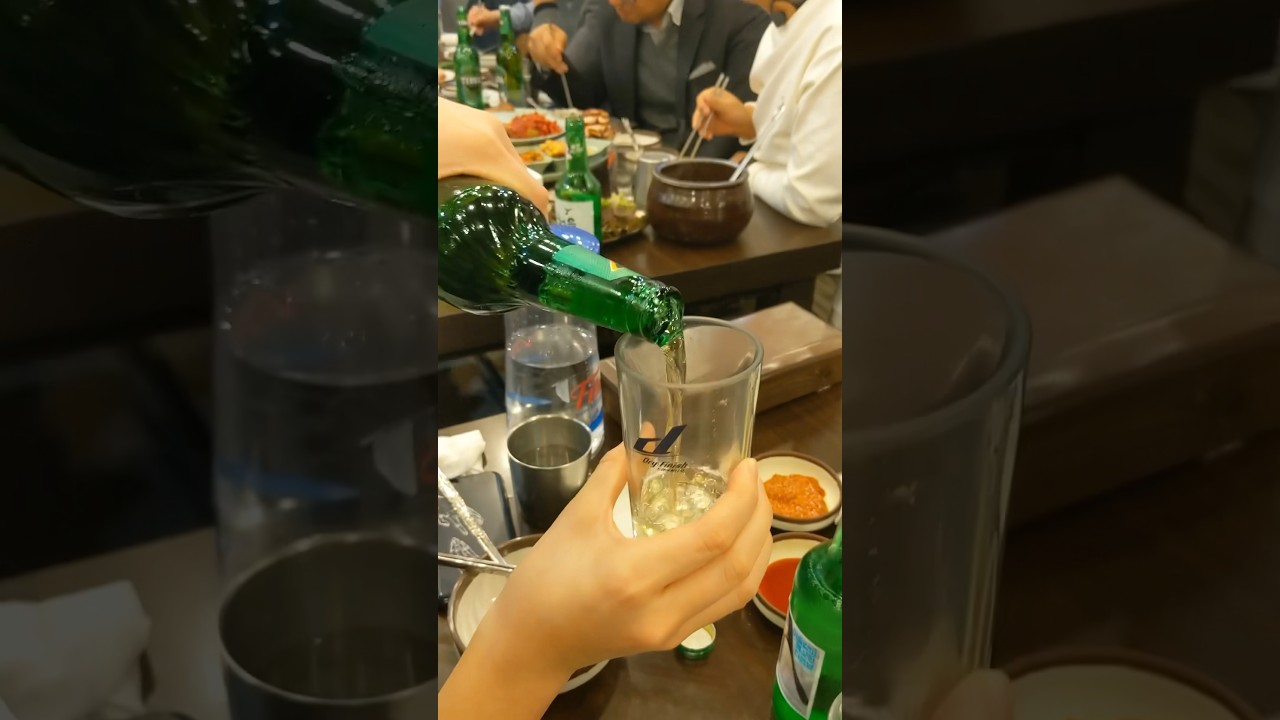
The classic somaek ratio is 3:7 (three parts soju, seven parts beer), but ratios shift based on the drinker and the occasion. Skilled Korean drinkers will balance the soju shot glass on top of the beer using a chopstick and tap it in for a dramatic visual. Somaek pairs best with samgyeopsal, fried chicken, or anything grilled.
2. Yakult Soju (야쿠르트 소주)
The yakult soju cocktail is the entry-level fruit-friendly drink that introduced an entire generation of younger Koreans to mixed soju. The recipe takes one bottle of soju, four to six small Yakult yogurt drinks, and a splash of lemon-lime soda like Chilsung Cider or Sprite. Stir gently, pour over ice, and serve.
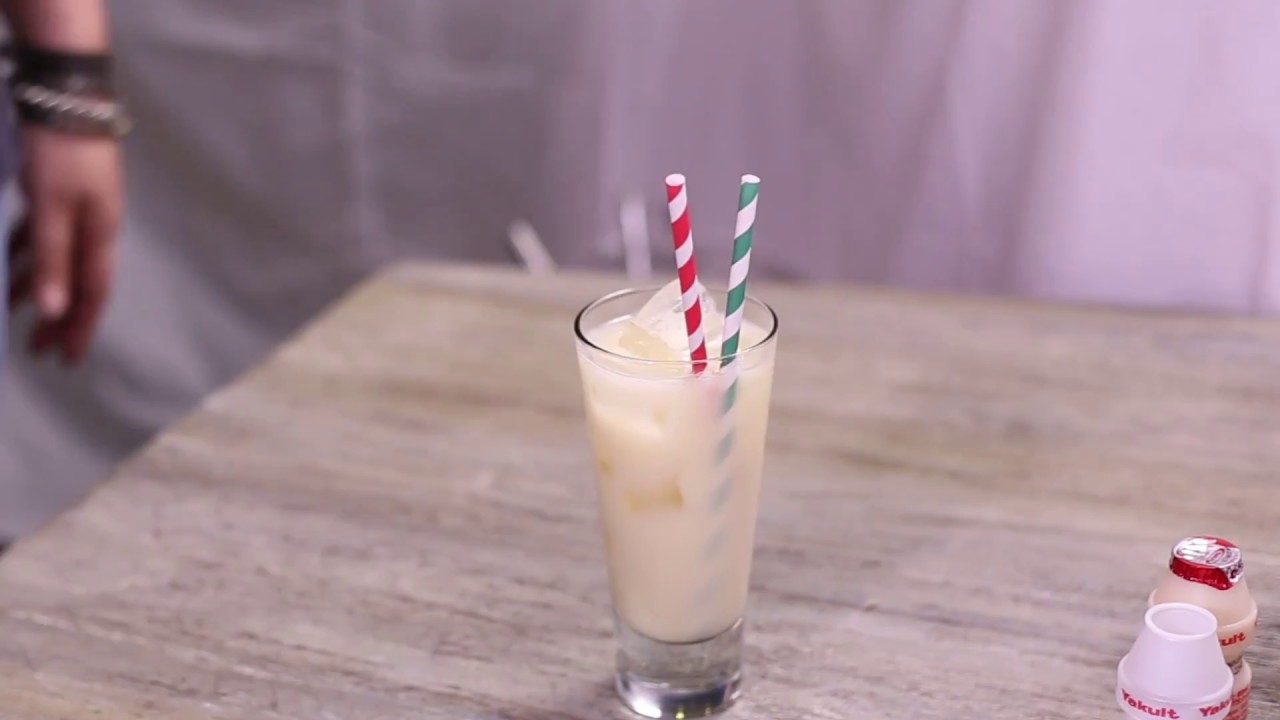
The drink is mild, almost dessert-sweet, and surprisingly easy to over-pour because the alcohol all but disappears under the yogurt and citrus. Korean college students often order it by the pitcher, and the recipe has crossed into K-pop fan culture because BTS members have mentioned drinking it. If you cannot find Yakult, a small bottle of plain probiotic yogurt drink works as a close substitute.
3. Subak Soju (수박소주): Watermelon Soju
Subak soju is the summer favorite. Cut the top off a whole watermelon, scoop out the flesh, blend with a bottle of soju and a splash of honey or sugar, then pour the mixture back into the hollowed-out watermelon shell to serve. The drink is shared by inserting long straws directly into the watermelon shell and sipping with friends.
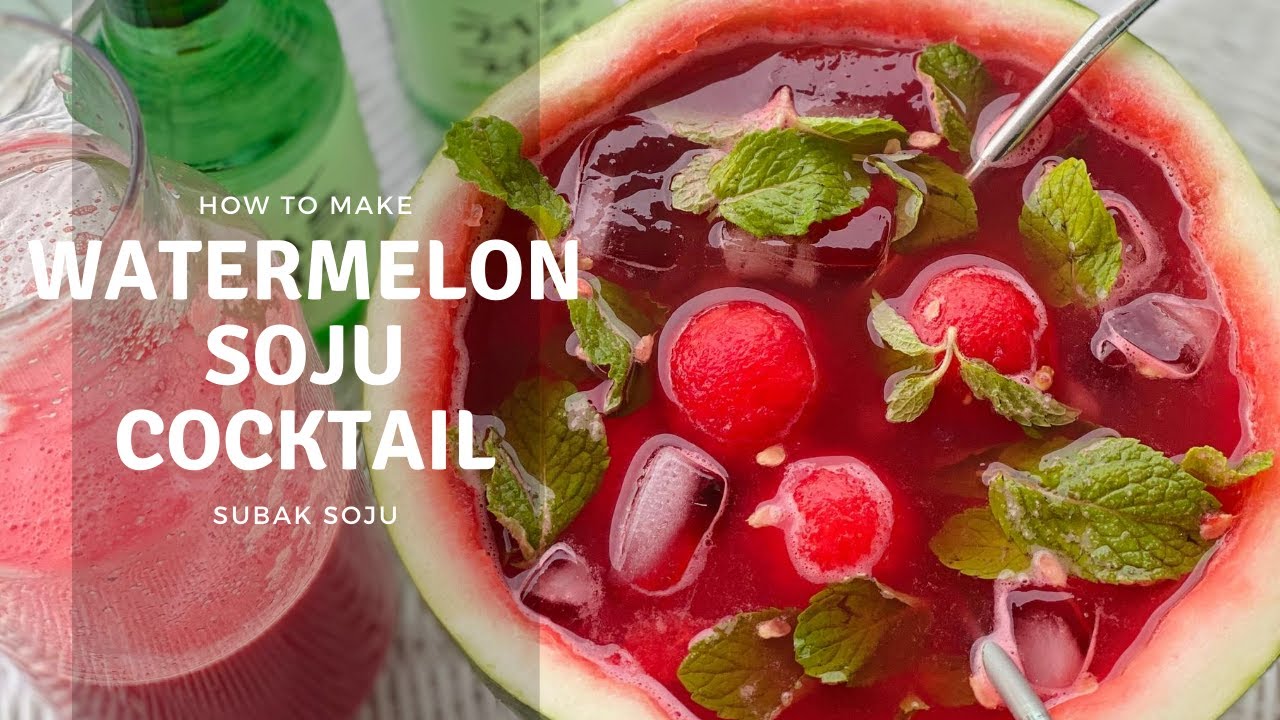
Korean bars often offer the watermelon soju in two formats: a whole melon for a group of four, or a tall glass version for one. Either way, the drink is sweet, refreshing, and extremely easy to over-drink given how cold and fruity it tastes. For home versions, blend a few cups of watermelon with one bottle of soju, strain through a fine-mesh sieve, and chill for an hour before serving.
4. Fruit Soju Cocktails (Strawberry, Peach, Lychee)
Flavored sojus exploded into the Korean market in the 2010s and now occupy half the shelf at most convenience stores. The leading flavors are strawberry, peach, grape, green apple, and yuzu, all at a lower ABV (typically 12 to 14 percent). These flavored sojus are easy to upgrade into cocktails with just one extra ingredient.
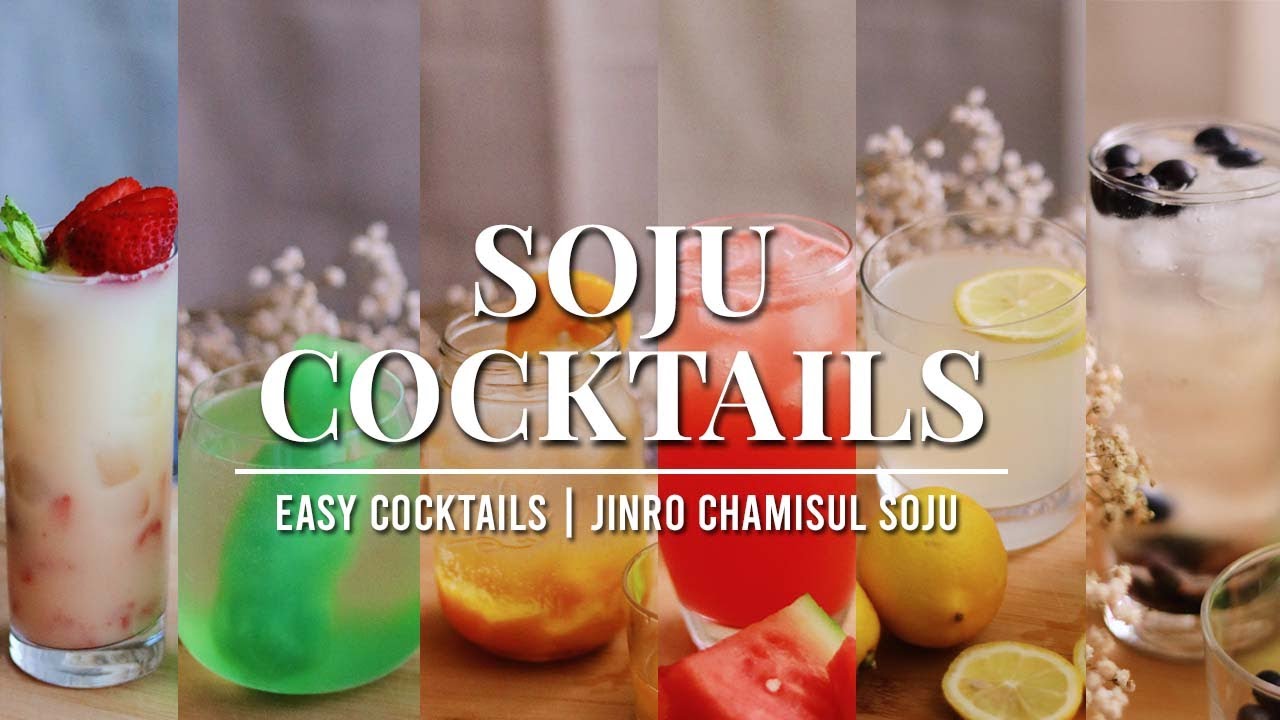
The most popular at-home versions are strawberry soju with crushed fresh strawberries and a splash of cider, peach soju with sliced fresh peaches and tonic water, and grape soju with lemon-lime soda for fizz. The fruit flavored sojus also work well in punches: pour a bottle over chopped seasonal fruit in a large bowl, add a can of cider, and serve over ice.
5. Cucumber Soju (오이 소주)
Cucumber soju is the unexpected dark horse of Korean cocktails. The drink is minimalist: a bottle of standard soju, half a fresh cucumber sliced into thin rounds, and an hour or two of infusing in the fridge. The cucumber lifts the soju into something close to a clean Asian-style gin cocktail, refreshing and slightly herbaceous.
Korean home cooks often skip the infusion entirely and simply add cucumber slices to a glass of chilled soju with a splash of soda water, garnished with a lemon wedge. It is the soju cocktail that most surprises first-time drinkers expecting fruit syrup or yogurt, and many Korean drinkers consider it the best pairing for spicy food like buldak ramyeon or kimchi jjigae.
Soju Cocktail Tips and Ingredients
A few rules make any Korean soju cocktail more reliable. Use standard soju like Jinro Chamisul Fresh or Chum-Churum for unflavored cocktails, and one of the lower-ABV flavored sojus when adding fruit. Always serve chilled, ideally with a small amount of ice or chilled in a freezer for fifteen minutes before mixing. Use clear lemon-lime soda (Sprite, 7-Up, or Korean Chilsung Cider) for fizz rather than sweet sodas like cola.
Pair soju cocktails with food, never on an empty stomach. Korean anju that complement soju cocktails include fried chicken (especially yangnyeom or honey-butter style), crispy fried squid, samgyeopsal lettuce wraps, kimchi pancakes, and salty snacks like seaweed crackers or shrimp chips. The sweetness of most soju cocktails calls for something savory to balance the table.
Where to Buy Korean Soju Outside Korea
Korean soju is now sold in over 80 countries. Major brands like Jinro Chamisul, Chum-Churum, Good Day, and Hwayo are available at Asian supermarkets, Korean grocery chains like H Mart, Total Wine, Whole Foods in some US states, and many large liquor retailers. The flavored sojus are even more widely distributed thanks to their lower alcohol content classification in some markets.
For the freshest taste, look for bottles imported from Korea rather than ones produced under Korean license in Japan or the US. The labels usually print the origin country in small text on the back. If you want to recreate Korean drinking culture from home, pair your soju cocktail with a curated Korean snack box for a complete table.
Explore Korean Snacks with Daebak
Love Korean food? Get authentic Korean snacks and ramen delivered straight to your door with the SnackFever Box by Daebak.


