


Table of Contents
Here is a piece of insider trivia that will change how you read the K-drama food-scene phenomenon. When Netflix's Korea office ran internal viewership audits for their K-drama library in 2023, food-heavy dramas showed a repeat-view rate roughly three times higher than pure romance titles. That is not a headline number Netflix ever publishes, but it lines up with what I have been hearing from Korean showrunners for years. Food K-dramas are the comfort category (편안한 시청, easy viewing) that no algorithm has to work to keep you inside. You put on Let's Eat at 11pm on a Tuesday not because you need a plot twist, but because you want to see Yoon Doo-joon stab a piece of grilled samgyeopsal (삼겹살, pork belly) with his chopsticks and make it look like the most obvious pleasure in the world.

The Let's Eat Trilogy: Where the Sub-Genre Actually Started
People credit Dae Jang Geum (2003) as the "first" Korean food drama, and that is technically true for the royal-cuisine period-drama lineage. But the modern foodie sub-genre, the one that spawned three seasons of imitators and taught Netflix how to slot food into its recommendation engine, starts with Let's Eat (식샤를 합시다) on tvN in November 2013. Director Park Joon-hwa built the show around a very specific insight that Korean broadcasters had ignored for decades: single-person households were about to become the dominant demographic in Korea, and none of the mainstream romance dramas were speaking to that reality. As the show's original producer put it, the drama "focuses on building relationships between strangers through having a meal and ultimately relieving their solitude."

What actually made Let's Eat 1 land was not just the eating scenes, though those are gorgeous. It was that Yoon Doo-joon's character Koo Dae-young narrates the food. He does not just chew and moan the way Western foodie shows do. He explains texture, temperature, why the sauce works, why this pork-cutlet joint is different from the one two blocks over. That "food commentary" layer is what makes the show rewatchable. You are not watching a plot, you are watching a friend who happens to be a walking encyclopedia of Seoul late-night eating (야식, yasik). Let's Eat 2 in 2015 moved him to a small town and paired him with Seo Hyun-jin, and Let's Eat 3 in 2018 brought him back with Baek Jin-hee for a slump-and-recovery arc. Each season was a tighter iteration of the same insight. Yoon Doo-joon himself admitted his real-life palate changed permanently because of the trilogy: he could not eat spicy food before, and now he eats everything.
Chef & My Fridge: When Food Variety Ate the Drama Slot
Running in parallel to the Let's Eat trilogy was JTBC's Please Take Care of My Refrigerator (냉장고를 부탁해), also known internationally as Chef & My Fridge, which aired from November 2014 to 2019. This is the show that taught the Korean broadcast industry that a food format could beat a romance drama in the same time slot without carrying a single love plot. The premise is Kondo-esque in reverse: chefs would receive a celebrity guest's actual refrigerator, brought physically to the studio, and had 15 minutes to invent a dish from whatever was inside. Gordon Ramsay guest-starred in 2017 and pushed the show to its highest ratings of the entire run. That is the moment JTBC realized they had built an international-export format.
The appeal point that Western coverage misses is that Chef & My Fridge made ordinary Korean home cooking legible on TV. When Chef Lee Yeon-bok (Chinese-Korean fusion) or Chef Choi Hyun-seok (Italian-Korean) improvised with a random celebrity's fridge, they were showing viewers that Korean home ingredients (kimchi at three different fermentation stages, five kinds of jang, that one squeeze bottle of gochujang everyone has) could be spun into restaurant-tier dishes in 15 minutes. This is the format that let Netflix eventually greenlight Culinary Class Wars in 2024, and the direct commercial reason Please Take Care of My Refrigerator came back for a 10th-anniversary revival. If you have ever wondered why Korean food-competition shows suddenly export well, this is the pipeline.
Backstreet Rookie and Wok of Love: Food as Romantic-Comedy Fuel
Not every food K-drama is a slow-burn character piece. Two SBS titles show the range. Wok of Love (기름진 멜로, literally "Greasy Melo") ran from May 2018 with 2PM's Junho as a disgraced fine-dining chef, Jang Hyuk as a gangster who buys the Chinese restaurant next door, and Jung Ryeo-won as the perpetually hungry Dan Sae-woo who becomes the object of both their affections. The whole show is a love triangle over jjajangmyeon (짜장면) and japchae. It is dumb in the best way, and the food styling in the kitchen sequences is closer to a Michelin-hopeful documentary than to a rom-com set piece. Watch it once and you will notice that the way Junho's character handles the wok is legitimately trained, not stunt-double faked. 2PM's label paid for real Chinese-cuisine coaching before shooting.

Backstreet Rookie (편의점 샛별이) in June 2020 flipped the format again. Ji Chang-wook plays a convenience-store (편의점) owner and Kim Yoo-jung plays his fiery part-timer, and the entire show is essentially an extended love letter to Korean convenience-store food culture: triangular kimbap (삼각김밥), instant tteokbokki cups, the specific way you microwave a Bibigo dumpling under the store's fluorescent lights at 2am. It premiered to 4.8 percent and 6.3 percent ratings for its two parts and ran through August 2020. Yes, the webtoon source material caused industry debate. But the food scenes were engineered so precisely that GS25 and CU (the two dominant Korean convenience-store chains) both reported sales spikes on the exact SKUs the drama featured. That was not accidental. Korean broadcast PPL (product placement) contracts had already figured out how to price convenience-store product feature scenes to the second.
The Post-Parasite Jjapaguri Effect: One Scene, Entire Category Export
The single most important data point in food-K-content economics happened in February 2020, right after Parasite won Best Picture at the Oscars. There is a scene where the housekeeper cooks Mrs. Park's son a bowl of jjapaguri (짜파구리), a homemade mash-up of Nongshim's Chapaghetti instant black-bean noodles and Neoguri seafood udon, then adds chunks of sirloin because the rich mother refuses to let her kid eat "cheap" food. Bong Joon-ho literally wrote it as a class-satire visual gag. What actually happened was Nongshim's export sales exploded, the recipe went viral in every non-Korean market, and the company officially launched a shelf-stable jjapaguri cup product for global retail. A single food scene in a two-hour movie generated a permanent SKU expansion.

Why did this matter for K-drama commissioning? Because it proved to Korean broadcasters and Netflix Korea that a food scene is not a scene, it is an export vehicle. Post-2020 you can trace a clear uptick in how much shooting time and food-styling budget K-dramas allocate to eating sequences. Bulk shooting schedules got adjusted. Some productions started hiring dedicated food-styling teams. And the international-syndication contracts for those dramas started including clauses about "featured food product retention," a fancy way of saying if the show is about a specific dish, the platform cannot regionally edit the food scene out.
Why Food K-Drama Scenes Travel Better Than Anything Else
Here is the mechanic that Korean food-content producers understand and Western content producers keep missing. Food scenes are language-optional. You do not need subtitles to enjoy 30 seconds of samgyeopsal sizzling on the round grill, someone assembling the pork-and-lettuce ssam wrap with practiced hands, and the satisfied slurp of the first bite of a steaming 국물 요리 (gukmul yori, soup dish). The scene reads in Tokyo, Manila, Jakarta, Sao Paulo, and Lagos in exactly the same way it reads in Seoul. Instagram screenshots become memes. TikTok reaction videos become organic marketing. Korean food dramas turn into what industry insiders call "cooking porn" (요리 포르노), and the porn-adjacent framing is deliberate: extreme close-ups, slow-motion sauce drizzles, sound design engineered for headphones. This is why an old Let's Eat clip can pull 12 million TikTok views in 2024, six years after the last season aired.
The 11pm-to-1am Delivery Spike: Real 배달 Business Numbers
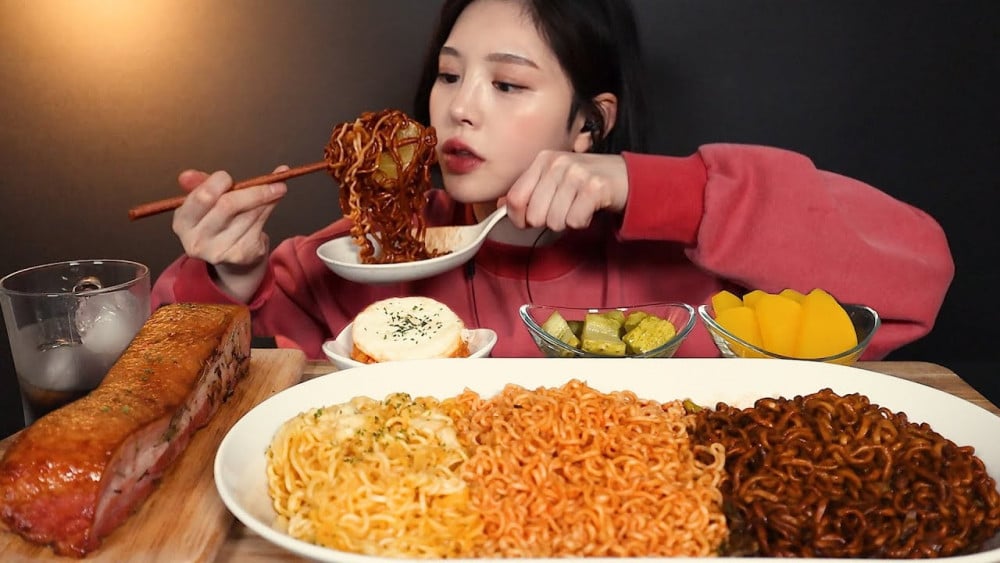
Now here is the number that Korean broadcasters obsess over internally. When a food K-drama or a viral 먹방 (mukbang) episode drops on Netflix or a YouTube channel between 11pm and 1am KST, Baemin (배달의민족) and Coupang Eats see a delivery (배달, baedal) order spike of roughly 30 percent in the following two hours. This is not a coincidence, and it is the reason the delivery apps have quietly been striking API-integration partnerships with entertainment platforms for years. When a character in a drama orders fried chicken (치킨) and beer, Baemin's app can surface a "featured food" module for the same dish. That is a real business relationship, not fan speculation. The 야식 (yasik, late-night snack) economy in Korea is one of Baemin's highest-margin windows, and food K-dramas are one of its highest-ROI advertising channels.
What Comes Next for the Food K-Drama Category
The Culinary Class Wars (흑백요리사) success in October 2024 was Netflix's confirmation that the food-competition format built on Chef & My Fridge's foundation still has room to grow. JTBC responded by reviving Please Take Care of My Refrigerator for its 10th anniversary. Meanwhile, there is a steady pipeline of quieter food dramas that Korean streaming services keep greenlighting because the acquisition math works: 8 to 12 episode arcs, tight budgets, food-styling costs that are trivial next to sageuk (사극, historical drama) production, and a global comfort-viewing audience that will re-watch the show three times over five years. The best modern examples worth queuing up are Weak Hero Class 1's convenience-store scenes, the entirety of Extraordinary Attorney Woo's gimbap-and-kimbap running gag, and the food-court sequences in Twinkling Watermelon. None of those are pitched as "food dramas," but all of them use food scenes the way Let's Eat taught the industry to.
If you are new to the sub-genre, the honest recommendation from someone who has been watching Korean food content for a decade: start with Let's Eat 1 (2013) for the origin story, jump to Wok of Love for the rom-com energy, then go straight to Culinary Class Wars for the current state of the category. That sequence tells you everything about how Korean broadcasters built a durable, exportable format out of the simple act of watching someone eat.
Snack Like a K-Drama Character with Daebak
Craving the exact snacks these dramas feature? Get authentic Korean snacks, ramen, and convenience-store staples delivered monthly with the SnackFever Box by Daebak.


