


Table of Contents
If you have ever queued in a Samcheong-dong alley for a bowl of ice that is actually a deep, almost-eggplant purple, you have already met Cafe Bora (카페 보라). The name is a one-word thesis. 보라 means purple in Korean, and every single item on the menu, from the bingsu to the latte to the soft-serve, comes out in that same saturated color. I have watched Korea's cafe scene up close for more than a decade, and Bora is one of the cleanest examples of the mid-2010s single-color cafe playbook that still works in 2026, mostly because the ingredient is real and the location refuses to move.

The Location Is Half the Product: Why Bukchon, Not a Mall
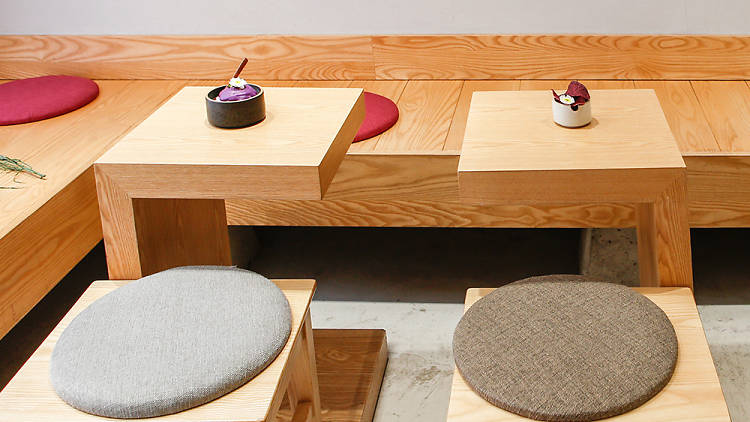
Cafe Bora sits at 75-3 Yulgok-ro 3-gil in Jongno-gu, tucked into the hanok cluster right where Bukchon Hanok Village bleeds into Samcheong-dong. That address matters more than the menu, because the whole business model runs on foot traffic from the Anguk Station Exit 1 tourist funnel. The walk from the subway is about ten minutes uphill through streets full of tteok shops, hanbok rental studios, and slow-drip coffee counters. By the time you turn into Bora's alley and spot the small white sign with the purple blob logo, you have already been primed to expect "aesthetic Korea" rather than a mass-market dessert chain. That priming is the value add. The cafe seats only 12 to 15 people at a time, and management has stayed disciplined about not expanding the room, because the queue outside is itself the marketing.
The appeal point that gets missed in Western write-ups is that Bora is not trying to be a scale play. Most Korean dessert brands with a viral moment (think Sulbing, Yogerpresso, or Sanbenito) chase franchise contracts within eighteen months and lose the aesthetic in the process. Bora has kept its Samcheong-dong shop tight, added a Bangkok Siam Paragon outlet and an LA Koreatown branch, and stopped there. That restraint is what protects the 인생샷 ("life shot," the Korean word for the photo you would use as your profile picture forever) equity. The moment a purple bingsu is available inside a food court, it stops being pilgrimage-worthy.
Why the Purple Is Real: Boryeong 자색고구마, Not Food Coloring
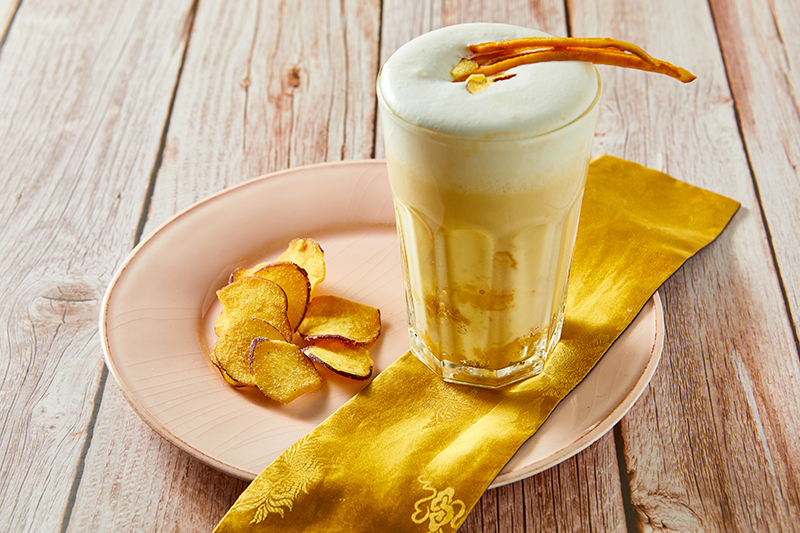
The color story is the reason Bora survived the food-coloring backlash that took down a lot of its Instagram-era competition. The purple comes from 자색고구마 (jasaek goguma, purple sweet potato) sourced from Boryeong on Korea's west coast, a growing region whose sandy coastal soil produces a variety with unusually high anthocyanin content. Anthocyanin is the same antioxidant pigment you get in blueberries and black rice, and it is what gives the ice cream its purple that photographs as royal indigo under warm cafe lighting. Bora's operators have been on the record for years that they do not add coloring or preservatives, and the flavor confirms it. The sweet potato tastes like sweet potato, not vanilla with a color slider dragged to "grape."
This detail matters commercially because Korean food regulators tightened labeling around synthetic colorants throughout the 2010s, and the audience of Korean 20 and 30-somethings that drives cafe trends is unusually literate about ingredient sourcing. A cafe that can credibly say "one crop, one region, no coloring" gets a moral pass on charging 15,000 won for a bowl of shaved ice. Contrast that with the cotton candy bingsu clones that flooded Instagram around 2018 with visibly artificial pastel colors, and you can see why most of them are gone and Bora is still there.
The Menu Is Actually Small, and That Is the Point
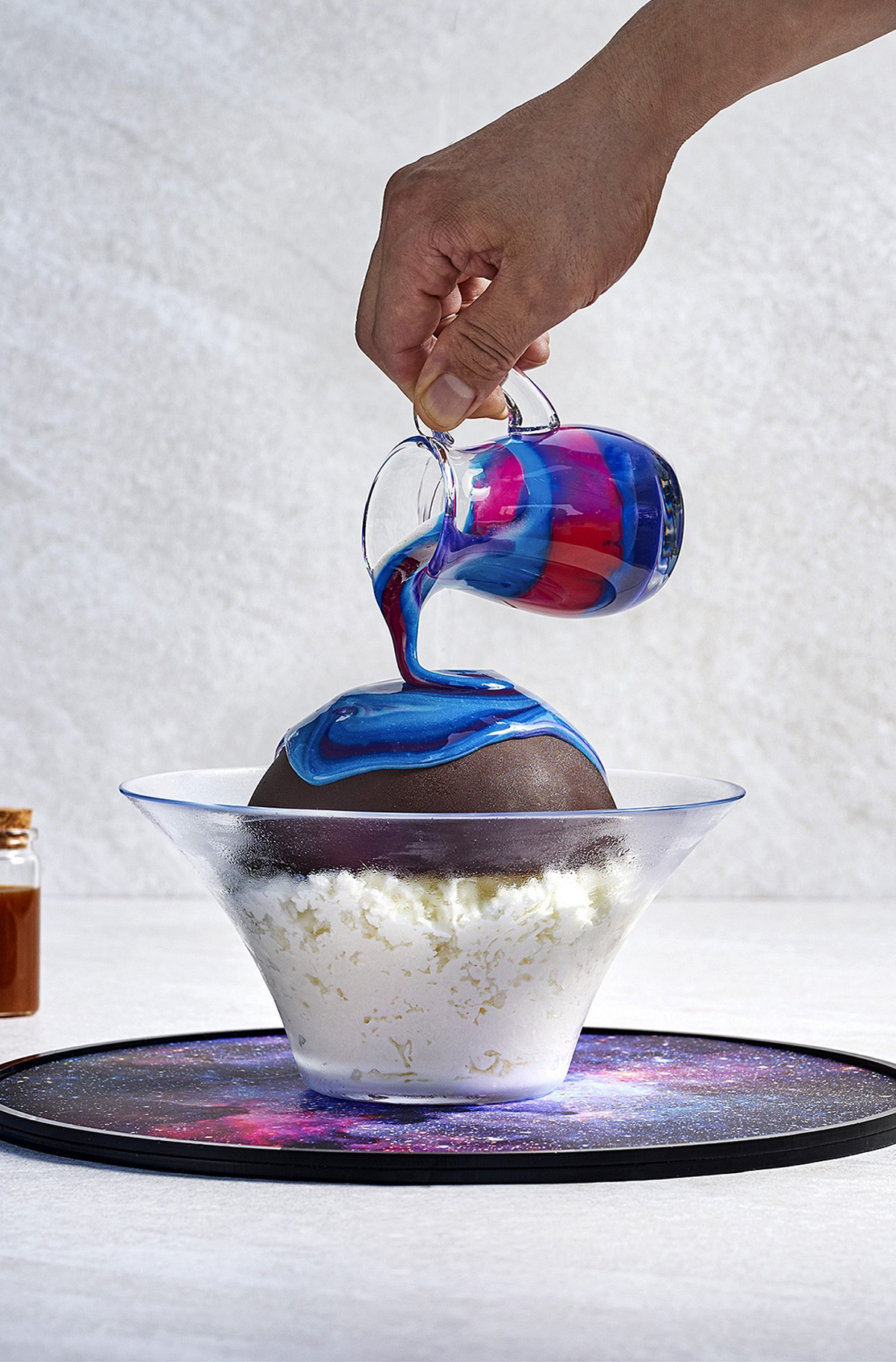
People who arrive expecting a sprawling menu are always surprised. Bora sells maybe eight to ten items at any time: purple sweet potato bingsu, purple sweet potato soft serve, purple sweet potato latte (hot and iced), a purple 찐빵 (jjinbang, steamed bun), purple rice cake macaroons, dried 자색고구마 chips, and a couple of non-purple safety options like matcha bingsu for the friend who came along and hates sweet potato. The bingsu is the flagship. It arrives as a mountain of ultra-fine shaved milk-ice, topped with a scoop of the sweet potato ice cream, a small edible chrysanthemum flower for the photo, and a side dish of purple porridge and crunchy sweet potato chips that you fold in yourself.
The reason the menu stays small is operational, not aesthetic. A 12-seat cafe with a single dominant ingredient can standardize prep to the point where the taste is identical every visit, which is what protects the reputation. The moment Bora tries to add a strawberry version or a mango version, the ingredient sourcing gets complicated, the color palette breaks, and the whole "single-color cafe" concept collapses. Discipline about what NOT to sell is one of the least-discussed skills in Korean F&B, and Bora has it.
The Single-Color Cafe Format: Why It Peaked in 2016 to 2019
Bora belongs to a very specific Korean cafe genre that peaked between roughly 2016 and 2019: the single-color, single-ingredient concept cafe. The other big names from that wave were Dore Dore in Gangnam (rainbow layer cakes), Cafe Bruno (pink everything, marketed to couples for Valentine's), Cafe Mamas (all-green with matcha), and briefly a wave of all-black charcoal cafes across Hongdae. The industry logic was straightforward. Instagram had trained a generation of Korean 20-somethings to treat their cafe visits as content, and a cafe whose entire physical space and menu shared one dominant color was, essentially, pre-composed for the grid. You did not have to think about your feed anymore. Every photo already matched.
That format worked until it did not. By 2020 the algorithm shifted toward video, TikTok started rewarding motion over static color harmony, and the pandemic emptied out the walk-in dessert cafe economy for eighteen months. A lot of single-color cafes closed or pivoted. Bora survived because the ingredient story (real Boryeong sweet potato, no coloring) gave it a second reason to exist beyond the visual. The cafes whose only differentiator was the color, without a defensible product story underneath, mostly did not make it. This is the durability lesson: aesthetic-first businesses need a substance-first backup. Bora has one.
How to Actually Get There, and What to Order First
Take Line 3 (the orange line) to Anguk Station, use Exit 1, and walk north-east for about ten minutes. The address is written on Naver Maps and Kakao Maps as 카페보라 or Cafe Bora Samcheong. Do not follow Google Maps directions in this neighborhood. Google's coverage of Bukchon's alleyway network is still spotty, and Naver's is precise. Hours are typically noon to 10 pm, and the queue is longest on weekend afternoons between 2 and 5 pm when the Bukchon Hanok Village tourist walk hits its peak. Go on a weekday morning if you want to sit inside.
Order the Bora Bingsu first (around 6,500 won when I first visited, closer to 15,000 won today after post-pandemic pricing resets). Skip the peanut ice cream unless you have brought a friend, because the whole point of a Bora visit is the color. If the weather is cold and shaved ice sounds miserable, get the hot purple latte instead. It is a legitimately good drink, thick and mildly savory the way a proper Korean goguma latte should be, and it photographs better than any Starbucks pumpkin drink you have ever posted.

What Cafe Bora Says About Korea's Cafe Economy
Seoul has more than 20,000 cafes inside the city boundary, and cafe density per capita in the Bukchon-Samcheong-Insadong triangle is arguably the highest in the world. Most of those cafes are commodity coffee-and-Wi-Fi shops that compete on price and location. What Bora represents is the other tier: the trip-worthy specialty concept where the menu, the ingredient, and the physical space are all part of a single narrative. That tier is smaller, harder to replicate, and much more resistant to franchise pressure, which is exactly why it endures.
If you are visiting Seoul and mapping out a Bukchon afternoon, Bora slots in cleanly after a morning at Gyeongbokgung and a hanbok rental photo walk. The bingsu is a legitimate reward at the end of that route, not a tourist trap. And if you want to trace how the mid-2010s Instagram-cafe wave shaped what Seoul's dessert scene looks like today, this is one of the case studies that is still open for business, still using real 자색고구마, and still worth the queue.
Explore Korean Snacks with Daebak
Love Korean food? Get authentic Korean snacks and ramen delivered straight to your door with the SnackFever Box by Daebak.


