


Table of Contents
Let me start with the read that most Seoul guidebooks get wrong. 이태원 (Itaewon) is not a food district that happens to have foreigners. It is a foreigner-shaped neighborhood where the food, the bars, the streetlife, and even the alley grid were engineered by seventy years of proximity to the U.S. Army Garrison in 용산 (Yongsan). Take that context away and Itaewon is just another Seoul commercial strip. Keep it in mind and everything from the Turkish bakery next to the Nigerian grocer next to the ramyeon stand starts to make sense. I have watched Seoul's neighborhood cycles for over a decade, and Itaewon is the one that keeps rewriting itself in ways that reflect where Korea sits in the world at that specific moment.

Why Itaewon exists at all: the 용산 Yongsan Garrison origin story
Short history first, because it is load-bearing for everything that follows. Itaewon sits directly next to what was, until 2018, U.S. Army Garrison Yongsan. After the Korean War ended in 1953, the neighborhood pivoted almost overnight into a service economy for American soldiers stationed at the base. Tailors, bootleg record shops, custom suit stores, burger joints, jazz bars, and the infamous Hamilton Hotel strip all grew up along that specific supply-demand curve. When The Korea Times revisited its own 1988 Olympics-era coverage, the archival photos showed sidewalks that were half hangeul, half English, with Wendy's storefronts next to Korean tailors, because that is who was walking past.
The 다국적 (multi-national) layer arrived later. In the 1970s the Muslim community around the Seoul Central Mosque started anchoring a South Asian and Middle Eastern presence. In 1994 Korea's technical trainee program brought workers from the Philippines, Bangladesh, Pakistan, Indonesia, and beyond, and Itaewon became the natural landing pad because the housing was cheap-ish and nobody stared at you for looking different. By the 2000s, the arrival of Seoul Metro Line 6, the 2002 World Cup, and English teacher inflow flipped Itaewon from "American soldier town" to "international everyone town." That is why you can now walk one main-drag block and pass a Turkish bakery, an Iranian teahouse, a Nigerian restaurant, a Nepali momo shop, and a Korean galbi place without breaking stride. The layering is what makes it Itaewon. Any one cuisine you could get elsewhere in Seoul. All of them within four hundred meters is only Itaewon.
The food street that Seoul cannot replicate elsewhere

The appeal point Western travel writers usually miss: Itaewon food is authentic because the cooks are from the country the food is from. That is not a marketing slogan, that is a supply-chain fact. Clare Youn, a Seoul professional quoted in The Korea Herald, put it plainly. Go into an Indian curry restaurant in Itaewon and the chef is almost certainly Indian, the recipe is not watered down for the Korean palate, and the spice level is what the country of origin actually eats. Same for the Turkish kebab guy, the Iranian saffron rice house, the Nigerian jollof kitchen, the Nepali momo counter. In Gangnam an "Italian" restaurant means a Korean chef who trained at a Milan trip. In Itaewon a Turkish restaurant means a Turkish chef who learned from his grandmother.
The 2010s built out a second layer of iconic spots that gave Itaewon a Korean-run food identity too. Ilhoje bakery, tucked in the alleys, became the neighborhood's default breakfast pastry stop, with croissants and morning buns that made Seoul food-media rounds for years. Vatos Urban Tacos, opened by three Korean-American founders, invented the Kimchi Carnitas Fries dish that anyone under thirty-five in Seoul now recognizes by name, and turned Cal-Mex-Korean fusion into a genre. Casablanca Sandwicherie, opened by a Moroccan chef in Haebangchon, does chicken shawarma sandwiches on house-made flatbread that have a Naver-Map cult following that includes actual Moroccan expats. These three represent the template. Not the American chain going global. Not the Korean brand copying international. Actual founders from the actual culture, operating at a scale that fits an alley shop, making food they would eat at home.
경리단길 Gyeongnidan-gil: the original "-idan-gil" that everyone else is copying

경리단길, the uphill alley that climbs from Noksapyeong Station toward Namsan, is the reason half the trendy streets in Korea now end in "-idan-gil." Mangnidan-gil in Mangwon-dong, Yongnidan-gil in Sinyongsan, Songnidan-gil in Songpa, Haeridan-gil near Haeundae Beach in Busan. By Namu Wiki's count, at least forty-two imitators nationwide. All of them are borrowing from the original because 경리단길 defined a specific vibe: uphill so no cars, low-rise so no chain retail could ram in, foreign business owners so the coffee and craft beer were actually good, and residential enough that walking the street felt like discovering a place rather than being sold to.
The industry read on Gyeongnidan's rise: it was Korea's craft beer ground zero. Magpie Brewing opened in the alley in 2011 and became the first serious American-style craft brewery Koreans could visit. Craftworks (now Sauce), Southside Parlor cocktail bar, and dozens of foreign-run food spots followed. When rents jumped 10.2 percent between 2015 and 2017, that was the signal that the neighborhood had graduated from "expat secret" to "Naver Map bookmark for Seoul twenty-somethings on date night." The paradox is that success priced out the very people who made it. Post-COVID, foreign business owners quoted by The Korea Times describe a neighborhood where three shops around them closed in the last two months and Saturday night crowds are noticeably thinner than 2019. What Gyeongnidan has, that its imitators do not, is the military-multicultural origin story and the family-mentality among owners who market for each other's businesses because they are marketing for the little neighborhood. Even the character Park Sae-roi in Itaewon Class starts his business by walking 경리단길, which tells you where writers in 2020 thought the soul of the district lived.
Nightlife: from beer alleys to speakeasies, without the pretension

Itaewon's nightlife is genuinely two neighborhoods stacked on top of each other. Ground floor is the loud beer-and-crowd version that most tourists see: Hooker Hill (the camptown legacy nobody in Seoul has renamed yet), the main-drag bars, the LGBTQ street off the main road that hosts what is, in practice, Korea's largest queer nightlife zone. Second floor is the quieter craft-cocktail version: Itaewon Fireman's, the firehouse-themed bar that runs whiskey-driven cocktails at menu prices your Gangnam friend will actually complain about but drink anyway. Le Chamber, the speakeasy-format bar that operates behind a bookcase door and is regularly ranked in Asia's 50 Best Bars for classic-cocktail precision. Made in Pong, the ping-pong-and-drinks concept that turned bar sports into an actual date-night category before every other Seoul neighborhood copied it.
The appeal point for locals: Itaewon nightlife is unpretentious in a way Gangnam is not. In Cheongdam or Apgujeong the cocktail bars enforce dress codes and price the drinks like they are performing exclusivity. In Itaewon the same-caliber bartender is pouring the same-caliber Old Fashioned and nobody will care if you walk in wearing a hoodie because you just came from a co-working space in Haebangchon. That casual sophistication is the neighborhood's actual competitive advantage, and it is exactly the thing that a good speakeasy operator like Le Chamber's team learned to preserve as the block-level demographics gentrified around them.
Itaewon Class (2020, JTBC): the K-drama that put the neighborhood on the global map
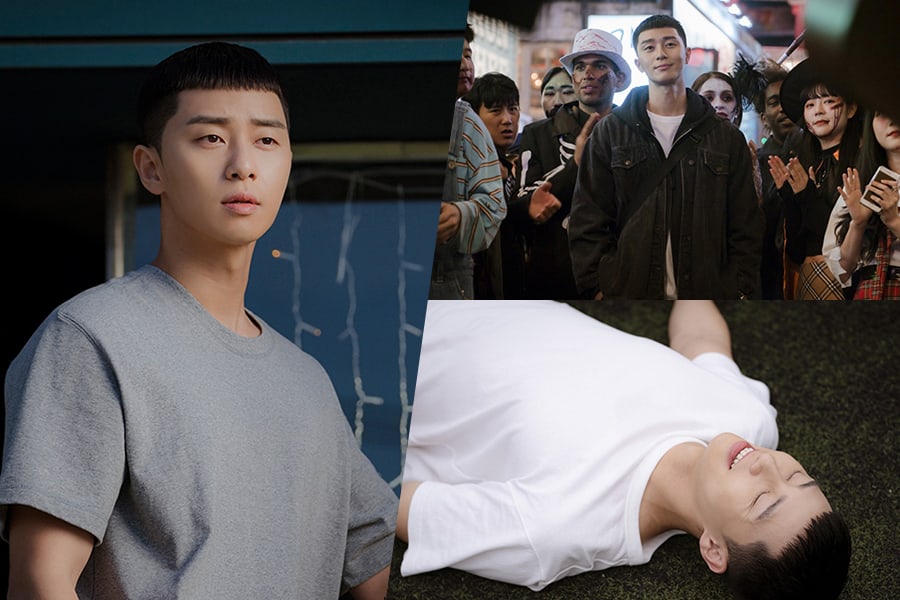
Itaewon Class (이태원 클라쓰) aired on JTBC from January to March 2020, sixteen episodes, based on the Jo Gwang-jin webtoon of the same name. Park Seo-joon played Park Sae-roi, a stubborn ex-con who opens the fried tofu pub DanBam in Itaewon and runs a fifteen-year revenge arc against the food conglomerate Jangga. The show landed on Netflix mid-airing, exploded internationally during the first month of pandemic lockdowns, and did the specific thing K-dramas rarely do: put a real Seoul neighborhood on the global map by name. Anyone who watched Itaewon Class in 2020 will still recognize the DanBam alley set locations, the 경리단길 walking shots, the Noksapyeong overpass. For a generation of overseas fans who had never been to Seoul, Itaewon became the mental image of what a Korean neighborhood looks like.
The industry read on why the show worked: Sae-roi's revenge is not really about the food business. It is about a working-class outsider refusing to fold to Korean chaebol hierarchy, and Itaewon (foreigner-friendly, class-agnostic, defined by outsiders making their own rules) is the only neighborhood in Seoul where that storyline reads as geographically credible. Set the same show in Gangnam and it collapses because Gangnam is the system Sae-roi is fighting. Setting it in Itaewon is the writer's way of telling you, before any dialogue lands, that the underdog has a chance. That is what dramaturgy people mean when they say a setting does narrative work. Itaewon Class did not put Itaewon on the map by being about Itaewon. It picked Itaewon because Itaewon already did the storytelling for it.
2022.10.29 이태원 참사: the tragedy that changed the neighborhood
Any honest Itaewon read has to sit with October 29, 2022. On that Saturday night, during the first large-scale Halloween festivities after COVID-era distancing rules eased, a crowd crush occurred in a narrow alley (roughly 3.2 meters wide) between the Hamilton Hotel and the World Food Street. One hundred fifty-nine people died. Most were in their twenties. Both Korean and foreign nationals. It is now called 이태원 참사 (the Itaewon Disaster), and the alley itself was designated a Memorial Alley in October 2023 on the first anniversary. The Korea Herald's coverage across 2022 to 2025 has been careful and continuous, from the immediate aftermath through the presidential-office-relocation audit findings, and the three-year memorials in October 2025 that drew bereaved families and international attention.
What that meant for the neighborhood, industry-wise, was a hard commercial collapse. Pre-tragedy Itaewon F&B revenue ran around ₩500 billion annually across the Yongsan-gu commercial cluster. Post-2022 the decline was reported at roughly 40 percent through 2023 as Koreans and foreigners alike simply stopped coming. Restaurants closed. Long-standing bars shuttered. Rents dropped in some blocks and then reflated as speculative investors moved in. Through 2024, the recovery has been gradual and uneven. Some Gyeongnidan business owners quoted by The Korea Times describe post-pandemic Saturday nights that never got back to 2019 levels. Others, particularly the artisanal cocktail bars and the destination restaurants that were already Naver-Map anchors, have held on because their customer base actively wanted to come back.
The appeal point that matters here is what the neighborhood chose to become in the aftermath. Itaewon did not pivot to solemnity or turn itself into a memorial park. It kept operating, kept feeding people, kept hosting the small daily rituals of a working district, while making structural space for grief. The Memorial Alley is quiet, marked, and visitable. The bars a block over are open. That coexistence is very Korean in a specific way. 정 (jeong, the deep bond that carries obligation) does not require you to stop living. It requires you to keep the memory close while you do.
What Itaewon means in 2026: still Seoul's most international neighborhood
Walk 이태원 today and the district that comes back is not the pre-2022 version and not the immediate post-tragedy version. It is a third thing. The multicultural food scene is thinner in some corners and denser in others, with new arrivals from Central Asia and West Africa now more visible than the American military presence that seeded the original neighborhood. The craft beer bars that made 경리단길 famous have some empty storefronts but the anchor spots (Magpie, Southside Parlor, Sauce, Coley Bar) are still there, still recommending each other to guests. The queer nightlife street is quietly the most established LGBTQ zone in Korea and still the safest place in Seoul to hold your partner's hand walking down a main road. The Itaewon Global Village Festival, held annually since 2002, still packs the main drag every October.
The read that stuck with me from multiple long-time Itaewon residents interviewed across Korea Herald and Korea Times coverage: this neighborhood absorbs shocks that would kill a lesser district because its whole reason for existing is to be a landing zone for people who do not fit anywhere else in Seoul. The American GI in 1965. The Bangladeshi migrant worker in 1994. The queer twenty-two-year-old from Daegu in 2005. The Ukrainian family in 2022. The Nigerian trader in 2024. Itaewon's job is to be the place where those people can walk down the street, buy the food they grew up eating, and not have to explain themselves. Gentrification threatens that, tragedy threatens that, and the neighborhood keeps rebuilding around the same operating principle because the operating principle is what makes it valuable in the first place. 이태원 is Seoul's proof of concept that Korean cosmopolitanism is not a marketing brochure. It is a working neighborhood.
Bring Itaewon's Global Flavor Home with Daebak Box
If reading about Itaewon's alley bakeries, ramyeon stands, and craft-beer corners made you want the Korean side of the neighborhood in your kitchen, the Daebak Box is the shortcut. Curated Korean snacks, lifestyle finds, beauty picks, and pop-culture goods shipped monthly to your door. It is the low-friction way to keep the K-culture connection that 이태원 taught the world to love, without booking a Seoul flight.


