


Table of Contents
Here is the read from someone who has been mapping Korean food-service categories since before 배달의민족 (Baedal Minjok) went unicorn in 2019: 짜장면 (jjajangmyeon) is the most instructive dish in the entire Korean-Chinese canon because it is not really Chinese and never fully Korean either. It was invented in 1905 by Shandong migrants working the docks at Incheon's Chinatown, at a restaurant called 공화춘 (Kongwha Chun), and every generation since has quietly rebuilt what it means. Cheap treat for postwar kids. Delivery staple for salaryman lunch. Bowl you eat on 이사 (moving day) because pots are still packed. Meal singles share on 블랙 데이 (Black Day) to make being uncoupled feel less like a defect. Post-Parasite Oscar, a category exporting to Manhattan and Koreatown LA. The industry math on this dish is roughly ₩1.5 trillion annually in Korea across restaurant, delivery, and instant channels combined, and the cultural math is even bigger.
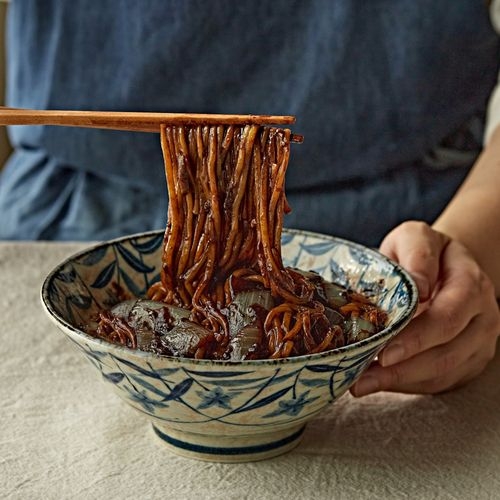
The 1905 Incheon origin story most non-Koreans get wrong
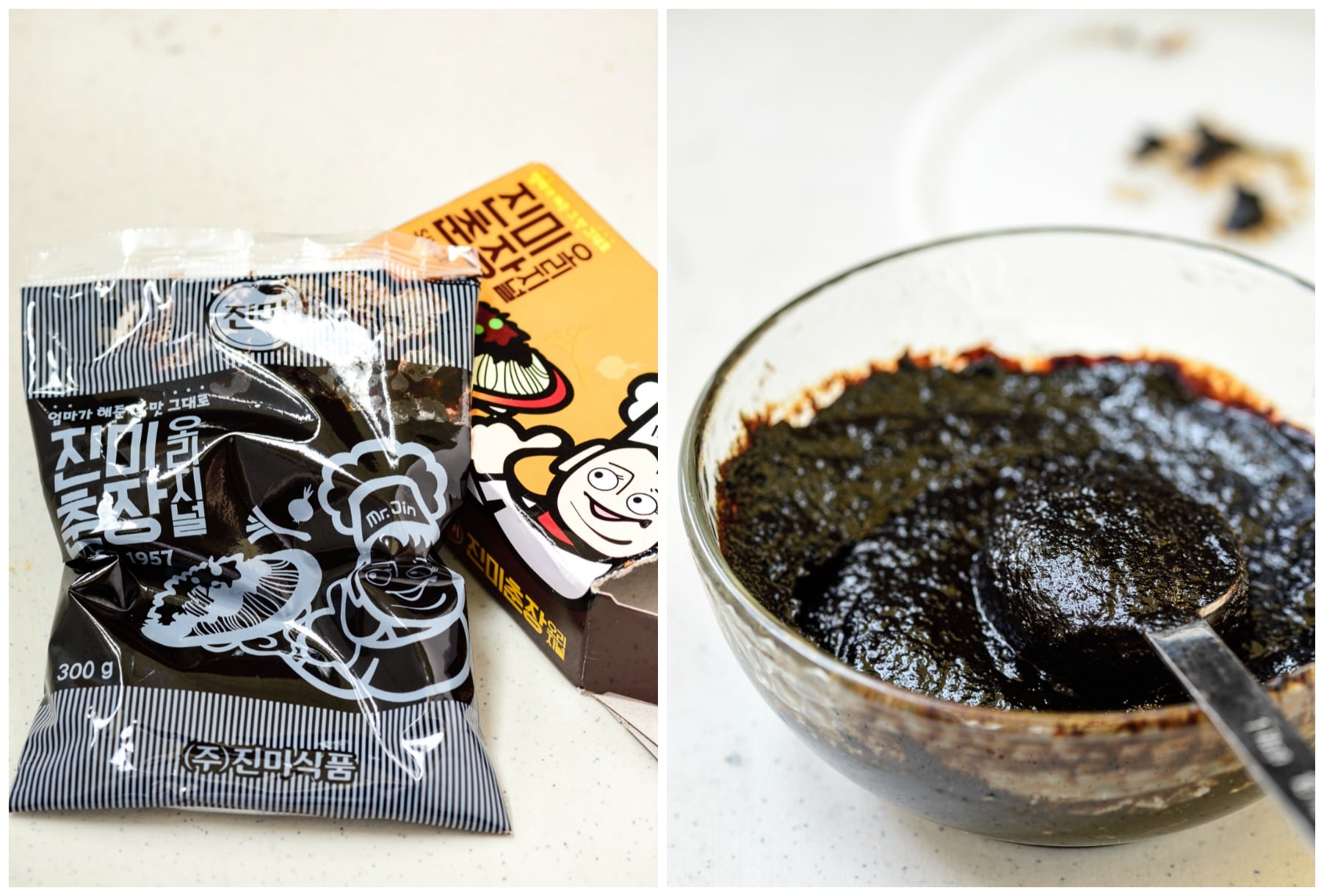
Kongwha Chun opened in Incheon's Chinatown in 1905, and the founding fact everyone repeats is that Shandong dock workers wanted a cheap, fast, filling lunch. True. The part that gets flattened in translation is what happened to the sauce. Mainland zhajiangmian uses a salty, unsweetened yellow-brown fermented bean paste. When Shandong cooks in Incheon started reformulating for Korean palates, they added caramel to soften the salt and cut in more sugar and stir-fry oil. That is how 춘장 (chunjang) was born, and this is why, as the Korea Herald's Hyungwon Kang put it in his 2022 visual history piece, chunjang "does not exist in Chinese cuisine outside of Korea." If you eat zhajiangmian in Beijing tomorrow you will taste a different dish. Jjajangmyeon is a Korean product with a Chinese passport, invented at the exact moment when Qing dynasty workers had extraterritorial rights in Incheon's 청국 조계 (Qing settlement) and Korean food culture was porous.
The Kongwha Chun building itself is now the 짜장면 박물관 (Jajangmyeon Museum), which the city of Incheon opened in 2012 in a restored 1908 wooden structure. That is not a cute tourism play. It is Incheon staking a claim on food-heritage IP the same way Naples claims pizza, and it works because chunjang is a proprietary Korean adaptation that Chinese cooks abroad genuinely do not make.
Why 배달의민족 has jjajangmyeon in its top delivery categories
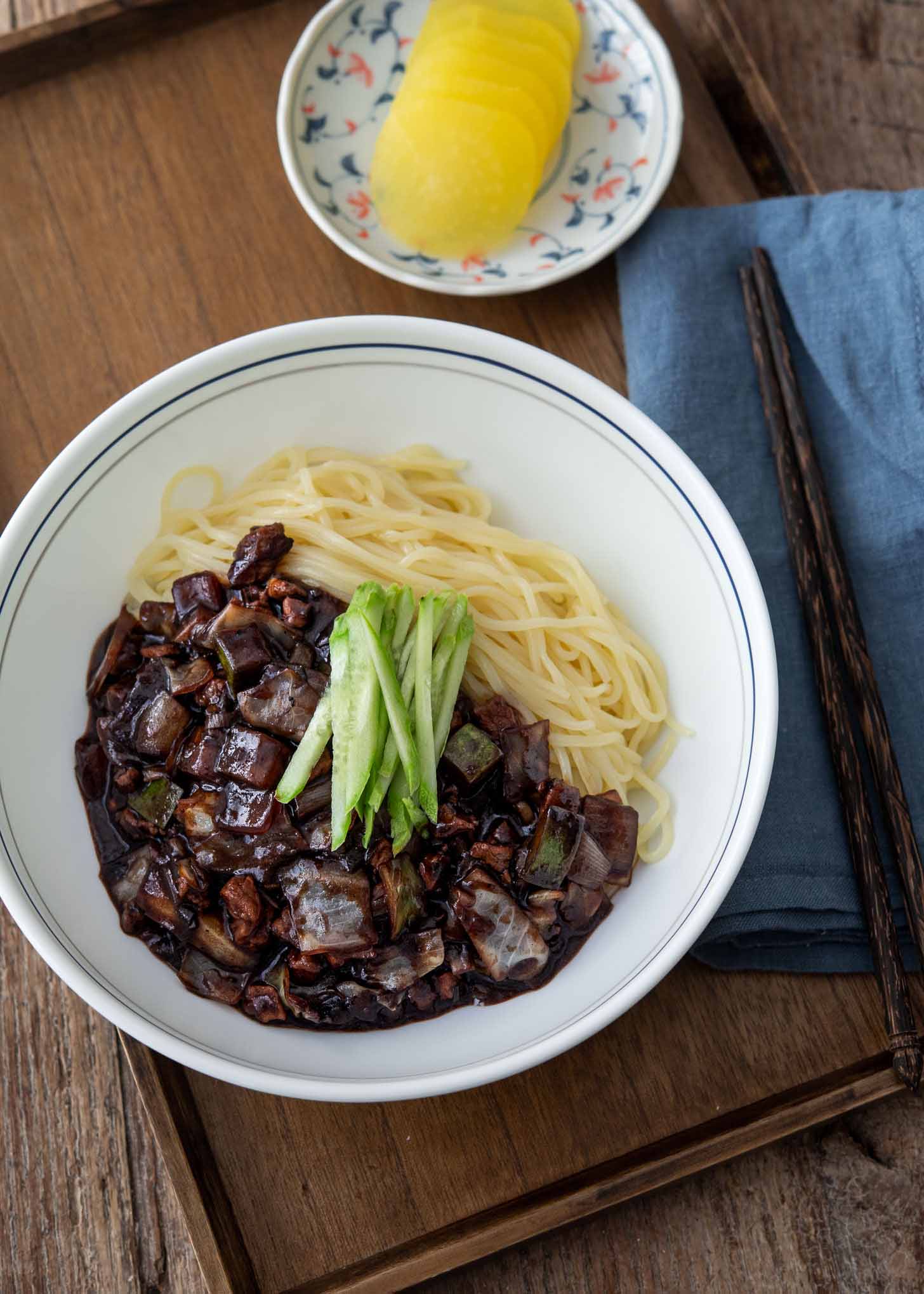
Ask any Korean under 40 what they order on 배달의민족 (Baedal Minjok, the Woowa Brothers delivery app that Delivery Hero bought for $7.6 billion in 2019) when they cannot decide, and you will get the same answer: 짜장면 combo, ₩12,000 to ₩18,000, at the door in 30 to 40 minutes. Restaurant dine-in is ₩8,000 to ₩15,000 per bowl in Seoul. Delivery adds a small margin, but the reason it dominates is operational. Chunjang sauce holds temperature in the metal 철가방 (cheol-gabang, the black insulated delivery box that predates modern delivery bags), noodles are cooked slightly firm at the restaurant so they finish on the ride, and the ubiquitous side of 단무지 (yellow pickled radish) plus raw onion with black bean sauce for dipping cost the restaurant almost nothing while feeling generous.
Industry mechanic worth naming: Korean-Chinese restaurants figured out lean unit economics before the delivery app era. A single-owner shop with two family cooks can push 100 to 150 jjajangmyeon bowls at lunch service because the sauce is batch-cooked and holds all day, noodles are portioned by weight, and delivery labor is often outsourced to 배달의민족 or Coupang Eats riders now instead of the in-house scooter delivery guys of the 1990s. That is why jjajangmyeon consistently ranks in the top three most-ordered dishes on Baedal Minjok's yearly public reports, alongside 치킨 (fried chicken) and 김치찌개 (kimchi jjigae). The dish did not become dominant because it is glamorous. It became dominant because it scales.
Black Day (4/14): the internet-born tradition that stuck
Here is the cultural nuance most Western coverage misses. 블랙 데이 (Black Day), April 14, started as a mid-1990s internet joke. Valentine's Day (Feb 14, women give chocolates to men) and White Day (Mar 14, men reciprocate with candy) already anchored Korea's romantic calendar. Someone on a Korean BBS in 1994 or 1995, depending on which nostalgia thread you trust, floated the idea that people who received nothing on either date should meet up on the 14th of the next month, wear all black, and eat 짜장면. The joke stuck because it did the exact opposite of what a marketing holiday does. Instead of pressuring singles to buy something, it gave them a low-stakes ritual to sit together and be uncoupled without shame. The dish's color matched, the price was low enough for students and workers alike, and the food itself is comfort food coded as neither romantic nor celebratory.
Fast forward to 2026 and Black Day is now on every 편의점 (convenience store) marketing calendar. CU, GS25, and 7-Eleven Korea all run instant jjajangmyeon promotions the second week of April. Restaurant chains like 홍콩반점0410 (the number literally references April 10, close to Black Day) do table-of-four Black Day specials. And it exports. Korean-American communities in Los Angeles and New York now hold small Black Day gatherings, usually at Korean-Chinese spots like Turntable or Kang Ho-dong Baekjeong branches that have added 짜장면 to formerly BBQ-only menus.
The 이사 (moving day) tradition and why it exists
Every Korean who has moved apartments in Seoul knows this: at some point on moving day, someone orders 짜장면. Universal. It is not folk memory, it is operational necessity built into the food category. When your pots, pans, and dishes are in boxes and you cannot cook, when the movers are still hauling in a mattress, when you want to feed six people including delivery-crew helpers for under ₩100,000, the answer is stacked bowls of jjajangmyeon plus 탕수육 (tangsuyuk, sweet-and-sour pork) delivered in disposable containers from the neighborhood 중국집 (Chinese restaurant). The restaurant collects the tin bowls the next day, unless you got the disposable-plastic version now standard post-2020.
The appeal point Korean insiders understand: this ritual made 짜장면 a lifetime-shared reference. Everyone under 60 in Korea has eaten it on a moving day at least once. Ask ten Koreans about their most memorable 짜장면 bowl and roughly six will describe a moving-day scene, not a restaurant one. That collective memory is worth more to the category than any ad spend. The Korea Herald has published this observation multiple times in its Life and Culture section, and it is why the dish keeps its price ceiling stubbornly low. Charge ₩25,000 for a bowl in Gangnam and Korean customers will refuse on principle. The dish is coded as accessible comfort, and that coding is defended culturally.
The instant-noodle empire: 짜파게티, 짜왕, and Chapaguri after Parasite
The instant category is where the industry math gets serious. 오뚜기's 진짜장 and 농심's 짜파게티 (Chapagetti, launched 1984) built a ₩300 billion-plus instant-jjajangmyeon subcategory long before the world knew what it was. Then Bong Joon-ho put Chapaguri (짜파구리, a viral Korean fan mashup of 짜파게티 + 너구리 udon-style instant noodles topped with sliced steak) into Parasite in 2019. When Parasite won Best Picture at the 2020 Oscars, US grocery searches for "chapaguri" spiked. Nongshim pushed a bundled export product to Whole Foods and H Mart within weeks, and the mashup became an instant category unto itself. That was not luck. Nongshim's US subsidiary had been laying export infrastructure since the mid-2010s and Parasite gave them the pull-through demand to complete the flywheel.
The industry read: instant jjajangmyeon does not compete with restaurant jjajangmyeon. It complements it. Koreans eat the restaurant version for social occasions (moving day, Black Day, birthday of a nostalgic parent) and the instant version for solo late-night cooking. Chapagetti has one of the highest household-penetration rates of any Korean instant noodle, right behind Shin Ramyun. And every convenience store in Korea stocks 짜파게티 at eye level.

유니짜장, 삼선짜장, 쟁반짜장: the menu variations that matter
Every Korean-Chinese restaurant menu has three or four jjajangmyeon variants, and the price ladder tells you the operational hierarchy. Base 짜장면 (₩8,000 to ₩10,000) uses diced pork and a slightly liquid sauce. 유니짜장 (yuni-jjajang, ₩9,000 to ₩11,000) uses finely minced meat that binds into the sauce for a smoother mouth-feel; the name yuni is a Korean transliteration of a Shandong term for minced. 삼선짜장 (samseon-jjajang, ₩12,000 to ₩15,000) adds shrimp, squid, and sea cucumber; the seafood upgrade is where restaurants make their premium margin. 쟁반짜장 (jaengban-jjajang, ₩20,000 to ₩30,000 for two to three people) is the noodles stir-fried directly with the sauce and served on a big platter to share, restaurant Chinese style, and is the option families order for a shared table meal.
Then there is 간짜장 (ganjjajang, dry-style with no thickened water added), which cognoscenti order because the sauce is more concentrated and holds better on the noodle. If you want to spot a Korean-Chinese food obsessive at a restaurant, they order 간짜장 without asking about the price. Regional variants: coastal areas like Busan lean toward samseon-jjajang because of seafood proximity, and inland cities like Daegu and Gwangju stick tighter to the base and yuni versions. All told, this variation ladder is what lets a single dish carry an entire restaurant category through six-plus decades of Korean urbanization.

Post-2020 global export: from Koreatown menus to Netflix visibility
Here is the industry mechanic behind the 2020-onward global rise. Kang Ho-dong Baekjeong, the Manhattan Korean BBQ juggernaut that expanded to LA, Vegas, and beyond, quietly added 짜장면 to menus around 2021 as a post-meal starch option. Turntable, the Korean noodle bar concept in Koreatown LA, made it a headline item. H Mart's ready-to-eat section rolled out refrigerated jjajangmyeon kits with pre-cooked sauce and fresh noodles. And on the streaming side, the dish shows up in K-dramas at a rate that would embarrass a paid PPL contract: Crash Landing on You, Reply 1988, Itaewon Class, Weightlifting Fairy Kim Bok-joo, and dozens more use a shared jjajangmyeon scene as emotional shorthand for "these characters are family now."
The reason this exports without needing a marketing push is the same reason ramen exported from Japan in the 1990s. Jjajangmyeon delivers a specific comfort-food payoff (rich, glossy, savory, one-bowl, cheap) that Western casual-dining categories do not currently serve. Once diners taste a proper chunjang-based bowl, the category installs itself. Nongshim, Ottogi, and CJ CheilJedang are all now shipping instant and refrigerated formats through US retail, and boutique Korean-Chinese restaurants in Manhattan, LA, and Toronto are running jjajangmyeon as a permanent menu item, not a special. The next five years will see the category harden globally the same way tteokbokki hardened in 2023 and 2024.
Explore More of Korea with Daebak
If the inside read on 짜장면, 춘장, 배달의민족 delivery culture, and 블랙 데이 gave you the taste for the Hallyu-insider perspective on Korean food and pop culture, the Daebak Box is a monthly deep-dive: curated Korean snacks, ramen, K-pop merch, and cultural picks delivered straight to your door. Subscribe, and let each month arrive like a fresh bowl of jjajangmyeon on 이사 day.


